live
Live: Erin Patterson's fight to appeal mushroom murder conviction continues in court
Triple murderer Erin Patterson continues her bid to have her conviction overturned in the Court of Appeal, while the Office of Public Prosecutions launches its own appeal to have a harsher sentence imposed that removes any chance of parole.
Follow our coverage live.
Live updates
New: Filters
Choose what information you see below by using filters
More on grounds four and seven
We are discussing the admissability of Facebook posts where Patterson complains about her relatives, and the assertion that the prosecution changed its approach to a motive.
Mr McWilliams says neither ground has any substance.
He says all of this evidence was simply relationship evidence at all times.
He says the defence itself introduced what has been described as an "anti-motive" — that Patterson was unlikely to poison family members because she loved them.
He says everyone understood that Patterson was going to use the relationship evidence as "a shield, not a sword", and use it to support her case.
Mr McWilliams says the prosecution were merely anticpating her predicted argument and used the messaged where Patterson complained about her family as a counterpoint.
We move on to grounds four and seven

If you were following along yesterday, grounds four and seven for appeal relate to Patterson's legal team arguing that Facebook messages introduced as evidence were unfairly prejudicial and shouldn't have been used.
They also argued that the use of these Facebook messages in Dr Rogers's closing address caused a substantial miscarriage of justice, because they were used to hint at a motive for the murders, despite the Crown saying they would not provide a motive.
Prosecutor rejects 'Frankenstein' of an argument
Mr McWilliams sums up his thoughts on the 35 issues raised in ground six by Patterson's lawyers, calling it a "Frankenstein of a ground which has no force".
"What is now placed before the court in ground six is a collection of matters which were even thought to be unobjectionable [by her own lawyers] … matters which were raised, argued and decided against … or curiously, matters where she had success in the court below, but without saying what more she would require to alleviate any unfairness," he says.
He calls for them to be rejected completely.
An example of one of the disputed closing argument moments
To give an idea of the issues they are discussing, we can look at one suggested complaint with the closing address.
Nanette Rogers SC referenced Erin Patterson's claim that she was sick following the deadly lunch and was forced to go to the toilet on the side of the road because she was so ill. CCTV footage showed Patterson entering a petrol station bathroom after the alleged diarrheal attack, and leaving just nine seconds later.
Dr Rogers said in her closing argument:
"We suggest that if she [the applicant] really did have diarrhoea in the bush and this was the first bathroom she had access to after that, it would take more than nine seconds to complete the process of cleaning herself up, or at a minimum to wash her hands…"
Patterson's legal team is now arguing this was unfair and had no basis in evidence, because:
"But the applicant — when she gave evidence — never said she cleaned herself up in the toilet or washed her hands at BP Caldermeade. What she did say was that she had cleaned herself up with tissues at the side of the road and put them in a dog poo bag and placed it in the rubbish bin in the bathroom at BP Caldermeade.
"Yet the prosecution submission suggests she did things which she never said she did — 'complete the process of cleaning herself up, or at a minimum wash her hands'. So it was a submission untethered to any evidentiary basis. It was also something that was not put to the applicant during cross-examination."
But Mr McWilliams says this was never raised at all during the murder trial by Patterson's own lawyers, and as her own lawyers did not see it as prejudicial, it was a non-issue.
Prosecutors reject ground six entirely
There is more discussion around the alleged issues with Dr Rogers's closing address.
Mr McWilliams attempts to dismiss ground six entirely with some particularly colourful language.
"Risk of prejudice reduced to nil … yet rebirthed into this omnibus of 35 complaints with no persuasive force for the reason," he says.
He reels off a list of problems that were never raised at all in court, and Justice Kidd asks him to go slowly as he fires through them.
Mr McWilliams says none of the issues have any weight.
More on the 35 problems in the closing address
Mr McWilliams says that about four or six points made by Dr Rogers during her closing address were flagged at the time, with trial judge Christopher Beale saying they were not supported by evidence and were corrected.
He gives the example of claims about death cap mushrooms being scraped off the beef Wellington lunch and possible lingering poison on the meat, which was pulled up on by Judge Beale.
Mr McWilliams says this was fixed in court and asks why it is still included in the 35 problematic moments listed by Patterson's lawyers now.
He asks why, if the issue was corrected at the time, Patterson and her lawyers could still want more.
Justice Taylor jumps in and says the mention of the incident could be to show the "cumulative effect" of all the issues with the closing address, but Mr McWilliams rejects this.
"The cumulative effect of zero is still zero," Mr McWilliams says.
Patterson listens from prison
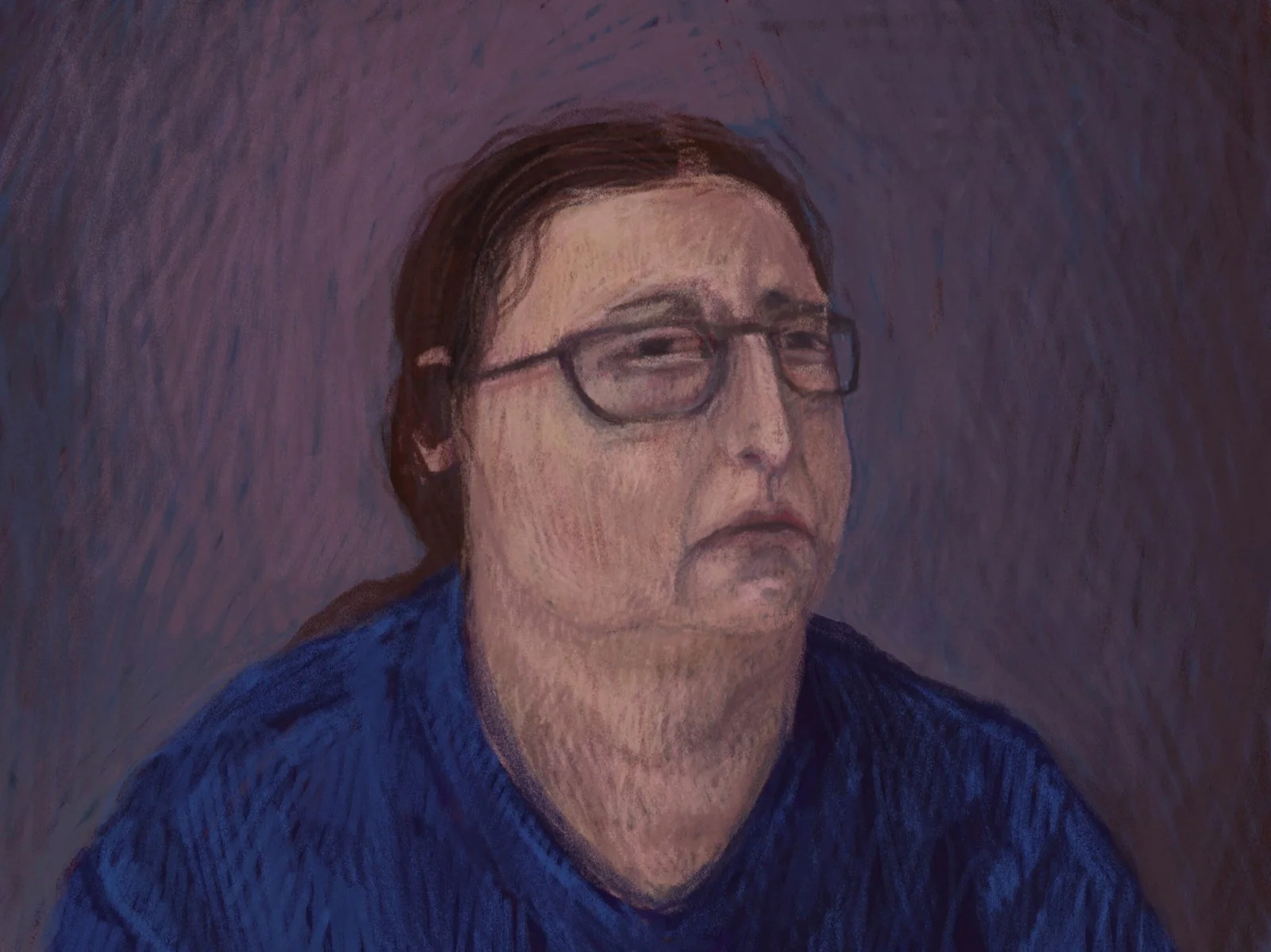
As mentioned earlier, Erin Patterson is listening to proceedings via video link from prison.
Sketch artist Anita Lester is in Courtroom 1 at the Supreme Court.
She has produced this impression from Patterson's video link.
Prosecutors say defence made strategic choice that failed
As a refresher, a closing address is the final argument a prosecutor makes to the jury at the end of a trial, summing up the evidence and witnesses to present their version of events and prove the accused's guilt.
Yesterday, Patterson's lawyers said Dr Rogers' closing address was rife with cherry-picking of evidence.
Mr McWilliams says the best course of action would have been to raise concerns at the time and allow the prosecutor to correct them if necessary.
He says that Patterson's defence team purposely chose not to object at the time, and used some of these concerns in their own closing address as ammunition for their own argument.
Mr McWilliams says appeal lawyers are now using these issues well after the fact, when that strategy did not work to win an acquittal for Patterson.
"One might think this court would be reluctant to embrace a ground of appeal which now seeks a thoroughly different course to that which was seen as forensically advantageous by [Patterson] at her trial," he says.
Key Event
We return with a focus on appeal ground six
To recap, the sixth ground for Patterson's appeal to overturn her murder conviction was the closing address of Nanette Rogers SC during her murder trial, which they argue caused a substantial miscarriage of justice.
Patterson's lawyers raised about 35 different problematic moments during her address.
Crown prosecutor Jeremy McWilliams says there is no merit to any of them, saying 20 of them were never raised during the trial in any form.
"Of that 20, there is significant double accounting in relation to other grounds," he says.
He also notes that despite Patterson's defence team having her best interests at heart during the trial, they did not see it appropriate to raise these issues at the time.
Key Event
We head for a break
With that, the prosecution wraps up its rebuttal to ground five, and we take a short break.
We'll return as they move to the other grounds, which deal with what Dr Rogers said during her closing address in the murder trial.
Fewer people watching proceedings in court
Much of the discussion has related to a particular question by Nanette Rogers SC, which we can't go into more detail about due to legal reasons.
Dr Rogers's questioning suggested certain things and was immediately challenged by Judge Beale during the trial, who ordered the jury out and admonished Dr Rogers, telling her she was "skating on thin ice" and to move on immediately, which she agreed to do.
Mr McWilliams says that although the question was admittedly "a little loose", the matter was dealt with appropriately at the time.
As the discussion remains on this topic, we'll take this chance to note that there are far fewer observers in the courtroom today.
Court of Appeal hearings are very technical and difficult to understand.
But Ian Wilkinson is back in court for a second day.
Nothing unorthodox about death cap mushroom questions, says McWilliams
Mr McWilliams is now addressing a complaint that Dr Rogers put to Patterson that she had an interest in death cap mushrooms.
He says Patterson agreed that her computer had been used to look up death cap mushrooms on the iNaturalist website and that she accepted she may have looked that up because she wanted to know if they grew in the South Gippsland area.
Mr McWilliams says a separate search for death cap mushrooms in the Moorabbin area quashed the "innocent explanation" about wanting to know if they grew near her home.
He says there was nothing unorthodox about Dr Rogers's cross-examination of Patterson on that matter.
McWilliams rejects criticism of prosecutor's conduct
Mr McWilliams says Dr Rogers's questioning of Patterson, where she asked Patterson if other witnesses were wrong, is thoroughly permissible.
"This is a prosecutor taking care to be thorough, fair and careful," he says.
Mr McWilliams reminds the court the case went for 11 weeks, had many, many witnesses, drew on both direct and indirect evidence, including substantial incriminating conduct evidence.
He also tells the court that the way Patterson answered some of the questions required Dr Rogers to ask them again to get a clear answer.
He says the ground is "thoroughly without substance".
Mr McWilliams notes that the lack of objection from Patterson's own trial defence barrister shows there were no issues with the way Dr Rogers questioned Patterson.
"We can infer from the lack of objection that senior counsel didn’t see that it stepped outside the boundaries of proper, orthodox prosecution cross-examination," he says.
He even goes as far as to mention that even Patterson's barrister, Colin Mandy SC, described her as "a pedantic witness" during his closing address.
Key Event
We move on to ground five of the appeal
Ground five is the defence's argument that prosecutor Nanette Rogers SC was unfair and oppressive during her cross-examination of Patterson.
The Crown prosecutors today have jumped to the defence of their colleague.
Mr McWilliams says Dr Rogers was thorough and fair at all times.
"Plainly, we reject any suggestion that the prosecutor acted as anything other than a model minister of justice who was careful, thorough, fair and professional in all respects," he says.
The defence had argued that Dr Rogers rehashed the case and was repetitive when questioning Patterson.
Mr McWilliams says it may not always be apparent in the moment where the conflict in evidence lies, and it's necessary to put that evidence to Patterson to allow her to respond to it.
"At all times the form of questioning employed by the prosecutor wasn’t just permissible but it was required, or at least strongly justified," he says.
Key Event
How is Erin Patterson reacting?
In a rare sign of emotion, Patterson is shaking her head and can be seen saying "no" as prosecutor Jeremy McWilliams makes his legal arguments about the exclusion of the SD card.
Prosecutors reject 'right-to-silence' argument
Mr McWilliams rejects any claim that Erin Patterson's right to remain silent was violated.
"Her right to silence could only have been impeded if she was compelled to do something she otherwise would not have done," Mr McWilliams says.
Justice Taylor asks about the suggestion that Patterson may not have testified at all on foraging if the SD card had not existed.
"That would have been an adventurous position to hold and I think defence counsel during the trial were far more careful than that," he says.
"One might infer that they had inferred that this would be evidence that was available to them in one way or another during the course of the trial."
Prosecutors address claimed prejudice
Justice Taylor raises the point about Erin Patterson's right to silence, and the "prejudice" suggested by her lawyers because the photos had to be raised during her testimony rather than during the police witness's testimony.
Mr McWilliams sounds almost a little confused when he answers the next point, saying he doesn't understand why it matters who introduces evidence to the jury.
"It is difficult to see what the unfair prejudice is from the evidence being adduced from one witness versus another," he says.
Juries aren't ... terribly concerned with the formal mechanics of tender, they're concerned with the content of the evidence."
Addressing the right to silence, he says it isn't a right to not be bound by the rules of evidence.
"[Patterson] had a forensic choice to make," he says.
"She clearly wanted to rely on having an innocent tendency to foraging."
He says if she wanted to use the photos as defence, it only makes sense that it was introduced to the court through her.
What did the mushroom photos mean for the case?
We're back to why the SD card photos of mushrooms were relevant to the trial.
Mr McWilliams says the photos alone did not prove that Patterson regularly picked and ate wild mushrooms.
"The significant probative value ... were the accident theory and the culinary aspect," he says.
"The photos of themselves couldn't meet that next step."
Mr McWilliams says the mushrooms in the photos were "fairly raggedy" and not seemingly fit for consumption.
He reiterates that trial judge Christopher Beale was right to initially rule the photos out as irrelevant.
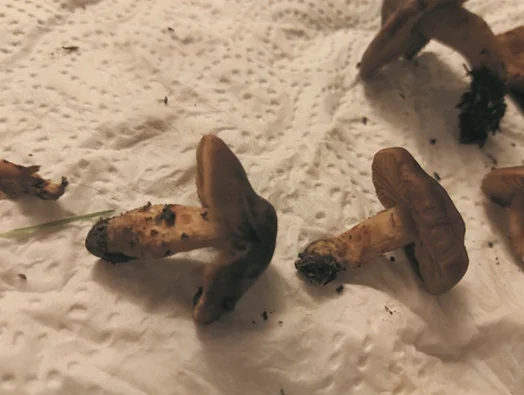
Justice Kidd asks again whether the photos should be considered as evidence of the fact in issue — that it was a culinary misadventure where Patterson accidentally cooked poisonous mushrooms.
Mr McWilliams says Judge Beale was right in his decision, and notes that all the images were shown to the jury anyway.
Key Event
The SD photos and the fake cat claim
This may be confusing so stay with us, but Mr McWilliams says the SD card photos were initially evidence that the prosecution wanted included in its case.
This is despite Patterson's appeal lawyers arguing the defence wanted them included.
But Mr McWilliams says the prosecutors wanted some of the photos included for different reasons.
While the defence wanted the photos shown to the jury to show her interest in foraging wild mushrooms, the prosecution wanted the photos to show Patterson's "enduring interest in poisons".
"There was evidence on the Crown case that [Erin Patterson] had posted these photographs … on a Facebook poisons page and said, 'My cat has eaten one of these mushrooms and has become very sick,''' he says.
"The evidence was [Patterson] didn't own a cat."
Mr McWilliams argues Patterson's post about the cat was actually her seeking information about poisonous mushrooms, and it's the prosecution's case that she used the photos on the SD card to research poisonous mushrooms.
Prosecutor argues no evidence of foraging
Mr McWilliams revisits the testimony of Jenny Hay, a Facebook friend of Erin Patterson.
Ms Hay told the trial that Patterson had never discussed foraging with her.
Mr McWilliams also mentions the accounts of estranged husband Simon Patterson and their son, both of whom said they had never seen Patterson forage for wild mushrooms before.
"The only reference to the concept of an innocent interest in foraging wild mushrooms came from [Erin Patterson's defence lawyer's] opening address to the jury," Mr McWilliams says.
He says her defence lawyers had to raise the idea that Patterson picked and ate wild mushrooms to the jury, knowing she would be cross-examined about it.
Justice Lesley Taylor clarifies this point, and says Mr McWilliams is saying there was evidence that Patterson never foraged, rather than an absence of evidence that she did.