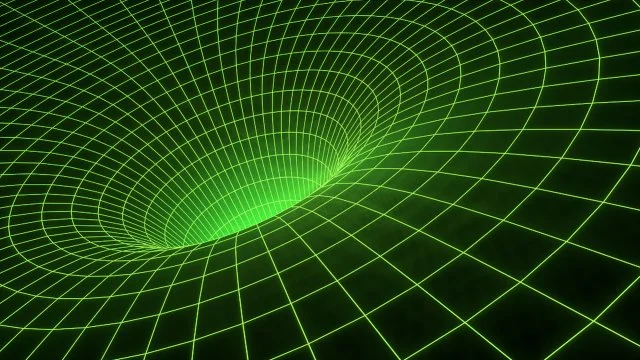
Here in our Universe, there are few objects more awe-inspiring or mysterious than black holes. First theorized to exist back in the late 18th century, they represent a region of space where so much mass and energy is confined within such a small volume that, from within it, nothing can escape: not even light itself. Black holes are bounded by an event horizon, and as more and more mass falls into the black hole, the black hole grows, with its event horizon increasing in size as it happens.
But at some point — even if it’s very far into the future — the Universe will become more evolved, more isolated, and more sparse in terms of both matter and energy. Beyond a certain point, black holes will cease to effectively grow, and once that happens, a different process will begin to dominate: Hawking radiation, which is the quantum process by which black holes decay. As the decay progresses, the black hole will lose mass and its event horizon will shrink. Will that ever allow us to see what’s inside of it? That’s the question of Artur Gouveia, who asks:
“I’d like to know what happens to a black hole which receives no matter inflows from an accretion disk and keeps on losing mass from Hawking radiation. Does there arrive a moment when the mass is not enough to keep light from going out? What happens at that moment? Does an object become visible? Is it a neutron star or an even denser object? Have these ends of black holes been observed in the universe?”
It’s a great and wondrous question, and stretches the limits of what’s conventionally known about physics today. Although it’s well beyond the limits of anything we can actually observe and measure today, here’s what we expect to occur.
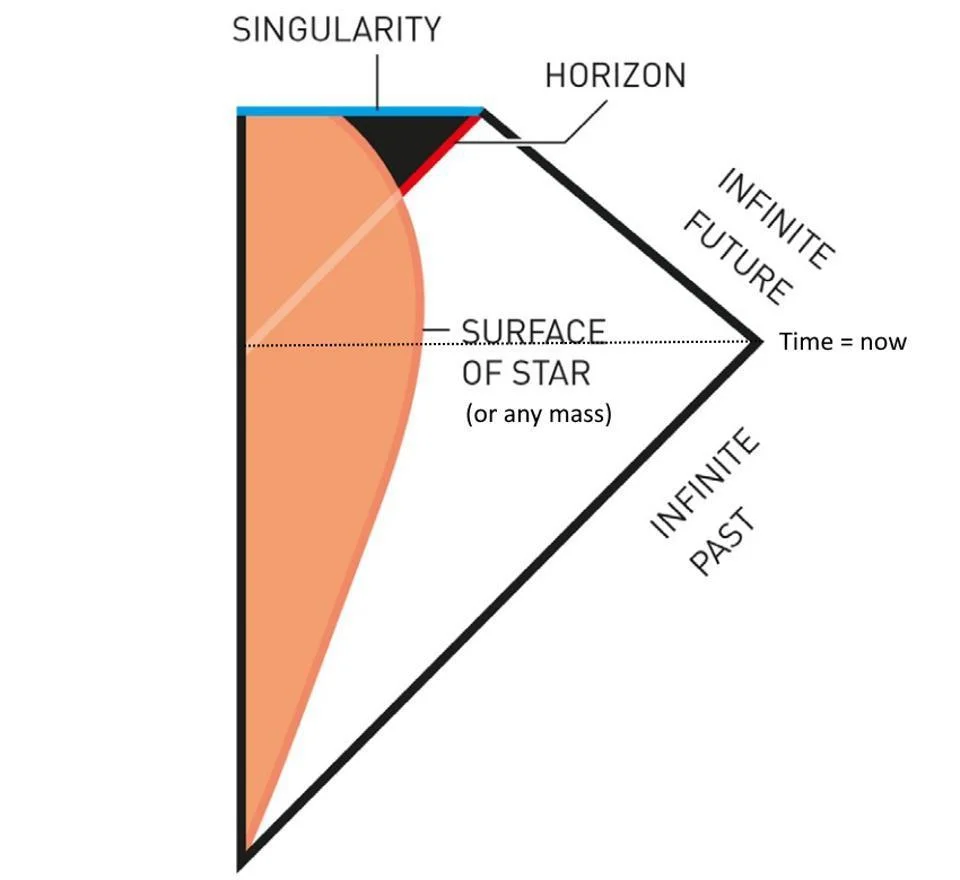
Forming a black hole is actually easier than you might think. All you have to do is accumulate enough mass (or energy) within a particular volume of space so that, within that volume, the escape velocity — the speed at which you’d need to travel in order to escape the gravitational pull of the mass (or energy) within that region — exceeds the speed of light. Because the speed of light is the ultimate speed limit of quanta in this Universe, there’s nothing that can move faster than it: neither matter, nor energy, nor quanta, nor any information-containing signal.
Since gravitation is an always-attractive force, the Universe provides plenty of opportunities for black holes to come into existence. They can arise:
- from a contracting, cold clump of sufficiently massive gas, where simulations indicate that converging streams of cold gas can form black holes of tens of thousands of solar masses,
- from the deaths of stars, including from the cores of sufficiently massive stars that die in a core-collapse supernova and from stars whose interior pressure suddenly drops and the entire star directly collapses to a black hole,
- and from the mergers of stellar remnants, such as neutron stars, that exceed a particular mass threshold, overcoming the repulsive degeneracy pressure of the neutrons themselves and leading to the formation of a black hole.
All told, we estimate that there are around 40 quintillion black holes within the observable Universe at present.
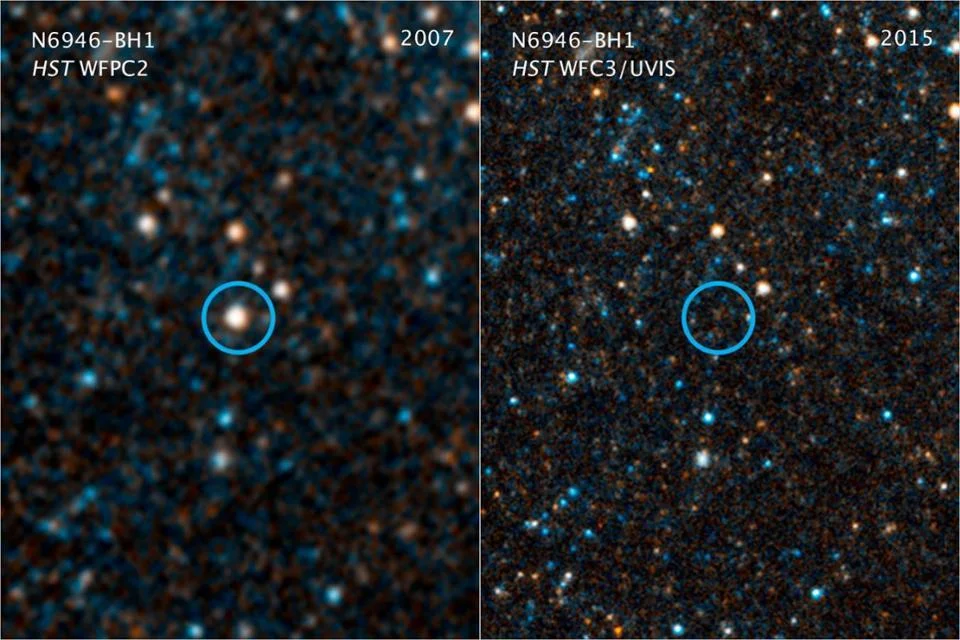
Black holes grow by feeding on matter and energy. Whenever anything — a star, a planet, a cloud of gas, a mote of dust, an atom, a single particle, even a photon or the energy from a gravitational wave — encounters a black hole’s event horizon, it enters into the black hole’s interior, and doesn’t come back out. Even the leftover photons from the Big Bang, the CMB, run into the event horizons and increase their mass. While we normally think of black holes feeding on matter through their accretion disks, this is just the most visible signal given our current capabilities: because the disk heats up and emits infrared and radio light, which we can observe. In reality, there are all sorts of processes that unavoidably increase the mass of black holes.
But eventually, given enough time, the stars will die. Galaxies will finish merging, and the Universe will drive unbound galaxies mutually away from each other, owing to dark energy. Stellar remnants will gravitationally interact, merging, getting kicked out of galaxies, or hurled into their galaxy’s supermassive black hole. Gas and dust will become rarer and rarer, and eventually — around 10²⁰ years from now — black holes will stop growing in mass. The rate of mass growth for a typical black hole will finally fall below the rate of mass loss from an unavoidable quantum process at play: Hawking radiation.
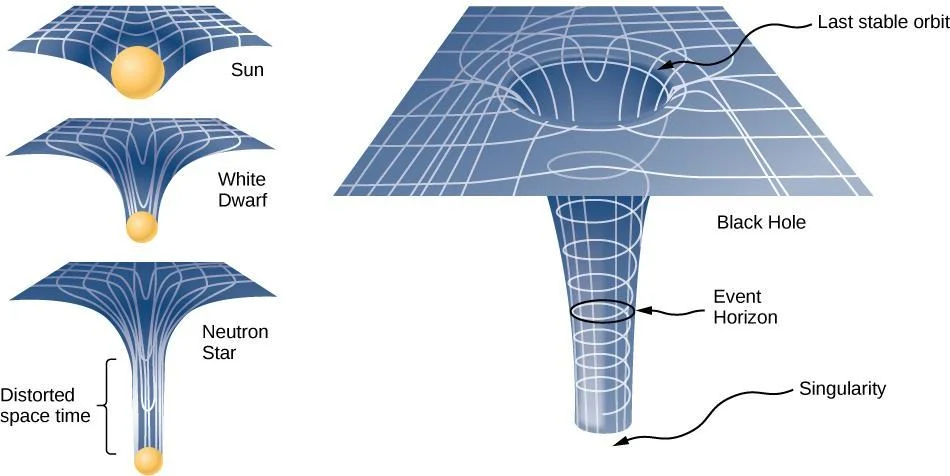
Hawking radiation arises from the fusion of two independent ideas that don’t typically “play nice” with each other:
- The idea of curved spacetime, which comes from Einstein’s general relativity, and where the region just outside of a black hole’s event horizon represent the regions of strongest spatial curvature that we’re connected to (the interior of the event horizon is connected to the black hole’s singularity, which is shielded from us by the horizon itself),
- And the idea of quantum field theory: where not only are particles quantized, but the quantum fields that underpin reality are also quantum in nature, even in regions where there is no matter or energy, such as in the vacuum of empty space.
Although we normally perform our quantum field theory calculations with a background of flat space, this is just because it’s an excellent approximation to reality in most instances (the spatial curvature is small almost everywhere), and because it makes calculations much, much easier. However, in principle, space is curved everywhere. Because it’s so severely curved the closer you get to a black hole’s event horizon, that means that what any observer sees as the quantum vacuum “close to” the event horizon won’t be the same as the quantum vacuum that they see for a location “far from” the event horizon. Although an observer at any location in free-fall always sees the same quantum vacuum, the differences between “near” and “far” means that there’s a gradient in the vacuum in quantum field theory.

Credit: Pixel Matrix / Adobe Stock
One of the key principles of relativity is the notion of frame invariance: if you are in uniform motion, or if you’re in free-fall, you can’t tell the difference between being in any other uniform motion or in free-fall in any other location or under any other accelerating conditions. If you drop in an elevator here on Earth, or you float freely in the vacuum of intergalactic space, or you go aboard the International Space Station that orbits the Earth which orbits the Sun, you’ll feel the same conditions — of weightlessness and free-fall — regardless of which situation you’re in.
But the fact remains that someone in free-fall at the Earth’s orbital distance and someone in free-fall at Pluto’s orbital distance will have different accelerations from one another, and will observe one another accelerating and moving at a rate that’s different from their own. The quantum vacuum, too, knows the difference between a region of space that’s more severely curved (just barely outside a black hole’s event horizon) and that’s less severely curved (much farther outside the event horizon). That difference in the vacuum, coupled with the existence of a horizon (the black hole’s event horizon, in this case) leads to the emission of radiation from the more-curved region to the less-curved region: outgoing radiation that emanates outward from the black hole.
(This is the real explanation behind how Hawking radiation works, rather than the false “pair-popping” explanation you’ve likely heard from others, including Hawking himself.)
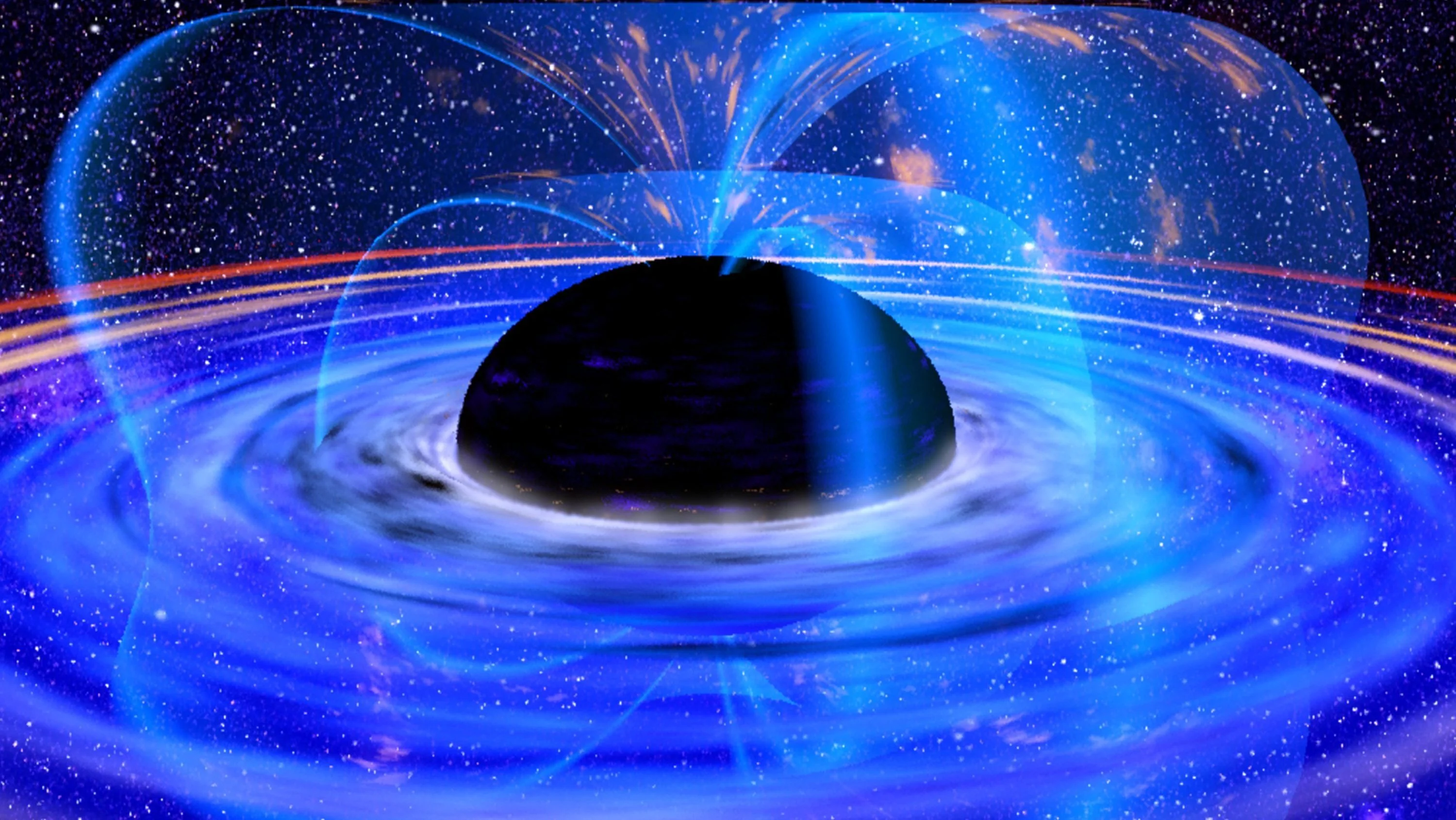
This means that any black hole with an event horizon emits radiation, with the greatest rates of radiation being emitted by:
- the lowest-mass black holes,
- with the smallest event horizons,
- at the shortest radii from the black hole’s center.
Nonetheless, we’ve never yet seen a black hole in the act of decaying, nor have we ever detected Hawking radiation. The reason is simply because, for realistic black hole masses that are produced in our Universe, the rate of radiation (and the temperature of that radiation) is far too low (and far too small) for us to detect it, even for the lowest mass black holes of all.
Theoretically, it may be possible to produce a black hole, via the merger of two neutron stars, that weighs as little as 2.5 times the mass of our Sun. For that mass of a black hole, its Hawking temperature would be a miserly 24 nanokelvin, and its emitted power is right around 10-29 watts, which means it would take over a day’s worth of Hawking radiation to equal the energy emitted in the spin-flipping hyperfine transition of a single hydrogen atom. However, after around 10⁶⁸ years or so, that low-mass black hole would finally decay via Hawking radiation, as all of that emitted energy has to come from one and only one place: the mass (via Einstein’s E = mc²) of the black hole’s singularity itself.
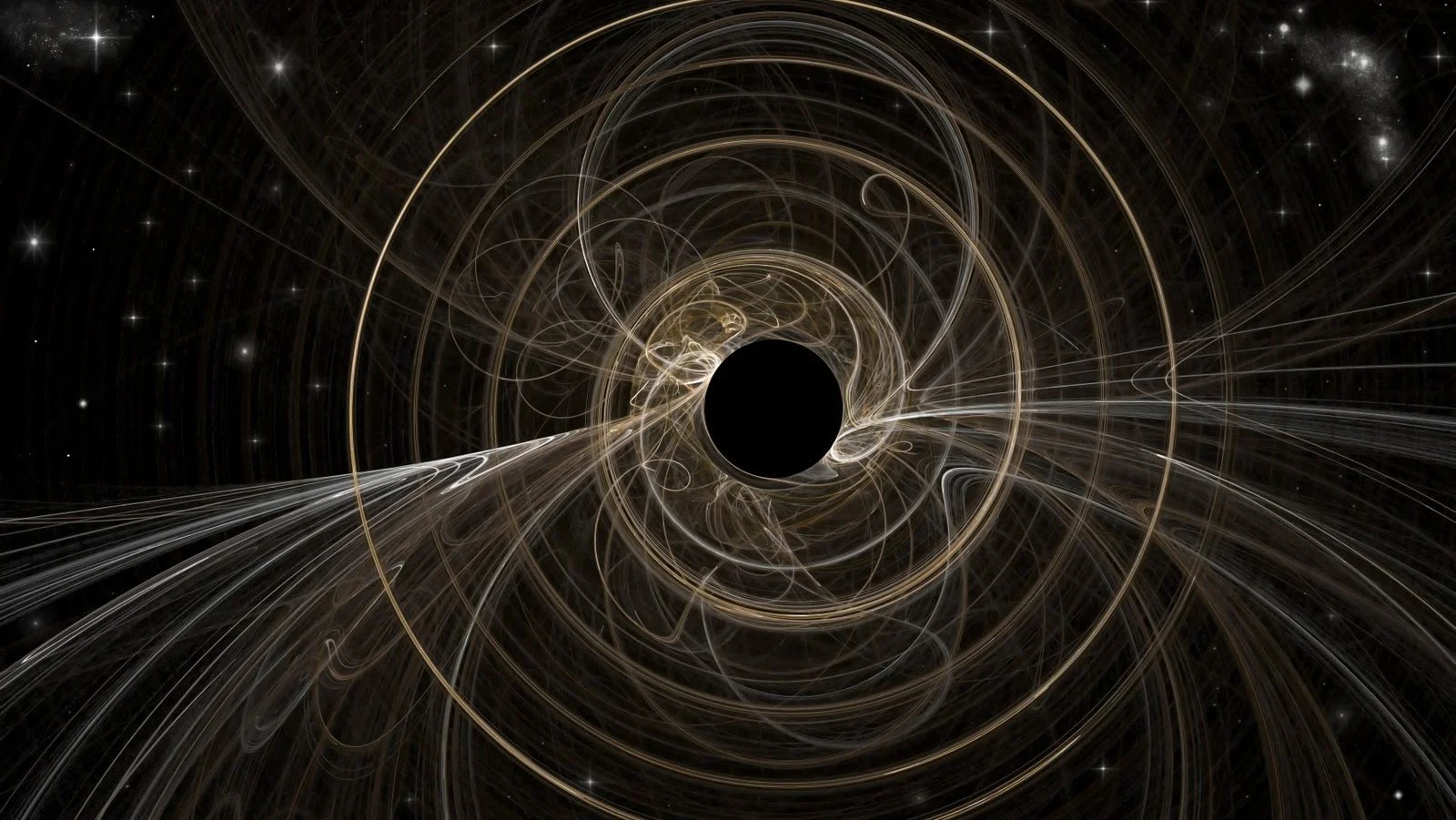
Credit: The EU’s Communicate Science
As the black hole loses mass, the rate of radiation and the temperature of the radiation continues to increase: lower-mass black holes radiate faster and hotter, and so as they lose mass, they accelerate toward their own demise. Even though it’s never happened, we can calculate when such a black hole would become visible and detectable in the process of its evaporation.
- When the black hole decayed to approximately the mass of Jupiter’s moon Europa (a little under the mass of our Moon), the temperature of the emitted Hawking radiation would equal the temperature of the CMB today: 2.7 K. At this mass, its emitted power, however, would be only 0.000001% the power of a single firefly’s flash.
- When the black hole decayed to the current mass of Earth’s polar icecaps, the Hawking radiation temperature would match the temperature of our Sun (6000 K), but again, at a tiny power: about 5% of a firefly’s flash.
- When you finally got down to about the mass of Mars’s moon Phobos, you’d finally start producing a non-negligible amount of power: 4 watts, or about the amount of light put out by a low-power LED light bulb. The temperature of that radiation, however, would be enormous: 11 million K, or the temperature found just slightly off-center from the center of the Sun.
- And to reach the luminosity of the faintest known star, 2MASS J0523−1403, you’d have to wait until the black hole had decayed down to a mass of only about 100 tonnes: the same as an adult blue whale. It would be very, very hot, however: one quintillion K.
However, for a black hole of a tiny mass like the equivalent of a blue whale, the time it takes to fully evaporate once reaching that state is minuscule: only about 1 second. It would be an incredibly energetic event, though, in that final second. The equivalent of more than 2 trillion tons of TNT, or about 40,000 times the yield of the most powerful nuclear device ever detonated: the Tsar Bomba. It’s for these (power) considerations that it’s generally only the final second (or, if you’re really lucky and close by, the final few seconds) of an evaporating black hole’s life during which it’s visible. Unless you’re counting single photons with remarkable efficiency, that’s the only way you’re likely to see a black hole that evaporates via Hawking radiation.
In our standard picture of physics, the event horizon never disappears. This is due to the fact that as the black hole emits Hawking radiation, the energy that powers the Hawking radiation comes from the mass of the black hole itself, causing it to shrink and evaporate in the first place. But this assumes there is actually a singularity (a point for a non-rotating black hole, a ring for a rotating black hole) at the center of the black hole within that event horizon.
You might rightly wonder — just as the electron degeneracy pressure holds white dwarf stars up against gravitational collapse and the neutron degeneracy pressure holds neutron stars up against gravitational collapse — whether there isn’t some exotic state, perhaps some type of subquark matter, whose pressure holds up a non-singular structure that simply lies within a black hole’s event horizon?
It turns out that, if relativity remains true and there’s no information-carrying signal that travels faster than the speed of light, you cannot prevent the formation of a singularity from within the event horizon.
Here’s how you can convince yourself that this is true.
- At the quantum level, in order for a force to occur, a (virtual) quantum has to be exchanged.
- It could be a massless quantum (photon, gluon, graviton) that travels at the speed of light, or a massive one (W-boson, Z-boson, meson) that travels slower than light, but the speed of light is the maximum speed it can travel at.
- Outside of a black hole’s event horizon, you can travel from “closer to the center of mass” to “farther from the center of mass” by moving at the speed of light or below. (That’s how neutron stars and white dwarfs do it.)
- But inside a black hole’s event horizon, for an “inner” part to push back on an “outer” part, a signal would have to travel faster than the speed of light.
- Since that doesn’t happen, any attempt to avoid a singularity will fail: by the time the “outermore” particle receives the quantum from the “innermore” particle, it’s already interior (closer to the center) than the “innermore” particle was when it emitted the quantum.
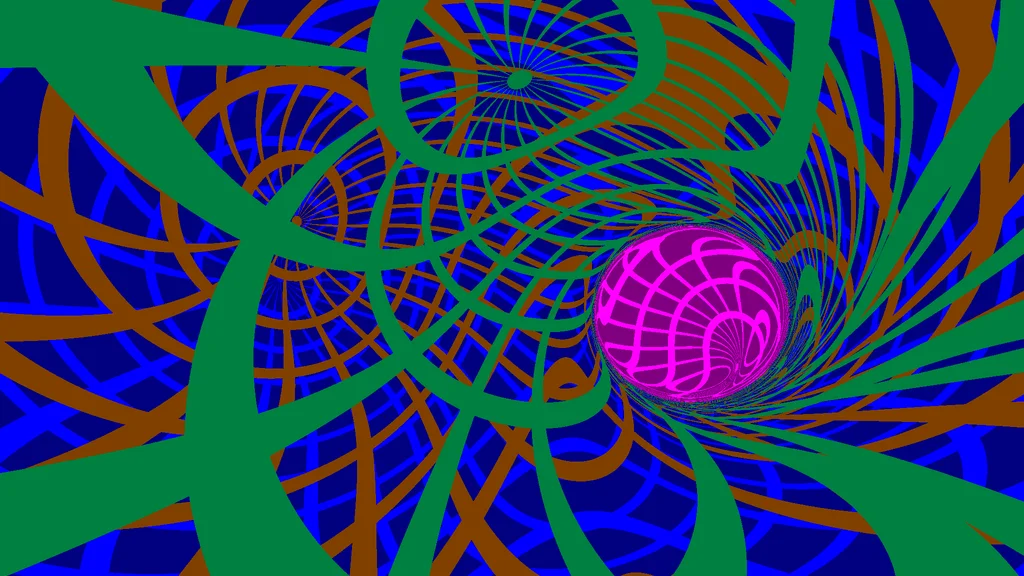
And therefore, every particle that falls into a black hole reaches the central singularity in a finite amount of time. There’s no way to avoid it without breaking the known laws of physics.
Credit: David Madore
Sure, you can try to wiggle your way out of it by doing away with general relativity, and replacing it with an alternative. In Carlo Rovelli’s version of quantum gravity, you can wind up with Planck stars instead of singularities, where a solar mass black hole has a size that’s smaller than that of a single hydrogen atom. Instead of degeneracy pressure, they argue that the Heisenberg uncertainty principle sets the limit to the black hole’s size. Similarly, in superstring theory, there can be extended objects known as fuzzballs that occupy a higher-dimensional volume in either 9 or 10 dimensional space. In both versions, these are tiny, minuscule structures that replace the classical singularity of general relativity.
However, both of them have a feature in common that isn’t generally appreciated: as Hawking radiation occurs (and it still occurs in both scenarios), then as the mass of the black hole decreases, the size of the object that replaces the singularity (Planck star or fuzzball) also decreases, to smaller than the size of a proton and eventually all the way down to sizes approaching the Planck scale itself. While general relativity is usually assumed to not be our final theory of gravity, the principle of relativity and the speed limit set by the speed of light are both assumed to hold even in quantum gravity and superstring theory scenarios. It may yet be true that there’s something inside an event horizon that is of finite size, but letting a black hole evaporate via Hawking radiation won’t be the way to reveal it!
Send in your Ask Ethan questions to startswithabang at gmail dot com!
This article Ask Ethan: Do evaporating black holes ever lose their event horizons? is featured on Big Think.