Technology
Exploring Scientific Aspirations in the Search for Extraterrestrial Life
The quest to discover extraterrestrial life captivates our imagination, influencing both hope and fear. Recent advancements in science highlight the significant strides made in this area, particularly in the 21st century.
The Search for Extraterrestrial Life: A Current Snapshot
When considering the allure of extraterrestrial life, it's easy to get swept up in visions of distant aliens and advanced civilizations. Our understanding of the cosmos has markedly evolved in recent decades, shedding light on both our origins and the vastness of the universe.
To illustrate this progress, consider some pivotal developments in astronomy:
- We’ve traced the history of life on our own planet,
- Probed our Solar System's moons and planets in unprecedented detail,
- Cataloged thousands of exoplanets orbiting stars far beyond our Sun,
- Mapped billions of stars within the Milky Way,
- And recognized that our galaxy is merely one among trillions scattered throughout the observable universe.
Despite these significant advancements, however, a vital question remains: where is the evidence of life beyond Earth? In spite of our enhanced scientific tools and techniques, we’ve yet to confirm any definitive signals or signs of life elsewhere in the universe.
Historically, we've often misjudged our findings in this quest. Recall the fervor over Martian canals thought to be crafted by intelligent beings, or the hopeful interpretations of data from Viking landers and the enigmatic Wow! Signal. Even the intriguing features of Tabby’s star once sparked discussions about alien megastructures. Each time, subsequent investigations failed to substantiate these claims, reminding us of the sobering reality: the universe may still harbor surprises, but definitive proof of life remains elusive.
Ultimately, this elusiveness shouldn’t extinguish our hopes. Scientific exploration continues to present solid theories on where we may find life beyond our blue planet.
The Cosmic Lottery: Odds of Life's Emergence
Envision the emergence of life as a massive cosmic lottery. Each newly formed star signifies potential, ushering in planets and moons that could host life. In a universe replete with raw materials, conditions arise where life might spark. On worlds capable of sustaining life, a delicate balance is needed for survival and evolution — a long journey that might culminate in technologically adept civilizations.
Yet, this isn’t just about formation; it’s fraught with uncertainty. Catastrophic events, from natural disasters to self-inflicted wounds like nuclear war, can wipe out any emerging species. For each stage of life’s potential emergence—its genesis, survival, evolution into complexity, and technological advancement—there are probabilities that remain largely unknown.
Frank Drake's groundbreaking work over sixty years ago, encapsulated in the eponymous Drake equation, attempts to quantify these uncertainties. While some of the equation's variables were once speculative, advancements in our knowledge have led to a more informed understanding of cosmic phenomena.
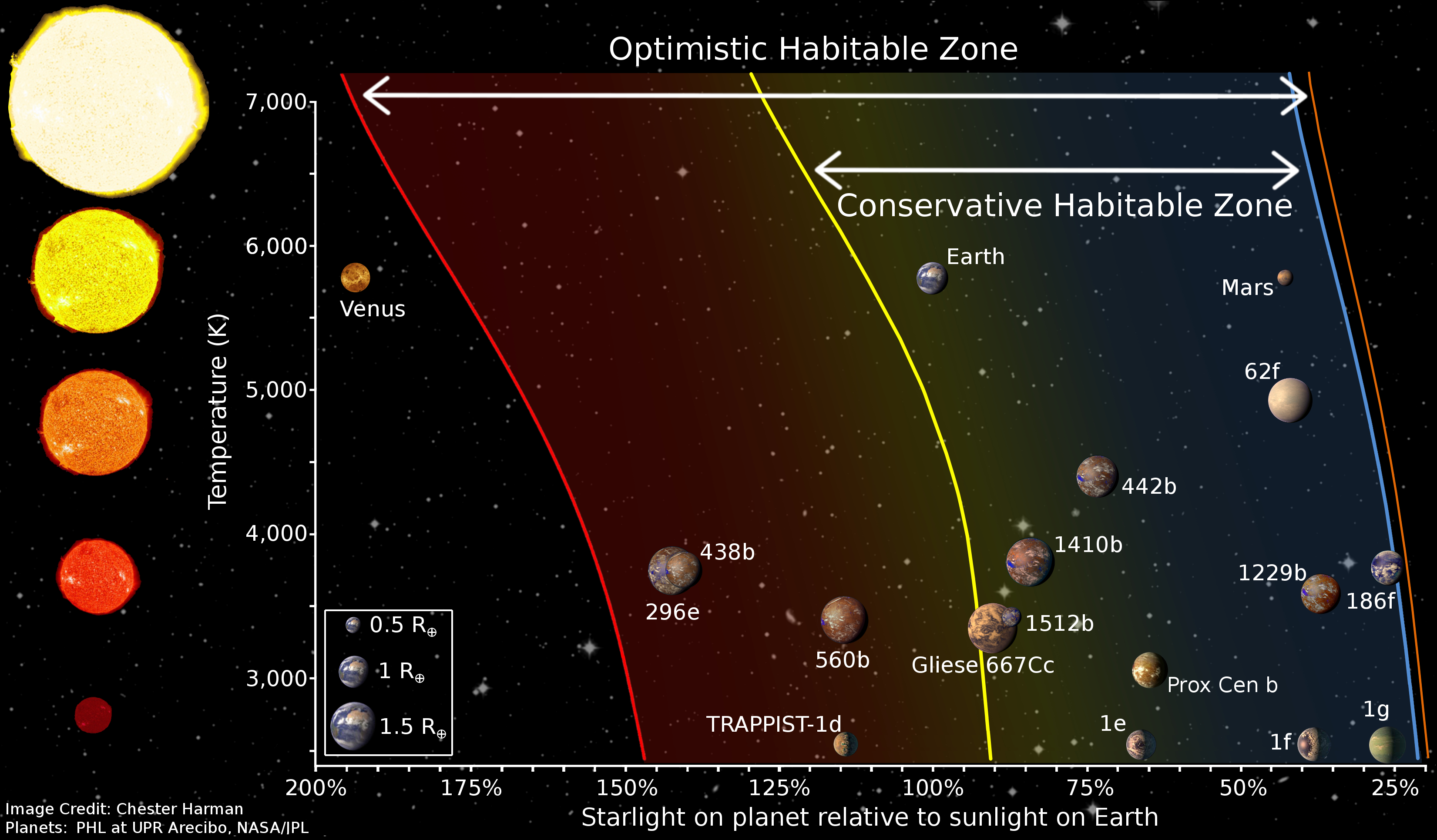
Today, we know the star formation rate in our galaxy and how metallicity influences planetary presence. The discovery of over 6,500 exoplanets has transformed our perspective on habitability. Many of these worlds linger within their stars’ "Goldilocks" zones, the right distance to allow liquid water — a crucial condition for life as we know it.
However, just because we find planets that seem suitable doesn’t guarantee life’s emergence. The scientific community has invested considerable effort into understanding abiogenesis, the process through which life arises from non-living matter. Current research hints that metabolism — the ability to harness energy from the environment — might have been a critical stepping stone for life.
Even so, we’re left grappling with key questions. Out of those myriad Earth-like planets, how many actually foster life? Of those instances, how many support life capable of evolving into the complex beings we recognize as intelligent? And, crucially, how many withstand existential threats that could extinguish their sparks of life?
We find ourselves limited to a single example on Earth. Our survival through the evolutionary process raises inherent uncertainties about whether we’re a common outcome or an exceptional anomaly in the vast cosmic experiment.
The next logical step has never been clearer: to increase our search for extraterrestrial life, we must expand beyond our own planet. There are three compelling avenues to pursue in this cosmic endeavor.
Three Main Avenues for Discovery
First, exploring our own Solar System offers immediate opportunities. Though intelligent life may be absent, ancient bodies like Mars and watery moons such as Europa provide tantalizing clues to past life. With current technology, missions could conduct sample returns and direct explorations within a human lifetime.
Next, the hunt for life extends to the realm of exoplanets. Remote assessment of their atmospheres could reveal biosignatures — the byproducts of biological processes that alter atmospheric compositions over time. Techniques like transit spectroscopy enable us to "read" these atmospheres by analyzing starlight filtered through them.
Finally, we can envision future technologies that extend our reach beyond the known planets, applying our burgeoning understanding to probe the furthest reaches of the universe. Only time will tell where our next significant breakthroughs will lead us in the search for life. The wonders of the cosmos remain largely unexplored, and the answers we seek could be just beyond our grasp.The Road Ahead: Tools and Techniques for Discovering Alien Life
The quest for extraterrestrial life is not just a hopeful endeavor; it's an urgent scientific mission. While current technologies have so far yielded silence amidst the great cosmic expanse, we're on the verge of a new era in astrobiology. The potential for significant discoveries relies heavily on our ability to refine our detection methods, and the stakes couldn't be higher.
As outlined, we possess multiple avenues for identifying signs of life beyond Earth—whether through the detection of specific molecules associated with biological processes or through direct imaging of exoplanets in habitable zones. For instance, the upcoming Habitable Worlds Observatory may very well allow us to discern details of distant worlds, from their geological features to atmospheric composition, even if only via minute pixel data.
However, the search for technosignatures—evidence of intelligent life—adds another layer of complexity and excitement. If we think about it, our technological footprint can be traced through a variety of signals. Everything from radio and television broadcasts to even the glow of urban skylines could serve as beacons to an observant alien civilization. This concept, rooted in our understanding of how intelligence might manifest technologically, could radically reshape how we define 'life' in the universe.
That said, it’s pivotal not to overestimate our current capabilities. While organizations like SETI strive to catch potential signals from the stars, the reality is that we've barely scratched the surface in our quest to understand the myriad forms life might take. We’re still navigating the shallow end of a vast cosmic ocean, and the lack of confirmed discoveries so far doesn't rule out life’s prevalence.
To truly assess life's abundance in the cosmos, we need sophisticated instruments: dedicated spacecraft to explore our own Solar System, a new generation of telescopes to probe the atmospheres of exoplanets, and advanced radio arrays poised to listen for faint but telling signals. The feasibility of these projects is within our grasp; they align with our current technological progress. Yet, without the necessary commitment to these tools, we risk remaining unaware of life beyond our blue planet.
Ultimately, finding another inhabited world would redefine our perspective on existence itself, rewarding our efforts to understand our place in the universe. If you're working in this space, the message is clear: investment in the right instruments and techniques isn't just beneficial; it’s essential for us to step beyond speculation and into the realm of knowledge. Only then can we hope to solve one of the most fundamental questions mankind has ever faced: Are we alone?