Technology
CERN's Pioneering Role in 21st Century Particle Physics
In the field of physics, progress hinges on the quantity and quality of experimental data, underscoring the vital importance of large-scale collaborations and innovative techniques to advance our understanding of fundamental particles.
The Imperative for New Frontiers in Particle Physics
Data is the lifeblood of physics; without it, theories remain fragile and speculative. The contrast between theoretical frameworks and real-world experimentation shapes our understanding of the cosmos. Currently, our bedrock of knowledge relies heavily on the Standard Model, which encapsulates phenomena such as quantum field theory for electromagnetic and nuclear interactions alongside general relativity for gravitation. However, while the Standard Model is backed by copious experimental evidence, it still leaves significant questions unanswered.
The unresolved enigmas within our current paradigms are profound. Key mysteries include the elusive nature of dark matter and dark energy, the observed asymmetries in matter and antimatter, and the details surrounding the electroweak phase transition. Despite the triumphs of the Large Hadron Collider (LHC) at CERN, which is approaching its operational limits, the hunger for knowledge compels physicists to seek out new avenues for exploration.
CERN's decision to update the European Strategy for Particle Physics, advocating for a new electron-positron collider, signifies a pivotal moment for the field. Dubbed the Future Circular Collider (FCC), this proposed facility isn't just a continuation of existing efforts; it's poised to redefine our quest for knowledge. Unlike many other proposed enhancements, which merely prolong current methodologies, the FCC aims to expand our discovery potential, providing vital insight into the foundational questions that remain.
Renewed Exploration Possibilities
This push for innovation stems from a recognition that cutting-edge experiments hold the key to breakthroughs. Although the LHC has achieved invaluable discoveries, such as the Higgs boson, it has not yielded the unexpected discoveries that could indicate new physics. Enthusiasts and skeptics alike may question the necessity of further colliders based on the LHC's findings—after all, nothing extraordinary has emerged from the data that implies a departure from the Standard Model.
What many in the scientific community fail to appreciate, however, is that the absence of exotic signals should not discourage future endeavors. A deeper inspection of historical achievements in particle physics reveals a pattern: groundbreaking insights often emerge not only from the initial discoveries of particles themselves but also from the precision measurements taken subsequently. For instance, the Large Electron-Positron Collider (LEP), which operated before the LHC, was instrumental in uncovering intricate details about the W and Z bosons, solidifying our understanding of these fundamental particles.
The LEP’s clean collision environment facilitated the production of vast numbers of particles, allowing for critical measurements that provided insights into the fabric of the universe. Each electron-positron interaction produced a distinct array of decay signatures, which were meticulously analyzed to glean new information about particle behaviors. Such an approach highlights the significance of precision over mere discovery—something the LHC, with its proton-proton collisions, is inherently limited in achieving.
Why the Future Circular Collider Matters
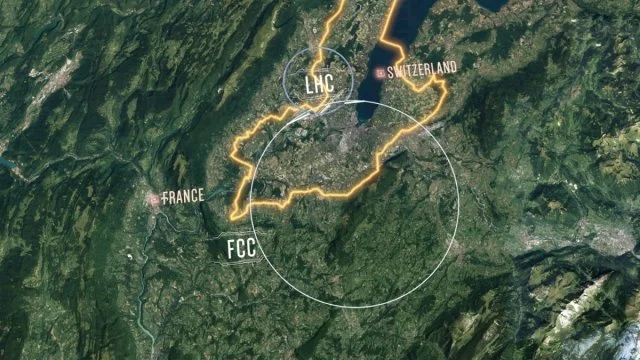
CERN's FCC is not just another collider; it's a concerted investment in the future of understanding the universe at a fundamental level. The proposed 91-km circumference collider is envisioned to yield unprecedented data quality and quantity, elevating the potential for groundbreaking discoveries. With its focus on electron-positron collisions, the FCC would redefine our capability to explore the physics that resides just beyond the current experimental reach.
Concerns around potential stagnation in discovery should be vigorously challenged. The prevailing notion that colliding particles at ever-greater energies must yield novel results is overly simplistic. The truth is, more precise experiments can illuminate nuances that have largely remained hidden from view in prior analyses. The potential returns on investment—both in scientific knowledge and technological advancement—far outweigh the criticisms that question whether the next collider could unveil something radically new.
As colleagues in this dynamic field, we must advocate for focused efforts like the FCC. Embracing this opportunity won’t only refine our existing theories; it’ll empower us to confront the universe's most profound mysteries head-on. The motivation to proceed lays not only in a thirst for discovery but also in our obligation to future generations of scientists who will undoubtedly build upon the foundations established today.The Path Ahead for Particle Physics
Looking into the future of particle physics, it’s evident we stand on the brink of monumental developments. The Future Circular Collider (FCC) could redefine our understanding of the universe, offering unprecedented opportunities for research. If we successfully launch the FCC by the 2040s, we won't just replicate what we’ve done at the Large Hadron Collider (LHC); we'll expand our capabilities dramatically. This shift is more than just an upgrade; it propels us into a realm where we can produce millions of Higgs bosons along with larger quantities of W and Z bosons and top quarks—an invaluable treasure trove for physicists.
CERN’s ambition outlines a facility 91 kilometers in circumference, dwarfing the LHC's existing structure. Although these plans hinge on a complex mix of political will, funding, and international collaboration, the prospect is tantalizing. We're not merely looking for particles; we're aiming to probe the very fabric of reality. The scientific questions we have yet to answer—concerning the nature of dark matter, Higgs boson interactions, and CP violation, to name a few—could result in breakthroughs that reshape our fundamental understanding of physics.
That said, there are significant hurdles. The research landscape is shifting, particularly in the United States, which appears to be retreating from ambitious scientific ventures—abandoning its own energy frontier with the shutdown of Fermilab’s TeVatron and losing ground in other fields of fundamental inquiry. This diminishing support for high-energy physics places pressure on international partnerships like CERN to fill the void and push these frontiers forward.
Here's the thing: science is a global endeavor, transcending borders and political agendas. While one nation may step back, others can rise to push the boundaries of human knowledge. The upcoming decade will prove crucial; as research at facilities like CERN resumes, we must remain committed to investing in these essential explorations. Failing to do so guarantees stagnation, but genuine inquiries into the unknown promise illuminating revelations.
What does all this mean for you? If you're engaged in any facet of physics, engineering, or even policy-making, this is a call to action. Support from varied sectors, whether governmental, private, or academic, is vital for these ambitious projects. Collaborations can yield extraordinary insights, reminding us that the pursuit of knowledge is worth every effort—after all, the universe holds its secrets tightly, but it’s always ready to reveal them if we ask the right questions. The stakes are high, but so are the rewards. Let's keep pushing forward; the payoff could redefine our understanding of existence itself.