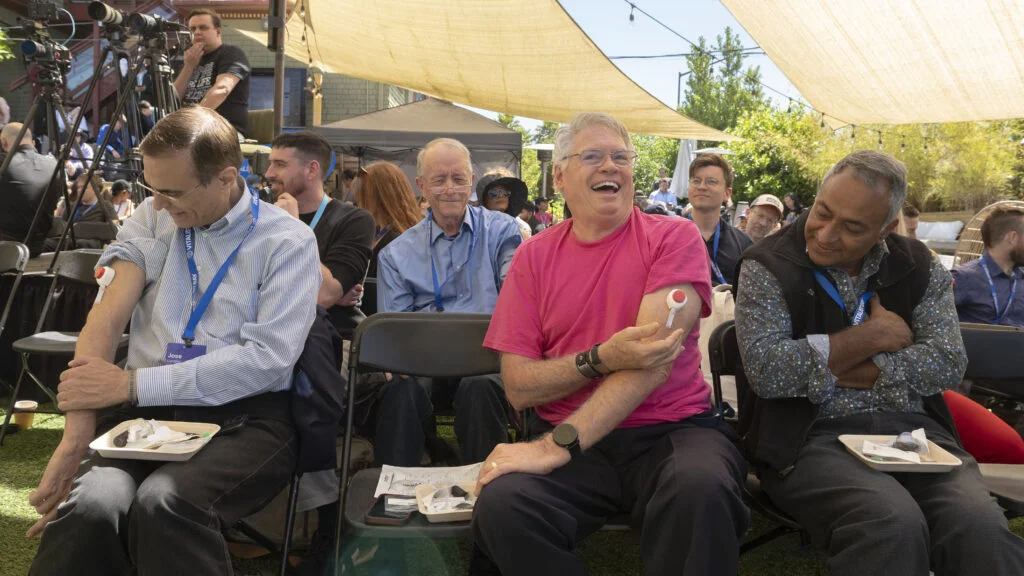
Longevity has transcended its niche origins, rapidly evolving into a significant industrial force. The recent Vitalist Bay conference in Berkeley, attended by around 100 enthusiasts and experts, exemplifies this transition. It's a convergence of ambitious founders, forward-thinking investors, and biohackers eager to exploit scientific advancements in their quest to combat aging.
The New Frontier of Longevity
The conference, held at the innovative Lighthaven venue, featured a diverse array of activities: from hormone testing with Rythm Health's Tasso devices to discussions on cutting-edge topics like cryopreservation and menopause delay. Robby Wade, the CEO of Rythm Health, kickstarted the event by showcasing his company’s approach to at-home testing, which made a splash with its practical demonstration. The attendees, equipped with stick-on devices and encouraged to take charge of their health, reflect a burgeoning culture that's no longer waiting for scientific breakthroughs but actively participating in them. Many of them are ready to embrace technology and wellness practices previously reserved for high-end clinics, signaling a democratization of health management.
What Drives This Movement?
Conversations at the event explored existential themes, as highlighted by Adam Gries, co-founder of the Vitalist movement, who provocatively asked whether we would “give up and die like every other generation.” This sentiment resonates with many in tech and health circles who believe surrendering to aging is no longer an acceptable option. Gries's remark isn't just rhetorical; it encapsulates a growing belief that modern science can— and should— defy the limitations of nature. As Christine Peterson from the Foresight Institute pointed out, the longevity sector is shifting from an idealistic movement to a legitimate industry. This is leading to a proliferation of products and services aiming to prolong life, thus warranting scrutiny over ethics and accessibility. The question arises: how far-reaching is the desire to combat aging? What sacrifices are we prepared to make in this pursuit?
Emerging Ethical Concerns
While the atmosphere at Vitalist Bay brimmed with optimism, it doesn't obscure the complex ethical dilemmas at play. The instinct here is to herald this enthusiasm as revolutionary, but that could miss key issues, such as who will benefit from these advancements. As the field matures, questions surrounding equitable access to longevity treatments and the implications of extending life are increasingly pressing. You may be wondering how this affects you or your loved ones. As these treatments become commercially available, will they remain accessible only to the wealthy, creating a new divide? The discourse around these advancements needs to shift from mere fascination to a critical examination of the consequences of heavily investing in life extension. After all, who defines the worth of a prolonged life? (and this is the part most people overlook)
Societal Implications and Future Outlook
This growing movement isn't just about individuals seeking longer lives; it poses significant questions for society as a whole. If you’re working in this space, you’re likely aware that extending life could reshape demographics, labor markets, and healthcare systems. When people live longer, healthier lives, the implications ripple through various sectors, from employment to pensions. Moreover, there are cultural shifts to consider. What values might be redefined as society becomes increasingly preoccupied with longevity? Conversations that once centered on living meaningfully might evolve into debates about the merits of life extension technologies.
The gathering at Vitalist Bay, complete with workshops on everything from Krav Maga to sound baths, signals a significant cultural shift. It's clear that a segment of society is now actively wrestling with the idea of death and is willing to invest both time and resources to prolong life. This evolution towards mainstream acceptance of longevity practices introduces not just new products and technologies but also profound questions about our values as we stare into the abyss of mortality. The vitality of this movement indicates we should remain engaged, not just as bystanders, but as articulators of a future where life is extended, intentionally and ethically. The dialogue around this topic needs to deepen, and critical thinkers must step up to examine whether we should strive for longer lives, or a richer quality of life instead.