Technology
The Enduring Mystery of Gravity: 340 Years After Newton's Insights
More than three centuries have passed since Newton's groundbreaking work, yet the fundamental nature of gravity remains unsolved, perplexing scientists and sparking ongoing exploration in the field of physics.
The Enigma of Gravity: A Persistent Puzzle
It's astonishing to think that more than three centuries have passed since Sir Isaac Newton first articulated his laws of motion and universal gravitation. Despite the groundbreaking nature of his work, the quest to fully understand gravity remains one of science's most persistent challenges. As Robert Lea points out, this age-old mystery continues to elude even the brightest minds in physics, leaving us with a profound embarrassment that highlights our limitations in deciphering the fundamental forces that govern the universe.
Newton's insights established a framework that has served scientists well, framing gravity as a tangible force. However, you don't need a Ph.D. in astrophysics to recognize that we've made little progress in unraveling the deeper questions surrounding this force. Key scientific quests, such as reconciling Newton's insights with Einstein’s theory of general relativity, or explaining why gravity is so weak compared to other fundamental forces, are still underway. This gap suggests a fundamental misunderstanding of gravity that seriously impacts our grasp of the cosmos.
What does this mean for you? If you’re immersed in the field of physics or simply curious about the universe, the notion that we are still grappling with a basic force can be both daunting and thought-provoking. It raises questions about our understanding of nature itself and suggests that there's so much more to learn. The implications extend into technology as well—how do we develop instruments for space exploration when we don't fully grasp the forces at play?
As we reflect on Newton's legacy, the critical takeaway is stark: humanity's pursuit of knowledge is far from complete. The ongoing struggle to decipher gravity reminds us that the universe is full of mysteries that await exploration, underscoring a broader theme in science—progress often comes through acknowledging how much remains unresolved.
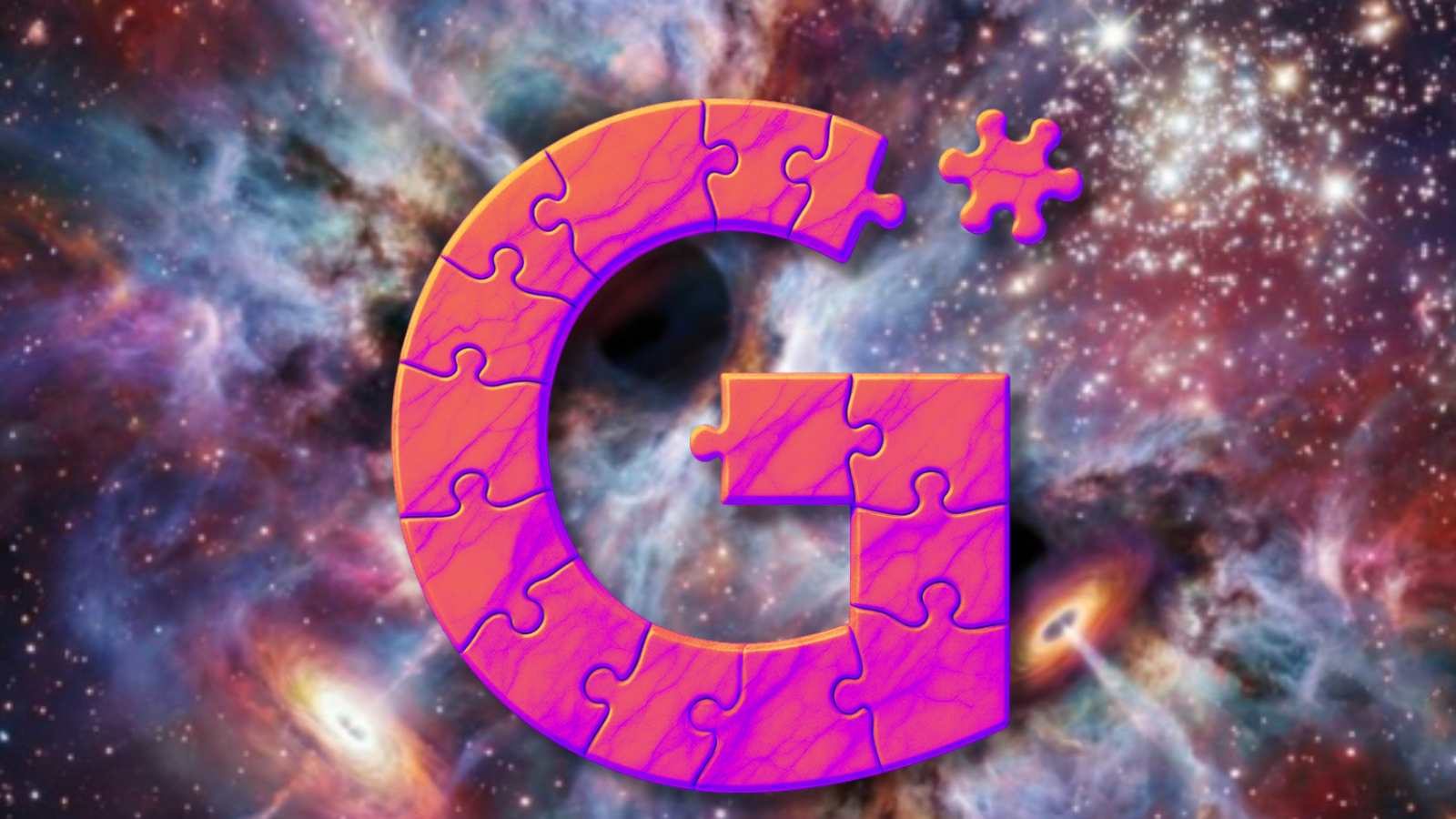
*Image credit: Robert Lea (created with Canva)*The Struggles of Understanding Gravity
While we often take gravity for granted in our daily lives, it's fascinating—and frankly frustrating—that scientists still grapple with its mysteries. Over 340 years have passed since Isaac Newton published his groundbreaking work on gravitational theory, yet fundamental questions persist about what gravity actually is. Indeed, many in the scientific community consider this oversight an embarrassing conundrum.
Gravity's nuances are not merely theoretical; they have profound implications for various fields, from astrophysics to particle physics. When you start questioning the core of gravity itself, it becomes clear this lack of understanding stymies advancements in our overall comprehension of the universe. Physicists have made notable strides—like the development of Einstein's General Relativity—but these advancements have not fully resolved the underlying mechanics of gravity.
This leads us to the perplexing idea that our understanding remains incomplete despite centuries of inquiry and experimentation. If you’re in the research arena, it's not merely an academic point; tackling gravity’s anomalies could pave the way for breakthroughs in technology and materials science. Yet, with our current models, there are gaps that continue to hinder our capabilities in harnessing gravity effectively.
What’s intriguing here is not just the acknowledgment of a problem—it's also the recognition that gravity might not just be a force, but part of a larger fabric of spacetime influenced by massive objects. This perspective challenges traditional views and could possibly revolutionize how we approach numerous scientific quandaries.
And yet, the question remains: if we can’t fully encapsulate gravity in our equations, what else are we missing in the vast landscape of physical laws? The implications of these gaps aren’t just academic—they could fundamentally alter our grasp of the universe's workings. Indeed, understanding gravity better might be what ultimately allows us to unlock the door to new technologies and insights.The Enduring Mystery of Big G
As we reflect on the gravitational constant’s impressive 340-year history, it's clear that its role is both foundational and perplexing. Known endearingly as "Big G," this figure has been a cornerstone of physics since Isaac Newton introduced it in 1687. Despite its long-standing significance, it’s striking that Big G remains the least accurately measured fundamental constant of nature.
This continued ambiguity isn’t just an academic curiosity but presents a real challenge for physicists. Current estimates of Big G vary significantly, which raises concerns about the robustness of our understanding of gravity itself. Stephan Schlamminger, a physicist from the National Institute of Standards and Technology (NIST), has dedicated the last decade to investigating this very enigma. His work culminated in a dramatic moment that, while not the Oscars, certainly had its own suspense: the unveiling of a hidden value for Big G, locked away in an envelope until the team's findings could stand independently.
Schlamminger describes this paradox aptly: “Big G is a fundamental constant that sits in a peculiar position. It’s the oldest known constant, yet it is the least precisely known.” This contradiction represents more than a research headache; it signifies a profound gap in our understanding.
Assessing the Latest Findings
During his recent experiments, Schlamminger and his team sought to mitigate biases inherent in measurement techniques. By employing an ingenious workaround—an unknown bias added to their weights, revealed only after analyses were complete—they hoped to secure a more reliable value for Big G. When the envelope was finally opened, the team found a striking result: their measured value for Big G was slightly lower than the current consensus, suggesting that Earth's mass might be about 360 quadrillion tons heavier than previously thought.
Though this new finding is small in numerical terms, it cannot be dismissed. If confirmed, it will necessitate a re-evaluation of gravitational models and could potentially uncover unknown aspects of physics. However, despite this progress, Schlamminger is quick to remind us that “the mystery is not solved.” The inconsistencies between various measurements continue to linger, suggesting deeper unresolved questions in our understanding of gravitation.
So where do we go from here? Schlamminger feels the need to step back from the pursuit of fundamental constants for a while, opting instead to focus on precision measurements in electrical systems. This pivot underscores a broader reality in scientific inquiry: sometimes you have to shift perspective to untangle the most stubborn puzzles.
Ultimately, the journey to decode gravity is far from over. Until a cohesive explanation emerges, the gravitational constant will remain an intriguing enigma, challenging researchers and fueling curiosity across generations.