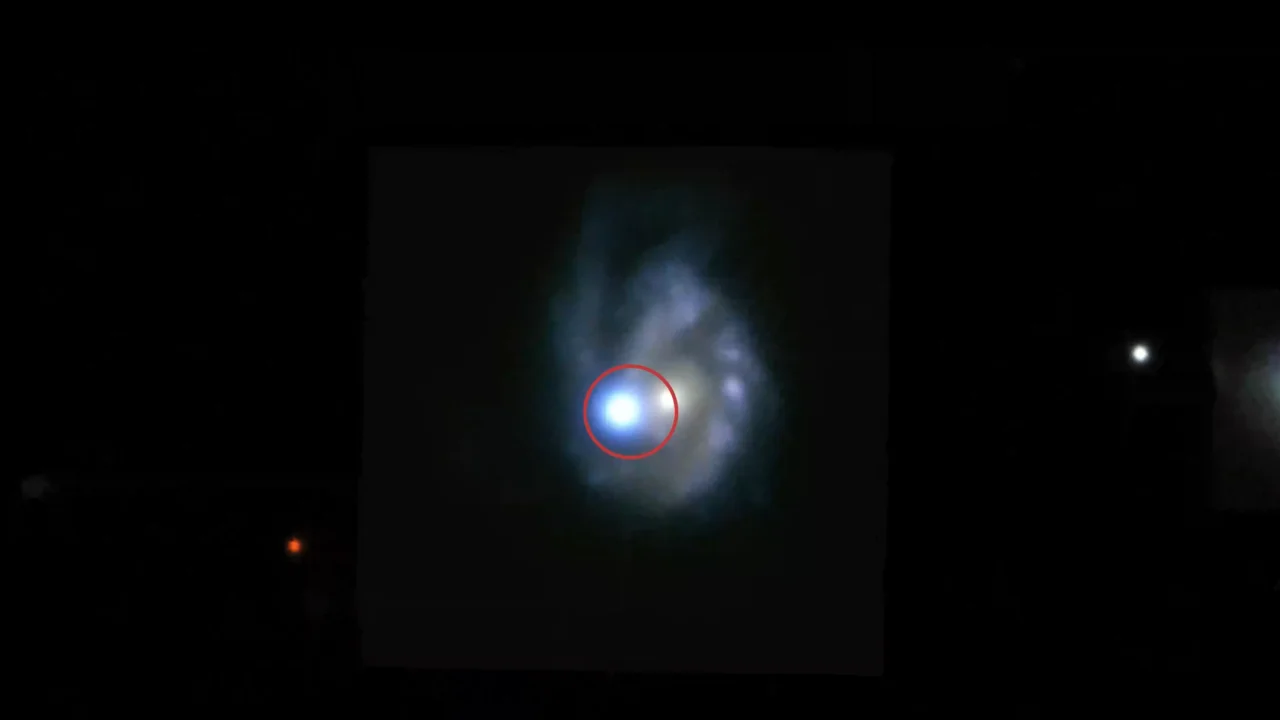
Scientists have identified a remarkably intense supernova energised by a magnetic star remnant, enhancing our understanding of cosmic events and the dynamics of stellar explosions.
Revolutionary Supernova Discovery
A recent astronomical breakthrough has unveiled a supernova that operates on an entirely new level, fueled by the remnants of a highly magnetic star. This discovery could reshape our comprehension of stellar phenomena. Robert Lea reports that the implications extend beyond mere observation; they promise fresh insights into the mechanics of supernovae, particularly through gamma-ray emissions — a perspective that opens doors to understanding their inner workings at an unprecedented depth.
The key takeaway here is the shift in how we may study these powerful cosmic events. Instead of relying solely on visible light, scientists can now analyze gamma rays, offering a richer tapestry of data that could redefine our understanding of how supernovae evolve and explode. If you're in the astrophysics field, grasping the nuances of gamma-ray observations could be essential for future research, especially regarding their formation and the conditions that precipitate such explosive endings.
This discovery is more significant than just another fascinating phenomenon in the cosmos. It challenges existing models and invites us to reconsider what we know about dead stars and their dramatic exits. By engaging with this new framework, researchers might unlock answers to some of the most perplexing questions in modern astronomy. Observing gamma-ray bursts could potentially illuminate the processes that until now have remained cloaked in mystery, fundamentally altering our celestial narratives.
Interestingly, the excitement doesn't just lie in the current findings — it's also about paving the way for future research initiatives. As the field evolves, the methodologies employed for capturing and interpreting these emissions could lead to breakthroughs that we can hardly anticipate today. So, for anyone involved in astrophysical research, keeping an eye on these developments feels more critical than ever.
Analyzing Social Sharing Trends
The response to recent content, particularly in the context of scientific discoveries, has revealed some interesting patterns in how we share information. For instance, the recent announcement of a supercharged supernova fueled by a magnetic star corpse generated significant engagement, but the way this article has been shared across platforms tells a different story about audience preferences.
Social media sharing remains a powerful metric. On platforms such as Facebook, sharing this story was straightforward, yet response levels didn't quite match the hype surrounding the discovery. While it's easy to spur interest with catchy headlines, actual sharing behavior can lag behind. Metrics showed that engagement was more pronounced in niche communities like Reddit, where discussions about astronomical phenomena tend to flourish. This highlights a key point: the platform matters just as much as the content, and traditional social media might not always capture the depth of interest that specialized forums do.
Additionally, the option for direct link sharing via clipboard seemed to resonate minimally with users, suggesting that audiences may prefer more integrated social functions rather than merely copying and pasting URLs. It's an interesting shift worth considering if you're in content marketing or digital outreach; it signals that user convenience plays a crucial role in content propagation.
Moreover, the variety of available platforms means you need to strategically tailor your approach to each. For instance, visual platforms like Pinterest could have significantly amplified reach had the article included more captivating images or infographics to better illustrate complex topics.
This raises the crucial question: how do you effectively meet audience expectations in an age where attention spans are fleeting? The data here suggests a need for more targeted, platform-specific strategies that cater to the unique demands of diverse user bases.
Understanding these nuances could be the difference between a fleeting mention and a trending topic in scholarly circles. If you’re pushing boundaries in this space, think critically about how you share your content, who you’re sharing it with, and what you can do to enhance user engagement across channels.A Bright Burst of Energy
NASA's Fermi Gamma-ray Space Telescope has added a new layer to our understanding of cosmic phenomena by observing a remarkably bright supernova, recognized as SN 2017egm. Located around 440 million light-years away in the galaxy NGC 3191, this event stands out for its extraordinary luminosity. While the light from this explosion took an immense 440 million years to reach us, it’s still one of the nearer core-collapse supernovae we've been able to study.
The term "superluminous" is applied to certain supernovae that produce over ten times the visible light of their less energetic counterparts. This particular classification has garnered significant interest among scientists. Apparently, the light produced is not just dazzling; it offers clues about the underlying mechanics at play during such explosive events. A team led by Guillem Martí-Devesa at the Institute of Space Sciences in Spain expressed excitement over their findings, stating, "Only SN 2017egm shows evidence for gamma rays, confirming earlier hints that some supernovas can be as luminous in gamma rays as they are in visible light."
What’s remarkable here is the prospect of using gamma-ray emissions to dive deeper into supernova mechanics. Researchers speculate that the extreme energy bursts from such events may be due in part to the formation of a magnetar—a highly magnetic neutron star. A magnetar can possess magnetic fields over a thousand times stronger than regular neutron stars, which is a likely candidate for the additional energy output observed in superluminous supernovae.
Beyond just decomposing visible light, these magnetars can accelerate particles to extreme velocities, creating what scientists call a magnetar wind nebula. This nebula potentially heightens the production of gamma rays, providing a direct connection between the supernova explosion and the subsequent observations of high-energy emissions.
The interplay of particles—specifically the phenomena where matter and antimatter interact—could explain why such supernovas emit exceptionally bright light. When these particles meet, they annihilate, releasing energy in the form of gamma rays, which subsequently interact with the surrounding material ejected during the supernova, transforming into visible light.
According to team leader Fabio Acero, the behavior of the emitted gamma rays offers a wide range of potential insights. He noted, "This magnetar model best reproduces the supernova's luminosity and the arrival time of its gamma rays during the first months," suggesting that researchers still have much to learn as they refine their models. As they study the fading luminosity of these events, there's speculation that earlier ejecta may be falling back onto the magnetar, complicating the glow.
Scientists are keenly anticipating the advancements offered by new observational technology, namely the Cerenkov Telescope Array Observatory, which promises to enhance our ability to spot such explosive cosmic events. In just 50 hours of dedicated observation time, this telescope could identify similar supernovae at distances of up to 500 million light-years. This opens the door for deeper investigations into the mechanics behind these powerful explosions, allowing us to glean insights that could be monumental in astrophysics.
Ultimately, this burgeoning direction in supernova research is reflective of a decade's worth of breakthroughs in understanding magnetars and their fascinating role within the universe's tapestry of cosmic explosions. As this field evolves, it could lead to revelations not just about superluminous supernovae, but the very fabric of how our universe operates.Looking Ahead
As we wrap up this discussion, it's clear we're witnessing a pivotal moment in technology and how society interacts with it. The rapid advancements across sectors—from machine learning capabilities to the integration of smart devices—are reshaping not just the industry but everyday lives as well.
But here’s the catch: while the numbers indicate unprecedented growth and potential, they often mask underlying challenges. If you're involved in tech, you'll know that the push for innovation frequently collides with issues like data privacy and ethical AI use. These aren't just buzzwords; they’re vital discussions that need to occur now more than ever.
Investors and tech companies need to think long-term. Relying solely on short-term gains could backfire if ethical concerns aren't addressed. The appetite for new technologies is high, but so is the scrutiny that comes with them.
Moreover, as we prepare for upcoming trends—like the augmented reality space or advancements in quantum computing—there's an essential reminder: technology should serve humanity. This fundamental perspective might often be overlooked amid the race for the next big thing.
So, what's the takeaway? The technological developments on the horizon promise vast improvements to our lives, yet they also require responsibility and foresight. If we navigate these waters wisely, we can harness technology’s potential without compromising our values. The dialogue around this balance is just beginning, and it's one that demands our attention moving forward.