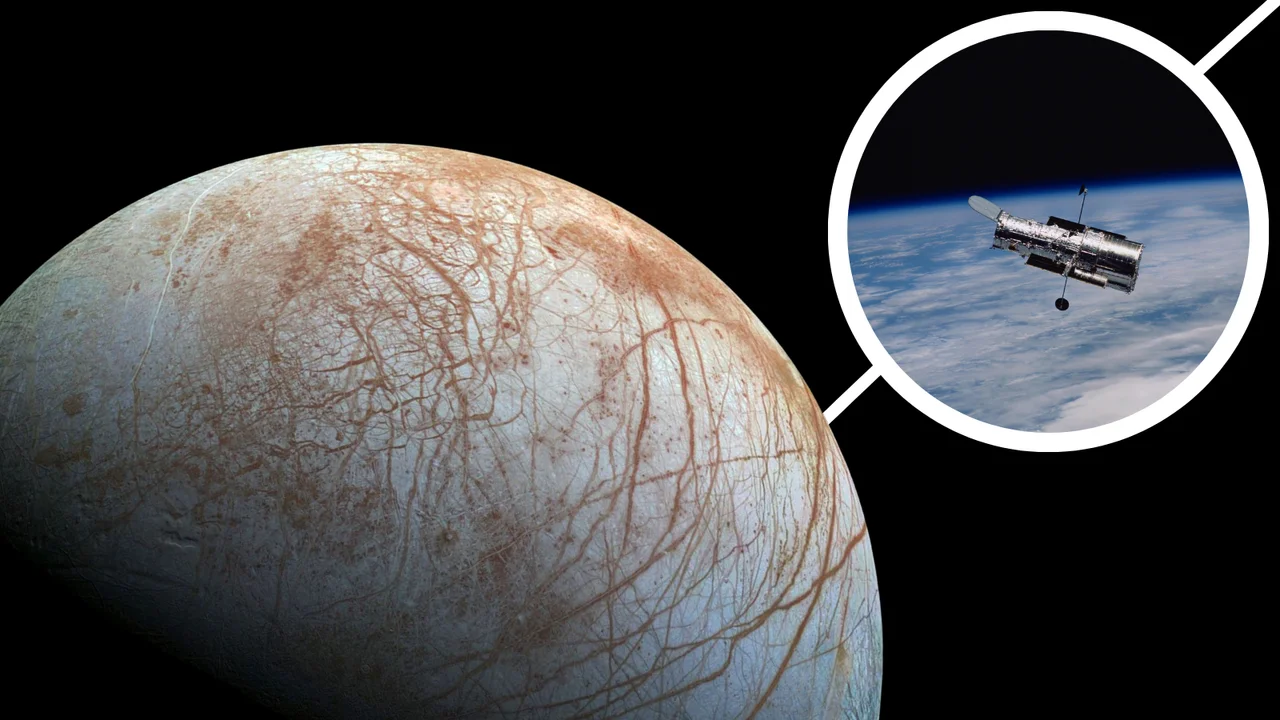
Initial evidence suggesting that Europa was ejecting water vapor has become less conclusive, leading scientists to reevaluate their findings.
Shifting Perspectives on Europa's Water Plumes
Recent scrutiny of Jupiter's moon Europa has produced intriguing yet unsettled findings. Initial excitement over the discovery of potential water vapor plumes spewing from its ice-covered surface has waned, as new evidence raises doubts about their existence. As Robert Lea reported on May 22, 2026, scientists are re-evaluating what they had long accepted about this icy moon, suggesting that the earlier indications of these water jets may not be as compelling as previously thought.
What calls into question our understanding of Europa isn’t just a simple case of misinterpretation; it’s a reminder of the complexity involved in planetary science. The past assertions about water vapor plumes originated from observations captured by the Hubble Space Telescope, which seemed to reveal bursts of water vapor, an enticing clue in the search for extraterrestrial life. However, recent assessments highlight that the evidence supporting these claims is significantly weaker than originally believed. This is more significant than it looks because it challenges our assumptions about one of the most promising candidates for hosting life beyond Earth.
One striking quote encapsulates the cautious atmosphere among researchers: “The evidence for water vapor plumes on Europa isn’t as strong as we first understood it.” This statement underscores the need for a more nuanced reading of data as we dive deeper into the cosmos. If you’re engaged in this field, this reassessment serves as a clear signal: always approach intriguing findings with a healthy dose of skepticism.
As we continue to explore the potential of Europa, the scientific community now faces a pivotal moment. Given that Europa is one of the prime targets for upcoming missions focused on astrobiology, the implications of this uncertainty ripple through planning and funding decisions. The deeper narrative here is that confidence in our interpretations of complex phenomena should evolve alongside technological advancements and more refined exploratory methods. In this instance, what was once a captivating narrative about liquid water and the possibility of life now evolves into a platform for cautious reassessment and rigorous analysis.
If you’re working in astrobiology or planetary science, these developments should prompt a critical examination of how we communicate findings—not just among scientists, but to the public as well. The excitement of discovery should be tempered with responsibility, especially as we confront the mysteries of distant worlds capable of rewriting our understanding of life itself.
Sharing Insights and Interactions
The opportunity for readers to engage with the article goes beyond mere consumption. Buttons for sharing on various platforms including Facebook, Twitter, and Reddit provide an easy way for insights to permeate social media. It’s a strategic move; by easing the sharing process, the article gains wider visibility and promotes discussion. Sharing content isn’t just a convenience—it's an integral part of modern media consumption. Each share amplifies the reach and can ignite conversations surrounding the findings.
The interactive features aren't just for looks either. For instance, the 'Copy Link' button leverages the clipboard functionality, allowing users to share the article effortlessly. This capability is targeted at a savvy audience that appreciates instant access to relevant news. If you're navigating this digital landscape, you know how crucial it is to allow your audience to spread the word. Each interaction counts toward boosting engagement, so thoughtful design in this area is more significant than it may appear at first glance.
Commentary and Community Engagement
The comments section holds its own weight in maintaining the article's dynamic interaction. Though it currently sits at zero comments, this does not diminish its potential for community building. On digital platforms, a vibrant comments section encourages readers to express their opinions, ask questions, and share insights. This engagement enriches the content, making it a living document rather than static text.
As the number of comments begins to grow, so too does the article’s credibility and relevance. For those in content creation or tech journalism, fostering a community around your articles is key. It’s about establishing a dialogue, not just broadcasting information. Comments can often transform insights from the article into broader discussions that resonate with the audience.
Strategic Social Sharing Options
The strategic placement of social sharing options invites readers to disseminate content across a multitude of platforms. These are designed not just for visibility but for encouraging organic conversations around the topic. Each button, visually distinct in its own right, underscores the push for engagement through shares and discussions.
As tools become more intuitive, users expect a frictionless experience, something that this article capitalizes on with a straightforward interface. The share options, displayed prominently, suggest a proactive approach in reaching out to an audience that thrives on connectivity. This effort is crucial because, in an age of information overload, facilitating easy sharing can significantly improve an article’s lifecycle and impact. Readers are more likely to share something that is easily accessible and visually appealing.
And yet, the presence of well-integrated social links often goes unnoticed. Their potential benefits are vast, making them indispensable for effectively driving traffic and interest. If you’re involved in content strategy, think deeply about how your layout enhances or hinders user interaction, because that can make all the difference in today’s saturated information landscape.
Questioning the Plumes of Europa
The ongoing reassessment of the water vapor plumes on Europa emerges as a significant narrative in our quest to understand life beyond Earth. For years, these plumes were slated as evidence of potential habitability on the icy moon. However, the recent findings from a team led by Kurt Retherford signal a dramatic shift in perspective. After studying 14 years’ worth of Hubble Space Telescope data, they've concluded that the earlier evidence for these plumes lacks sufficient credibility. In fact, their confidence level has dropped from an impressive 99.9% to under 90%. That's a crucial reduction when it comes to making bold claims about extraterrestrial life.
Many scientists viewed Europa as a prominent player in the cosmic search for life due to its suspected global subsurface ocean, which may contain the vital ingredients for life—water and complex organic compounds. Initially detected using Hubble's Space Telescope Imaging Spectrograph, the supposed emissions from Europa were indicative of these water plumes erupting from the moon's icy surface. Yet, Retherford's team, which was part of the original discovery, is reevaluating those prospects after recognizing the possibility that initial data misinterpretations could have stemmed from noise.
This pivot raises essential questions about how we interpret astronomical data and the validity of our conclusions. Retherford emphasized the challenges they faced with the Hubble observations, particularly in positioning Europa accurately within its context. Even minor misalignments in imaging could result in significant misinterpretations.
The implications of this research extend far beyond scientific curiosity; they tap into humanity's deeper longing to know our place in the universe. While the evidence for these plumes is now in doubt, it doesn't close the door on the potential for life in other forms or locations. Interestingly, similar plumes have been observed on Saturn's moon Enceladus, and volcanic activity on Jupiter’s moon Io has also caught researchers' attention.
Looking ahead, the forthcoming NASA Europa Clipper mission, set to launch in 2030, could bring clarity. With advanced instruments focused on uncovering the mysteries of Europa's ocean and surface, we might finally ascertain the truth behind these elusive plumes. Until then, this reexamination underscores the importance of skepticism in science—a reminder that even the most captivating claims can unravel under the scrutiny of time and technology. If you're tracking developments in astrobiology, this reassessment could shape future discussions and expectations about the possibilities of life beyond our planet.