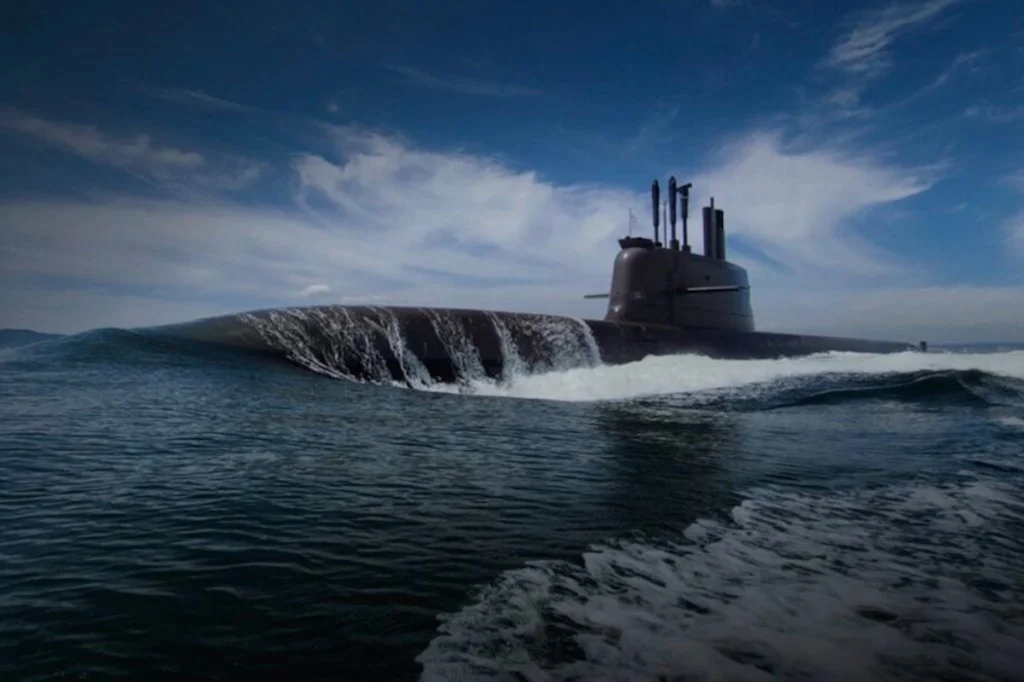
South Korea’s recent announcement to develop nuclear-powered submarines marks a significant shift in regional defense strategy, potentially altering its status in the geopolitical landscape. This initiative, primarily driven by concerns over North Korea's expanding military capabilities, aims to bolster South Korea's undersea warfare capabilities and achieve a greater degree of strategic autonomy. However, this ambitious project, known as the “Jangbogo-N Project (KSS-N)," comes with substantial financial, technological, and proliferation risks that merit close scrutiny.
Strategic Transformation with Jangbogo-N
The KSS-N program aims to design and construct a fleet of nuclear-powered attack submarines (SSNs) domestically by the mid-2030s. This development leverages South Korea's robust civilian nuclear technology and advanced shipbuilding industries. Notably, the submarines will be powered by low-enriched uranium, ensuring compliance with international non-proliferation norms while enabling extended operational cycles.
The political significance is clear: this project enables South Korea to transition from a U.S. ally dependent on external security guarantees to an assertive maritime power actively shaping its defense posture. South Korean President Lee Jae-myung and Defense Minister Ahn Gyu-back have underscored the strategic necessity of this move, emphasizing its role in enhancing national defense and regional stability. Following the announcement, shares of major shipbuilders like Hanwha Ocean and HD Hyundai Heavy Industries saw a notable increase, reflecting market optimism about this initiative.
Countering North Korean Threats
South Korea's nuclear submarines are envisioned as a key countermeasure against North Korea's burgeoning nuclear submarine program and ballistic missile capabilities. According to analysts, including James Holmes of The Korea Society, these submarines will facilitate a continual maritime presence, potentially deploying in flotillas to ensure one vessel is always at sea. This strategy is designed to provide robust monitoring of North Korean missile activities and counter any maritime threats from Pyongyang.
North Korea's dual-track approach to developing nuclear ballistic capabilities underscores the urgency of South Korea's plans. This includes the deployment of conventionally powered, nuclear-armed submarines, such as the recently showcased Hero Kim Kun Ok, which, despite technical flaws, reflects North Korea's intent to enhance its undersea deterrence. Meanwhile, advancements in North Korea's capabilities appear to be supported by dubious alliances, notably with Russia, which raises questions regarding the proliferation of sensitive technologies.
Financial and Technical Challenges
While South Korea's ambitions are clear, the KS-N initiative faces numerous financial and regulatory hurdles. The intricacies of finalizing nuclear fuel agreements and establishing regulatory safeguards pose significant challenges. Moreover, the long-term financial burden of developing and maintaining nuclear submarines cannot be understated. A single Virginia-class SSN, for instance, carries a price tag of around $5 billion—substantially higher than the $829 million cost of a KSS-III conventional submarine.
Critics raise valid points regarding whether the KSS-N program could divert investment away from more immediately viable solutions, like advanced air-independent propulsion (AIP) conventional submarines. The reality is that conventional submarines are often easier and cheaper to operate, potentially enabling a more extensive and versatile fleet in the shorter term.
Proliferation Risks and International Implications
The pursuit of indigenous nuclear submarine technology introduces serious proliferation concerns. Experts caution that South Korea's expanded nuclear capabilities, while framed as defensive, could lay the groundwork for a clandestine nuclear weapons program. Past incidents, where South Korea engaged in undeclared uranium enrichment, highlight the potential for missteps that could violate international agreements and escalate tensions in the region.
The implications of this project reach beyond the Korean Peninsula. As the United States backs South Korea’s ambitions, regional dynamics may significantly shift. Cooperation with the U.S. on military technologies could forge an interlinked defense infrastructure that complicates future geopolitical maneuvers, possibly deterring North Korean aggression but simultaneously raising the stakes in the face of escalation.
Technological Race Against Detection Advancements
Further complicating South Korea's undersea ambitions is the rapidly evolving landscape of maritime detection technologies. Some experts predict that advancements in non-acoustic sensing could render submarines less effective by the 2050s. This suggests a strategic timeline that necessitates agility in program development and operational tactics to maintain the effectiveness of submarine capabilities.
As such, South Korea's KSS-N project must not only focus on submarine construction and operation but also integrate a comprehensive approach to countering emerging detection technologies to ensure strategic relevance over time.
If you’re working in defense technology or strategic analysis, the Jangbogo-N Project represents a critical juncture not only for South Korea but for the broader Asia-Pacific security environment. It highlights the balancing act between deterrence through advanced technology and the risks of escalating nuclear capabilities in a volatile region. The evolution of this initiative will be watched closely, as its outcomes will potentially reshape alliances, provoke responses, and drive the ongoing arms race in Northeast Asia.