China is at the forefront of a profound shift in agricultural trade, fundamentally redefining how supply chains operate across Asia. The Chinese government is enforcing stricter import regulations focusing on food safety and environmental sustainability, inadvertently forcing neighboring countries to adapt or risk being sidelined. The implications of this transformation are significant, revealing stark contrasts in how different nations are faring under China’s new compliance framework.
China's Evolving Compliance Landscape
Recent trends indicate that compliance is no longer a peripheral concern for international suppliers but a primary driver of market access to China, the world's largest food consumer. For example, in Brazil, the Tianjin Meat Industry Association has committed to procuring 50,000 tons of deforestation-free beef by 2026, explicitly stating the importance of transparency and environmental compliance in their sourcing strategy. This move delivers a clear signal: meat buyers in China are now prepared to pay a premium for products that meet these heightened standards, reshaping the competitive landscape for agricultural exports.
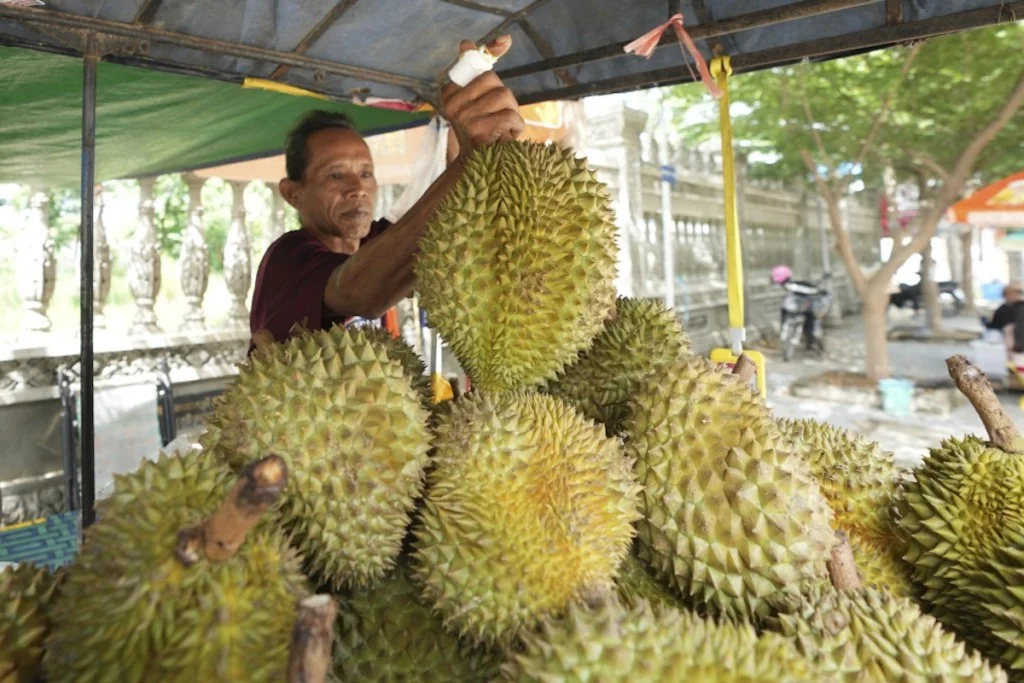
Contrast this with the situation faced by Vietnam's durian industry, where a recent discovery of chemical residues has led to a shutdown of 80 out of 111 fruit packaging factories in Dong Thap Province. Prices for local durians have plummeted to around one US dollar per kilogram—well below production costs—due to these setbacks. The inability of Vietnamese producers to meet compliance requirements illustrates an alarming gap in readiness and adaptation compared to countries like Brazil.
Historical Context: The Shift from Volume to Compliance
Reflecting on the past, the trade dynamics at the China-Vietnam border lacked structure and rigorous standards until recent years. Historically, the logistics between the two nations thrived on flexibility, with customs procedures being simple enough to facilitate substantial transaction volumes. Yet, as China tightened its regulatory framework—evident with the implementation of Customs Decree 280—this leniency has become a liability for producers unprepared for stringent compliance. The Chinese market is no longer just another volume-driven destination; it has become a battleground for standards and quality assurance.
Structural Gaps in Agricultural Compliance
The divergence in outcomes for countries like Brazil and Vietnam can partly be attributed to the latter’s inadequate quality and logistics infrastructure. Brazil has established a digital tracking system that ensures complete traceability from pasture to slaughterhouse, fortifying its position as a dependable supplier under China’s new standards. Meanwhile, Vietnamese producers are still grappling with inadequate testing capabilities and unreliable supply chain structures. Some factories have resorted to submitting falsified documents to pass inspections, a practice that will no longer be tolerated under stricter regulations.
Infrastructure Disparities Impacting Trade
The contrast between Thailand and Vietnam serves to illuminate how infrastructure plays a crucial role in export competitiveness. Thailand’s utilization of the China-Laos Railway to transport tropical fruits significantly enhances its export capabilities, while Vietnam's reliance on outdated logistics has resulted in operational bottlenecks. In Dong Nai Province, trucks endure long waits—up to 24 hours—for pre-shipment tests, delaying exports substantially during peak harvest times. Inadequate cold storage facilities exacerbate these issues, leading to staggering post-harvest losses estimated at $3.5 to $4.1 billion annually.
Beyond Testing: A Systemic Approach Required
The prevailing narrative in Vietnam attributes export disruptions to insufficient testing facilities, albeit overlooking deeper systemic issues. The stringent testing protocols instituted by China on harmful substances like heavy metals and unapproved additives serve as wake-up calls for producers not investing seriously in their compliance infrastructure. For example, exceeding cadmium levels has led to immediate shipment bans, with producing firms facing lengthy penalties for disqualification.
Reframing Agricultural Trade Regulations
As China takes on the role of a rule-maker in global agricultural trade, it’s crucial for affected countries to align their industrial practices with the evolving standards. The new compliance framework emphasizes stringent safety and environmental criteria that serve not just to protect consumers but also to reshape trade patterns globally. Adherence to these requirements can become a competitive edge, allowing compliant countries to maintain robust trade relations with China, as demonstrated by Thailand’s strategic adjustments.
Strategic Choices for Vietnam's Future
Vietnam now faces a pivotal decision: to cling to temporary fixes or to initiate comprehensive supply chain reforms. Enhancing farm-level tracing, investing in cold chain logistics, and establishing robust quality management systems are essential steps toward transforming compliance into a genuine competitive advantage. As global agricultural trade norms evolve, countries that fail to adapt risk losing their foothold in lucrative markets.
Ultimately, this reshaping of agricultural import regulations by China marks the dawn of a new order in trade. The strict compliance requirements, far from being barriers, act as essential filters that separate capable producers from those lagging behind. The outcomes of these shifts will resonate across economies, making it imperative for nations like Vietnam to embrace systemic changes rather than short-term solutions to thrive in this transformed landscape.