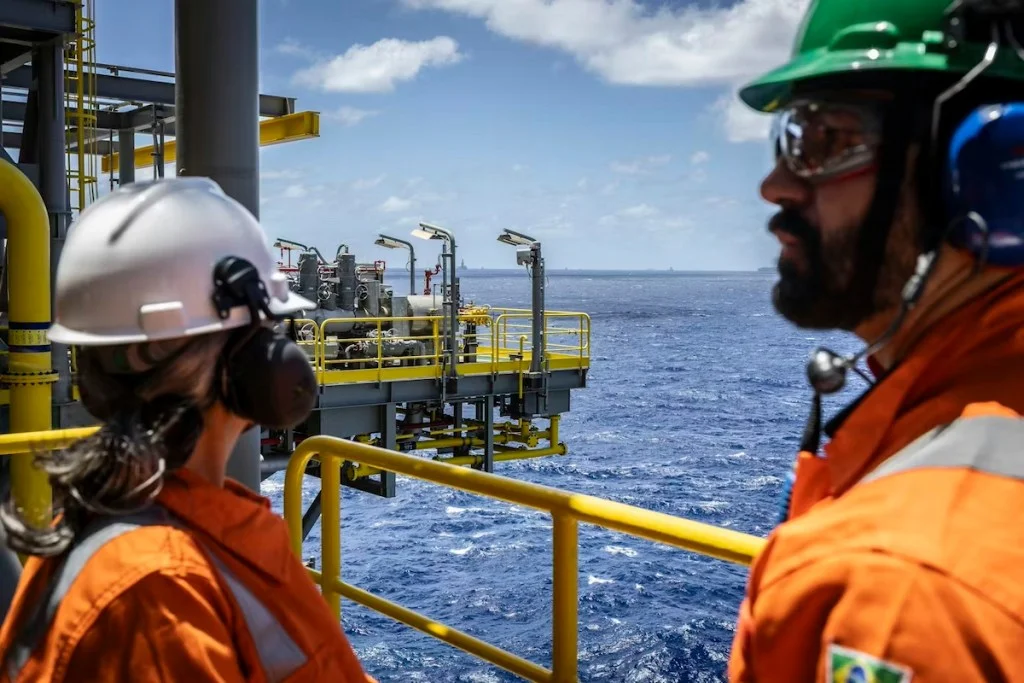
Recent developments surrounding oil production emphasize a shift in market dynamics triggered by geopolitical tensions, particularly the ongoing conflict involving Iran. Surprisingly, despite significant disruptions, global oil prices have remained relatively stable, hovering around $100 per barrel. The real story lies in where this resilience is emerging: from the Americas, which are becoming increasingly critical to global oil supply.
Emerging Energy Producers in the Americas
Even before the current conflict, expectations were already leaning toward increased output from North and South America. The International Energy Agency previously noted that nearly all global oil demand growth in 2026 would be supported by these regions. Specifically, countries such as the United States, Canada, Brazil, Guyana, and Argentina were primed for an uptick in production.
The war, however, has recalibrated supply expectations dramatically. The ongoing crisis has led to the closure of the Strait of Hormuz, removing an estimated 14 million barrels per day from the market. This disruption initially prompted price hikes and unanticipated global stock draws, countering earlier forecasts that predicted increases in stock levels due to oversupply.
Yet the silver lining here is high prices, which often incentivize ramped-up production. The United States has seen its crude oil exports soar to a record 6.44 million barrels a day as infrastructure investments to handle transportation have accelerated. By 2026, an additional 800,000 barrels per day of dock capacity is anticipated to come online, enhancing export capabilities.
Brazil and Guyana: Key Contributors
Brazil continues to play a pivotal role in this new energy landscape. The state oil company, Petrobras, recently accelerated production schedules for its new projects, including developments in the Búzios field, which is expected to yield significant additional barrels ahead of schedule to capitalize on elevated global prices.
Moreover, Guyana has emerged as a fast-rising oil power, with daily production currently hovering around 900,000 barrels. Projections suggest this output could nearly double by the decade’s end, highlighting the nation’s rapid ascent in the oil industry. Even Venezuela, often associated with a deep economic crisis and plummeting production, has managed to increase its oil exports in response to favorable pricing conditions.
The Broader Impact on Global Oil Production
By late 2026, the combined output from the Americas could approach 30 million barrels per day, nearing pre-war production levels associated with OPEC. The U.S. remains at the forefront, with liquid hydrocarbons production reaching close to 22 million barrels a day as of April.
This burgeoning output is due to years of infrastructural growth and strategic investments in production technology. Interestingly, this boom in the Americas can be traced back, somewhat ironically, to OPEC’s own strategies. For years, OPEC’s restraint in production, particularly by its leading member Saudi Arabia, helped support higher prices, thereby enabling costlier production techniques in regions like North America to become economically viable.
The Continuing Role of OPEC and Middle Eastern Producers
While the surge in oil production from the Americas signifies a fundamental shift in capacities, it doesn't signal the end of OPEC's influence. The economics behind Gulf oil extraction remain strongly favorable; production costs in the Gulf countries can be less than $10 per barrel, with average extraction costs still around $27. In contrast, North American shale operations often require prices ranging from $50 to $65 per barrel to be profitable.
The implications of this cost divide are crucial, especially during periods of lower prices. Higher-cost producers in the Americas would likely feel the pressure first should fluctuations arise once again, while Gulf producers, with their extensive reserves and low extraction costs, would have a greater ability to weather such downturns.
Furthermore, geographical considerations also heavily favor Middle Eastern producers. For key Asian markets—India, Pakistan, and Bangladesh—importing oil from the nearby Gulf presents the lowest-cost option. The infrastructure in place, coupled with the design of many Asian refineries to process Middle Eastern crude, maintains the region’s stronghold on significant market segments.
Future of Global Oil Markets
Looking ahead, both Saudi Arabia and the United Arab Emirates are proactively investing in alternative pipeline infrastructure to reduce reliance on the Strait of Hormuz. These developments—such as Saudi Arabia’s East-West Pipeline and the UAE’s Habshan-Fujairah project—aim to mitigate vulnerability to geopolitical instability and ensure long-term export reliability.
The Americas undeniably are altering the dynamics of the global oil market, stepping into a role as a swing producer amid supply crises and geopolitical events. However, long-term dominance in oil production and market influence will depend on more than just output volume. Factors like production costs, geographic advantages, infrastructure capabilities, and reserve quantities will continue to uphold the Gulf’s pivotal position in the global oil landscape.
As the world remains heavily dependent on oil, the Middle East is likely to retain its core production and export status, despite the strengthened role of the Americas as a growing source of crude. For professionals operating in the energy sector, understanding these shifting dynamics—alongside the traditional strongholds—will be essential for navigating the complexities of future energy markets.