Technology
Ancient Egyptian Beaded Shroud Illustrating the Deceased's Transition to Osiris
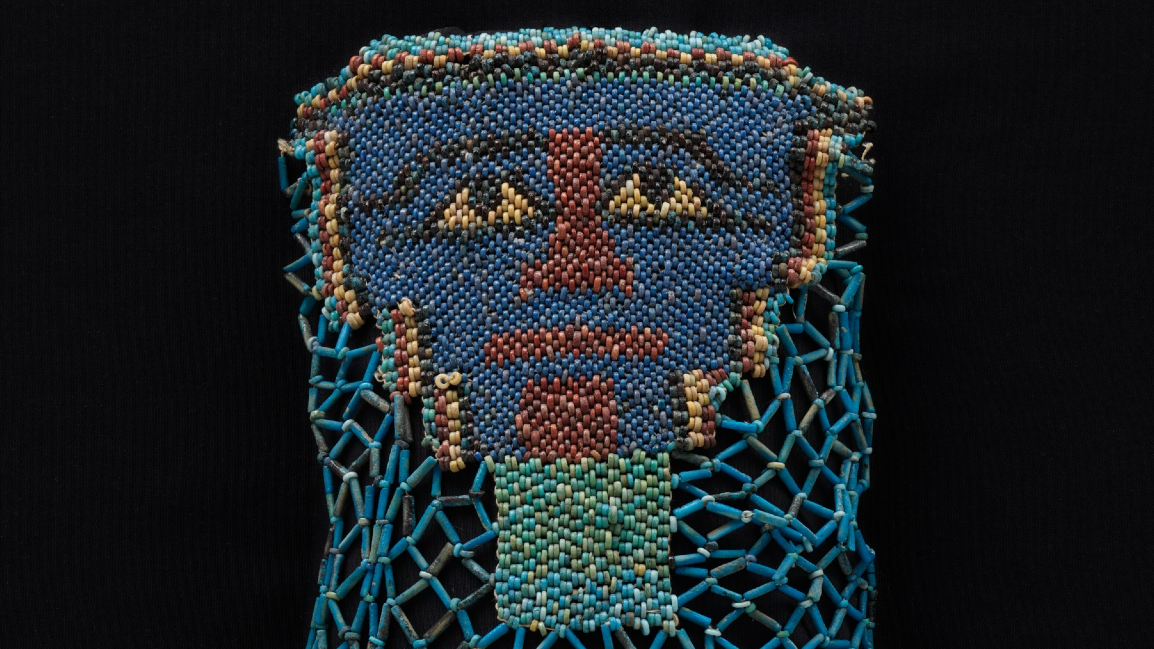
This 2,500-year-old funerary shroud features an intricate design crafted from thousands of multicolored beads, symbolizing the deceased's journey into the afterlife as Osiris.
The Intricacies of Ancient Egyptian Funerary Practices
A striking artifact has emerged from the sands of time: a funerary shroud dating back 2,500 years, intricately designed and steeped in profound symbolism. This beaded veil, crafted from a multitude of vibrant beads, serves not only as a cover but as a visual narrative, illustrating the transformation of the deceased into Osiris, the Egyptian god of the afterlife. Ancient Egyptians placed immense importance on the afterlife, and this shroud exemplifies how they used rich artistic techniques to convey deep religious and cultural meanings.
The shroud features a detailed weaving pattern that represents both a human face and a large scarab beetle, emblematic of rebirth and regeneration in the ancient Egyptian belief system. Each element in this intricate design is loaded with meaning. Such artistry does more than showcase technical skill; it encapsulates the spiritual journey that Egyptians believed awaited them after death. Instead of simply being a burial accessory, this shroud embodies the entire philosophy of life and death that pervaded ancient Egyptian culture. For a civilization that invested significant resources and creativity into funerary customs, it serves as a poignant reminder of their views on mortality and the afterlife.
When we consider the broader context in which this artifact was made, it becomes an even more compelling study. At the heart of this discovery is not just a piece of fabric, but a legacy of beliefs that explain how ancient Egyptians perceived death. This provides a window into their extensive rituals, which were aimed at ensuring a safe passage to the afterlife. For those engaged in archaeological or anthropological studies, this artifact opens the door to understanding the intricate interplay between art, spirituality, and social practices in ancient Egypt. What this means for you is a deeper awareness of how remnants of the past continue to inform our interpretation of human behavior and beliefs across time.
As interest grows, the significance of these findings invites a more nuanced inquiry into ancient practices. In essence, this is more significant than it looks; it's a way to bridge the gap between ancient and modern sensibilities, challenging us to reflect on what we value today in terms of legacy and memory.
The Significance of Ancient Egyptian Artistry
Looking at the ancient bead-net funerary shroud, we’re reminded just how rich and complex Egyptian funerary practices were. This artifact, woven from thousands of colored beads, isn’t merely a burial covering. Rather, it embodies a sophisticated belief system where the deceased is intimately connected to divine figures such as Osiris, the god of the afterlife. Each bead tells a story, not just of artistry but of a civilization that focused intensely on the afterlife and symbolic representation. This is no mere happenstance; it reflects a carefully constructed worldview.
Dr. Emily Teeter from the Art Institute of Chicago emphasizes that the combination of the shroud and the intricate bead net mimics the bandages of Osiris. This representation serves as a transformative journey for the deceased, weaving together art and spiritual significance in a manner that feels profound even thousands of years later. The face crafted with dark-blue beads may evoke the heavenly body of Nut, the sky goddess. Here, the visual becomes narrative, encapsulating complex themes about rebirth and eternity.
But let’s talk numbers—thousands of beads don't just indicate technical prowess; they reflect the societal values attached to life after death. Which brings us to a pivotal assessment: ancient art wasn’t just decorative; it served specific spiritual functions that mirrored societal structures and priorities. If you’re involved in archaeology or cultural studies, this insight isn’t merely academic; it’s a gateway into understanding how artifacts act as cultural texts that inform our understanding of civilization itself.
And yet, the catalog of stunning discoveries continues to grow. Similar artifacts, like those adorned with scarab motifs, echo themes of renewal—an essential reflection of the cultures that produced them and their ongoing influence on our current aesthetic standards. An often-overlooked point: these items aren't just relics, but discussions in themselves about identity and community values.
As we analyze these artifacts further, we must consider how they contribute to our understanding of past and present identities, aesthetics, and cultural continuity. Ultimately, engaging with objects like the bead-net shroud can deepen our appreciation for the narratives woven into art. This reminds us that the pursuit of beauty—in life and death—is a pursuit as ancient as humanity itself.
Implications and Future Outlook
The implications of findings like this shroud extend beyond merely appreciating art; they challenge our understanding of culture and identity. As art historians and archaeologists dig deeper into these complex artifacts, they’re likely to uncover even more connections between ancient practices and contemporary beliefs. Think of it this way: this artifact not only highlights how ancient Egyptians approached death but also encourages us to reevaluate our own interactions with mortality.
Viewing historical artifacts through a modern lens could prompt introspection about how narratives of life and death manifest in today's society. If you’re working in this space, consider how these ancient stories might inform your understanding of contemporary issues, from spirituality to cultural identity.
In the coming years, as technology and methodology in archaeology advance, we can expect more detailed analyses that shed light on the nuanced relationships between artifacts and their socio-religious contexts. This gives us reason for optimism; the real stories behind artifacts like this shroud may still have many layers left to unearth. Let’s keep exploring these astonishing artifacts and the histories they represent. For more, check out our dedicated section on [Astonishing Artifacts](https://www.livescience.com/tag/astonishing-artifacts).