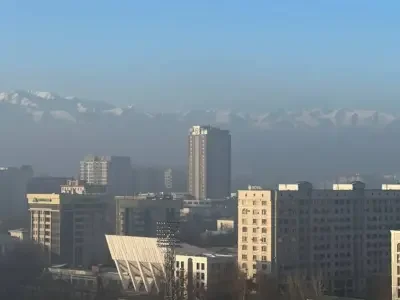
Central Asian Cities Confront Air Quality Crisis: Diverse Strategies and Shared Challenges
Central Asia's urban centers, particularly in Uzbekistan, Kyrgyzstan, and Kazakhstan, are grappling with alarmingly high levels of air pollution, leading to severe public health implications. A report by IQAir has placed these countries' capitals among the most polluted globally, highlighting a pressing need for effective policy measures and community engagement in combating this issue.
Uzbekistan, particularly its capital Tashkent, is facing life-threatening smog conditions, prompting a reactive response from the government. President Shavkat Mirziyoyev enacted emergency measures in response to the deteriorating air quality, notably launching nighttime raids on local businesses blamed for emissions, while also rolling out initiatives involving water trucks to mitigate dust on city streets. Activist Mutabar Khushvatova stresses that the government needs a broader perspective on pollution causation, considering geographical and regional elements, like those stemming from neighboring Kazakhstan and ongoing environmental damage from the shrinking Aral Sea. Additionally, initiatives to incentivize renewable energy adoption and urban development strategies designed to create protective greenbelts signify a dual approach to this multifaceted problem.
Policy Responses in Kyrgyzstan
Bishkek, the capital of Kyrgyzstan, has established itself as a perennial contender in global air pollution rankings, largely suffering from PM 2.5 particle pollution. With financial backing from the World Bank, which has earmarked $50 million to enhance air quality, Kyrgyzstan's prospects for cleaner air hinge significantly on improved urban planning. Climate journalist Azat Ruziev argues that the government must overhaul its approach to pollution, recognizing the detrimental effects of rampant urbanization leading to unregulated emissions. The recent urban development plan aims to reduce reliance on coal and transition toward cleaner energy sources, as well as implement infrastructure changes designed to encourage public transport usage and establish more green spaces, offering a long-term vision for air quality improvement.
Kazakhstan's Complex Landscape
Kazakhstan presents a more complicated scenario, where the clash between scientific understanding and policy direction creates inefficiencies in combating air pollution. Disparities exist in defining pollution sources, with government entities focusing on vehicles and small businesses, while scientific evidence points toward industrial activity and coal combustion as primary contributors. In Almaty, the city is spearheading measures to phase out solid fuel heating by the end of 2026, alongside the transformation of a major coal plant into a gas-powered facility. These regulatory changes signify a crucial step towards reducing air pollution, but concerns linger due to the governance approach that tends to sideline scientific expertise, as highlighted by Nassiba Baimatova, a local lab head stressing the need for evidence-based decision-making.
Shared Challenges Across the Region
Despite the varied approaches each of these countries are taking, shared challenges abound. Rapid urbanization is nudging all three nations toward a crisis point, where infrastructure and governance struggles are magnified by poor air quality. Each government's attempt to engage with the issues reflects broader societal concerns and the urgent need for a collaborative approach that transcends political borders. Khushvatova’s observations about regional pollution complicate the narrative—air pollution does not respect national boundaries, and it’s imperative that these countries work collectively on sustainable solutions that reflect scientific consensus.
Furthermore, as the region continues to confront the consequences of climate change, the expectation for government action will inevitably grow. It’s clear that the current strategies adopted by Uzbekistan, Kyrgyzstan, and Kazakhstan can serve as models – or warnings – for how to tackle urban air issues. The ongoing refinement of air quality measures and urban policy will be critical for population health as these nations seek to reconcile development with environmental sustainability.
In conclusion, Central Asia's ongoing battle against air pollution offers key lessons in governance, public health, and international collaboration. As cities innovate and adapt, the imperative for a cohesive, scientifically-informed approach to policy development remains paramount. The next steps in improving air quality can shape not only the health of individuals in these countries but also serve as a benchmark for environmental resilience in the face of climate challenges.