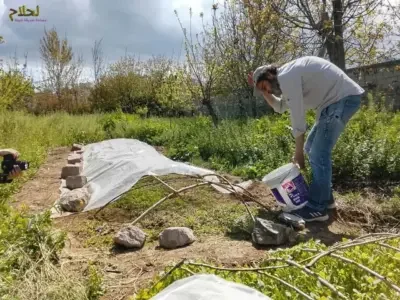
In a world grappling with climate change and food insecurity, an initiative in Jaramana, Syria, offers a poignant reminder of agriculture’s roots and the resilience of local communities. The Solidarity Fields project seeks to regenerate local seed production, restoring a vital link between farmers and their land in a nation battered by war and economic strife. This movement is not merely about planting crops; it's a concerted effort to reclaim agricultural heritage that has been all but erased in recent years.
The Genesis of Solidarity Fields
The Solidarity Fields in Jaramana emerged in March 2026, igniting a spark for local agricultural revival. Organizers, including Muhannad Deeb—an artist and project coordinator—teamed up to create an ecosystem focused on local and indigenous seeds. This initiative is part of a broader movement known as “Solidarity Fields and Dignity,” which aims to reshape agricultural practices across Syria. It reflects a nuanced understanding that food security is deeply intertwined with local culture and identity.
Deeb encapsulates its essence: “This project helps increase the number of farmers adopting local seed production, thereby expanding the areas cultivated with these seeds, especially as production costs are reduced by minimizing the reliance on chemical inputs.” By championing indigenous seeds, the project not only fosters self-sufficiency but also seeks to transform agricultural methodologies in the face of ongoing climate challenges.
The Broader Context of Seed Sovereignty
The reliance on local seeds is paramount, particularly in post-conflict settings. According to the Food and Agriculture Organization (FAO), community-based seed systems represent a staggering portion—80 to 90%—of seeds consumed by farmers, particularly for self-pollinating crops. This statistic underscores the existential role such initiatives play in achieving food security and fostering a resilient agricultural framework.
Why is this significant? It’s about dismantling dependency on imports during a time when supply chains are disrupted and agricultural inputs are costly. The war in Syria saw a rural population decrease by 50% from 2011 to 2016, decimating traditional farming practices and upending local economies. Farmers were left financially and materially impaired, often forced to rely on expensive, imported seeds that fail to adapt to local climates or needs. The Solidarity Fields project, therefore, serves as a pivotal response to restore lost agricultural diversity and resilience.
Indigenous Seeds: A Path to Recovery
With approximately 300 dunams (about 75 acres) dedicated to cultivating indigenous seedlings, the initiative aims not only to regenerate crops but also to revitalize agricultural knowledge that has waned throughout years of conflict. Deeb explains, “The heart of this work relies on diverse agricultural experiences that enrich the project,” noting that indigenous seeds obtained from locally grown plants are more suited to the specific environmental conditions of the region.
The emphasis on indigenous seeds highlights their intrinsic value—they are not merely commodities; they are carriers of genetic diversity that make crops more resilient to diseases and climate variations. The FAO affirms that “food security depends critically on farmers having access to good seeds appropriate to their environment.” In Syria's fragile agricultural landscape, initiatives like this become indispensable in ensuring that local ecosystems and farming practices can flourish, paving the way for economic recovery and self-reliance.
The Social Fabric of Solidarity
At its core, the Solidarity Fields initiative symbolizes a shift towards collective resilience. By distributing harvests among community members in need, it fosters a culture of support rather than competition. Such cooperative frameworks can play a vital role in addressing food insecurity and rebuilding trust within communities. The idea extends beyond food production; it’s about weaving a tapestry of solidarity among those who have faced myriad challenges.
This initiative emerged from a confluence of multiple projects aimed at revitalizing community engagement with agriculture. For instance, the Shughl wa Fan initiative, originating in 2008, invests in cultural and developmental projects designed to enhance awareness about environmental stewardship and community connectivity. Such collaborations, as highlighted by Deeb, have been instrumental in the establishment of Solidarity Fields, affirming that rebuilding agricultural systems necessitates not only physical investment but also shared cultural and social investment.
The Future of Agriculture in Syria
In a nation where war has transformed the agricultural landscape into a specter of its former self, movements such as Solidarity Fields stand as beacons of hope. They challenge a narrative of despair, spotlighting opportunities to reclaim and restructure agricultural practices that prioritize ecological balance and community empowerment. As Deeb aptly points out, “The results of this experiment could influence farmers and the community broadly, making regenerative practices more widespread.”
The journey of reclaiming Syria's agricultural memory will undoubtedly have its hurdles, but initiatives focused on local seed production hold the promise of not just food security, but of cultural revitalization and economic stability. For anyone engaged in the fields of agriculture, community development, or climate resilience, the lessons emerging from Jaramana are profound. They underscore the importance of local knowledge, the power of community collaboration, and the urgent need to adapt in the face of adversity.
In conclusion, organizations and individuals interested in sustainable agriculture should take a cue from these efforts. The revival of local seed production in Syria exemplifies how grassroots initiatives can play a transformative role, connecting people back to their land—and to each other. As the world looks for sustainable agricultural solutions amid looming crises, the lessons from Jaramana will resonate well beyond Syria’s borders.