
African regimes are embracing AI surveillance, nudging them closer to a troubling model of governance that stifles dissent while masquerading as modernization.
AI as a Tool for tyranny in Africa
In recent years, the narrative of governance in Africa has shifted from overt brutality to more subtle forms of digital oppression. The deployment of artificial intelligence in surveillance systems has equipped autocratic regimes with a potent arsenal disguised as technological advancement. This shift is particularly alarming given that many of these governments have long histories of corruption and oppression, leading to a dangerous convergence of AI and authoritarianism.
The Financial Backing Behind the Surveillance State
A report by the Institute of Development Studies reveals that eleven African nations have collectively churned over $2 billion into AI-driven surveillance systems. Nigeria stands out, accounting for more than $470 million of this expenditure. The gear includes high-definition cameras, license plate readers, facial recognition tools, and biometric systems. Crucially, many of these technologies are sourced from Chinese and Israeli companies, signaling a troubling trend of foreign influence in domestic governance.
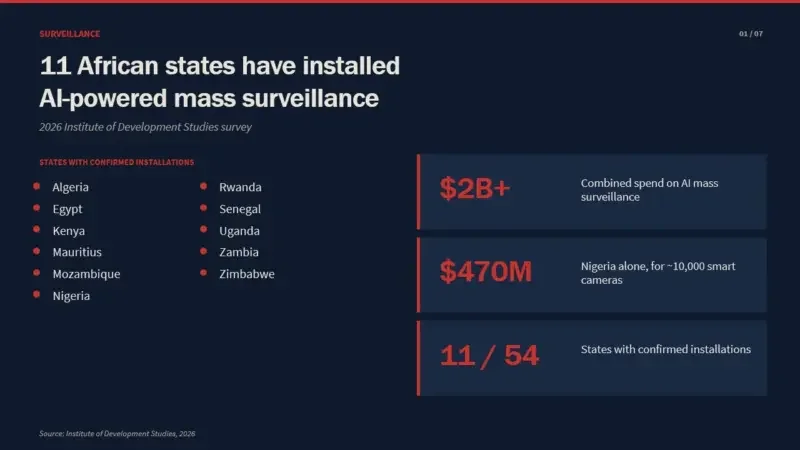
Statistics about AI-powered surveillance. By the Institute of Development Studies. Used with permission.
While these systems are marketed under the guises of public safety and crime reduction, the reality is more insidious. Studies reveal a troubling trend: the cameras are strategically placed in areas of political dissent rather than in high-crime neighborhoods. The IDS mapping indicates that surveillance is concentrated in regions where opposition parties gather and where protests have occurred, effectively weaponizing technology against political adversaries.
The Transformation of Data into Surveillance
The problem extends beyond the mere presence of cameras. African states have previously mined data from various administrative records, including communications and tax documents, for decades. However, AI has significantly refined this capability by transforming dormant data into actionable intelligence. With just a few clicks, regimes can unveil intricate webs of relationships, histories, and movements, which allows them to surveil citizens with unprecedented efficacy.
The historical comparison to the Soviet Union's KGB is telling; earlier systems relied heavily on human resources that simply could not process the vast amounts of information. Now, with AI, every nook of a citizen's life can be scrutinized without the need for massive manpower, thus normalizing pervasive state monitoring.
Surveillance Designed to Suppress
The implications of AI-driven surveillance extend deeply into civil society. Its potential to preempt dissent is profound. By making clear that all organizing can be visibly monitored, regimes discourage public assembly and political engagement before any mobilization can occur. Even if laws purportedly protect civil liberties, the omnipresence of surveillance generates a chilling effect where potential activists weigh the risks and choose to remain silent.
AI's predictive capabilities further deepen this suppression. The algorithms can indicate individuals likely to organize protests based on past participation and online activity, effectively criminalizing intent without any action having occurred. The merging of multiple streams of data allows regimes to develop complex profiles that can be utilized to intimidate or even legally prosecute dissenters, for ideas rather than actions.
The Psychological Grasp of Surveillance
This pervasive surveillance architecture breeds a new form of psychological control. Citizens become aware they are monitored, which alters their behavior before any active coercion is needed. This anticipatory governance reflects Michel Foucault's notion of the panopticon, in which the mere possibility of surveillance shapes conduct. The end result is that citizens self-censor, stifling dissent before it materializes, thus preserving the power of the state without explicit repression.
Resistance and the Asymmetry of Power
While the surveillance state tightens its grip, there are glimmers of resistance. Journalists, civil society organizations, and activists are documenting abuses and pushing for ethical guidelines on AI usage. Civic technologists strive to reclaim some of this technological terrain, offering apps designed to monitor governmental overreach and fact-check information to counter misinformation. However, these efforts often lack adequate funding and support compared to the sprawling state machinery.
In the end, the state wields a far superior array of resources. The comprehensive databases, advanced algorithms, and international contracts overwhelmingly tip the scales in favor of the government. This stark disparity fuels a more extensive chilling effect, as those who would once advocate for change now hesitate to do so.
Looking Ahead
The implication of AI's rapid integration into governance structures in Africa raises vital questions. On one hand, AI holds potential for enhancing public services and economic growth. On the other, its misuse is making the prospect of oppression more accessible and affordable than ever before. The risk isn’t just the transformation of single states into oppressive regimes but the broader normalization of surveillance as a tool for control and compliance.
The future of African governance hinges on the establishment of robust democratic frameworks and the protection of civil rights. As regimes adopt these technologies, the focus for industry professionals, human rights advocates, and policymakers must remain vigilant—ensuring that innovation doesn’t undermine liberty in the name of modernization.