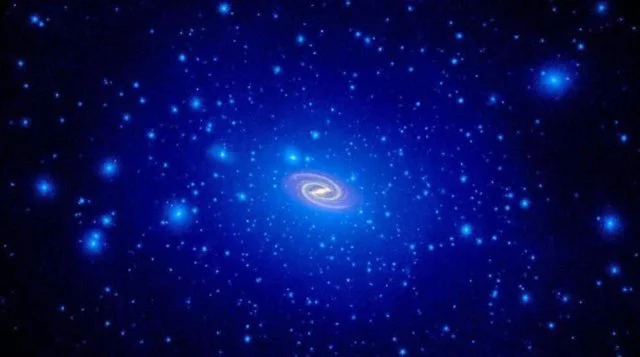
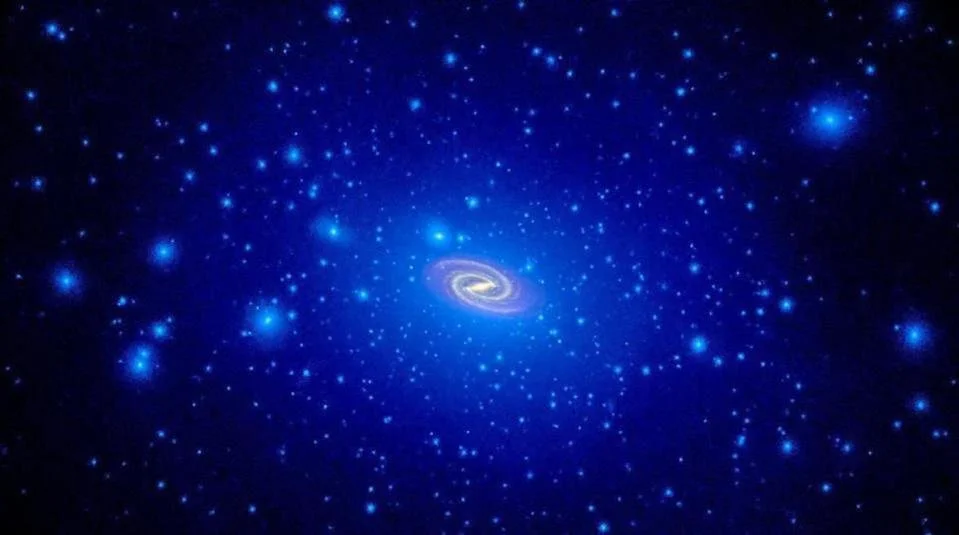
Who discovered dark matter?
Dark matter’s history is less tidy than the usual story of a single scientist making a decisive discovery. Fritz Zwicky raised the first major case for unseen mass in 1933, then Vera Rubin and Kent Ford’s work on galactic rotation helped bring the idea into mainstream astronomy decades later. Those are important milestones. But calling either one the person who “discovered” dark matter simplifies how scientific evidence accumulates—and how long it can take a contentious idea to earn acceptance. Zwicky coined the term dunkle materie, or “dark matter,” while studying the Coma Cluster. Rubin and Ford’s later observations gave the concept new force. Yet the case for dark matter was neither settled in 1933 nor established by one later set of measurements. The astronomical evidence is now overwhelming, but the path to that conclusion included legitimate doubts, better instruments, and repeated revisions to the numbers. [The history of the evidence](https://bigthink.com/starts-with-a-bang/asking-wrong-question-dark-matter/) is a useful reminder that scientific discoveries rarely have a single clean starting point.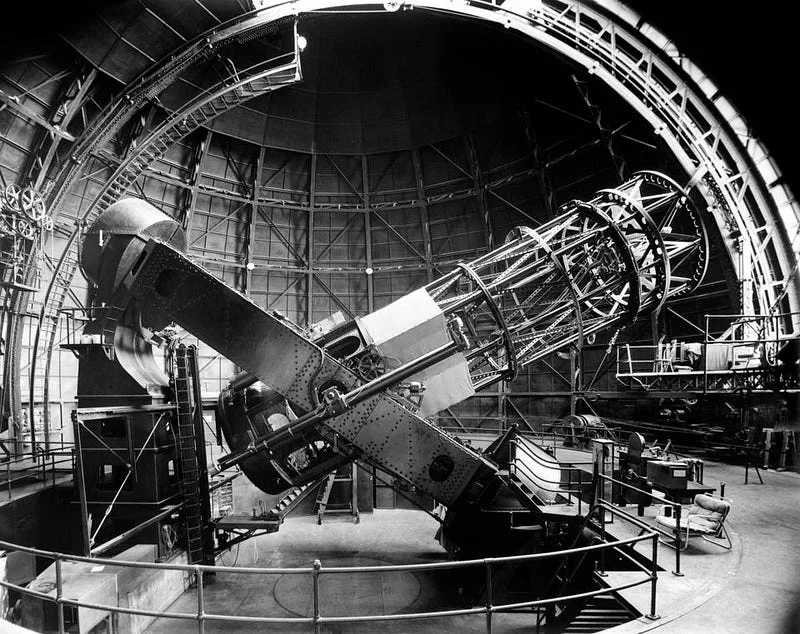
The Hooker Telescope was the world’s largest and most powerful telescope from 1917 to 1949. Its 100-inch (2.54-meter) mirror was larger than the Hubble Space Telescope’s primary mirror. It held the record until the 200-inch Hale Telescope was completed in 1949, 21 years after construction began. More than any other instrument, the Hooker Telescope helped unlock the discovery that the Universe is expanding.
The first case for unseen mass
By the 1930s, astronomers already had a surprisingly broad picture of the cosmos. Telescopes had reached 100 inches (2.54 meters), while a 200-inch (5.1-meter) instrument—with twice the diameter and four times the light-gathering power—was under construction. Astronomers had established that spiral and elliptical nebulae were distant galaxies, learned how stellar brightness, mass, color, temperature, and ionization relate, and found that the Universe is expanding: more distant galaxies show greater redshifts. They had even made an early measurement of the expansion rate, now called [the Hubble constant](https://bigthink.com/starts-with-a-bang/hubble-constant-become-actual-constant/). The [200-inch Hale Telescope](https://en.wikipedia.org/wiki/Hale_Telescope) was still on the way. That was the backdrop for Zwicky’s 1933 study of the [Coma Cluster](https://en.wikipedia.org/wiki/Coma_Cluster), about 300 million light-years away. Coma is larger and richer than the nearby [Virgo Cluster](https://en.wikipedia.org/wiki/Virgo_Cluster), which lies roughly 50–60 million light-years from us. More than 1,000 Coma galaxies have since been identified. Many are bright and large, including giant ellipticals near the cluster’s center and spirals nearer its outskirts.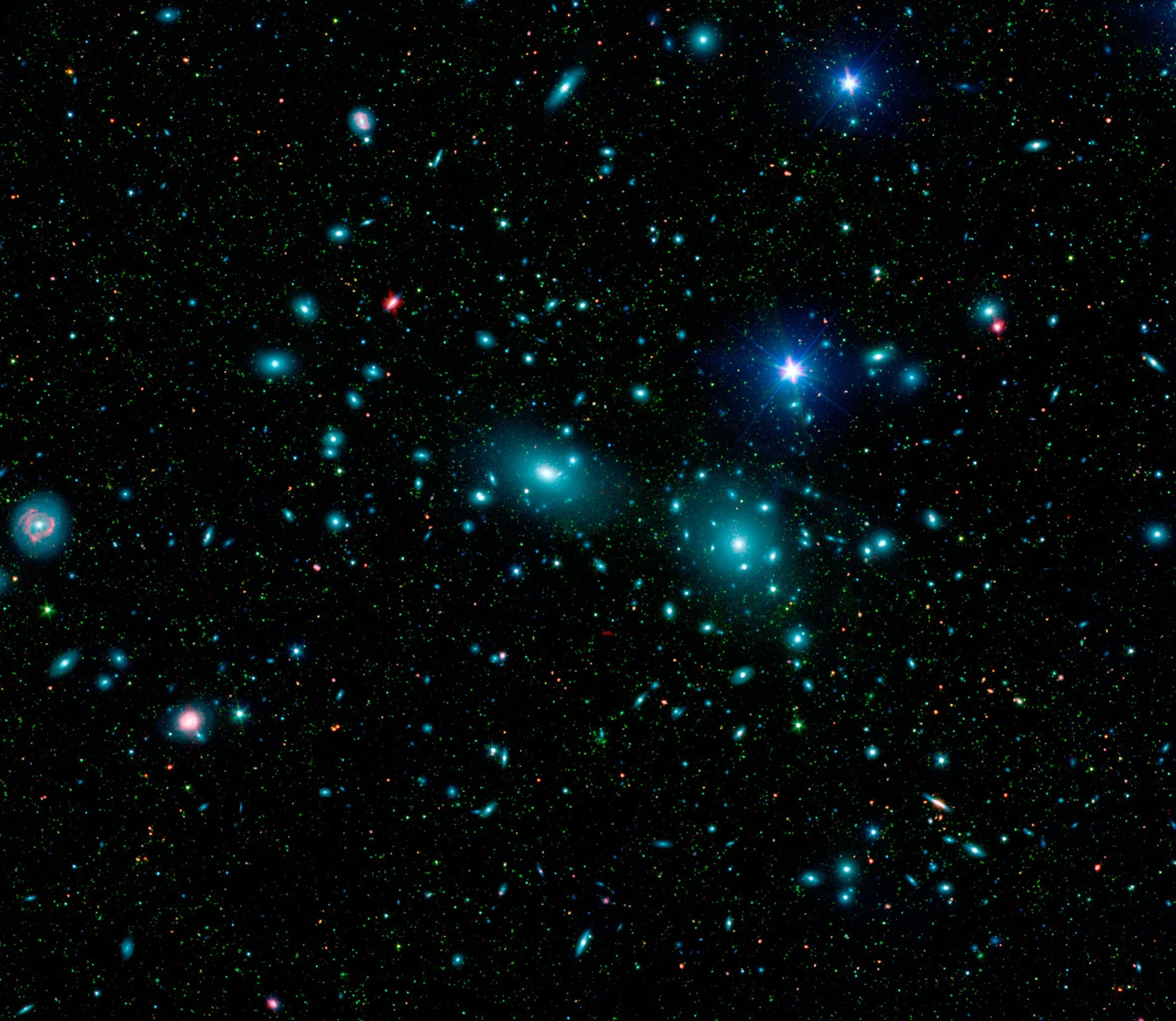
This composite view of the Coma Cluster combines infrared observations from the Spitzer Space Telescope with ground-based data from the Sloan Digital Sky Survey. Two giant elliptical galaxies dominate the cluster, which contains more than 1,000 other spiral and elliptical galaxies. Red, gas-free ellipticals are common, especially near the center. Measuring galaxy speeds in a cluster lets astronomers estimate its total mass—and provided the first evidence for dark matter in the 1930s.
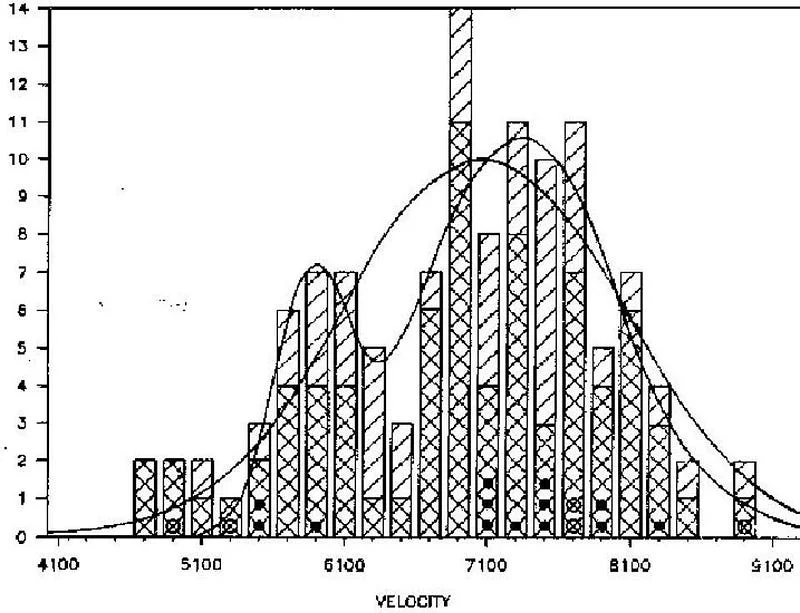
Galaxy speeds in the Coma Cluster can be used to estimate the mass needed to keep the system gravitationally bound. Data gathered more than 50 years after Zwicky’s original argument closely matches his central claim: the cluster contains much more mass than stars, gas, plasma, dust, black holes, and other known forms of ordinary matter can explain.
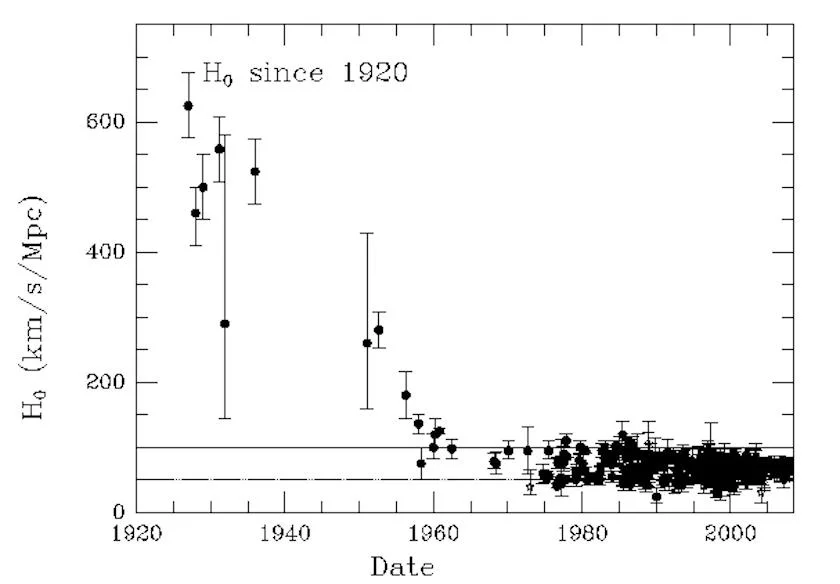
Estimates of the Hubble expansion rate changed substantially before converging near 71 km/s/Mpc. Discoveries about two types of Cepheid variables, peculiar velocities, calibration, and the assumptions behind distance indicators all affected the estimates. Today, two methods appear to give incompatible results: one favors about 67 km/s/Mpc, the other about 73 km/s/Mpc.
Why astronomers pushed back
The skepticism wasn’t simply resistance to an unfamiliar idea. Astronomers had real reasons to question the evidence. First, Zwicky had to infer Coma’s distance from its redshift and the Hubble constant. The value available at the time implied an implausibly young Universe—about two billion years old, less than half the Earth’s age. If that estimate was wrong, so might be the cluster’s inferred distance. There were also uncertainties in converting starlight into mass. Zwicky assumed the galaxies had the Sun’s mass-to-light ratio, even though their light is dominated by hotter, bluer, more massive stars. A more accurate ratio would put several times more mass in the galaxies than he had counted; the appropriate mass-to-light ratio was about three times his figure. And ordinary matter could be difficult to see. Gas, dust, black holes, stellar remnants, and ionized plasma might occupy the galaxies or the space between them, offering alternatives to a new kind of matter. Those objections mattered because astronomers lacked tools that later became routine. Infrared, radio, and X-ray astronomy could reveal ordinary matter hidden from visible-light observations; X-ray measurements of cluster gas began in the 1960s. Gravitational lensing would later provide another way to map the mass of large structures.
This full-field image of MACS J0717.5+3745 shows thousands of galaxies across four sub-clusters. The blue contours trace mass inferred from gravitational lensing of background objects. X-ray observations, not shown here, reveal that the gas emitting those rays is offset from the lensing contours, which map total mass, including dark matter. The apparent disorder partly reflects a collision occurring along our line of sight.
A galaxy containing only ordinary matter should rotate more slowly in its outskirts than near its center, much as planets farther from the Sun move more slowly in their orbits. Instead, observed galactic rotation speeds stay broadly similar across distance from the center. That pattern points to a large amount of invisible, or dark, matter and helped establish why astronomers needed to look beyond the visible stars when explaining galaxy motion.
How the evidence accumulated
For decades, astronomers expected a galaxy’s stars and gas to move more slowly the farther they were from its bright center. If starlight traced mass, the outer regions should contain less matter and exert less gravitational pull. That prediction seemed reasonable. Better observations eventually showed it was wrong. Radio observations of galaxies found that gas near their centers wasn’t moving faster than gas farther out. Improved studies of galaxy clusters softened Fritz Zwicky’s original estimate of the gap between visible and gravitationally inferred mass, but the gap remained. And measurements of star clusters, globular clusters, and dwarf galaxies pointed to unseen mass on small scales too. [Evidence from those smaller systems](https://www.aip.org/history-programs/niels-bohr-library/oral-histories/4706-1) strengthened the possibility that Zwicky’s proposal had something to it. These clues emerged as astronomy gained observations across the radio, infrared, and X-ray bands, along with better resolution of galaxies and their internal motions. Other ideas were also taking shape: [Big Bang nucleosynthesis](https://bigthink.com/starts-with-a-bang/revolution-first-big-bang-4-cornerstones/) suggested that ordinary matter couldn’t account for all the energy in the Universe, while X-ray observations indicated large quantities of unseen ordinary matter in galaxy clusters. Astronomers also understood how the [virial theorem](https://en.wikipedia.org/wiki/Virial_theorem#In_astrophysics) connects the motion of gravitationally bound objects to their potential energy.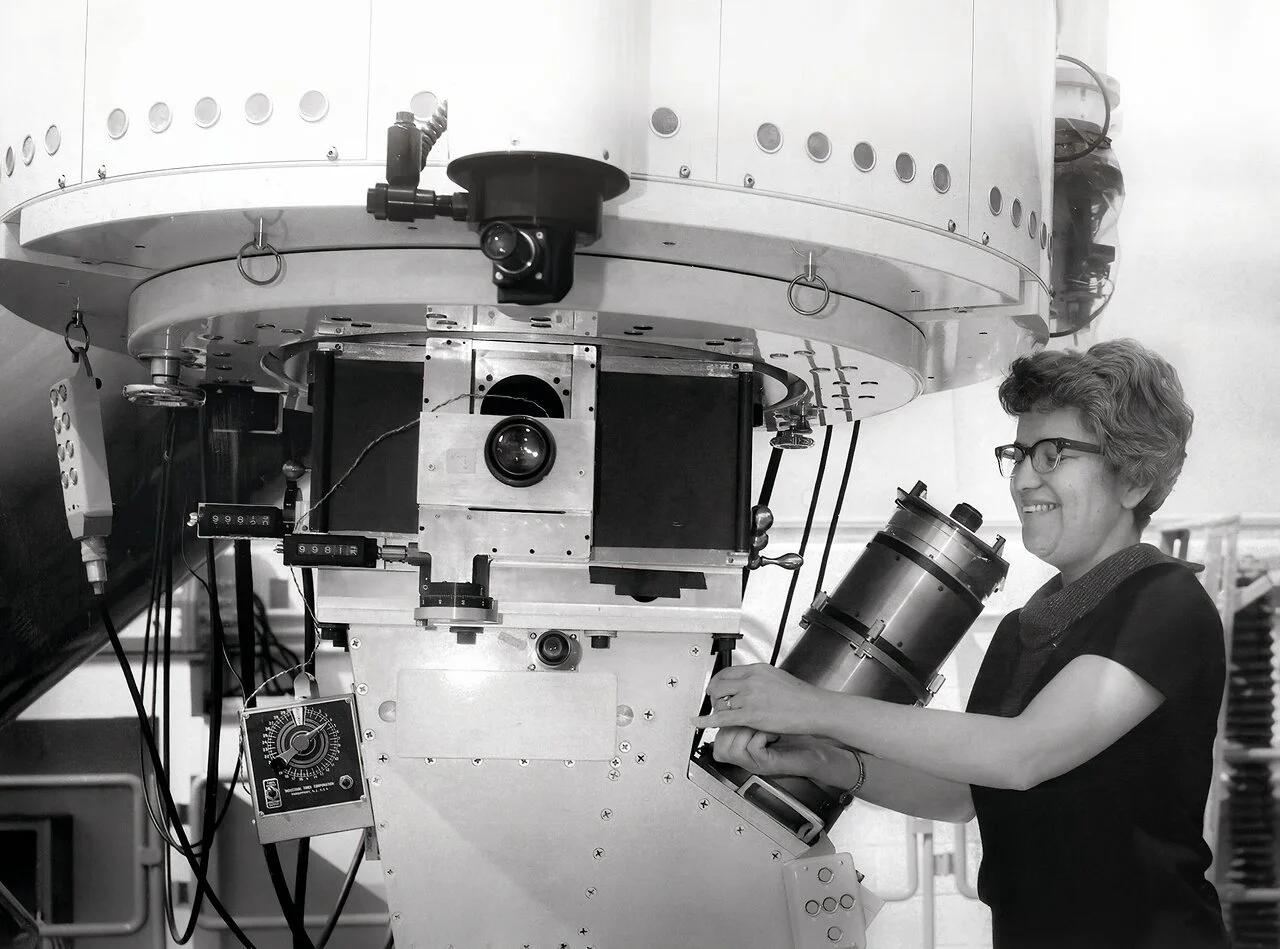
Vera Rubin, shown operating the 2.1-meter telescope at Kitt Peak National Observatory with Kent Ford’s spectrograph attached. Every working scientist today in astronomy and astrophysics agrees that Rubin and Ford’s work is deserving of a Nobel Prize, but they were never given one. With Rubin’s death in 2016, she will never receive one. To date, as of 2024, only 5 women have ever been awarded the Physics Nobel Prize.
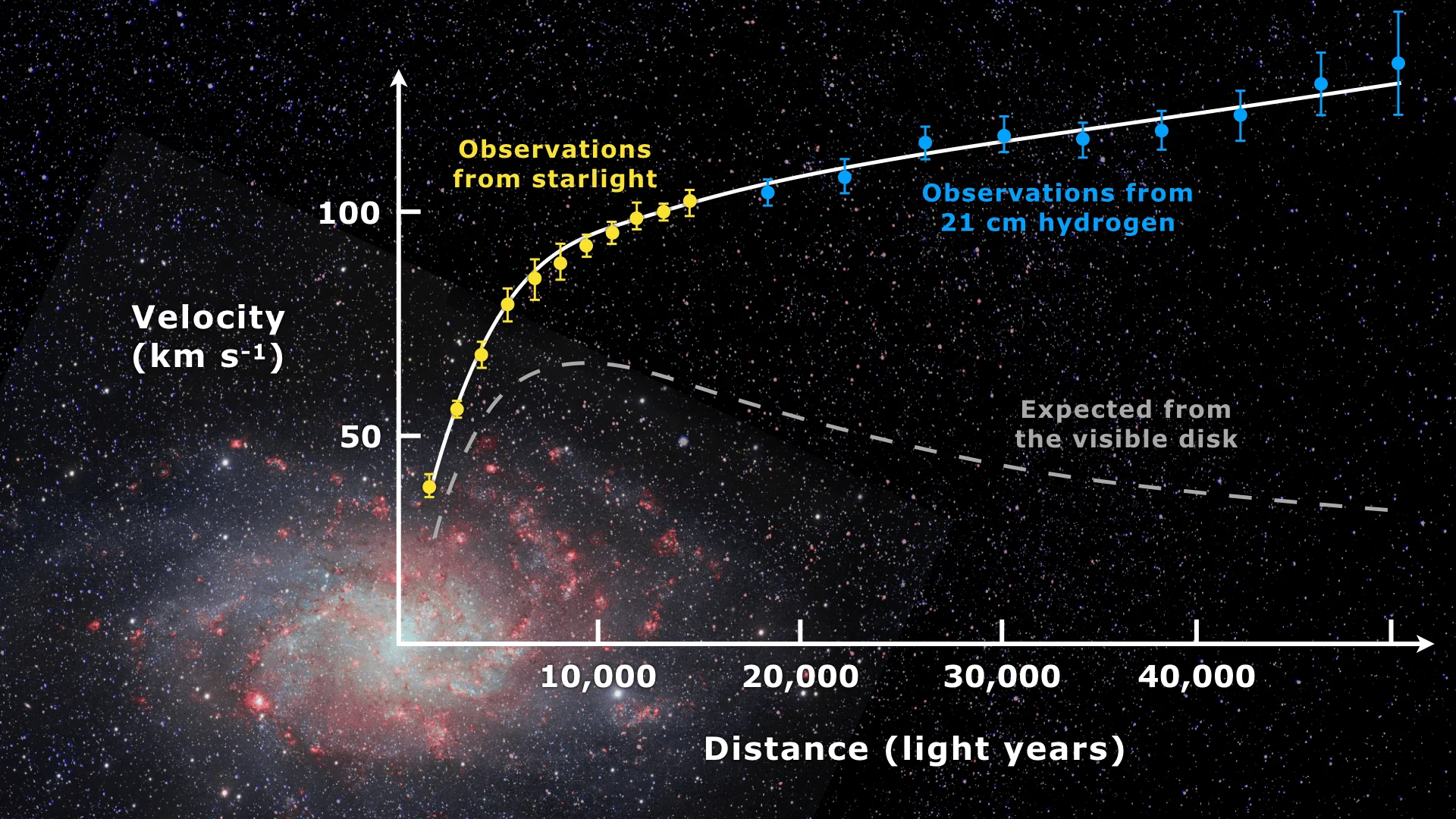
The extended rotation curve of M33, the Triangulum Galaxy. These rotation curves of spiral galaxies ushered in the modern astrophysics concept of dark matter to the general field. The dashed curve would correspond to a galaxy without dark matter, which represents less than 1% of galaxies. Vera Rubin’s work throughout the 1970s was essential in demonstrating that galaxies practically universally require an explanation for this unexpected but robustly observed behavior.
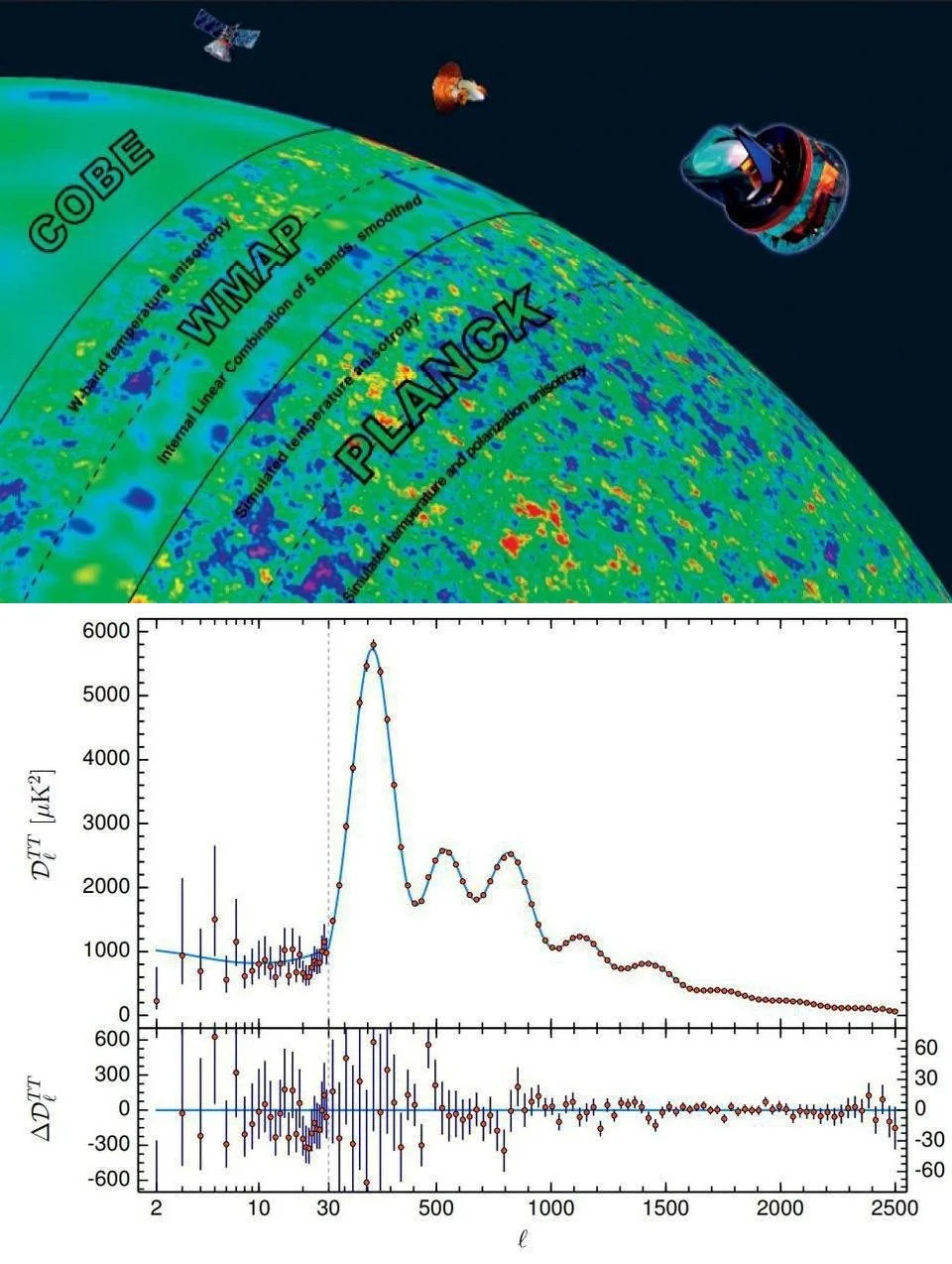
As our satellites have improved in their capabilities, they’ve probed smaller scales, more frequency bands, and smaller temperature differences in the cosmic microwave background. The temperature imperfections help teach us what the Universe is made of and how it evolved, painting a picture that requires dark matter to make sense.
This article Was dark matter first discovered by Fritz Zwicky or Vera Rubin? is featured on Big Think.


