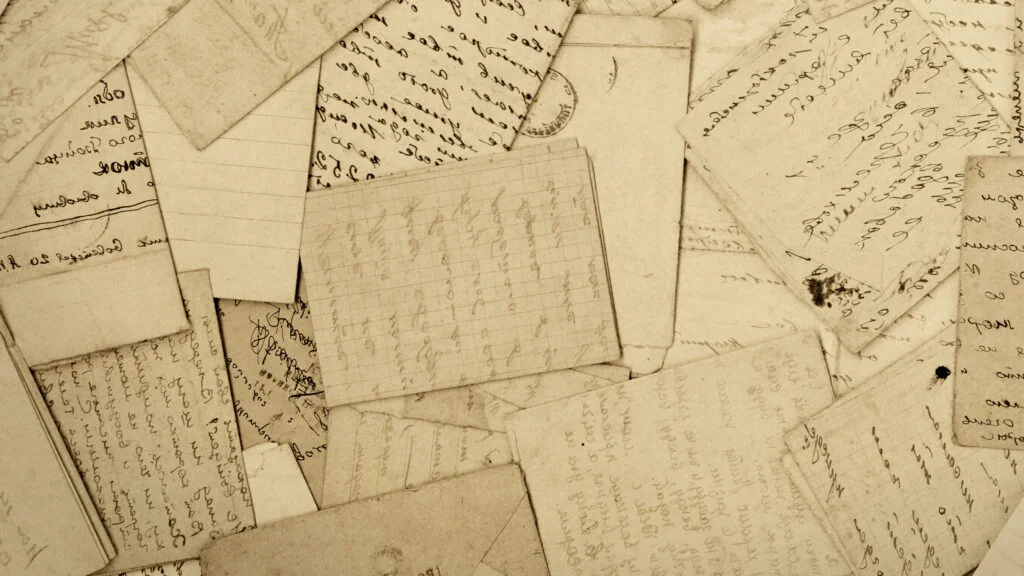
A local account of an outbreak
A village report from 1834 captures both the value and the limits of firsthand accounts in tracking disease. Jane Butt wrote that measles had spread among children in Broughton earlier that year, describing an illness in her own child and 36 other cases in the community. Her letter offers a view of an outbreak at household and village scale: who was sick, what complications were seen, and how one observer interpreted them. It’s the kind of evidence that can make a past epidemic feel immediate, even when the report leaves many basic questions unanswered.
Butt’s account is useful partly because it records details that a broad summary might flatten. She noted severe lung inflammation in some children, a complication that can make measles deadly, and said all 36 recovered. That outcome matters, but it needs to be read as a report about the cases she knew of, rather than as a complete medical record of everyone affected. The letter doesn’t tell us how the cases were identified, whether every household was reached, or how the total was counted. Those gaps don’t make the account worthless; they define what it can support.
What firsthand testimony can show
Before modern systems for collecting and comparing health data, local reports could preserve observations that might otherwise disappear. A person describing illness in a family or community could record the sequence of symptoms, the people affected, and the explanations circulating at the time. Such testimony can help later readers understand what illness looked like in ordinary life, beyond a clinical label or a retrospective summary. Butt’s letter does that in a compact way: it connects a named disease with children, respiratory complications, and a specific community.
But observation and interpretation aren’t the same thing. Butt thought a cold east wind worsened the children’s symptoms; that belief is part of the historical record, but the letter as described doesn’t establish that the wind caused or aggravated the inflammation. The distinction is easy to lose when a vivid account is retold. A writer may be careful and sincere while still lacking the tools to separate coincidence, exposure, and cause. Here’s the thing: the letter tells us what Butt saw and what she believed, and those are two different kinds of evidence.
That difference remains relevant when people report disease today. Personal accounts can surface patterns, communicate the experience of illness, and prompt questions worth investigating. They generally can’t, on their own, establish how common an outcome is or prove what caused it. A single village report has no comparison group, and it doesn’t provide the kind of consistent case definitions needed to compare one set of patients with another. For historians, those limitations call for careful reading rather than dismissal.
The value of a small record
The number in Butt’s letter gives the report a concrete scale: 36 cases, with her own child among those described. Yet the figure can’t answer every question a modern reader might ask. We aren’t given the village’s population, the number of children at risk, or a clear account of how many cases were mild or severe. Without that context, the report can’t tell us what share of Broughton’s children fell ill or how its experience compared with another community’s.
Still, the count is more than decoration. It suggests that Butt was reporting a cluster of cases rather than an isolated illness, while her description of lung inflammation records a complication that might be lost in a bare tally. The account also preserves a reported outcome: all 36 recovered. That should be treated as Butt’s report, not as proof that measles was harmless in the community or that every case had the same course. A short letter can carry meaningful evidence and leave major uncertainties at the same time.
And this is the part most people overlook: a historical source can be valuable even when it can’t settle a medical question. It can show how illness was noticed, discussed, and explained in a particular place. It can also reveal which details an observer thought important enough to send to someone else. The record’s silences matter too. What Butt didn’t mention may reflect the limits of what she knew, what she chose to report, or what the letter’s recipient needed to hear; the text alone can’t tell us which.
Reading the letter in its setting
The letter appeared beneath “Report from Mrs. Butt to Mr. Hudson” in the London journal Medical Dissenter. That title and placement give the account a route beyond the village: Butt’s observations were presented to a journal’s readers, where they could be read as a report rather than remaining only private correspondence. The source doesn’t explain the journal’s editorial process or how readers responded, so claims about its reception would go beyond what’s provided. What we can say is that the account entered a printed medical discussion and survived there.
Its survival matters because evidence about illness is often uneven. Formal records may summarize cases, while individual accounts preserve texture: the family member who was sick, the symptoms that caused concern, and the explanation offered at the time. Neither form gives a complete view by itself. Taken together, records of different kinds can help researchers ask sharper questions, while the absence of corroboration remains a reason for caution. A single document is a trace, not a full reconstruction.
The writer found the letter in Yale’s medical library on Sept. 23, exactly 192 years after Butt dated it. That discovery links a present-day reader with an observer who described illness as it unfolded in her community. The interval gives the document historical weight, but age alone doesn’t make every claim reliable. Its strongest contribution is narrower and more human: it preserves one account of children’s measles, serious symptoms, and recovery as Butt understood them.
What the account means for readers now
This is more significant than it looks. Butt’s letter shows why firsthand reports belong in the history of disease, while also demonstrating why they need context. The vivid parts—the sick child, the lung inflammation, the cold east wind—can draw a reader in, but vividness isn’t a substitute for evidence about cause or prevalence. A careful reading holds both ideas together: the account is informative, and its reach is limited.
If you’re working in this space, the practical lesson is to keep observation, interpretation, and outcome distinct when reading historical testimony. Butt observed cases and a complication, attributed worsening symptoms to the wind, and reported recovery among the 36 children described. Each statement has a different evidentiary status. That separation helps preserve the letter’s value without turning one observer’s explanation into a fact the source can’t establish.
Not a complete map of the outbreak. A surviving view from inside it.


