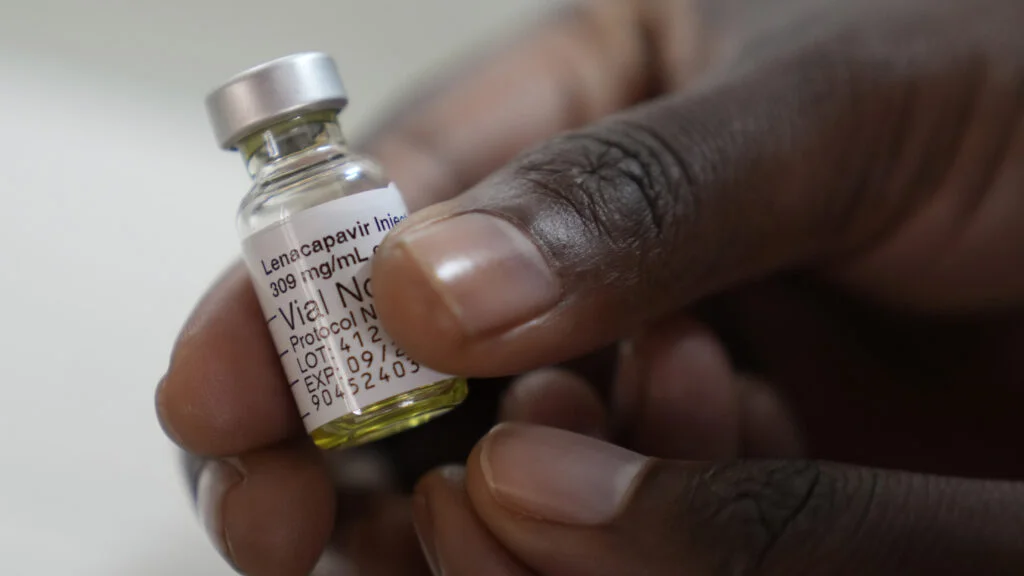
A low-cost generic version of lenacapavir could widen access to long-acting HIV prevention across dozens of low- and middle-income countries. The Food and Drug Administration has tentatively approved Dr. Reddy’s Laboratories to make the drug, following approval of the original medicine. That tentative approval marks a step toward supply, not proof that the medicine is already reaching patients. The gap between those two points can involve manufacturing, distribution, and health systems that are prepared to deliver injections on a six-month schedule.
A different rhythm for prevention
Lenacapavir is an injectable drug administered once every six months. According to the source, it offers virtually complete protection against HIV. Its dosing schedule changes the practical demands of prevention: people who might struggle to take a daily tablet have fewer scheduled doses to remember, while clinics and health programs must still make sure patients can return for injections at the right intervals.
That distinction matters because a medicine’s effectiveness in clinical use depends on more than its pharmacology. Daily tablets ask patients to maintain a routine; long-acting injections shift some of that work to appointment access, follow-up, and dependable supply. Neither approach is automatically easier for everyone. The useful question is whether people can obtain and continue the option that fits their circumstances.
Lenacapavir is a prevention drug, not a vaccine. That difference can get lost when a long dosing interval is discussed as a major advance. The medicine reduces the need for frequent dosing, but it still requires repeat administration and an infrastructure to provide it.
Price is only one part of access
Dr. Reddy’s, one of the world’s largest generic drugmakers, plans to begin shipping next month. Global health organizations have helped push to make the medicine available quickly in lower-income countries. The planned annual price is $40 per person, comparable to the cost of daily tablets. That comparison makes the generic’s promise concrete: less frequent dosing may become available at a price framed against an existing prevention option.
But a low listed price doesn’t, by itself, establish broad access. The medicine must be produced in sufficient quantities, shipped to the places that need it, and incorporated into local care. Health programs also need practical ways to identify people seeking prevention, explain the injection schedule, and arrange return visits. Those are common challenges for medicines that depend on clinic-based delivery.
Here’s the thing: the six-month interval may ease the burden of daily adherence, yet it makes each missed appointment more consequential. If you're working in this space, the central operational question is whether programs can make the next dose easy to get, not simply whether a generic has received tentative approval.
Generic supply and the next phase
Gilead Sciences sells the brand-name version as Yetzugo in the U.S.; the FDA approved it last year. The generic’s planned shipments put price and availability at the center of the next phase of access. Generic production can create a path to lower prices and wider supply, but the practical result depends on how quickly the product reaches health systems and whether those systems can deliver it consistently.
This is more significant than it looks. A six-month prevention option priced comparably to daily tablets could change the choices available to people and public health programs, especially where routine daily use is difficult. And yet, the source describes a plan to begin shipping, not evidence of how many people will receive the drug or how quickly distribution will expand. The measure of progress will be access in practice: reliable supply, affordable delivery, and patients able to return for each dose.
(And this is the part most people overlook.) A long interval between doses doesn't remove the need for follow-up; it makes a reliable next appointment part of the treatment design. That’s the test the generic will face once shipments begin.
Continue to STAT+ to read the full story…


