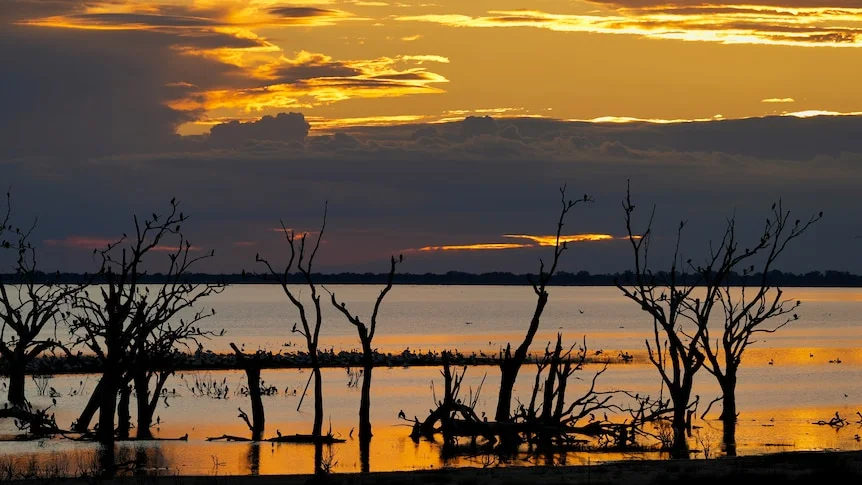
A dry summer raises the stakes
Menindee Lakes is heading into a hot summer with little inflow expected and water levels at their lowest since 2021. That combination puts pressure on a system already being reviewed: another dry spell could contribute to further fish deaths, while uncertainty about water access leaves growers weighing costly decisions about crops that take years to mature. The review’s timing matters because its eventual rules will have to contend with conditions residents are facing now, not only with long-term planning.
Darryn Clifton, a Sunset Strip resident and former vice-president of the Darling River Action Group, found 100,000 dead fish at Lake Menindee in February. He says the river needs substantial attention to recover, and worries that low inflows will worsen water quality. If conditions then change, he fears, that deterioration could set the stage for another fish kill. The immediate concern is ecological, but for people living nearby, each event also deepens uncertainty about the future of the lakes and the river.
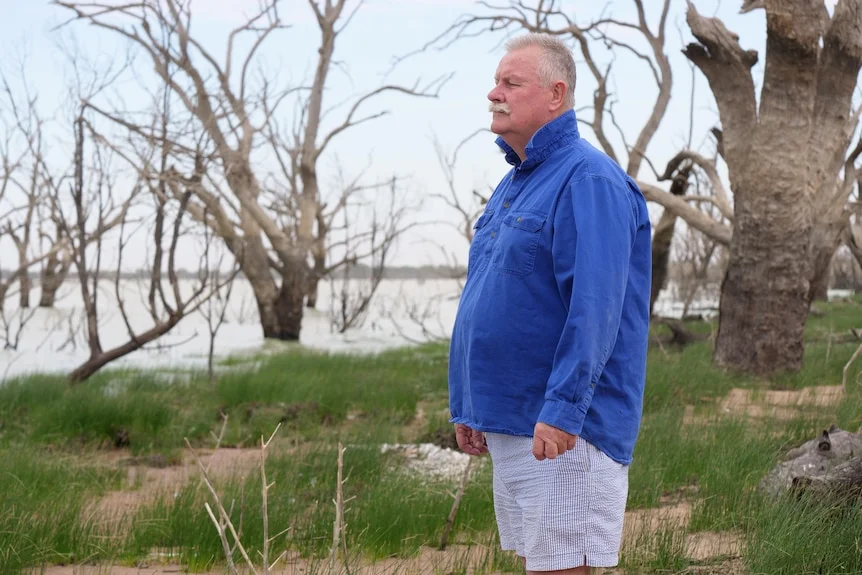
Darryn Clifton hopes the review brings positive change for the lakes and community of Menindee, but is not optimistic. (ABC Broken Hill: Coquohalla Connor)
Clifton sees water management as a recurring problem involving competing claims across the basin. He points to extraction by irrigators in the northern basin, South Australia’s priority for water, and releases by the Commonwealth Environmental Water Holder that he considers poor decisions. “We are the meat in the sandwich,” he said. His description captures a local frustration: decisions made across a connected river system can have consequences for communities that feel they have limited influence over when water is stored or released.
Menindee Lakes, he added, has traditionally been the first of the basin’s three major storages to be drawn down. That history shapes his expectations of the review. He expects it to produce change, but doubts that any outcome will satisfy people who live around the lakes or in Menindee. The system lies about 117 kilometres south of Broken Hill and links the Upper and Lower Darling rivers. At full capacity, it holds roughly three-and-a-half times the volume of Sydney Harbour, a scale that helps explain why decisions about its operation matter far beyond the lakes’ immediate shoreline.
New operating rules under review
The Murray-Darling Basin Authority (MDBA) is examining rules that have largely remained in place since the 1960s, when the lakes were developed as water storage shared by New South Wales, Victoria and South Australia. Rules written for a shared storage system have to manage several demands at once: water needs to be stored and released, while communities and ecosystems downstream depend on what happens upstream. The current review is an opportunity to reconsider how those competing needs are handled in practice.
Last month, after storage fell below 28 per cent of capacity and water restrictions were imposed in the Darling River’s Northern Basin, control of the lakes returned to the NSW government as a NSW-only resource. That change sets the immediate context for the review, but it doesn’t by itself resolve the underlying question of how water should be managed when supplies are low. For residents, the rules matter most when scarcity forces those choices into the open.
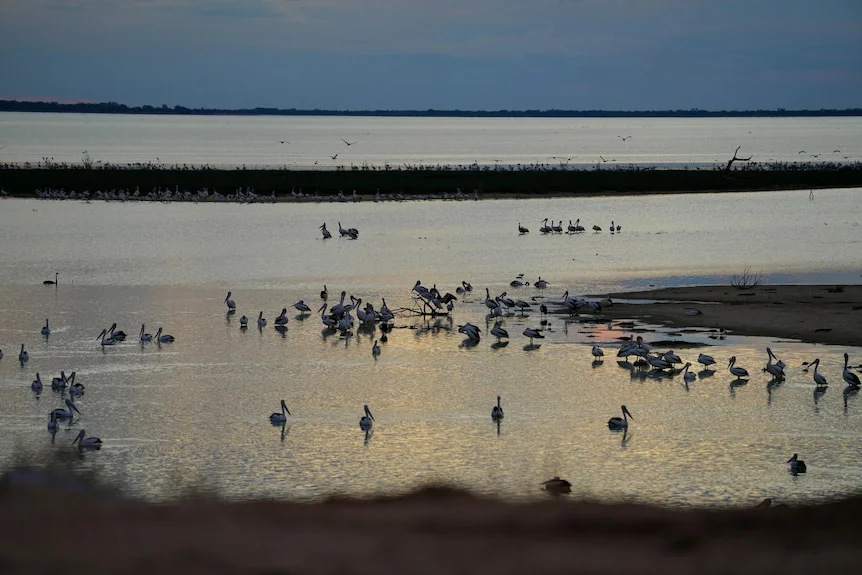
The lakes support a range of wildlife, with locals hoping future decisions ensure their survival. (ABC News: Bill Ormonde)
The MDBA received about 160 submissions. Senior director of river modernisation Joe Davis said responses showed agreement on several concerns, alongside different views about priorities. Those differences include how to balance environmental outcomes with water security, and whether reform should focus on infrastructure, operating rules or wider basin changes. The range of submissions suggests that there’s no single adjustment likely to settle every dispute; the authority will have to explain what its options are designed to achieve, and whose needs they serve.
Growers need dependable access
For Menindee grape grower Steve Howse, uncertain water supply carries a direct business cost. Vines can take more than two years to produce fruit, so drawdowns expose growers to risk well before a crop can repay the work and expense of establishing it. “Without a secure water source we really are taking a bit of a gamble,” he said. “It’s not a cheap exercise.” His concern points to a difficult feature of perennial crops: growers can’t respond to a short supply outlook simply by changing plans for the next season.

Steve Howse at his property on the Darling River in March 2020. (ABC Rural: Saskia Mabin)
Howse says access to water in the upper two lakes could provide growers with two years of security without waiting for the review. He also questions a focus on protecting fish habitat if water itself is unavailable: “We’re not going to have fish habitat if we have no water.” The point is blunt, but it reflects a real tension in the debate: ecological goals depend on water being present, while allocations and storage decisions determine how much is available and where it goes.
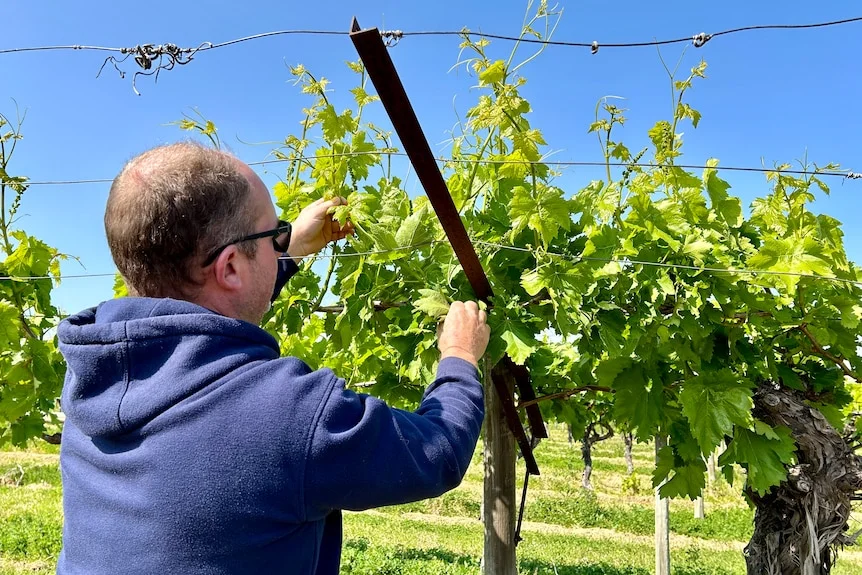
Steve Howse says he is worried about the longevity of his crops. (ABC Broken Hill: Lily McCure)
What the review will have to prove
The MDBA is expected to publish draft options for community review before the end of the year, followed by a final report next year. That timetable gives residents and growers a chance to assess the proposals, but it also means the summer’s pressures will arrive before the review is complete. If you’re working in this space, the practical question is whether the proposed rules will make water decisions more predictable when storage is low.
This is more significant than it looks: a review can name competing priorities without resolving how they should be balanced. The options will need to address ecological needs and the water security residents say underpins life and work around the lakes. (And this is the part most people overlook.) Predictability matters because growers make decisions years ahead, while the consequences of poor water quality can emerge quickly. The test will be whether the rules offer a credible way to manage both time horizons.
For now, the lakes are entering a hot, low-inflow summer with residents watching the water recede and waiting for decisions that could shape the next dry period. Not a small ask.


