
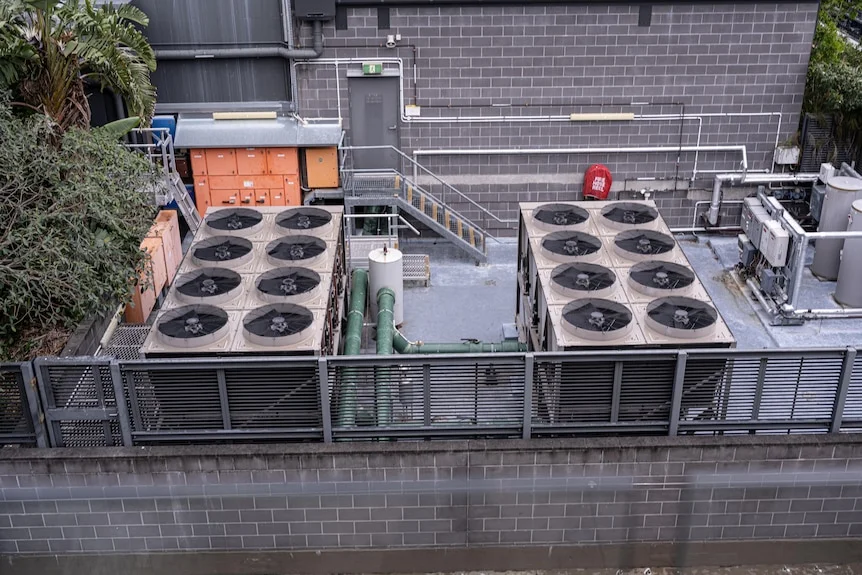
Brisbane City Council’s noise assessment found that a rooftop air-conditioning system at Melbourne Residences exceeded Queensland’s legal limits, yet the council decided against enforcement. That gap between a documented breach and the council’s decision has led residents of neighbouring Croft on Fish Lane to complain to the Queensland Ombudsman. The dispute raises a practical question about noise rules: what protection do residents have when measurements show a limit has been crossed but the authority responsible for administering it decides not to act?
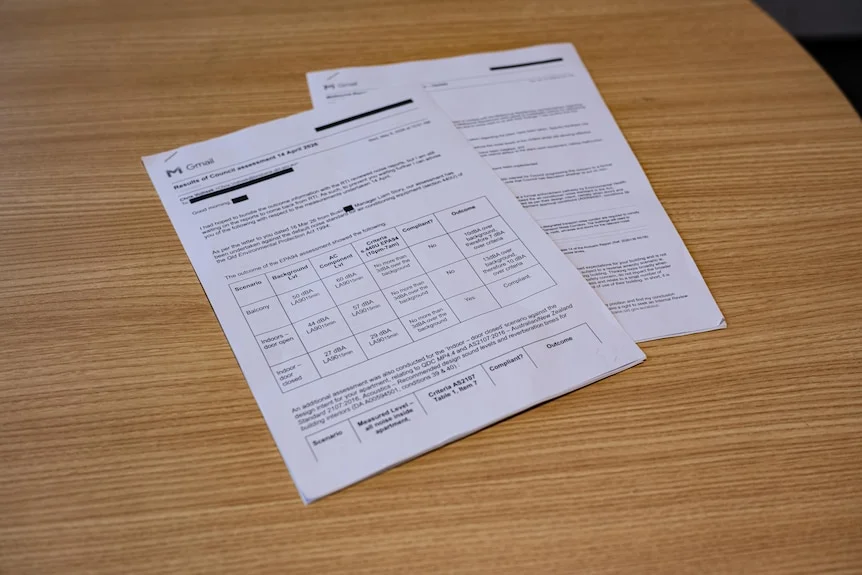
The assessment recorded noise on a Croft balcony at 7 decibels above the limit. Indoors, with the door open, the level was 10 decibels over. It described the air-conditioning system as non-compliant with the Queensland Environment Protection Act. A 10-decibel exceedance represents noise 10 times the maximum permitted level, making the indoor result more than a minor discrepancy on paper.
Those measurements establish the council’s finding, but they don’t, by themselves, settle what should happen next. Noise rules can involve both technical thresholds and decisions about how to respond to a breach. Here, residents are challenging the distance between those two steps: the assessment recorded excess noise, while the council concluded that enforcement wasn’t warranted.
The council’s discretion
In an email to residents, the council said it could weigh the circumstances before acting on a non-compliant finding. One official wrote that enforcing the Act would conflict with development-approval expectations for the building and wouldn’t be a reasonable use of council resources. That explanation puts two considerations—what was expected when the building was approved and the cost of enforcement—at the centre of the decision.
The council also advised residents to keep their doors closed, which would bring indoor noise below the threshold. For residents, that advice shifts the practical burden: the measured indoor level falls within the limit only when the apartment is closed off from its balcony. It doesn’t answer how they’re meant to use the space as they say they expect to, or whether that expectation should affect the council’s response.
A spokesperson said an independent review found enforcement unnecessary and that the measurements met expectations applying to the Fish Lane apartments. The spokesperson directed questions about each building’s noise mitigation to its developer. Those statements describe the council’s position, but they don’t resolve the residents’ complaint about the effect of the noise or explain what remedy, if any, the council considers appropriate.
That response has left residents disputing where responsibility lies. The council says it has discretion over enforcement; affected owners say inaction is difficult to accept when the assessment itself found the system exceeded the limit. This is more significant than it looks: the dispute concerns not just a reading on a meter, but what a finding of non-compliance means in practice for people living nearby.
Residents and developer disagree
Jarrad Wilson, a Croft on Fish Lane resident and property developer, said neighbours were angry at being told to stay indoors to avoid the noise. “We live in Queensland, there's a level of expectations you should be allowed to enjoy the outdoors,” he said, adding that being told to keep doors shut wasn’t acceptable. His complaint is about the daily consequence of the proposed workaround: residents can reduce the noise indoors, but only by limiting how they use their homes.
If you’re working in this space, that distinction matters. Advice that lowers a measured sound level may address a technical threshold while leaving the lived problem unresolved. Whether that should change an enforcement decision is the point residents are asking the Ombudsman to examine.
Aria Property, developer of Melbourne Residences, didn’t respond to a request for comment. In an email to complainants, however, the developer said buyers should have expected to overlook the building’s rooftop plant and suggested they raise any failure to disclose that information with the developer. It also said residents who disliked rooftop air-conditioning noise could move, and noted that properties bought off the plan more than three years earlier might have appreciated significantly.
That answer frames the issue around what buyers knew, or should have known, when they purchased. But expectations about a rooftop plant don’t by themselves explain the council’s decision to leave a documented exceedance unenforced. And yet, the developer’s account makes clear that the parties aren’t even arguing from the same starting point: residents describe an ongoing noise problem, while the developer points to the purchase and disclosure process.
Ombudsman investigation continues
The residents have referred Brisbane City Council’s handling of the complaint to the Queensland Ombudsman. In a letter to them, the office said its investigation was continuing and that it would provide a full response when its work was complete. No outcome has been provided yet, so the Ombudsman’s assessment of the council’s handling remains pending.
The letter also said Queensland law gives councils authority to administer noise rules but doesn’t require them to enforce compliance in each individual case. Enforcement decisions remain at council discretion, even when noise limits have been exceeded. That description helps explain why a breach finding doesn’t automatically lead to action, though it leaves open how the council weighs the circumstances in a particular complaint.
The case therefore turns on the reasoning behind the decision: how the council balanced the assessment, development-approval expectations, resource use and residents’ complaints. The available information doesn’t establish what the Ombudsman will conclude. Its response may clarify how the council applied its discretion in this instance.
What the dispute leaves unresolved
For residents, the immediate question is whether they can use their balconies without accepting noise above the measured limit. For the council, the stated answer rests on discretion and a judgment that enforcement would be unreasonable. The gap between those positions is the substance of the complaint.
Here’s the thing: a rule can permit case-by-case decisions and still leave affected people unsure what protection it offers them. The Ombudsman’s investigation may address the council’s handling of the complaint, but the residents’ account makes the practical stakes plain: a closed door may lower the indoor reading, yet it doesn’t settle whether the noise outside is acceptable to those who live with it. For now, the assessment records a breach, the council has declined enforcement, and the residents are waiting for an explanation of how that decision was reached.


