Australia’s Backpacker Visa Changes Face Delays Amid Seasonal Worker Concerns
2026-11-16 19:58
799 views
Resistance from employers may delay Australia’s backpacker visa ballot, as proposed changes raise concerns about seasonal staffing and regional work requirements.
Labor’s visa plan faces pressure over seasonal workers
Australia’s proposed backpacker visa changes may be headed for a delay after resistance from farming, tourism and hospitality businesses. That matters: introducing a ballot system just as employers depend on seasonal workers could create immediate staffing problems.
Home Affairs Minister Tony Burke is expected to address the changes later this morning. The government is likely to postpone the ballot for people seeking second- and third-year visas until early next year, according to the ABC’s understanding.
Other details may shift too. The proposed cap of 5,000 third-year visas could increase, while backpackers may have to complete longer periods of regional work. The final settings remain unclear.
There’s a notable exception. British backpackers are exempt from regional work requirements under the Australia-UK free trade agreement, even as UK arrivals have surged since 2023. If the government wants to reduce overall numbers, that exemption leaves an awkward gap in the policy.
McLachlan challenges the Coalition on climate policy and trade
Andrew McLachlan’s criticism of the Coalition’s climate stance goes beyond the optics of Australia’s presence at COP31. The Liberal senator argues that the opposition is focusing on small expenses while proposing a much larger cut to climate programs.
The Coalition has questioned the cost of the government’s COP31 participation, including $32,000 for a coffee cart at Australia’s pavilion. McLachlan called that line of attack “petty,” saying the conference gives Australia a chance to engage internationally despite its distance from many parts of the world. He told ABC Radio National Breakfast he’d rather see debate about climate targets and cooperation than the number of coffees served.
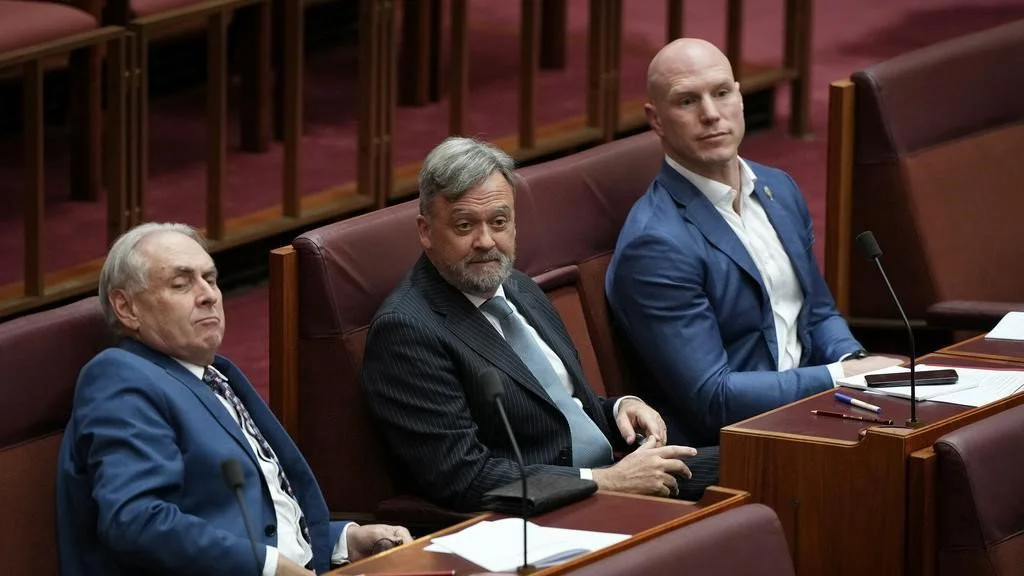
Andrew McLachlan sitting in between Don Farrell and David Pocock in the Senate. (ABC News: Matt Roberts)
The sharper dispute is over a Coalition proposal to cut $31 billion from climate spending. McLachlan said he was “totally opposed,” arguing that scrapping the Climate Change Authority would remove a body that advises how Australia can meet its Paris Agreement targets, to which the country remains committed. He described the plan as “illogical”: a financial saving, he argued, could come at an environmental cost.
There’s a political calculation here, too. McLachlan backed Sussan Ley in February’s Liberal leadership spill and said she had not received a fair chance. Asked whether Angus Taylor was doing a better job, he offered no endorsement, saying the Coalition had made “some gains” and wishing its leaders well.
His disagreement extends to the Australia–EU free trade agreement. The Coalition opposes the deal over concerns it would tie Australia to climate targets, but McLachlan says he is prepared to cross the floor to support it. His argument is that sectors expecting less from the negotiations shouldn’t block gains for others. He called that kind of “collective punishment” inconsistent with liberal principles and urged colleagues to set partisan politics aside.
McLachlan says there are “many like-minded individuals” in the Liberal party room, though he accepts that some may think he speaks too freely. That candour has now put him at odds with his own side on COP, climate funding and trade.
Australia joins US-led AI supply chain pact
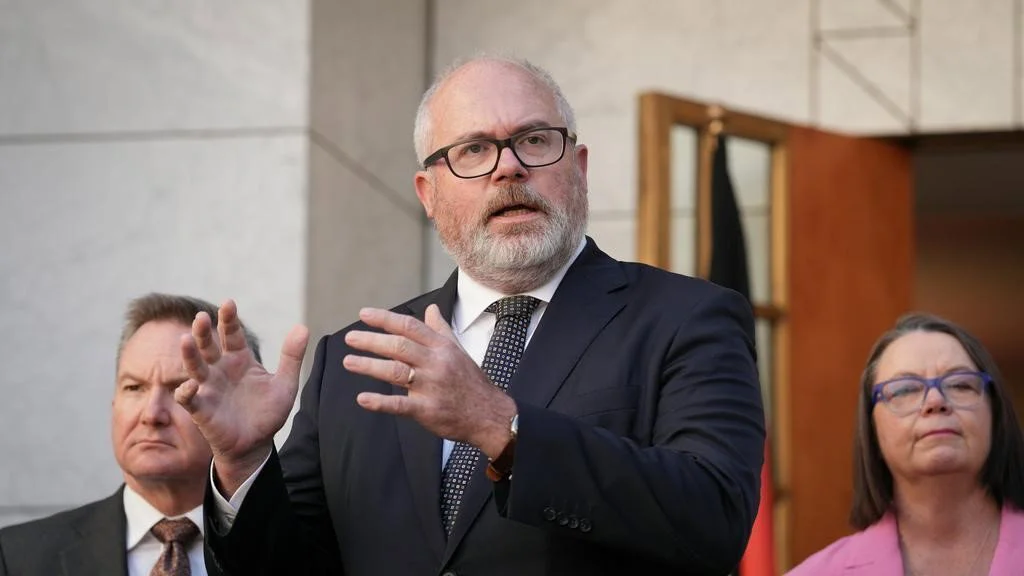
(ABC News: Matt Roberts)
Australia has signed onto a US-led agreement aimed at securing the sensitive technologies and supply chains behind advanced AI. The move puts AI access alongside the trade and resources ties Canberra has been building with partners.
Industry Minister Tim Ayres described the pact as part of a wider “web of trade and supply chain agreements,” pointing to the EU-Australia Free Trade Agreement and arrangements covering critical minerals. His case is that Australia needs a place in these networks if it wants access to advanced technology.
> “It's in our interest to participate in those supply chains and its interest to be able to access these technologies right up the value chain through to the high-end artificial intelligence capabilities as well.”
That ambition is clear; what the agreement will mean in practice for Australia’s access to AI systems and their underlying components isn’t yet. But the strategic point is harder to miss: governments increasingly see advanced AI as dependent on who controls the supply chains around it, as much as on the software itself.