Technology
Unexpected Solar Wind Discovery Unveiled by NASA Mars Spacecraft Data
NASA's silent Mars spacecraft has revealed intriguing data that led to an unexpected discovery about solar wind, challenging previous assumptions in the field.
Unexpected Findings from Mars
NASA's Mars spacecraft, MAVEN (Mars Atmosphere and Volatile Evolution), has unveiled an intriguing phenomenon that challenges our understanding of the Martian atmosphere. Recent observations have revealed what scientists are calling "very interesting wiggles" in data regarding solar wind interactions with the planet. This isn't just a minor detail; these unexpected fluctuations hint at new dynamics at play within Mars's atmosphere, something that no one had predicted.
The implications of this discovery are fascinating. Researchers noted that these fluctuations may indicate a response to solar wind far more complex than previously thought. Dr. Sharmila Kuthunur reported, "No one expected that this effect could even occur in the atmosphere." That statement resonates deeply, suggesting that our existing models for atmospheric interactions on Mars could be fundamentally flawed. If you're involved in planetary science or space exploration, this could signal the need to rethink how we interpret atmospheric data.
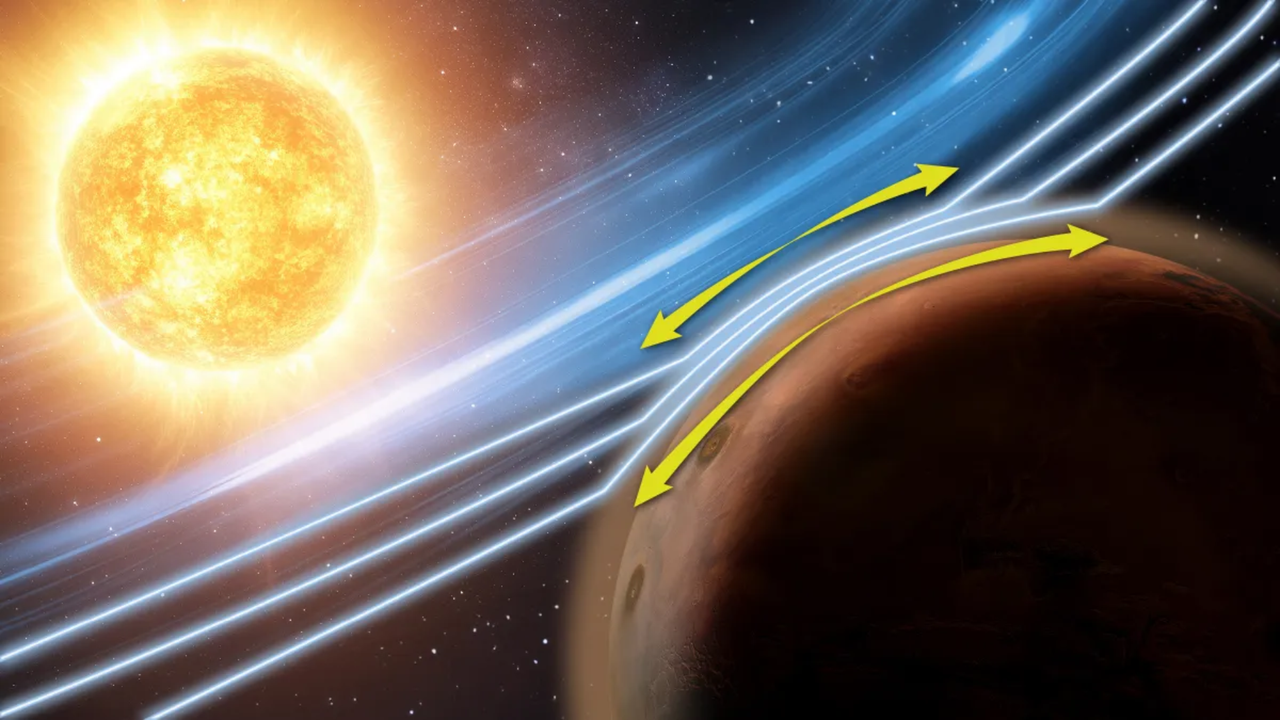
To visualize this, consider MAVEN's role: it continuously gathers data on Mars's upper atmosphere and its interaction with solar wind, providing key insights into how solar activity influences the Martian environment. This new finding could pave the way for further investigations into not just Mars, but potentially other celestial bodies affected by solar winds.
This discovery raises more questions than it answers. What specific conditions triggered these "wiggles"? Are they consistent across different periods of solar activity? And, importantly, how do these findings affect our understanding of Mars's habitability?
Stay tuned as this story unfolds—NASA's MAVEN mission is reshaping how we perceive Mars and its atmospheric complexities, and the broader implications could redefine our approach to exploring the cosmos.Dissecting the Solar Wind Discovery
The recent discovery of unexpected solar wind patterns from NASA's silent Mars spacecraft raises intriguing questions about how we understand solar interactions with planetary environments. These findings are not just scientific footnotes; they may reshape our grasp of cosmic weather and its influence on planetary atmospheres. While the specifics are still unfolding, the observed "wiggles" in the spacecraft's data hint at new dynamics in solar activity that could have ramifications for both Mars and Earth.
Here's the thing: the data isn't merely a curious anomaly—it's a potential indicator of deeper solar processes at play. The analysis reveals fluctuating patterns in solar wind that suggest variability in solar emissions, a factor that could influence not only space weather forecasts but also our understanding of Martian climate changes. This isn't just a technical detail; it could affect future exploration missions and our continued efforts to study planetary habitability.
It’s crucial to ask why these patterns were previously obscured. The spacecraft's intricate sensor suite, designed for other primary missions, may have inadvertently captured this unique solar data. It’s unclear whether this discovery stems from a flaw in our earlier data interpretations or if new technologies offer sharper insights into phenomena that were once invisible.
As the conversation around these findings develops, industry experts and scientists alike will need to reconsider how they approach solar data collection. If you’re engaged in aerospace research or planetary science, these developments signal a potentially seismic shift in the field, inviting a mix of skepticism and curiosity about how we interpret solar interactions moving forward.
In reviewing the implications, it becomes apparent that this isn’t just an academic curiosity. Should future data continue to corroborate these findings, they could require revisiting long-held assumptions about solar wind behavior and its impacts on not just Mars, but also on terrestrial conditions. The interplay between solar bodies and their atmospheres is complex, but it’s increasingly clear that there’s much more to explore.The Implications of the Zwan-Wolf Effect Discovery on Mars
Mars may be silent on the communication front, but its atmosphere still has much to share. The recent identification of the Zwan-Wolf effect on the Red Planet is a surprising development that holds potential implications for our broader understanding of planetary atmospheres—particularly those lacking robust magnetic fields. Although NASA's MAVEN spacecraft has lost contact during crucial times, its legacy lies in the data it collected, enabling scientists to observe phenomena previously deemed exclusive to magnetized worlds like Earth.
Here’s the punchline: the Zwan-Wolf effect typically deflects solar wind through a planet's magnetic shields. Earth’s substantial magnetosphere protects it from harmful solar winds. Mars, having lost its magnetic integrity billions of years ago, has a diffuse and weak magnetic environment that reacts differently, as researchers have discovered. They believe the Zwan-Wolf effect could be active all the time on Mars, but only became apparent when a powerful solar storm amplified the effect.
What this means for ongoing planetary science is profound. This finding opens up new avenues of exploration, particularly for tracking how solar activity influences atmospheres in unique planetary conditions. As Christopher Fowler, the lead researcher, noted, this discovery introduces new layers of physics that warrant further investigation. “No one expected that this effect could even occur in the atmosphere,” he remarked, underscoring the novelty of the observation.
However, the Mars exploration community faces uncertainty as NASA scrambles to re-establish contact with MAVEN. The spacecraft is pivotal for ongoing research and understanding of Martian climate dynamics. It's a race against time, not just for the data itself but for the insights it brings to future interplanetary exploration missions, which may include prospects like Venus and Titan, where conditions could mirror discoveries made on Mars.
In summary, while MAVEN may be silent now, the implications of its findings are anything but. This situation raises a pertinent question: how much more is out there waiting to be discovered, and how will evolving technology allow us to unlock these secrets in an era when communication fails? If you're invested in space exploration or planetary atmospheres, now's the time to keep a close eye on developments from Mars—because this may just be the tip of the iceberg.