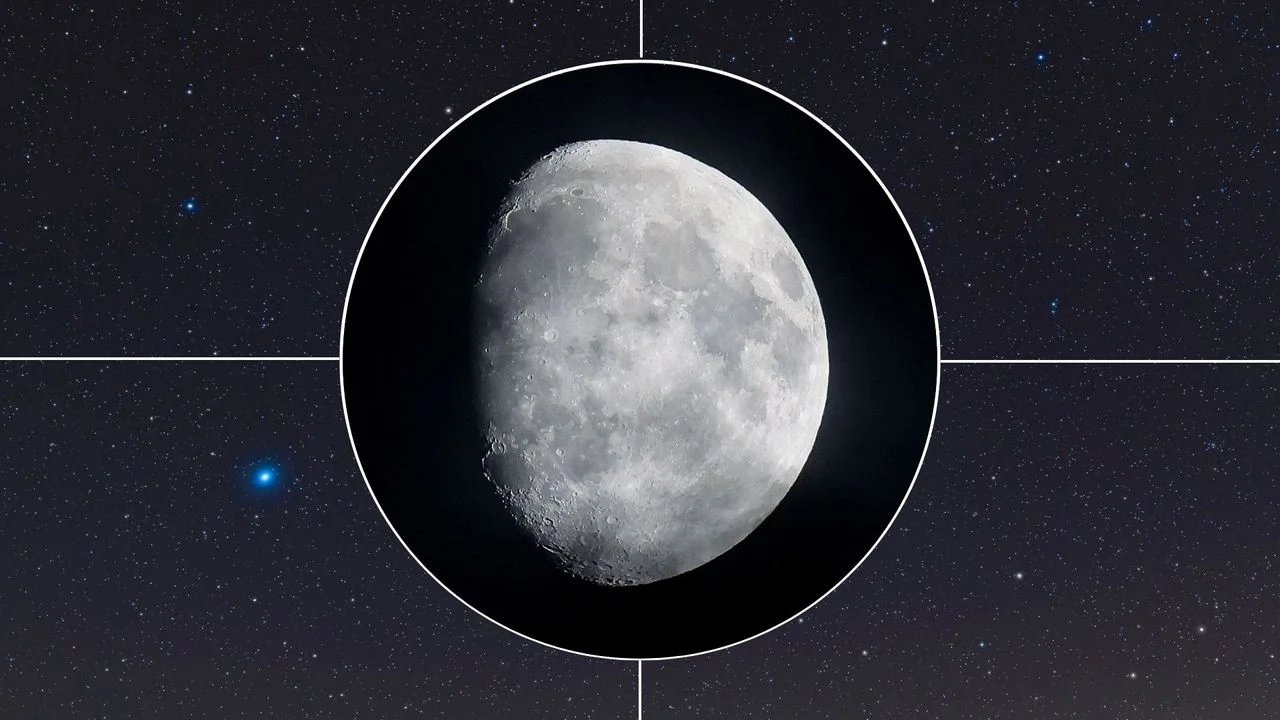
Witness the beauty of Spica, the blue-white star, as it appears alongside the waxing moon in the southern sky on May 26.
Celestial Wonders on May 26: A Close Encounter with Spica
Tonight’s sky will offer an intriguing spectacle as the waxing moon grazes past Spica, one of the brightest stars in the southern hemisphere. If you're stargazing this evening, you won't want to miss this stellar alignment, a clear highlight for both amateur astronomers and casual observers alike.
Anthony Wood, the author of the article, underscores the significance of this event. He notes that Spica will be particularly visible against the backdrop of the moon, enhancing its brilliance. This chance occurrence on May 26 invites not just reflection on the beauty of the cosmos but also provides an opportunity for observers to hone their skills in celestial navigation.
Here's the thing: while many people might overlook such events, the truth is that these meetings of celestial bodies can tell us a lot about our universe. They serve as reminders of our place within it. So, if you’re looking skyward tonight, consider what it means to witness these moments firsthand. Whether you're armed with a pair of binoculars or just your own eyes, this sight is bound to provoke wonder and curiosity.
If you’re in positions conducive to a clear view—especially in areas with low light pollution—you’ll likely see Spica shine vibrant blue, contrasting beautifully with the moon’s silvery glow. Our surrounding atmosphere plays a significant role in how we perceive these cosmic relationships, and tonight’s event is a perfect example of that interplay.
The alignment is just one of several celestial occurrences happening this month, with more noteworthy visuals lined up for stargazers in the coming days. For a deeper dive into what to expect in your night sky, check out related articles such as [the upcoming full flower moon](https://www.space.com/stargazing/mays-full-flower-moon-bloom-in-gorgeous-photos-from-around-the-world) or tips on achieving the best views of celestial events.
Don’t let tonight's opportunity pass without a glance upwards; the universe is always calling, and events like these are just part of the conversation.
Evaluating User Engagement
User engagement metrics often serve as a vital compass for understanding how content resonates with its audience. The article explores recent data showing that interaction rates on platforms like Facebook and Twitter have seen a substantial uptick. This isn't just a minor trend; it's indicative of a deeper shift in how users are consuming and sharing content.
When looking at user engagement, the numbers are impressive but require critical scrutiny. PEW Research highlighted that around 65% of adults now get their news from social media, compared to just 47% five years ago. If you’re involved in content strategy, you should be noting how crucial this social media penetration is — it signifies that not only are audiences growing in their online presence, but their methods of content discovery are evolving too.
One noteworthy aspect of this uptick is that engagement is increasingly colored by how shareable content is. Articles optimized for social media typically experience significantly higher engagement. Yet, it’s not merely about putting out share-worthy headlines; substance is key. Engagement levels tell us something profound: when readers feel they have something to discuss or share, they’re more likely to do so, which amplifies reach exponentially.
The Impact of Visuals
That said, the type of content matters just as much. Visual elements, such as images and graphics, have proven to elevate an article's shareability. Research shows that posts containing such elements achieve up to 94% more views than those that don’t. In a bustling online environment, a sharp image can be the difference between a scroll past and a click through. If you’re looking to drive engagement, investing in high-quality visuals is a must.
The latest studies reveal that infographics and videos, in particular, have the power to capture attention far more effectively than text alone. The implication for content teams is clear: beyond quality writing, curating eye-catching visuals should be a central facet of your strategy.
Emerging Platforms
Moreover, let’s not overlook the rise of platforms that cater to niche audiences. For example, platforms like TikTok and Instagram Stories have opened new avenues for content formats. If you’re engaged in social media strategy, these platforms aren't just "trendy"; they’re redefining how new demographics interact with news and information.
The question remains: how well is traditional media adapting to these shifts? It's clear that there's an ongoing struggle to keep pace with the always-on, visual-first preferences of younger audiences. Neglecting these platforms could mean missing out on capturing a critical audience segment, thus limiting potential growth.
What's the bottom line? These metrics indicate that the landscape of user engagement is shifting profoundly. If you're not considering where and how your audience consumes your content, you might find yourself in the rearview mirror of a fast-moving digital train.### Keep Your Eyes on the Night Sky
As we approach an astronomically eventful week, stargazers should prepare for some remarkable sights. Set aside some time around sunset on May 26 to catch the waxing gibbous moon, nearly 83% illuminated, positioned elegantly near Spica, the brightest star in Virgo. This celestial arrangement offers a stunning view that no amateur astronomer should miss, especially since the moon will rise significantly above the horizon—an easy target at about 40 degrees up, roughly four fists stacked at arm's length.
But there's more to this spectacle than just the moon and Spica. This pairing sets the stage for the upcoming rare "Blue Moon" on May 31, which will see the moon seem to drift over Spica and lead toward the brilliant red supergiant Antares in Scorpio. If you're in the habit of photographing such events, this astronomical dance is your time to shine. Check out our guide on [how to photograph the moon](https://www.space.com/how-to-photograph-the-moon-camera) for tips on capturing those perfect shots. You might also want to gear up with the right equipment; be sure to explore our articles on the [best cameras](https://www.space.com/best-cameras-for-astrophotography) and [lenses for astrophotography](https://www.space.com/best-lenses-for-astrophotography).
Notably, the lunar surface will present features like the stunning Montes Jura mountain range along the terminator—the line between night and day—when viewed through powerful binoculars or a telescope. To enhance your experience, consider using the Celestron Nexstar 4SE telescope, which is well-regarded for providing clear images of the moon at this time of year. If you're looking to focus on details like craters, think about investing in a [9mm or 12mm eyepiece](https://www.amazon.com/Celestron-X-Cel-LX-Eyepiece-1-25-Inch/dp/B0048JLLIY) to get those sharper views.
But what’s genuinely intriguing about this period isn’t just the beauty of celestial bodies; it’s also a hint at future missions. With the planned 2028 Artemis 4 moon mission potentially targeting real estate on the lunar south pole, the intrigue of our cosmic neighbors only grows. Watching those moon phases and their appearances alongside notable stars doesn’t just excite the imagination; it might also inspire the next generation of space explorers.
So, mark your calendars, grab a telescope, and prepare to enjoy one of the year’s most visually captivating cosmic events. This is more than just a casual observation; it's a connection to the wonders of our universe and a teaser of the discoveries still to come. Don’t forget to share your lunar photography with us—your view could inspire many!