Technology
Common Planetary Types Differ Significantly from Earth's Interior
Recent findings suggest that the most prevalent planets in the galaxy exhibit dramatic differences in their internal structures compared to Earth, challenging existing notions of what makes a planet familiar.
What Lies Beneath Most Planets
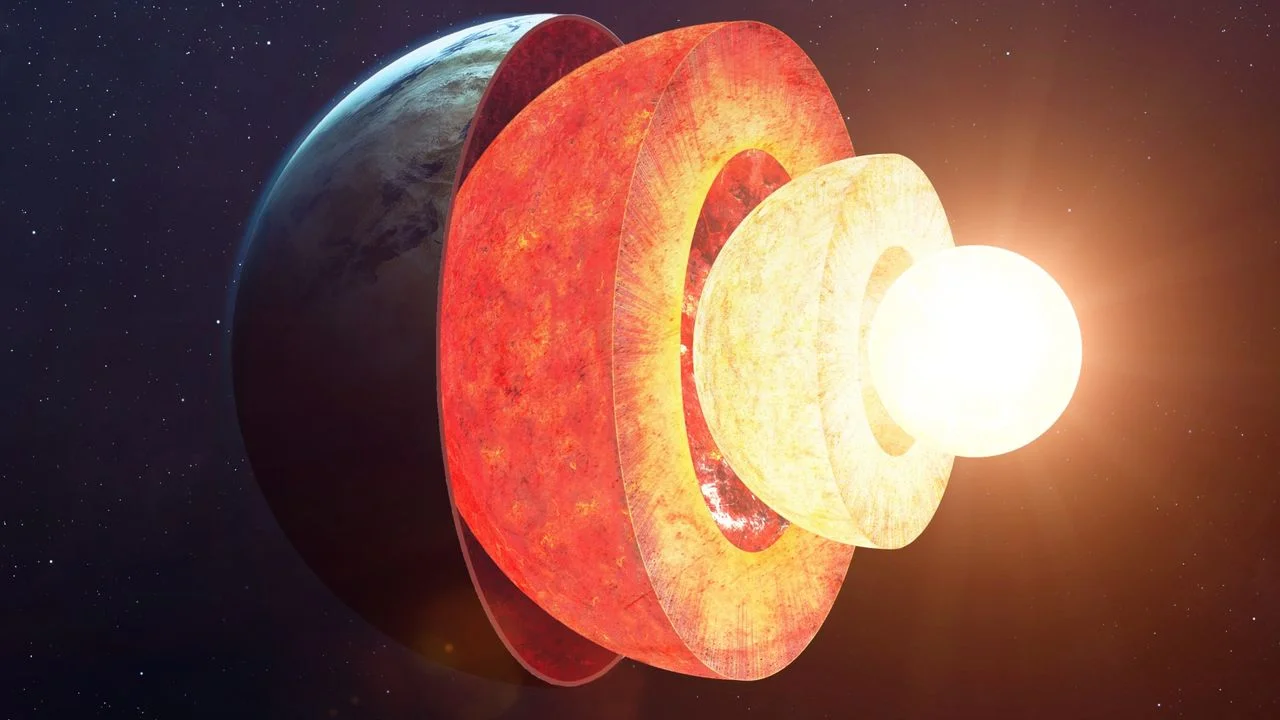
Recent revelations in planetary science challenge our long-cherished beliefs about planet composition. Specifically, new research suggests that the most abundant type of planet—super-Earths—doesn't conform to the classic image of a compact, metal-rich core surrounded by rocky layers like our own Earth. Instead, these distant worlds may defy such simplistic models, showcasing a remarkable diversity in internal structure that’s not only unexpected but also fundamentally alters our understanding of planet formation.
This significant find indicates that the common assumption of a dense metallic core as the standard for planetary interiors could be a rarity in the cosmos. If you’re immersed in astrophysical research or engaged with exoplanets, this may compel you to reconsider existing theories and models you once took for granted. The data suggests that many of these planets could have considerably different makeups, impacting everything from their geology to their potential for hosting life.
The implications are profound. For instance, if most exoplanets have vastly different structures, it raises the question of how those planets evolve and what conditions support life, if any. The traditional models guide not only theoretical understanding but also practical endeavors like the search for extraterrestrial life, making this shift in perception exceptionally pertinent.
Expanding our knowledge in this realm will require a leap in both observational technology and theoretical frameworks. As experts like Paul Sutter highlight, acknowledging this complexity will be vital as we refine our techniques for discovering and categorizing exoplanets going forward.
The ongoing discourse is invigorating, and ideally, it will prompt further research aimed at untangling these planetary mysteries while we look toward the stars.Social Sharing Options
When it comes to expanding the reach of an article, the sharing features embedded within digital platforms play a significant role. The current article offers various avenues for readers to distribute the content across multiple social media platforms and directly through email. You'll see prominent buttons that enable sharing via Facebook, Twitter, Reddit, Pinterest, and email, among others. The aim is to encourage readers to take an active role in promoting the content they find valuable.
Here’s a notable aspect: the share functionality isn't just about convenience. It's a calculated strategy to leverage user engagement for broader visibility. For example, the "Copy link" feature allows easy access to text that can be pasted anywhere, from forums to personal messages. Each sharing option is accompanied by social media icons that act as visual cues, increasing the likelihood that readers will participate.
But here's the thing: not all social media shares are created equal in terms of engagement. Posting to platforms like Facebook or Twitter might yield varying reactions based on audience preferences. For instance, links shared on Twitter can generate significant retweets but might fall flat on platforms like Pinterest. This variance suggests that understanding where to share is nearly as important as the act of sharing itself.
Readers also have the opportunity to see how many others have engaged with the content through comments. The comment count, currently showing zero for our article, poses a potential barrier to entry for new readers. If you’re in this space, you know how social proof can influence engagement rates. A visible comment section often invites more interaction, as users are more likely to join discussions that already have a foundational presence.
In essence, while these sharing tools are standard in digital publishing, their strategic implementation can significantly affect how broadly an article resonates beyond its original audience. The success of these tools relies not just on their existence, but on how well they are integrated into the reader experience.Shifting Perspectives on Planetary Formation
Recent research is fundamentally challenging our understanding of rocky planets beyond the solar system. For years, the prevailing assumption was that planets like Earth and its neighbors shared a similar structure: a dense metallic core, followed by a silicate mantle, and capped with a thin atmosphere. This model seemed straightforward and neatly aligned with our observations of Earth. However, the latest findings, as highlighted in a paper in the Astrophysical Journal, suggest a much more complex reality for the most widespread type of exoplanet: the sub-Neptunes.
Sub-Neptunes, characterized by their size—larger than Earth yet smaller than Neptune—represent an unexpected and prominent category of planets in our galaxy. The new research indicates that when these planets accumulate hydrogen beyond a critical threshold, their internal structure diverges significantly from the traditional layered model we've relied on. Instead of forming a distinct core and mantle, they may exist as a homogeneous mix of iron, silicate, and hydrogen. This revelation alters not only our theoretical frameworks but also the methodologies we use to study these celestial bodies.
Implications for Exoplanet Studies
The implications of this revised understanding extend into how we interpret planetary characteristics such as cooling rates, atmospheric retention, and size variations over time. Notably, the model postulates that young sub-Neptunes should exhibit a slower contraction rate due to helium bubbling from their depths, which is completely at odds with previous predictions. As we refine our observational tools and techniques, including those employed by the James Webb Space Telescope, we can expect to test these new models against real-world data.
Admittedly, this ambitious model carries uncertainties. Much of the research relies on theoretical extrapolations that we can't yet directly recreate in laboratory settings. Still, with advancements in high-pressure experiments, we're inching closer to validating these theories.
In essence, this emerging narrative suggests that Earth-like features, such as distinct cores, may not be the norm but rather an exception in a universe teeming with diverse planetary structures. If you're involved in astrophysics or planetary science, this is a paradigm shift worth monitoring closely. Future explorations are set to redefine what we understand about planetary systems at large, pushing the boundaries of our cosmic perspective.
The quest for knowledge about our universe continues to reveal fundamentally different pictures of what planets are and how they form, ultimately altering our own understanding of Earth’s place in the cosmos.