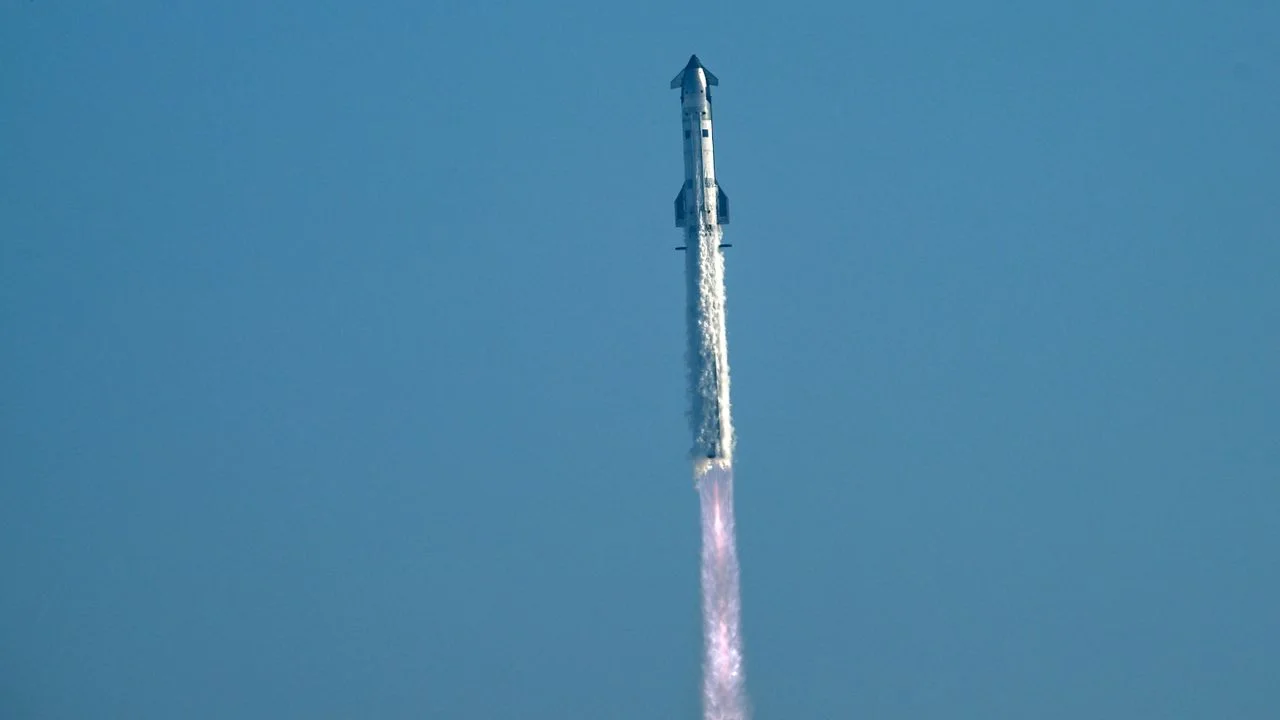
SpaceX has executed a successful launch of Starship V3, its most powerful megarocket to date, during the inaugural Flight 12 test. The mission marks a significant milestone in the company’s ongoing exploration efforts.
Starship V3 Takes Flight: A New Era for SpaceX
SpaceX has once again stepped into the limelight with the launch of its third iteration of the Starship, aptly named Starship V3. This megarocket, which is being touted as the most powerful version yet, has successfully completed its inaugural Flight 12 test, marking a significant milestone in the ongoing development of SpaceX's ambitious space exploration goals. The remarkable visuals from this launch highlighted the advancements made since previous versions, but they also raise questions about the future trajectory of the Starship program.
Here's the thing: the significance of this launch isn't just about achieving a successful test flight. Starship V3 is a critical component in Elon Musk's vision to return humans to the Moon and eventually colonize Mars. With each version, SpaceX continues to refine its technology, and the increased power of V3 could enable far heavier payloads, making lunar and Martian exploration more feasible than ever before.
However, while the company celebrates this success, it's essential to scrutinize the broader impact. Flight 12 was pivotal, yet it also serves as a reminder of the challenges that await. SpaceX faces fierce competition, not just from traditional aerospace giants but also from emerging players eager to stake their claim in the commercial spaceflight sector. If you're working in this space, it's crucial to consider how these developments could shift market dynamics.
In analyzing the current landscape, it becomes clear that while SpaceX's achievements are impressive, the company's future success may hinge on how quickly it can transition from test flights to operational missions. The industry is watching closely—after all, every successful launch adds to the narrative that SpaceX is paving the way for human interplanetary travel.
For industry insiders and space enthusiasts alike, this isn’t just another launch; it's a statement about ambition and technological progress. As we anticipate what comes next for the Starship program, we must also stay tuned to how these developments will influence both governmental and commercial missions in the years to come.
Technical Milestones of the Starship V3
The recent launch of SpaceX’s Starship V3 is noteworthy not just for its scale but for the distinct advancements made since earlier iterations. With a maximum payload capacity of around 150 tons, the V3 is touted as the most potent rocket ever constructed. This isn't just incremental progress; it represents a leap forward in payload efficiency and design robustness that competitors will find challenging to match.
If you're focused on payload specifications, Starship V3's enhancements go deeper than raw numbers. Its engines, utilizing new Raptor technology, offer improved thrust-to-weight ratios and optimized fuel consumption. This shift could redefine benchmarks in heavy-lift capabilities, positioning SpaceX as an indisputable leader in deep-space missions. In an industry where marginal gains can mean millions in operational costs, this technology may signal a seismic shift in how space missions are planned and executed.
The Significance of Flight 12
Flight 12 isn’t just another notch in SpaceX's belt; it’s pioneering the possibilities of future endeavors, like the planned lunar missions under NASA's Artemis program. What’s particularly telling is how this flight has been framed not merely as a test but as a crucial step toward a potential manned Mars mission in the future. Many skeptics argue that achieving reliable reusability is still a considerable hurdle, but with each successful test, SpaceX closes that gap.
You might wonder whether these gains translate to real-world application or if they remain theoretical. While some data is still emerging, the evidence from Flight 12 suggests a promising trend in both performance metrics and operational feasibility. The integration of rapid reusability features is particularly notable; it could allow for turnarounds that dramatically shorten the launch schedule, potentially ushering in an era of frequent and affordable access to space.
Challenges Ahead
Of course, it’s not all smooth sailing for SpaceX. Despite the successes, significant obstacles remain, particularly around regulatory approval for missions beyond low Earth orbit. The unpredictability of such processes can stall progress, and the cost implications from delays are steep. Labor and material shortages have haunted projects globally, and SpaceX is no exception.
That said, if you're watching the space launch market, expect ongoing reports of efficiency gains and technological refinements as they iterate on the design. The competition isn't waiting; companies like Blue Origin and Rocket Lab are racing to carve out their niches. This is more significant than it appears; the outcome of this space race could fundamentally alter access to space technology and exploration opportunities for years to come.
Launch Success Amidst Challenges
The latest Starship test launch was impressive in its power but not without its issues. Initially, SpaceX's Super Heavy booster, which houses a whopping 33 Raptor engines, encountered a snag as one of the engines failed during liftoff. This problem resulted in a missed "boost back" maneuver that is crucial for a controlled return to Earth. A critical aspect of these test flights is not just reaching the desired altitude, but also demonstrating the ability to return safely.
Interestingly, while the Super Heavy faced this challenge, the Starship itself—designated Ship 39—lost one of its six main engines during its ascent. Despite this setback, it successfully reached space using the remaining five engines, showcasing a level of redundancy built into its design. Still, the performance of these engines under real conditions raises concerns about reliability as SpaceX moves toward operational missions.
For those working in aerospace engineering or related fields, this test serves as a reminder: advancements in technology don't mean a lack of risk. The Starship's evolution continues to be a tale of trial and error, and every launch contributes to an ongoing learning process, crucial for the future of space travel. Keeping an eye on these developments becomes not just important for SpaceX enthusiasts but a significant point of analysis for industry observers and competitors alike.
This duality of triumph and difficulty illustrates the complexities inherent in aerospace innovation. If you’re closely tracking this sector, the implications of these launches can’t be overstated—they reveal what needs immediate attention and refinement before we see the day when missions to Mars and beyond become a reality.
Looking Ahead: SpaceX's Starship Evolution
SpaceX's recent developments with the Starship V3 indicate we're at a pivotal moment in rocket technology. During a live commentary, spokesperson Dan Huot remarked, "I wouldn't call it nominal orbital insertion, but we're in on a trajectory that we had analyzed, and it's within bounds." This attitude reflects a calculated optimism that characterizes SpaceX’s approach, even when they face challenges — such as optimistic forecasts tempered by the reality of engine performance.
The significance of the latest test can't be understated. Starship V3 represents a departure from its V2 predecessor with a shift to "hot staging," a method where the upper stage ignites its engines while still attached to the booster. This change is more than just a technical tweak; it speaks volumes about SpaceX's commitment to refining launch efficiency. The choice to ditch the interstage ring for a solid structural design that allows the upper stage engines to gain momentum before separation offers a glimpse into SpaceX's long-term vision of streamlining space travel.
Yet, there’s a layer of uncertainty here. The data does provide a narrative of progress, but the specifics around performance — especially after the separation where Super Heavy "falls back to Earth" — raise questions. How will these changes impact the trajectory and performance in upcoming missions? The adjustments might enable more reliable launches, but only if the engineering holds up under the pressures of real flight conditions.
For those of us in the industry, especially if you're involved in launch operations or spacecraft design, the implications of this testing series are profound. We're witnessing SpaceX push the boundaries, but at what point do the risks outweigh the potential for advancement? As they continue to refine their technology, the lessons learned from Starship V3 could reshape future missions, influencing the design of rockets both at SpaceX and elsewhere in the industry.
Ultimately, the road ahead for Starship is full of promise — but each step forward demands scrutiny, particularly in their approach to launch dynamics and engine performance. As these tests unfold, they will undoubtedly reveal whether these innovations are milestones on the path to effective space travel or simply ambitious experiments that expose the fragility of pushing technological boundaries.