Technology
'The Mandalorian and Grogu' Reimagined as Rotta the Hutt's 'Star Wars' Origin Tale
'The Mandalorian and Grogu' serves as a captivating origin story for Rotta the Hutt, enticing viewers with the prospect of exploring his adventures alongside Grogu.
A Fresh Take on the Star Wars Universe
"The Mandalorian and Grogu" isn't just another installment in the prolific Star Wars franchise; it offers a nuanced backstory that could reshape how we view the saga. At its heart, this latest chapter could be interpreted more as a formative journey for Rotta the Hutt than a straightforward continuation of familiar themes. While many fans initially tuned in for the duo of the titular Mandalorian and the beloved Grogu—universally known as Baby Yoda—it’s Rotta’s evolution that demands attention.
The allure around Rotta the Hutt is more than just the spectacle. This character's development could pave the way for a new understanding of power dynamics within the Star Wars universe. Amidst the myriad stories that shape the galaxy far, far away, Rotta's path provides a fresh lens through which we can explore the intricate web of alliances and rivalries.
The shift from focusing solely on Grogu to embracing Rotta as a pivotal figure signifies a crucial departure from tropes that have long defined Star Wars narratives. If you're entrenched in this universe—whether as a creator or a fan—it raises an essential question: what does this mean for character development in the franchise going forward? Ignoring Rotta's significance risks missing a deeper commentary on ambition and legacy that could resonate strongly in future projects.
This subtle shift in storytelling might just be the revitalization the series needs, presenting a chance for fan-favorite themes of redemption and identity to resurface under a new guise. The representation of “big buff slug adventures,” as one enthusiastic fan succinctly put it, highlights a playful yet serious take on the universe's expansive mythology.
As the careful narrative around Rotta unfolds, the implications for broader Star Wars lore could be profound. Exploring the nuances of such characters highlights the franchise's ongoing effort to evolve, balancing legacy with innovation. This journey towards understanding Rotta could redefine not just a character, but also what it means to carry the weight of a legacy in a galaxy that continues to expand and diversify.Analysis of Social Sharing Dynamics
The sharing functionality built into articles today taps into an essential aspect of online engagement: how easily content can be disseminated. While on the surface, the presence of social media sharing buttons may seem standard, their design and placement actually embody a strategic approach. Users are more likely to amplify content if sharing requires minimal effort and is visually integrated into the reading experience.
Take, for instance, the options provided: you have platforms ranging from Facebook to Reddit and even email connections. This diversity facilitates broader reach, allowing readers to choose the channels that resonate with their networks. If you’re observing trends in user engagement, it’s clear that each platform attracts different demographics. Facebook captures a more casual audience, while Twitter (now X) often serves those eager to engage in real-time discussions. The incorporation of a "copy link" feature, however, reflects an important understanding of modern users' preferences for convenience. It’s one thing to share on a social platform; it’s another to seamlessly enable sharing across private channels.
Yet, there's a nuanced challenge that professionals in content creation must grapple with: are users taking advantage of these features, or does user behavior suggest otherwise? Click-through rates aggregated from these buttons can reveal a lot. If users aren't actively engaging with these sharing mechanisms, it may indicate a need to reevaluate the placement or visibility of these features in future iterations of content.
Also, consider the psychological angle: the way an article is framed can leverage its shareability. Content that frames itself as insightful or revealing often attracts more shares. Readers who feel they are conveying unique insights or entertainment value are more likely to spread that content wider. So, if you're deep in digital marketing or content strategy, pay attention to this interplay between how you encourage direct engagement and how that ties back into reader perceptions.
Here’s the crux: in optimizing for shareability, the challenge exists not just in quantity but in engagement quality. It’s a matter of asking—if an article is shared widely but doesn't spark meaningful discussions, what does that mean for your content's value? That’s a dilemma worth contemplating in this fast-paced digital space.Rotta the Hutt: A New Kind of Character
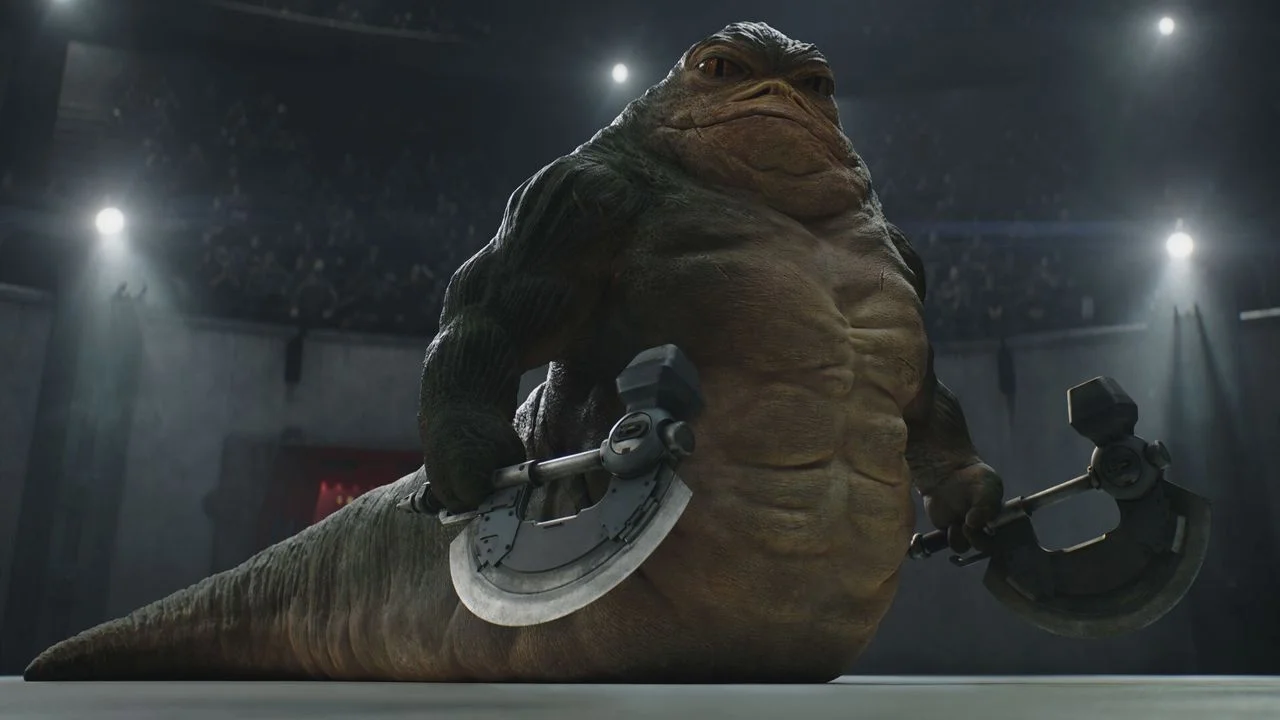
Rotta the Hutt stands apart from the typical portrayal of his species within the galaxy. While the Hutt clan is usually depicted as greedy and ruthless — think Jabba and his slimy dealings — Rotta carves out a new identity for himself. Here’s a character who physically embodies strength, marked by a noticeable transformation from his earlier depictions in "Star Wars: The Clone Wars," where he was referred to as "Stinky." This evolution is noteworthy given the usual trajectory of characters within the franchise.
His storyline in "The Mandalorian and Grogu" throws him into the center of an unusual role: a gladiator forced to fight for freedom under the oppressive thumb of Janu (played by Jonny Coyne). What’s particularly intriguing about Rotta is his willingness to turn down a life of crime, despite the family legacy pulling him in that direction. When he interacts with Mando and Grogu, he’s not just another villainous character straight out of the Hutt mold. Instead, he offers Gragu something much deeper than just a meal; he provides a glimpse into a healthier relationship compared to his toxic family ties.
This matters. When Rotta expresses kindness to Grogu, it highlights a significant departure from his family’s violent and duplicitous nature. Playing into the narrative, Rotta’s partnership with Mando is not merely about formulating a strategy against the Hutt Twins but also about redefining one's destiny. He chooses to be heroic, seeking not just personal freedom but allegiance to the New Republic.
The Deeper Themes at Play
What unfolds through Rotta’s character arc resonates with a broader theme in "Star Wars": the battle between innate destiny and personal choice. While characters like Luke Skywalker face their own paternal legacies, Rotta’s story starkly contrasts as he navigates this lonely path without the backing of allies. He observes familial bonds that are toxic, reminding us how much harder it is to break free from these ties without support.
It’s poignant when Rotta comments on Mando and Grogu's father-son dynamic; he recognizes the value of having a supportive figure. The emotional weight that Rotta carries sheds light on a larger issue — the cyclical nature of violence and abuse that goes unchecked in his world. His struggle draws attention to a theme common in "Star Wars": the impact of parental legacy on the choices of the next generation.
Rotta's ultimate decision to reject his family's corruption and align with virtuous forces is a reclamation of power. He exemplifies resilience and integrity, a refreshing interpretation that turns the narrative on its head. It raises a critical question: Can legacy be rewritten, and can a character with such challenging familial ties emerge as a symbol of hope? By embracing the good instead of succumbing to the temptations of his lineage, Rotta embodies a new kind of heroism that's powerful and relatable.Shifting Narratives in Star Wars
Rotta the Hutt is proving to be much more than just a side character in "The Mandalorian and Grogu." In a franchise where past characters often embody complex shadows or shades of darkness, Rotta stands out as a refreshing contrast. Picture Captain America—with a slimy twist. His kind-hearted and honorable demeanor invites viewers to reassess their preconceptions of what a Hutt can be. This is significant in a galaxy that’s struggled to inject genuine likability into its protagonists lately.
As the credits roll, you can't shake the feeling that Rotta's story is just getting started. Unlike his more notorious relatives, he presents the possibility of rewriting the Hutt narrative. Sure, previous Hutts haven’t garnered much sympathy due to their long histories of wrongdoing, but Rotta might just defy that stereotype. He represents the series' larger theme of redemption and second chances. It’s an appealing idea, especially in a universe that craves optimism amid chaos. That’s what makes Rotta a character to watch; he could evolve into a symbol of hope and resilience that the franchise desperately needs.
But let's be real—there's also a thrill in imagining Rotta channeling his newfound heroism into some action-packed sequences. This isn't merely about character development; who doesn’t want to witness his jacked physique taking on Stormtroopers? Forget the lightsabers; raw strength could become his signature weapon. Perhaps it’s time for the creators to entertain the idea of Rotta leading his own trilogy. The potential is there—surely, there's room for some fun in this expansive universe.
Catch "The Mandalorian and Grogu" in theaters now, and don’t miss out on "The Mandalorian" streaming on Disney+.