Technology
Ancient Solar Storm Clues Found in Tree Rings and Poet's Diary
Medieval accounts of the northern lights, as evidenced in tree rings and a notable poet's writings, reveal insights into a historic solar storm.
Unveiling Past Celestial Events
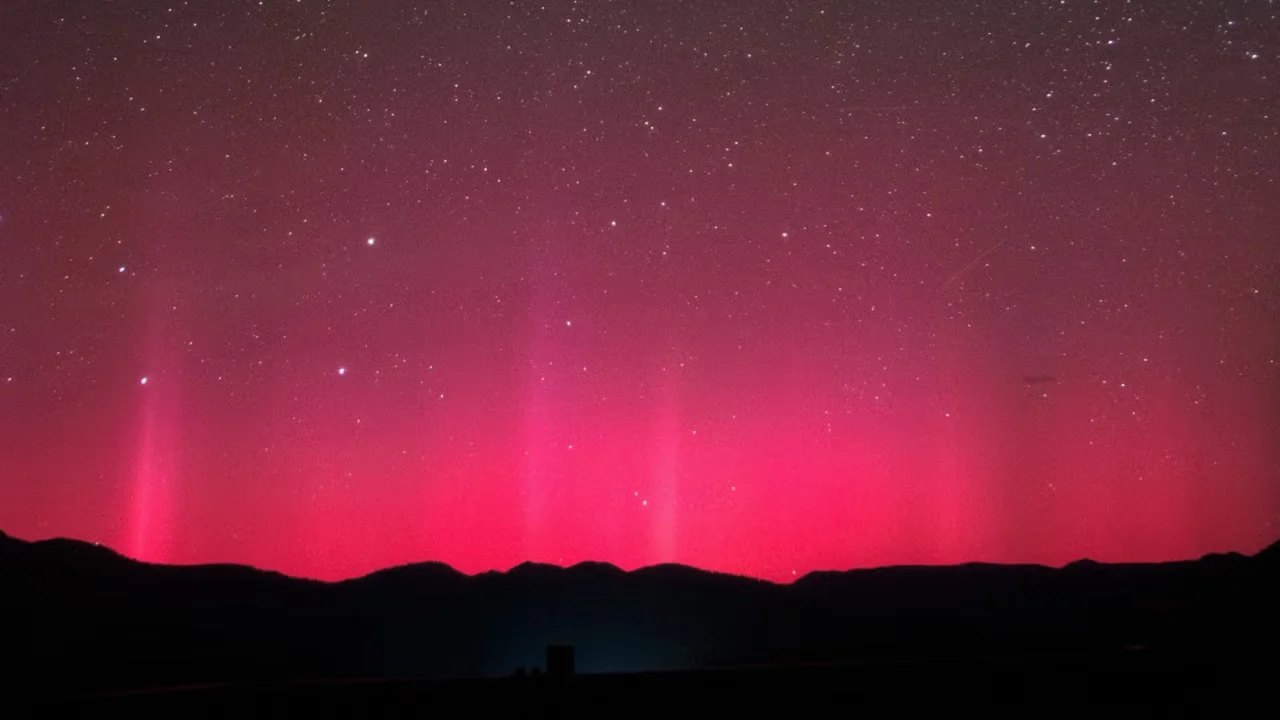
An intriguing intersection of literature and science emerges from the study of tree rings and medieval diaries, revealing insights into a potent solar storm that affected Earth centuries ago. This ancient event, likely occurring in the early 13th century, is documented not just in scientific terms but also through the eyes of a poet, who described “red lights in the northern sky.” What’s compelling about this finding is how it channels both the artistry of human experience and rigorous scientific investigation.
Research indicates that historical weather phenomena can leave lasting imprints on natural materials. In this case, the dendrochronology — or the study of tree rings — not only captures growth trends influenced by climate but also hints at extraordinary events like solar flares. The spikes in carbon-14 isotopes found in tree growth patterns point to a significant burst of cosmic particles, likely fueled by a massive release of energy from the sun.
One of the most striking aspects of the research is the geographical breadth of the reports. Records of auroras extend from Europe all the way to Japan, illuminating how widespread the impact of the solar storm was. This underscores a long-standing inquiry into how solar activity can affect life on Earth, raising questions about the resilience of our technological society against similar modern-day events.
This investigation not only feeds our curiosity about past solar activity but also serves as a reminder that understanding our planet's history can yield valuable lessons for the future, especially as we navigate an era of increasing solar unpredictability. If you're studying climate change or astrophysics, this is a pivotal exploration, offering a lens through which past and present collide.Given the fragment provided, here’s a fresh take on the section while maintaining context and relevance:
---
Social Engagement: A Critical Aspect
It’s interesting to see how sharing behavior is evolving in the digital space. This piece highlights various options for disseminating content across platforms — an absolute necessity in enhancing visibility. The share features, very much in tune with user habits, reflect where engagement now thrives: social media. Each button, tailored for platforms like Facebook and Twitter, paves the way for virality, should the audience choose to amplify the message.
However, let’s pause to unpack the numbers. With sharing options in place, achieving traction still requires significant effort. For example, many articles boast social-sharing statistics that fall flat despite appearing on major platforms. The tendency to overlook this discrepancy is common; success isn’t just about the quantity of shares, but the quality of engagement that follows. If you're in content creation, balancing these elements is key—encourage shares but also foster genuine discussions.
Comments Section: An Underused Resource?
Now, shifting gears to user interaction: the comments section remains a critical, yet often neglected dialogue space. With current engagement metrics showing zero comments here, it raises a fundamental question: Why aren’t readers congregating to discuss? There's an opportunity lost if authors fail to nurture these exchanges.
It’s not merely about having a comments section; it’s about prompting readers to contribute meaningfully. If you’re responsible for driving discussions, consider integrating questions or polls to spark conversation. Simple nudges can transform a passive audience into an active community, offering invaluable feedback and further cementing reader loyalty.
While the sharing options are extensive and cleverly integrated — with features elegantly designed for ease of use and maximum appeal — it’s the conversation that could give this piece its real vitality. So next time you review your content engagement strategy, think beyond share counts. Focus instead on cultivating a vibrant ecosystem of dialogue that resonates with your audience’s interests.
---
This reframing maintains the core ideas presented in the original fragment, while articulating them in a new structure and style that draws in the reader more directly.The latest research into historical solar activity provides a fascinating glimpse into our Sun's past, revealing more than just anomalies; it enhances our understanding of the solar environment that affects Earth. Recent findings led by Hiroko Miyahara from the Okinawa Institute of Science and Technology indicate that during the early 13th century, when the sun was particularly active, Earth experienced a series of solar proton events (SPEs) that altered the carbon composition in tree rings. This is a significant revelation—not only does it broaden our historical knowledge, but it also suggests that previous estimates of solar behavior might have missed critical events.
Here’s the crux: the evidence, including ancient auroral observations from Japan and China, points to a time when solar activity was both unusual and more turbulent than previously recognized. The unique method of dendroclimatology allowed Miyahara's team to correlate tree ring data with historical accounts, unveiling how humans have documented extreme solar phenomena. Fujiwara no Teika's observation of “red lights” in the northern sky in 1204 adds a compelling anecdote to the scientific narrative, highlighting the potential impacts of solar activity on climate and human perception.
As Miyahara pointed out in a recent statement, their study shifts focus from rare, extreme solar events to the more common sub-extreme SPEs, suggesting that these events, while less dramatic, still pose a legitimate threat to technology and life that ventures beyond our protective atmosphere. With Earth’s magnetic field acting as a shield, only a fraction of these solar impacts reach our atmosphere; however, they still pose risks to astronauts and satellite systems.
This new understanding helps clarify that the solar cycles of the past were shorter—averaging around seven to eight years instead of the modern 11-year standard. This shifts our perspective on solar variability and its historical implications. It raises questions about how these solar cycles influence contemporary climate patterns, satellite communications, and even potential future space exploration.
In essence, while we continually strive to decode the sun’s behavior, these findings urge us to reconsider what we think we know. Integrating history with modern science, we can unveil insights that not only explain the past but also prepare us for future endeavors amidst our star's unpredictable temperament. As researchers continue this line of inquiry, we stand on the cusp of deeper insights into both solar dynamics and their far-reaching effects on Earth.