Technology
Ancient Dying Star Unveiled in Stunning Cosmic Image
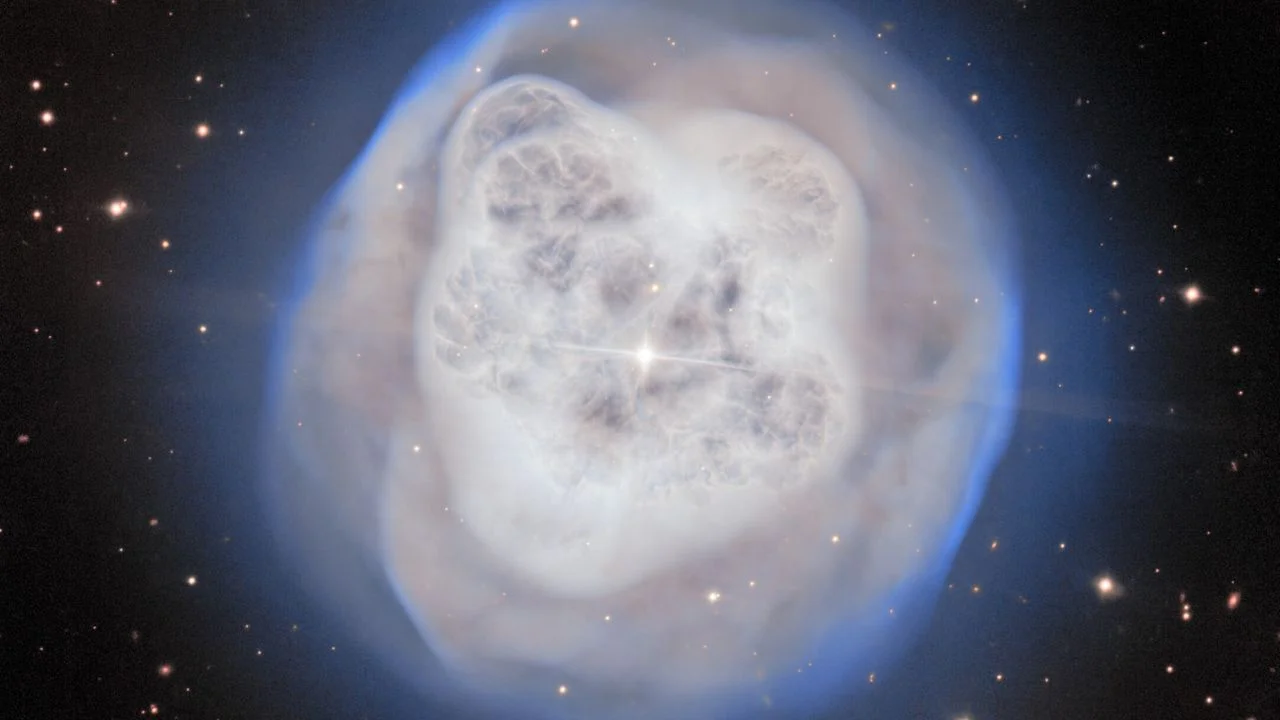
This compelling photograph showcases a star shedding its outer layers, offering a glimpse into the life cycle of celestial bodies. Captured on May 22, 2026, it highlights the intricate processes of stellar evolution.
A Glimpse into Stellar Demise
There's something profoundly captivating about the life cycle of stars—especially when viewed through the lens of modern astrophysics. On May 22, 2026, a striking image surfaced, showcasing a dying star releasing its outer layers. This event captures a cosmic phenomenon that many astrophysicists consider a sublime demonstration of stellar evolution and the complex processes governing our universe.
This isn't just another celestial photograph; it carries significant implications that extend beyond mere aesthetics. The image reflects intricate chemical processes and dynamic events that underpin stellar life cycles. When stars exhaust their nuclear fuel, they shed their outer material, enriching the cosmic ecosystem around them. This isn't just a case of a star fading away. Instead, this process contributes heavy elements to the interstellar medium, which directly influences the birth of new stars and potentially planets, including those that could harbor life.
The artist behind this remarkable shot, Brett Tingley, describes the star's dramatic exit as it transitions through a process known as shedding. In this fleeting moment, we observe a final farewell from a once-bright beacon in the cosmos, inviting amateur astronomers and seasoned professionals alike to contemplate the star's journey and the larger implications for the universe at large.
The Broader Implications for Astronomy
For those engaged in astronomy or astrophysics, the implications of this image are profound and far-reaching. It hints at immense processes happening throughout the universe that reveal the ongoing saga of stellar life. Not only does it serve educational purposes, but it also fuels a thirst for further exploration of dying stars and the subsequent birth of nebulas.
Here's the thing: this sort of discovery isn't merely about observing beauty in the skies. It provides critical insights into the mechanisms at play in star formation and destruction. The study of such events helps astrophysicists understand the life cycles of stars, which can last billions of years. These endeavors inform other areas of research, from understanding the origins of elements like carbon and oxygen, key building blocks for life on Earth, to exploring the evolution of galaxies.
This echoes the sentiment that the universe is a grand stage where each star plays a role. Realizing this can sometimes seem abstract, but for researchers, every dying star is a piece in a cosmic puzzle that offers clues about the evolution of everything we know.
If you’re working in this space, this is a reminder of the complex tapestry of the cosmos, actively pushing scientists to seek out the processes that govern not just stellar evolution but the entire architecture of our universe. Each dying star sends forth a reminder of the never-ending cycle of creation and destruction.
Peering into the Past: Cosmic Time Travel
Consider this: when we gaze at this nebula, we’re peering back 1,500 years in time. The light that reaches us today departed from its source long before Columbus set sail for the New World. This concept is more than just a fascinating thought experiment; it underscores a fundamental truth about our understanding of the cosmos. In an age where speed and immediacy often overshadow depth, narratives like that of the Crystal Ball Nebula force us to reflect on the slow, meticulous dance of stars that plays out over eons.
What this means for us in the field of astrophysics and astronomy is straightforward: we need to continue investing in observational technologies and collaborative research efforts. As we unravel the mysteries surrounding planetary nebulas and their formation, we gain insights into the lifecycle of stars, including those that may eventually form building blocks for life as we know it.
It's important to emphasize that while the Crystal Ball Nebula might just be a small blip on the cosmic radar, it holds substantial significance in the grand scheme of the universe. Each observation, each revelation, contributes to our broader understanding of the cosmos.
Final Thoughts: An Expansive Perspective
As we wrap up our exploration of the Crystal Ball Nebula, NGC 1514, it becomes clear that this cosmic spectacle is far more than just an attractive image. It serves as a poignant reminder of the intricate processes at play in the universe. The nebula's dual star system, where one star sheds its outer layers, results not only in breathtaking visuals but also shapes our comprehension of stellar life cycles.
And this is the part most people overlook; the process of a star exhausting its resources and ultimately transforming into a nebula is a remarkable story of resilience and renewal. It highlights the cyclical nature of stellar life and alludes to the interconnectedness of different cosmic events over vast timescales.
As we strive to unravel the mysteries of our cosmos, we must embrace both the beauty and the intense patience required to unveil deeper truths about celestial phenomena. Beyond the romanticism of stargazing lies a serious endeavor full of scientific discovery. So, let’s keep looking up—what we discover next could redefine our understanding of the universe and our place within it.
In this continuous quest for knowledge, each fleeting moment of a star's life serves as a new chapter in the ever-expanding story of the cosmos.