A ride accepted on trust
Craig Williams has committed to a Melbourne Cup ride built on European form and a brief decision window. He’ll partner James J Braddock, trained by Joseph O’Brien, despite having no chance to ride the four-year-old before the race at Flemington. That leaves Williams to make an important part of his assessment close to the start: he’ll first see how the horse presents in person on race day, rather than building familiarity through a trial or earlier race.
Williams, who won the 2019 Cup aboard Vow And Declare, said he expects to meet the horse in the mounting yard on the first Tuesday in November. “That’s not unusual for us these days,” he said, describing first-time rides on horses from overseas as part of the job. For an international runner, the jockey may have to rely on race records, reports from the horse’s team and the brief pre-race inspection. Those sources can offer useful clues, but they can’t fully answer how a horse will respond to a new rider, a new setting and the demands of the Cup.
“It’s pretty exciting that he’s definitely a well-credentialed horse for this year’s Melbourne Cup.”
That confidence is grounded in the horse’s European results, though credentials and race-day readiness are separate questions. A strong record can support a case for taking the ride; it can’t guarantee that the horse will settle, travel well or reproduce that form at Flemington.
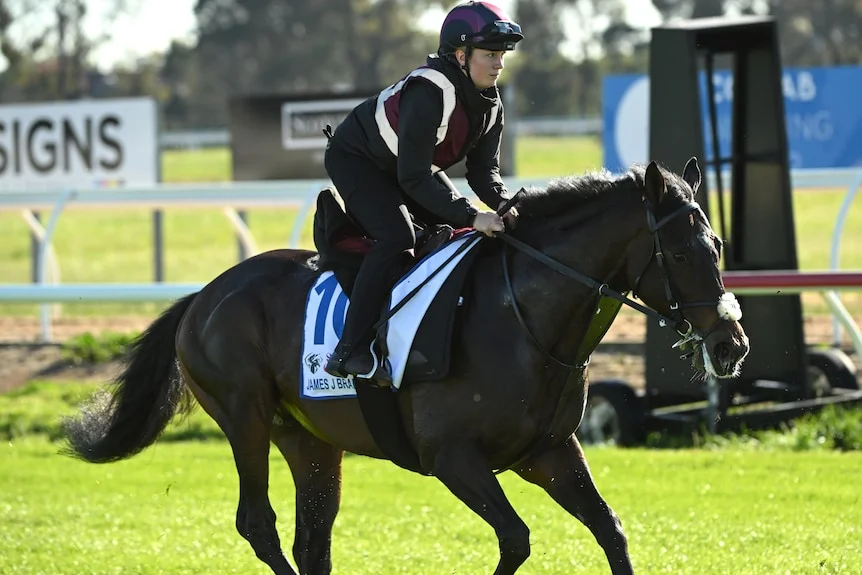
The Joseph O'Brien-trained James J Braddock is among the international runners in this year's Melbourne Cup. (Getty Images: Vince Caligiuri)
A rapid call on the ride
Co-owner Ozzie Kheir pushed Williams to make a quick decision last month. The jockey said James J Braddock sat near the top of his shortlist, but he had only eight hours to accept before the connections moved to secure another rider. That deadline made the choice a practical one as well as a judgment about the horse: waiting for more information could have meant losing the opportunity altogether.
After consulting his manager, Williams agreed to take the chance. He said the horse had arrived in Australia with the right form, leaving race-day fitness and performance as the open questions. That distinction matters. Form provides a record of what a horse has already done; fitness and performance on the day determine whether that record translates into a competitive Cup run.
Williams’ decision also reflects how a jockey’s work can change when a horse arrives from overseas. The rider may be asked to assess a runner based on evidence gathered by others, then make adjustments once the race begins. There’s room for judgment, but little time to build a partnership. Here's the thing: accepting the ride means committing before the most direct test of the horse is available.
James J Braddock finished third in the Group 1 Epsom Derby and sixth in the Irish Derby. He was gelded after becoming unsettled during the Epsom Derby preliminaries. The horse is named for the 1930s heavyweight boxer whose story inspired the film Cinderella Man. Those details give the runner a notable profile, but they don’t settle the central racing question: how he’ll handle the Cup’s demands after travelling from Ireland and arriving in Australia.
O’Brien’s Cup team
O’Brien is seeking a third Melbourne Cup win after victories with Rekindling in 2017 and Twilight Payment in 2020. Trustyourinstinct is also among his entries and sits second favourite behind Point Of Law, trained by Ciaron Maher. A stable with previous Cup winners brings experience of the race, though each horse still has to meet its own test. A trainer’s record can frame expectations; it can’t do the running for an individual entrant.
James J Braddock will carry 53.5 kilograms. Co-owner Kevin Blake said the horse had been “absolutely bouncing” since arriving from Ireland at Werribee’s international horse centre the previous week. That report offers an encouraging account of the horse’s condition, but it’s one observation from a member of the ownership group, not a race result. The more telling evidence will come as the horse moves from preparation into the starting gates.
What the late introduction means
For Williams, the first assessment will come in the mounting yard, shortly before the Cup’s scheduled 3:15pm start. How the horse handles the occasion will determine whether the quick decision pays off on race day. He’ll have to read the horse’s demeanour in that short window, then turn that impression into a plan for the race.
This is more significant than it looks. In a major staying race, the jockey’s role includes managing the horse through a long contest, and a rider who hasn’t previously sat on the runner must make that connection quickly. (And this is the part most people overlook: a promising record can’t tell a jockey exactly how a horse will react when the pace changes or the field compresses.) The ride is a bet on preparation, communication and judgment, as much as on past results.
If you’re working in this space, the case is a reminder that international form is only one piece of a race-day assessment. Williams has accepted the opportunity because the credentials are there, while openly acknowledging that the final answers remain unknown until he sees and rides the horse. And yet. That uncertainty is part of the assignment, not a footnote to it.


