A burial that unsettles familiar assumptions
A lavish Moche burial in northern Peru raises a pointed question about how the ancient society marked a child’s place in the world. The tomb, dating to the sixth or seventh century, held a toddler no older than 2 alongside imagery usually tied to warriors and sacrifice. That combination matters because grave goods are often read as clues to how mourners understood the person they buried. Here, the objects point toward a social or ritual identity the child couldn’t have earned through adult actions.
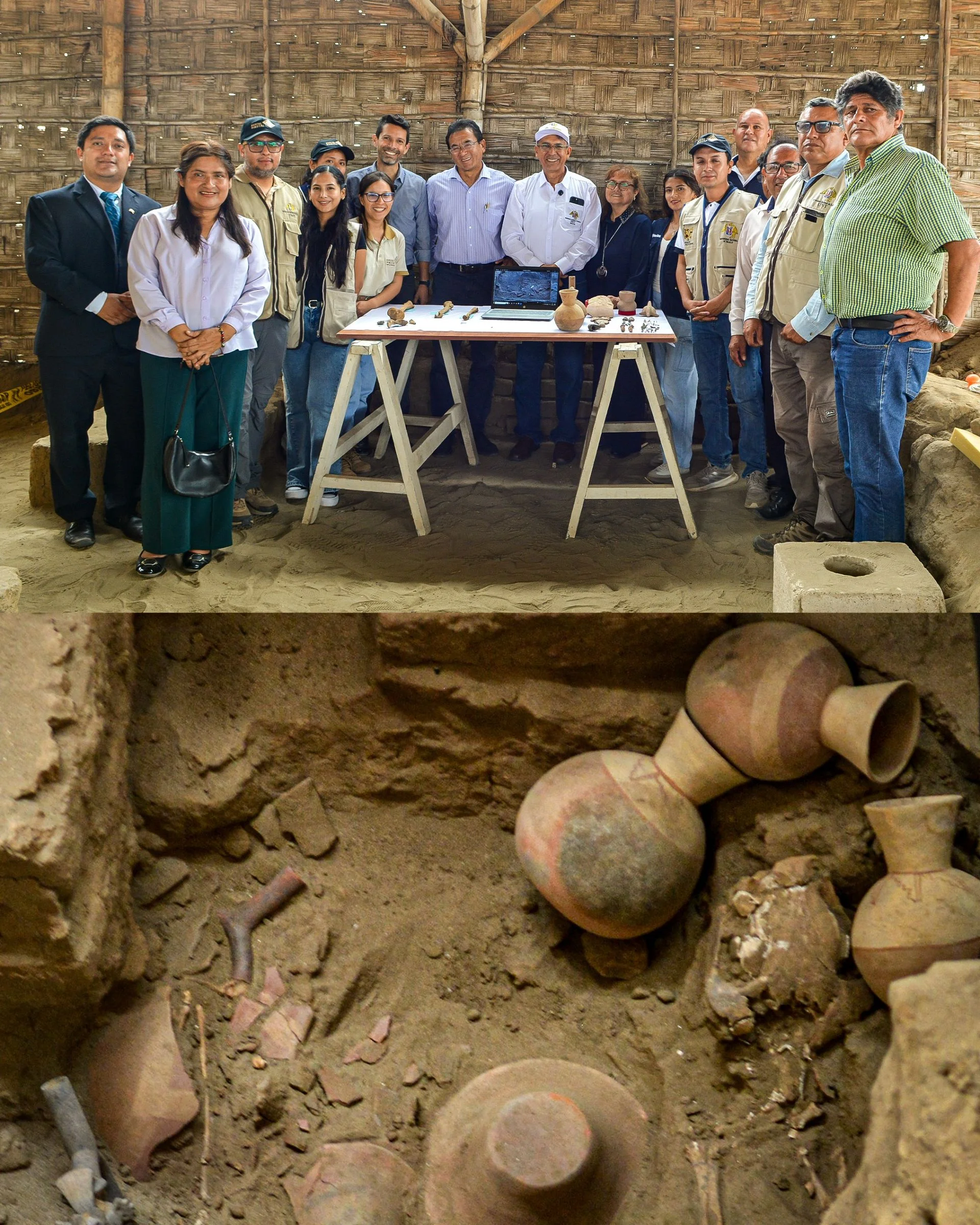
The child’s remains were found at the Uhle Platform, a mausoleum beside the Huaca de la Luna temple at the Huacas de Moche archaeological site. The tomb was large enough for an adult, a detail that adds to the sense that the burial was exceptional. Among more than 80 burials previously excavated at the platform, it’s the only known child burial with comparable funerary wealth, according to Carlos Rengifo-Chunga, director of the University of Trujillo’s Huacas de Moche Archaeological Project. That comparison gives the find weight: its significance rests not only on the objects themselves, but on how unusual their placement appears within this cemetery.
Objects associated with warriors and ritual
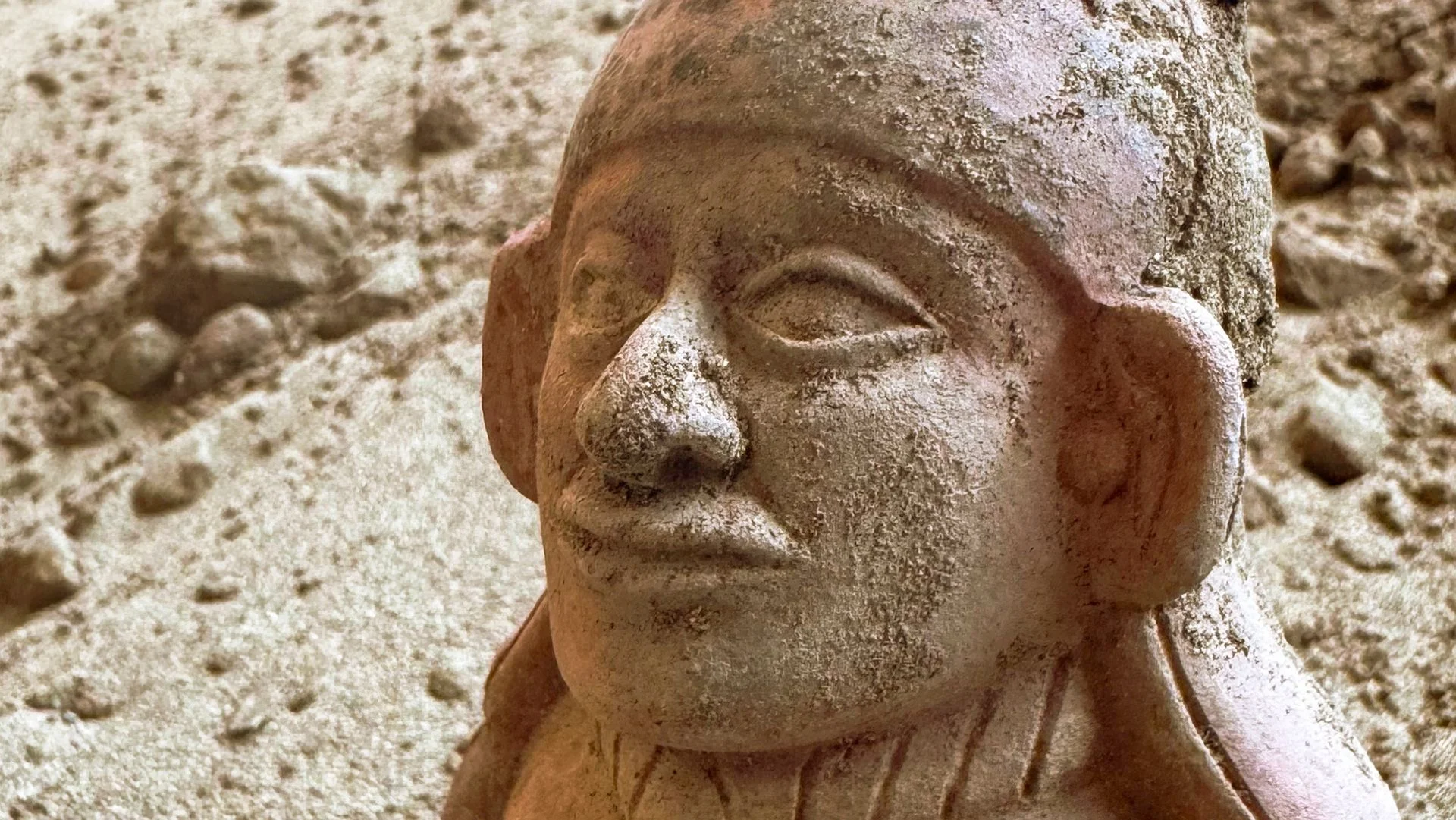
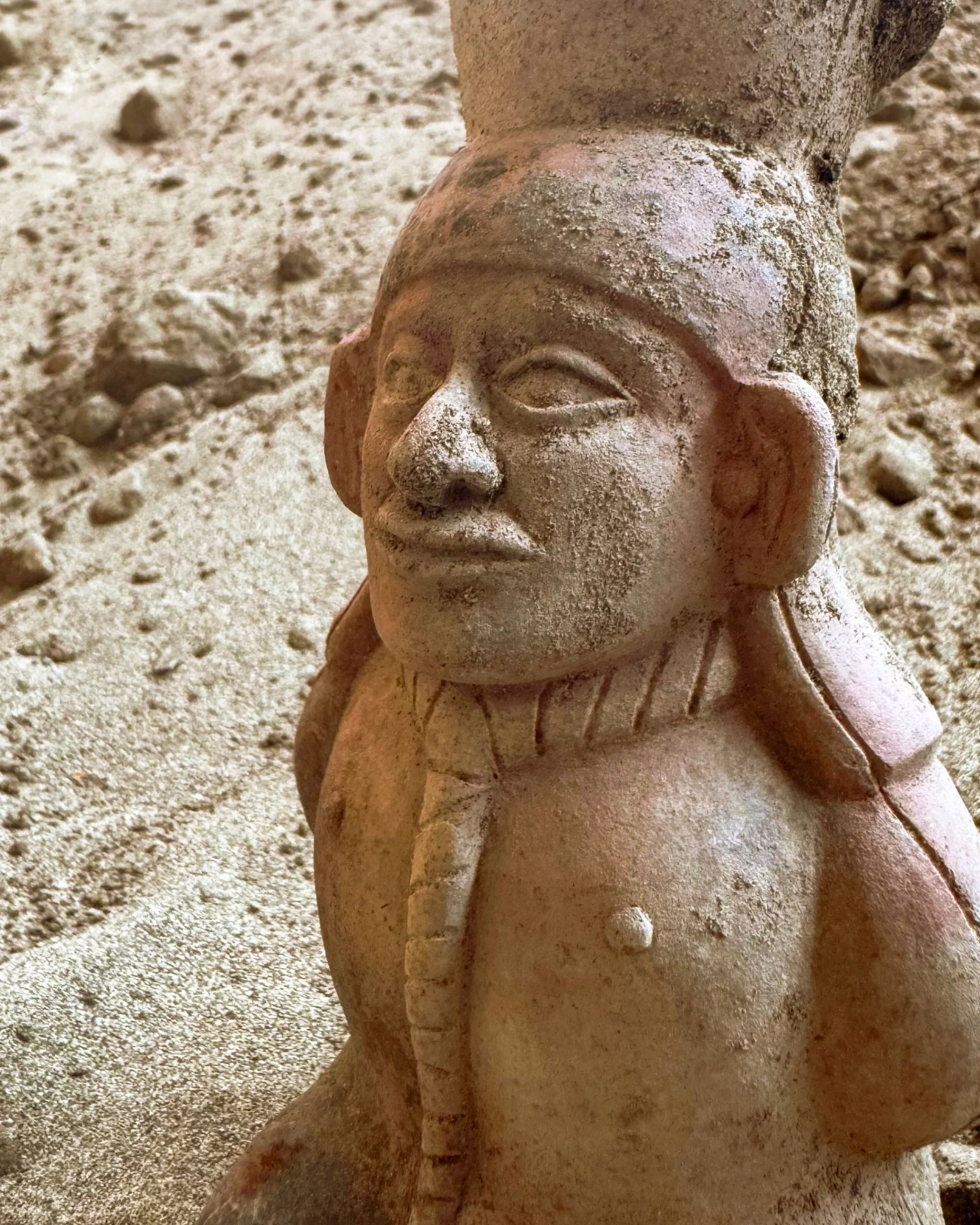
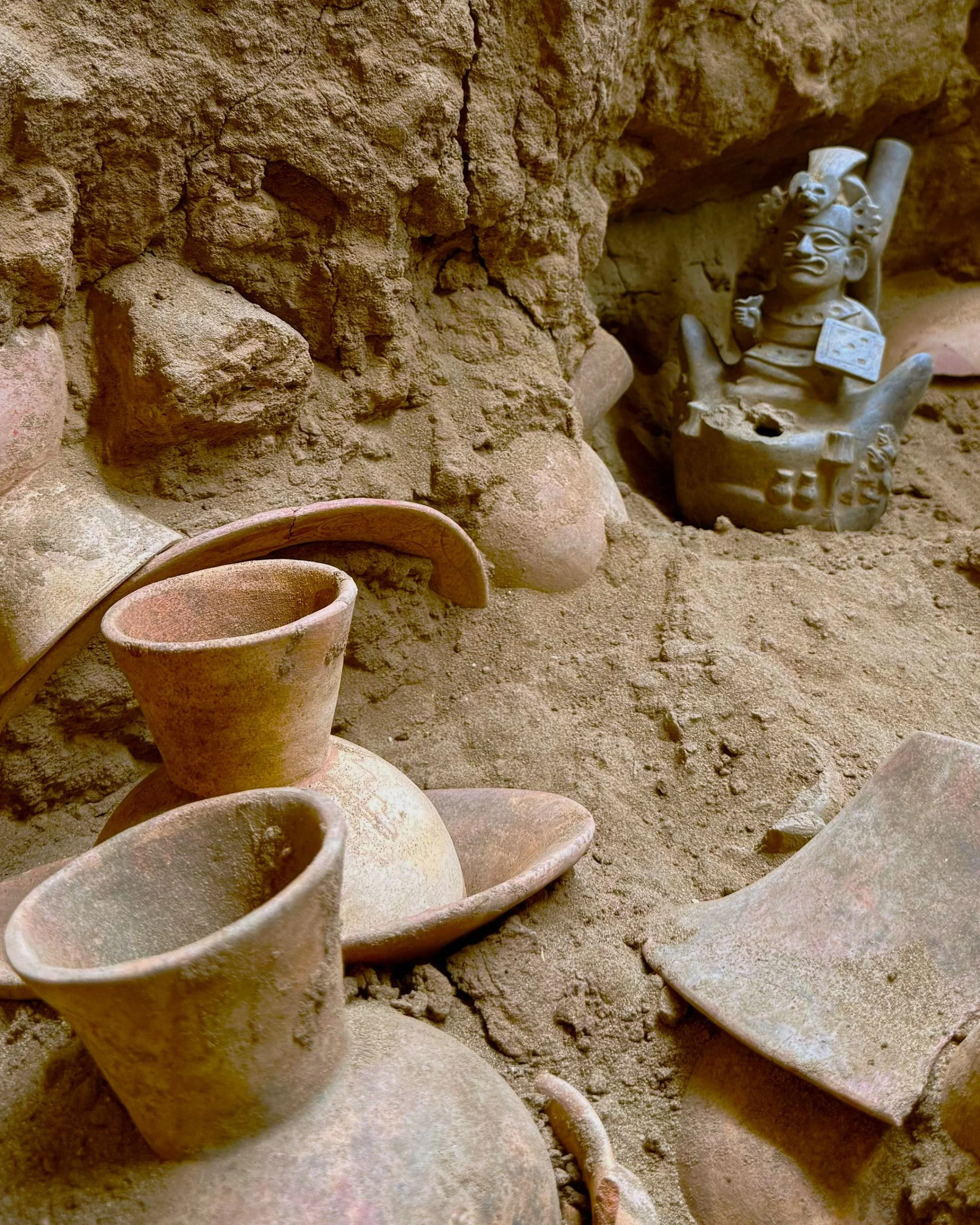
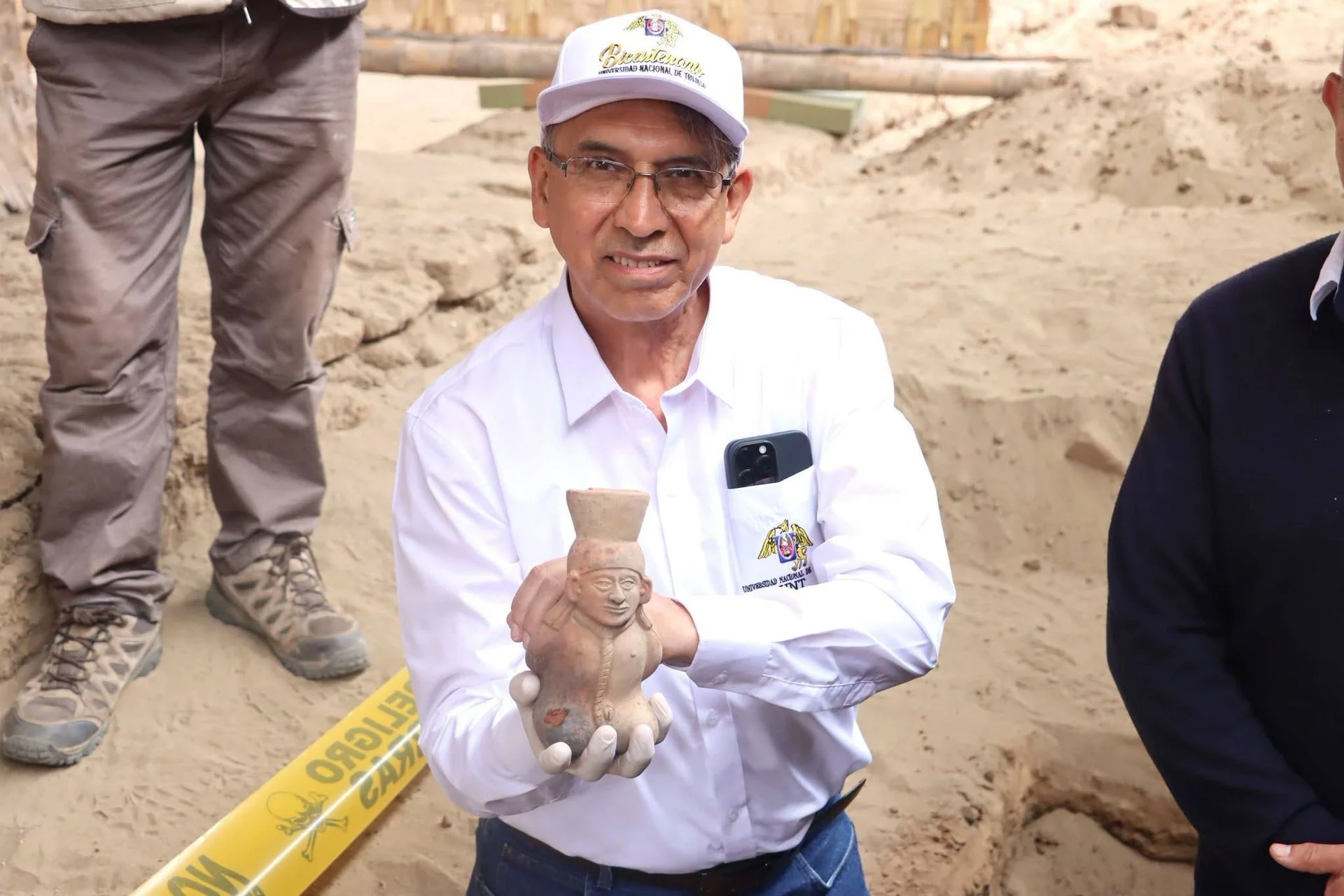
Excavators recovered 32 ceramic objects, including two vessels showing defeated warriors with ropes around their necks and a sculpture of a human-bird figure. The child also had two copper objects: a disk placed over the face and a half-moon-shaped piece at the feet. The remains’ sex hasn’t been determined. Taken together, the materials give archaeologists several kinds of evidence to interpret: the imagery on the vessels, the placement of the copper, and the care invested in the grave.
The warrior scenes refer to the Moche “ritual of combat,” Rengifo-Chunga said. In this recurring artistic theme, two fighters meet in battle; the loser is stripped of clothing and weapons, bound by the neck, and presented for human sacrifice. Such vessels are often understood as references to the deceased’s life, perhaps suggesting participation in combat. But a toddler couldn’t have fought, and the usual connection between a person’s life and their grave goods doesn’t readily explain these objects. That gap is the story’s central puzzle.
“One would normally presume that these kinds of vessels represent something related to the deceased’s life,” Rengifo-Chunga said. A child couldn’t have taken part in combat, and archaeologists wouldn’t generally expect adult ritual imagery in a child’s burial. “This expands our knowledge on Moche funerary practices,” he said. The find doesn’t settle what the vessels meant in this case; it shows that a familiar interpretation may not account for every burial.
The copper ornaments, the tomb’s scale, and its position within the mausoleum point to an elite burial, Rengifo-Chunga said. The objects suggest the community assigned the child a notable status, though the reason for that status remains unclear. The evidence supports a distinction in treatment, but it can’t tell researchers whether that distinction came from family, ritual role, or some other relationship now out of reach.
A figure whose identity remains debated
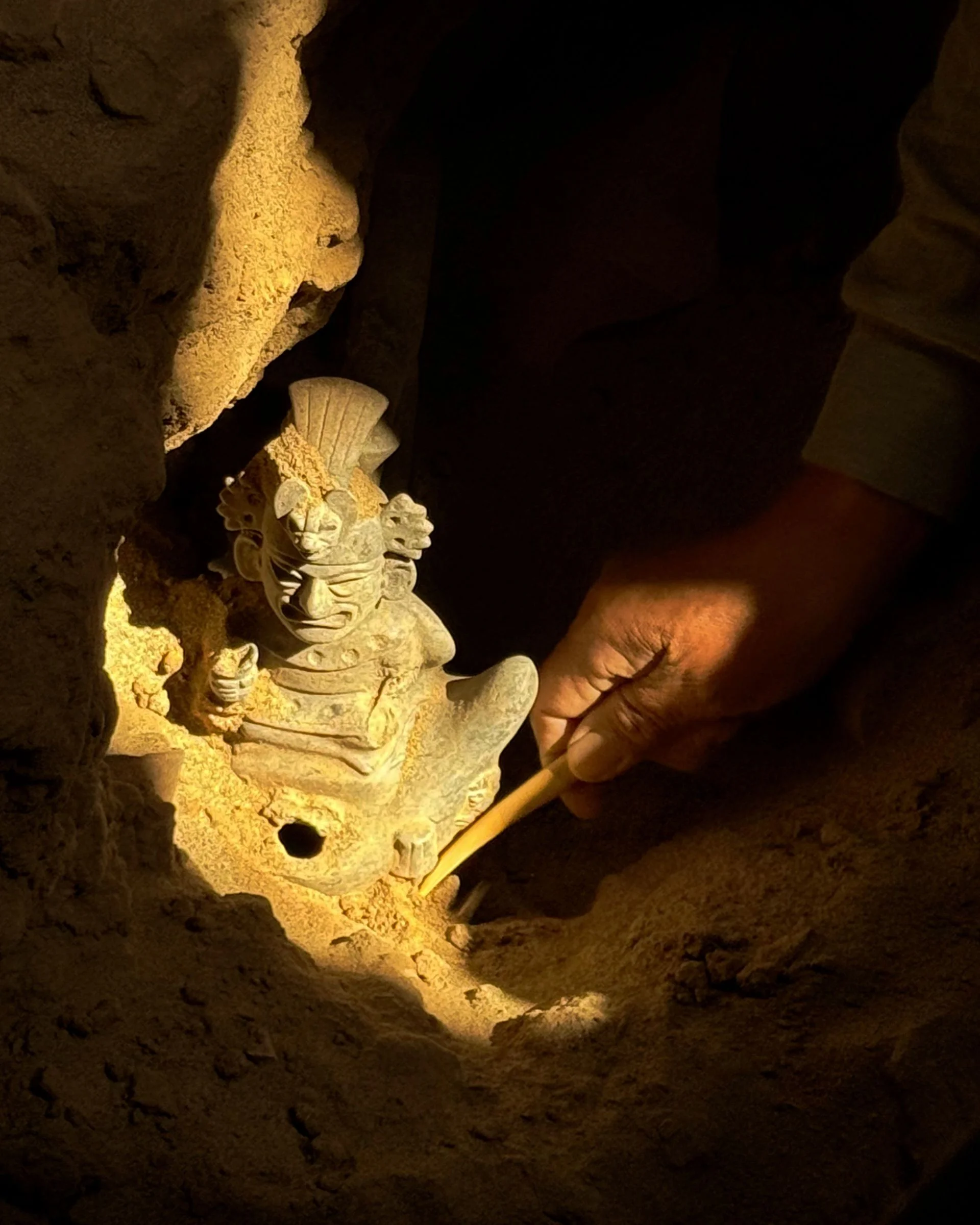
The human-bird sculpture depicts a winged figure with a bird’s tail, holding a square shield and a goblet. Two bird figures in ceremonial clothing flank it. Rengifo-Chunga said some scholars may read the image as a deity in transformation. Researchers still need to establish whether it represents a known Moche god or a previously unidentified figure. Its presence is suggestive, but the description alone doesn’t identify the figure or explain its role in the child’s burial.
That question touches on a wider debate about Moche religion: whether its pantheon comprised many distinct gods or a smaller number of deities able to take multiple forms. The sculpture adds an object to that discussion, but its meaning isn’t yet settled. Here’s the thing: an image can be striking without giving up a clear interpretation. Researchers will need to compare its features and context with other Moche material before treating any one reading as established.
What the material record can—and can’t—say
The Moche, also called Mochica, flourished along Peru’s northern coast from the third to the ninth century. Without a written language, they left a rich material record that includes monumental temples, irrigation canals, metalwork, textiles, and pottery. Their highly realistic portrait vessels are among the best-known examples of Moche ceramics. That record gives researchers substantial evidence to study, yet it doesn’t provide a written explanation for why this particular toddler was buried with warrior scenes.
That limitation matters beyond this one grave. When a society’s history is reconstructed largely through objects and sites, an unusual burial can challenge a reading that seemed persuasive elsewhere. It can also leave multiple explanations open. If you’re working in this space, the careful distinction is between what the grave shows—a child given exceptional treatment and objects linked to combat and ritual—and what researchers can’t yet establish: why those choices were made.
The recovered artifacts are now at the Santiago Uceda Castillo Museum in Peru, where they’ll undergo conservation. Conservation and further study may help researchers examine the objects more closely and clarify how they relate to Moche imagery and burial practices. The numbers here are underwhelming in one sense: a single unusual grave can’t rewrite an entire account of Moche society. But this is more significant than it looks, because it exposes the limits of assuming that grave goods always describe the deceased’s own life. A small life. An outsized burial.
Why this burial matters
The find’s value lies in the question it leaves open, not in a settled answer. The child’s age makes a straightforward link between warrior imagery and personal experience difficult, while the scale of the tomb and its rich contents suggest deliberate distinction. That tension invites researchers to consider how Moche funerary choices expressed status, identity, or ritual meaning. And yet, without further evidence, those remain possibilities rather than conclusions.
The broader implication is modest but useful: Moche burials may encode relationships and beliefs that can’t be read directly from a single object. The human-bird figure, the copper pieces, and the combat vessels each contribute clues, but their meaning depends on context and comparison. Further study could sharpen those interpretations. For now, the toddler’s grave stands as a rare case that makes a familiar question harder to answer.


