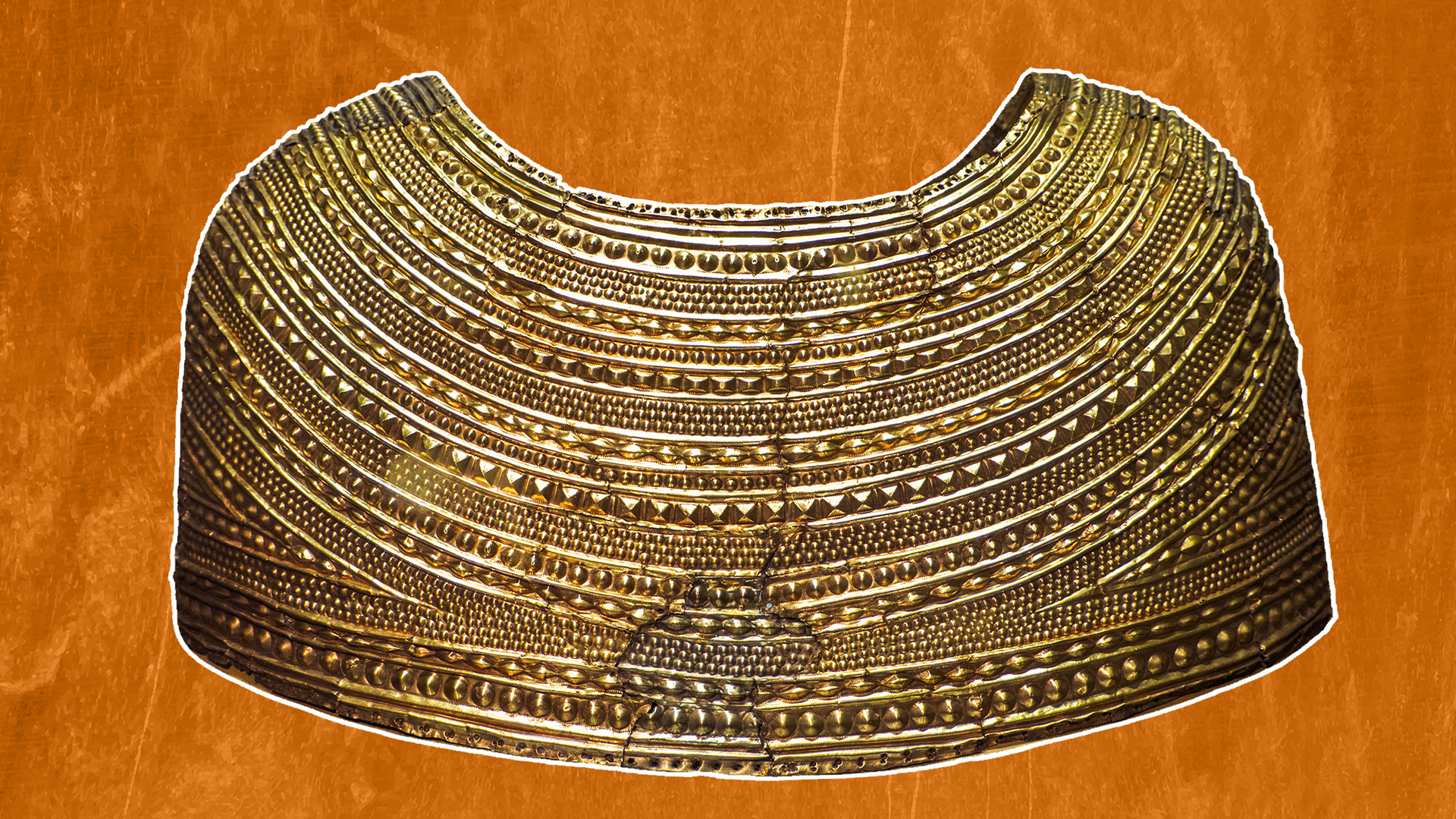
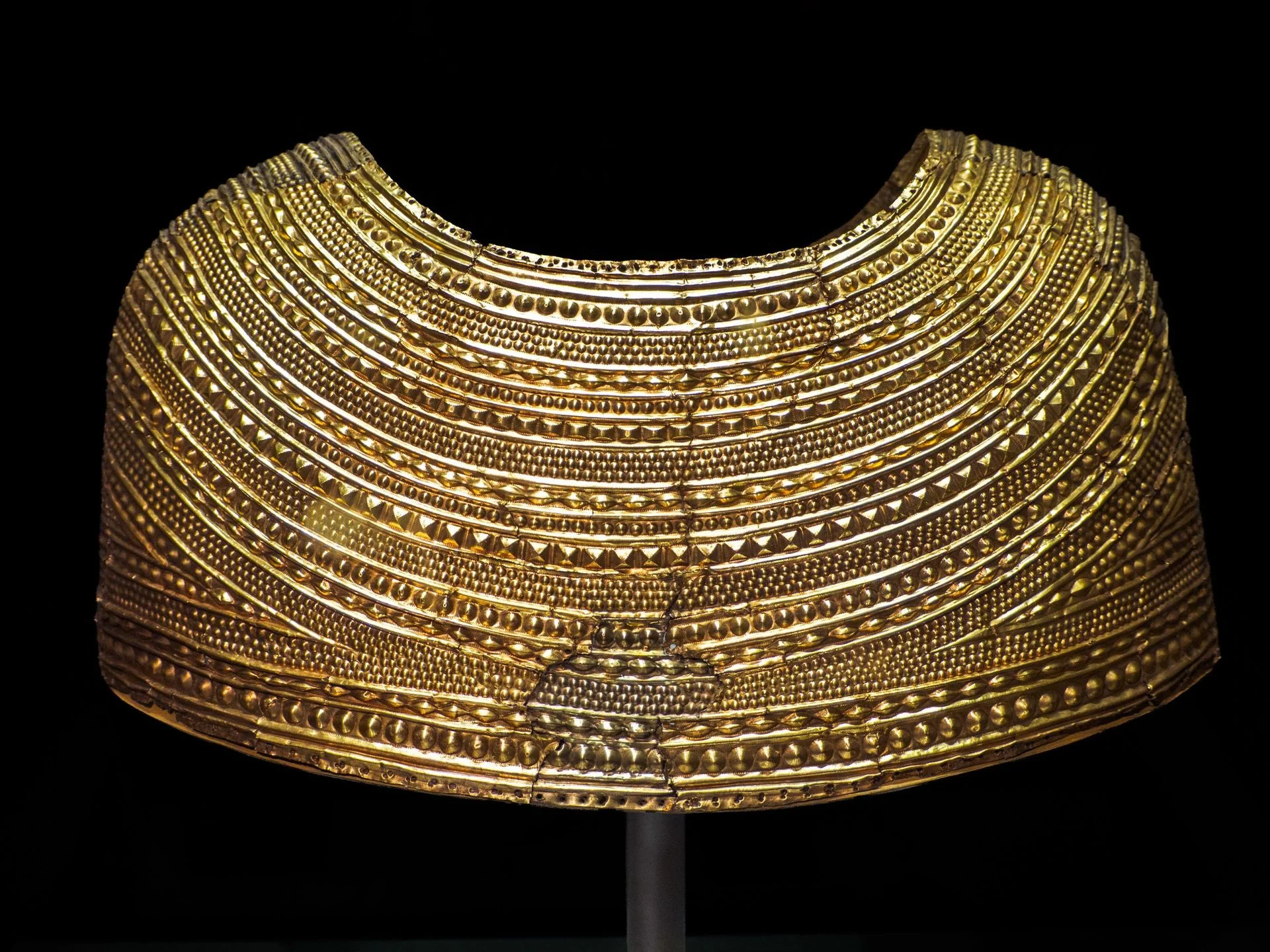
Name: Mold gold cape
What it is: A hammered gold accessory
Where it is from: Bryn yr Ellyllon (Goblins' Hill), Wales
When it was made: Circa 1900 to 1600 B.C.
The Mold gold cape’s workmanship is striking, but its purpose remains elusive. Its unusual form has no close counterpart elsewhere in Europe, according to the British Museum, which displays the artifact. That rarity makes the object both a remarkable example of Bronze Age goldwork and a difficult one to interpret. It’s tempting to read such an elaborate object as a straightforward badge of rank, but the surviving evidence doesn’t settle that question. The cape gives researchers a vivid view of skilled metalworking, while leaving the social meaning of that work uncertain.
A grave discovery near Mold
Quarry workers uncovered the cape in 1833 in a stone-lined burial at Bryn yr Ellyllon, or Goblins’ Hill, near Mold in Wales. The grave held a fragmented skeleton and the gold object, crushed into pieces. The cape dates to about 1900–1600 B.C., within Britain’s Early Bronze Age, a period when metalworkers expanded from flint tools to gold, copper and bronze weapons and ornaments. The find’s setting matters: this wasn’t a loose object recovered from an unknown context, but part of a burial that linked it to a particular person and a deliberate act of deposition. Yet the discovery came through quarry work, and the grave wasn’t excavated with the recording methods archaeologists would want today.
At first, the cape’s elaborate appearance led researchers to associate it with a warrior, chief or religious leader. Once the fragments were reassembled, however, its dimensions suggested a smaller wearer, perhaps a woman or child. The skeleton was not recovered by the 19th-century quarry workers, so the person’s sex remains unknown. That gap limits what can be said about who wore it, and it cautions against treating the object’s size as a firm identification. The cape may have marked the wearer’s position, but the evidence doesn’t tell us whether that position was political, religious, familial or something else.
The burial also included several hundred amber beads, although the surviving account doesn’t establish exactly how they were arranged in relation to the cape. That uncertainty is typical of objects recovered from disturbed or poorly documented graves: materials survive, but their original placement and use can be hard to reconstruct. Here, the combination of gold, amber and a stone-lined burial signals careful treatment. It doesn’t, by itself, reveal the beliefs or customs behind that treatment.
Gold beaten thin, then decorated
The cape measures about 9.3 inches (23.5 centimeters) high and 18.3 inches (46.5 centimeters) wide. It weighs roughly 1.2 pounds (560 grams). Museum researchers say it was likely made from a single lump of gold about the size of a ping-pong ball, hammered into a thin sheet and shaped into the garment. The process calls for repeated, controlled work: a metalworker had to spread the gold across a broad surface while preserving enough of it to form the cape’s distinctive shape. The finished object may look delicate, but producing it would have demanded both technical skill and sustained effort.
Rows of decoration imitate beads or necklaces. Several hundred amber beads were also found in the grave, and may have added to the cape’s shimmering appearance. Small holes around the neck opening point to a lost lining, perhaps made of leather or another perishable material. If a lining was attached, it could have helped the cape sit against the body or made it more comfortable to wear, though that remains a possibility rather than a confirmed reconstruction. The decoration and construction suggest that appearance mattered, but they don’t tell us whether the cape was designed chiefly for display, ceremony or another purpose.
Gold’s visual impact is part of the object’s story. A broad, decorated surface would have caught the light in a way that ordinary clothing couldn’t, especially when paired with amber. That effect may have made the wearer conspicuous to people nearby. And yet, without a close parallel or a clearer record of the burial, it’s difficult to turn that observation into a confident account of how the cape was used.
An object with no clear parallel
Wearing the cape would have restricted movement in the upper arms, which supports the possibility that it served a ceremonial role and appeared only on special occasions. It may have signaled religious authority, though researchers can’t establish why it was placed in the grave or what status its wearer held. This is more significant than it looks: an object that was awkward to wear could still have been valuable precisely because it was reserved for a formal appearance. But that interpretation depends on how the garment sat on the body, and the missing lining and uncertain reconstruction leave room for doubt.
“The cape is unique — there is really nothing to compare it to in the whole of Europe,” Benjamin Roberts, then curator of the British Museum’s European Bronze Age collections, told the BBC in 2010. “This makes it more difficult to understand why it was made and what significance it had.” Its craftsmanship is clear; its meaning remains open. The absence of comparable objects makes familiar explanations harder to test, since researchers can’t readily compare its shape, decoration or burial context with another example. Here's the thing: rarity can make an artifact famous, but it doesn’t automatically make its purpose easier to read.
What the cape can—and can’t—tell us
The Mold cape offers strong evidence for sophisticated goldworking in Bronze Age Britain, along with a glimpse of how carefully chosen objects could accompany the dead. It also shows the limits of interpreting a single find. The gold’s weight, hammered surface, ornament and burial location are tangible clues; the wearer’s identity, the cape’s exact use and the beliefs attached to it remain unresolved. Similar richly decorated objects can combine practical, social and ceremonial roles, so those categories needn’t be mutually exclusive.
If you're working in this space, the cape is a useful reminder to distinguish what an artifact demonstrates from what it merely suggests. Its form makes restricted movement plausible, and the grave makes deliberate placement clear, but neither point proves a specific ritual. (And this is the part most people overlook.) The missing skeleton and the circumstances of the discovery are not minor gaps; they shape how confidently the whole object can be interpreted.
That said, uncertainty doesn’t make the cape less informative. It directs attention toward the choices its makers and the people who buried it made: how to shape and decorate gold, what to place in a grave, and what kinds of objects deserved such labor. The answers may never be complete. For now, the cape’s best-known quality is also its central puzzle: it’s an extraordinary object with no close companion to explain it.
For more archaeological discoveries, visit our Astonishing Artifacts archives.
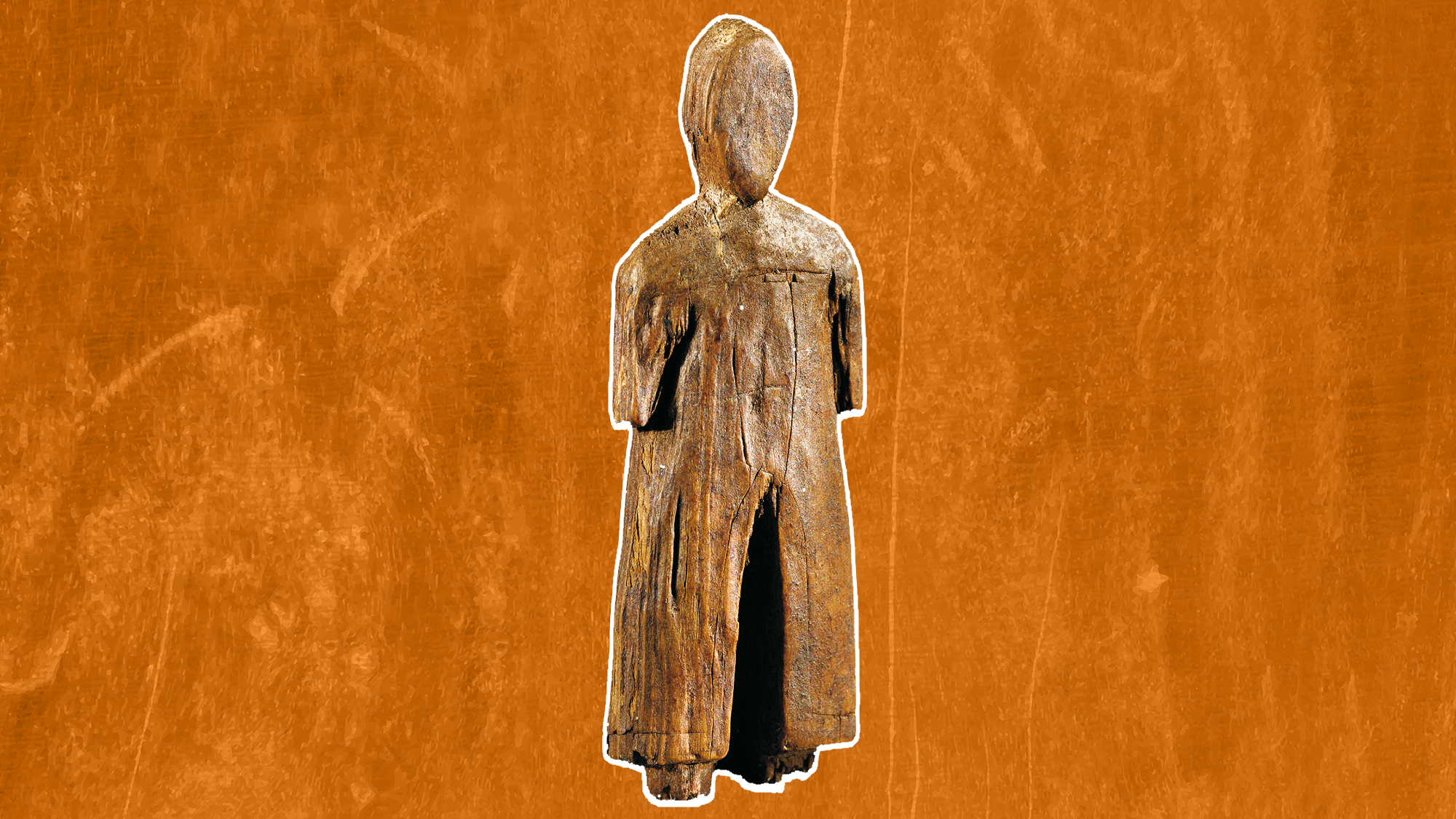
Inuit Figurine
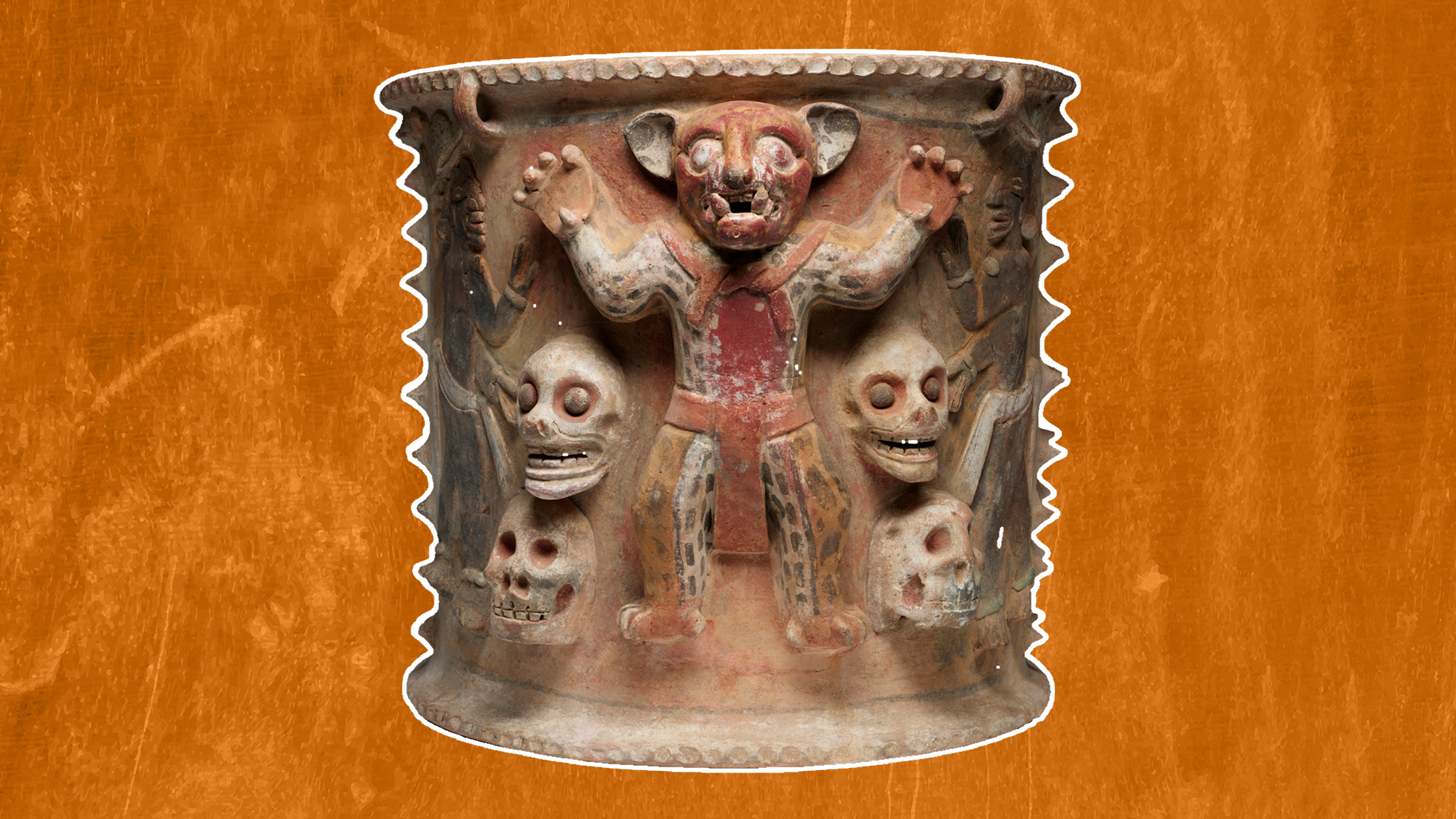
Maya Death Urn
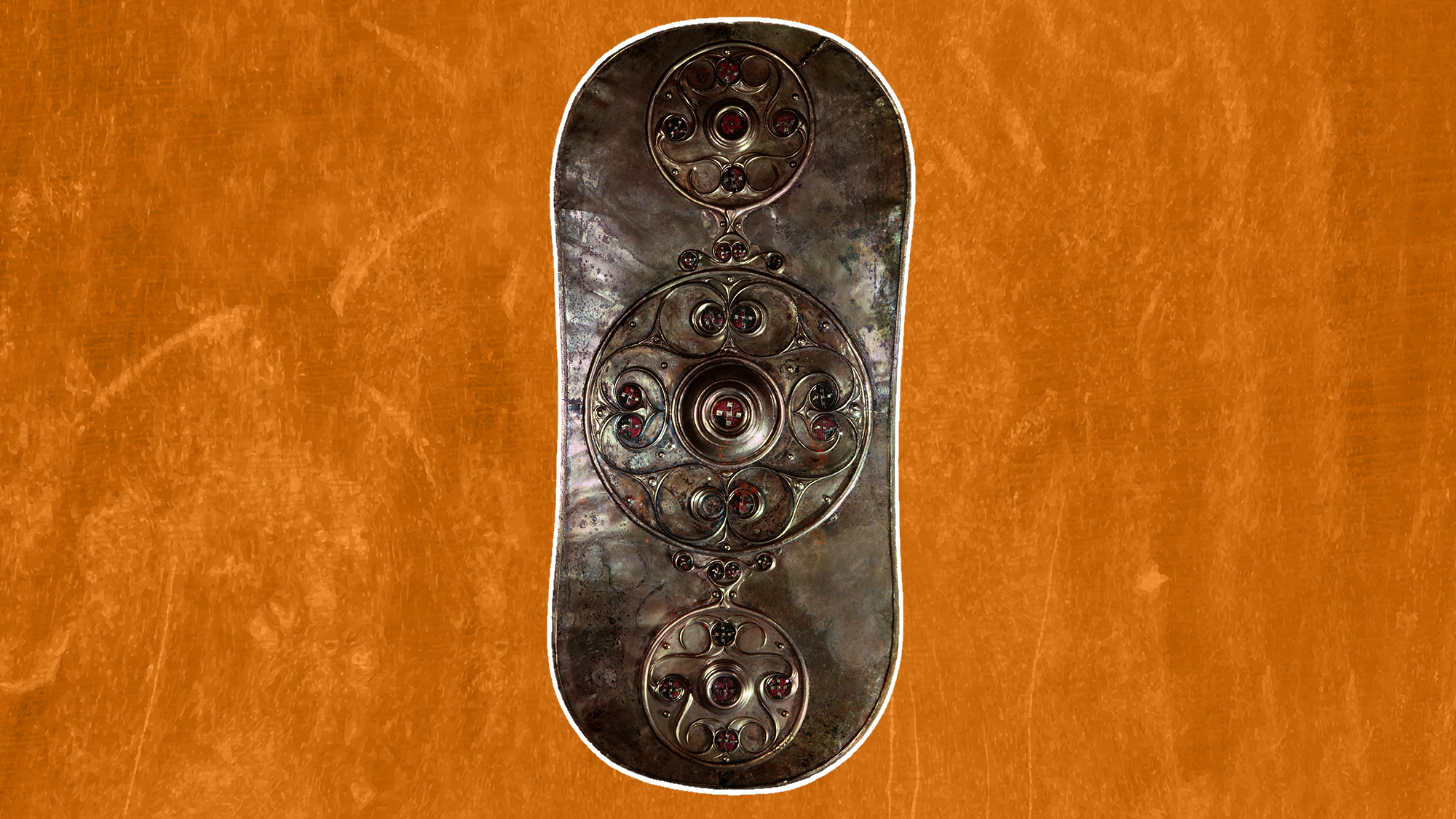
Battersea Shield
Can you identify last week's Astonishing Artifact?


