

The Kansas City cattle crash made for startling footage: young cows running past brick homes, chased through city streets by first responders and volunteers calling themselves “cowboys.” The images had the strange, comic energy of an animal story built for social media. The reality behind them was a truck wreck that killed dozens of cattle and left others badly hurt.
Close to 120 young cattle were aboard a semitruck when it plunged from a highway interchange in downtown Kansas City in the middle of the night. The driver and another person suffered minor injuries. Some animals died at the scene; others with severe injuries were euthanized. Cows that escaped scattered across the city, with some traveling several miles before authorities said they had all been rounded up by day’s end.
Online, the spectacle prompted jokes about “free roam BBQ” alongside expressions of sadness for the animals. That split reaction captures what the crash reveals: the public sees an unusual escape, while the animals were already part of a supply chain that routinely subjects livestock to long, difficult journeys. The rare highway disaster made that hidden process briefly visible.
The journey is part of the production system
Animals raised for food move between facilities throughout their lives. Cattle may travel from breeding farms to feedlots, auctions, and eventually slaughterhouses. Four to six trips are common for beef and dairy cattle. A recent US Department of Agriculture report found that half of cattle shipped to feedlots traveled more than 250 miles, while 22 percent traveled over 500 miles.
That movement has become harder to see as the industry has changed. Kansas City, like Chicago, St. Louis, and Omaha, once served as a major rail hub for livestock. Its stockyards helped earn it the nickname “cowtown.” Rail shipments have largely given way to trucks that move animals across a sprawling national network. Those journeys help sustain an industry that raises and slaughters nearly 10 billion land animals in the United States each year.


From the road, livestock trailers can look like ordinary freight vehicles. Inside, animals are packed into metal compartments and spend hours trying to keep their footing as the truck accelerates, brakes, and turns. They have no seat belts or passenger comforts. Waste accumulates underfoot, creating slippery conditions, while heat, cold, limited ventilation, and restricted access to food and water can compound the strain.
A Government Accountability Office report released over the summer described trips that can last many hours and cover thousands of miles. It warned that overcrowding, temperature extremes, poor ventilation, and inadequate access to food or water can lead to injury, illness, or death when transport conditions are poorly managed. Loading adds another source of stress: frightened animals may be pushed, prodded, or pulled as workers try to move them quickly.
The consequences aren’t limited to crashes. A 2022 Guardian investigation reported that more than 20 million farm animals in the United States die during transport or shortly after reaching slaughterhouses each year. Most are chickens, which make up the vast majority of land animals raised for food; the report put the number of cattle at about 166,000.

A crash, and the limits of current protections
The Kansas City wreck was an extreme event, but livestock truck crashes are not unheard of. A search by the article’s author identified 20 other such crashes in the United States so far that year. Aaron Caster, whose towing company handled the recovery, said nearly all the cattle were female and estimated they were about six months old. They had come from Virginia and were headed to Nebraska.
Caster described a trailer torn open and scattered cattle, some alive and some dead. Several animals had badly injured legs and had to be euthanized. He took more than 50 survivors to his property in Bates City, Missouri, where they could recover. Two later died, including one that had been badly cut in the crash and was euthanized after developing an infection.
The main federal law governing livestock transit is the Twenty-Eight-Hour Law, passed in 1873. It requires livestock traveling across state lines to be unloaded for rest, food, and water after no more than 28 hours in confinement. Poultry are excluded, leaving the species raised in the greatest numbers outside the law’s protection.
Even for covered animals, enforcement has been minimal. Between 2013 and 2025, the US Department of Agriculture investigated 23 suspected violations, issued no fines, and sent four warning letters. The GAO reported that the department stopped issuing those letters in 2022. Its review found that the law offers little protection against many common transport hazards, including unsafe vehicles, rough handling, extreme weather, and moving animals that are sick, injured, very young, or heavily pregnant.

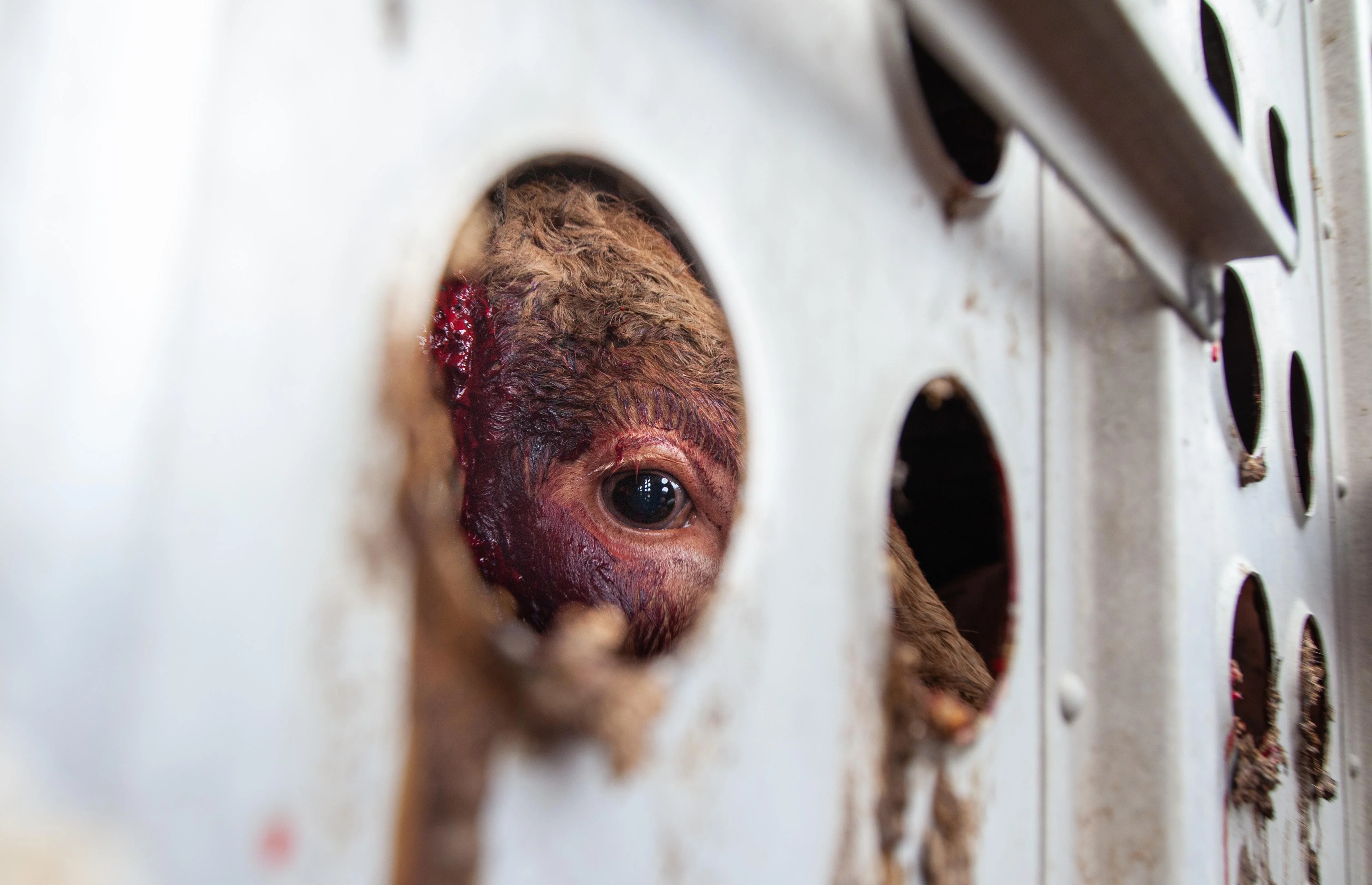
Dairy cattle show how those risks can accumulate. Newborn calves, recently separated from their mothers, are commonly shipped over long distances. Dairy cows are also sent to slaughter once they’re no longer productive, sometimes after long trips while exhausted, pregnant, or in poor condition. A 2022 industry audit found that about one in three dairy cows had impaired mobility when they arrived at a slaughterhouse.
The GAO pointed to more developed transport rules in Canada, Mexico, Australia, and the European Union, including standards for animals’ fitness to travel, space, handling, and vehicle safety. Better oversight could reduce suffering on the road, though it wouldn’t prevent every crash or remove the broader harms built into livestock production.
Kansas City’s loose cattle were an unusual sight; the conditions that put them on the truck were routine. The most useful takeaway from the viral footage is to look beyond the escape: animal transport is a central part of food production, and its ordinary risks deserve attention long after the streets are clear.


