Why Fraternities Remain Embedded in US Campus Life
2026-10-31 02:15
438 views
Fraternities offer housing, social bonds and alumni connections, while recent assault and hazing allegations have raised questions about university oversight.
What the Cornell case exposes
The allegations at Cornell have put the university’s response under scrutiny. New York State Police say they’ll take over future sexual assault investigations there. Faculty members have also held a no confidence vote on the administration’s handling of the case; results are expected November 6.
The alleged gang rape took place in 2024, according to [earlier reporting on the Cornell case](/news/2026-09-29/cornell-university-gang-rape-allegations-new-investigation/107206120). It sits amid other recent reports: the Associated Press says police were investigating an alleged sexual assault at a University of Chicago fraternity party on October 11. At the University of Arizona, a student alleged that two men assaulted her at a fraternity house on August 26. Weeks later, on October 8, the university suspended fraternity activity after reports of hazing and sexual misconduct. AP also reported past hazing there involving pledges being made to consume large amounts of alcohol and live goldfish.
There are thousands of fraternity organisations and chapters across US universities. The Cornell controversy raises a broader question: what are these groups, and why do they remain so embedded in campus life?
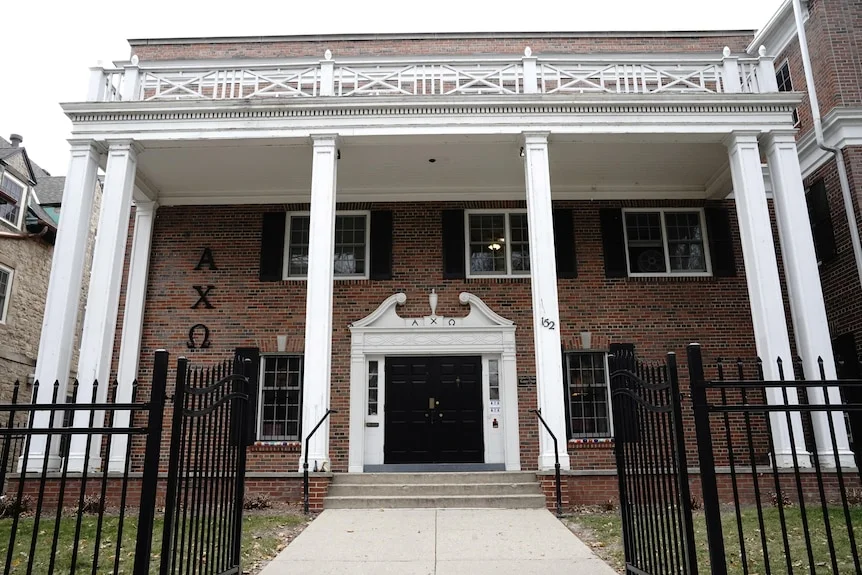
Thousands of fraternity organisations and chapters operate across US higher education institutions. (Reuters: Angelina Katsanis)
Clubs built to last beyond college
Fraternities and sororities are selective social organisations for undergraduate students. Members may live together, socialise and take part in group traditions, usually in same-sex settings. Kimberly Davis, a data analyst at Pennsylvania State University’s Piazza Centre for Fraternity and Sorority Research, says these organisations often form around a shared identity, with relationships that can continue well past graduation.
“For some students, that level of connection is especially appealing during a period of life that can feel uncertain and transitional,” Davis said.
The first fraternity-like organisation was established in 1776 at the College of William and Mary in Virginia. The groups spread more widely across the United States by the mid-19th century, Davis said.
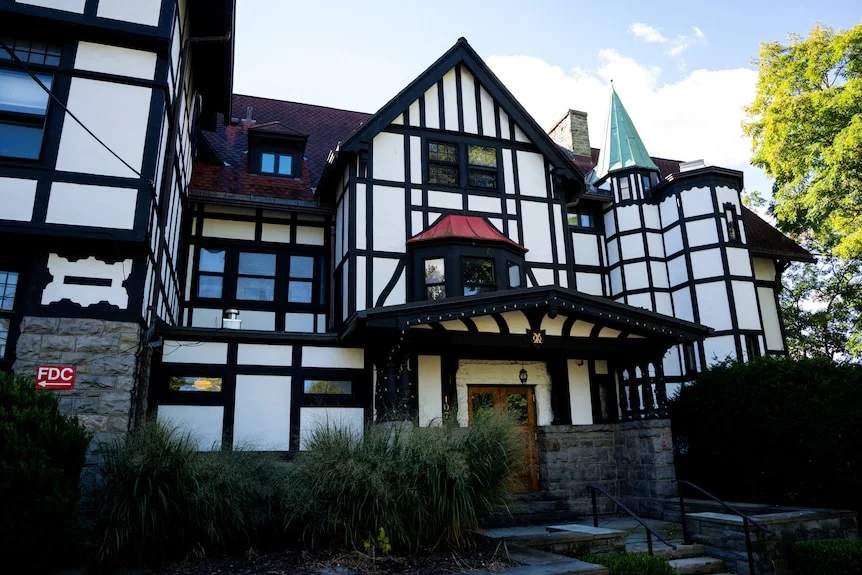
Cornell has closed the Chi Phi chapter house while it investigates an alleged sexual assault. (Reuters: Angelina Katsanis)
Why universities keep them around
Fraternities provide extra housing, Davis said, and universities also see them as partners in leadership development, community involvement, service and philanthropy. The relationships they create can benefit the institutions too: alumni with positive fraternity experiences may stay connected to their university through mentoring and donations.
That’s a real institutional incentive. It also helps explain why fraternities have endured despite recurring concerns about conduct. The Chi Phi organisation, for example, says its mission is “to build better men through lifelong friendships, leadership opportunities and character development”.
Female students typically join sorority chapters, which operate in a similar way to fraternities. (Reuters: Bing Guan)Chi Phi says its mission is “to build better men through lifelong friendships, leadership opportunities and character development”. (AP: Heather Ainsworth)
The risks inside the system
The numbers are troubling, though they don’t establish why assaults happen or how risk varies between chapters. In a 2019 survey by the [Association of American Universities](https://www.aau.edu/uploads/images/general/Revised-Aggregate-report-and-appendices-1-7_01-16-2020_FINAL.pdf), 10 per cent of undergraduate women who reported rape said it occurred at a fraternity house. Among women reporting unwanted sexual touching, 20 per cent said it happened there.
Among men who reported rape, 6.4 per cent said the assault took place at a fraternity house; the figure was 6.7 per cent for transgender, gender queer or questioning students. Just under 10 per cent of men and 12.6 per cent of queer students who reported unwanted sexual touching said it occurred at a fraternity house.
Davis says fraternities aren’t designed to produce sexual violence, but their social environments can still increase risk. Groups may normalise attitudes and behaviour that make assault more likely. A chapter that demands accountability, promotes healthy relationships and encourages intervention can operate very differently from one that tolerates harmful conduct or excessive drinking.
Hazing is another persistent problem. The University of Colorado defines it as an activity that humiliates, degrades, abuses or endangers someone as a condition of joining an organisation, whether or not the person agrees to take part.
The Pennsylvania State University research centre is named for Timothy Piazza, who died after a hazing incident at the university’s Beta Theta Pi fraternity. Prosecutors said he was given at least 18 drinks in 82 minutes, fell down the fraternity house stairs and became unconscious. He later died from a head injury after bystanders delayed seeking help.
“Timothy Piazza was one of four IFC fraternity men who died in hazing incidents in 2017 alone; that was an especially deadly year and the catalyst for many revised state hazing laws,” Davis said. HazingInfo’s database records about five hazing-related deaths a year in the United States since 2000.
Australian colleges share some of the same problems
Australia’s closest equivalent is the residential college: a place that provides housing, meals, academic support and social activities. But the comparison isn’t only about accommodation. Southern Cross University professor Elizabeth Mackinlay says sexual harassment, [assault and violence have also persisted at Australian residential colleges](https://www.tandfonline.com/doi/full/10.1080/08164649.2025.2454205#abstract). She says students often don’t report incidents because they fear consequences for themselves or the people responsible.
Mackinlay sees hazing as a common thread between Australian colleges and US fraternities. Reports from Sydney University have included hazing, abuse and misogyny. In 2018, allegations surfaced involving sexual assault, excessive alcohol use and other incidents at university colleges, according to [ABC reporting](/news/2018-02-26/report-into-university-colleges-reveals-bizarre-rituals/9478036).
In 2024, the City of Sydney council [recommended abolishing the University of Sydney’s residential colleges](https://meetings.cityofsydney.nsw.gov.au/documents/s89453/Abolishing%20University%20of%20Sydney%20Residential%20Colleges.pdf), following an incident at St Paul’s College. Six students were expelled and another 21 suspended after acts described as “serious humiliation” and sexual violence against a student.
Mackinlay said the problems reported at Cornell, Arizona and St Paul’s echoed what she encountered at university in the late 1980s and 1990s. “The alcohol abuse, the degradation, rape, everything happened,” she said. “Nobody reported it. Leadership in the student group took part.”
Changing that culture requires more than rules on paper, she said: respectful relationships have to become a shared norm and be reinforced. For students living in close quarters, the consequences are immediate. “If there's gender-based violence, there's a good chance that you're going to have to sit at the breakfast table in halls the next morning with the perpetrator there,” she said.