A student’s possible Procoptodon footprint at Fowlers Bay links classroom learning, Aboriginal cultural knowledge and a changing record of ancient megafauna.
Footprints make deep time tangible
A small depression in a rocky South Australian beach has turned into a lesson in palaeontology, maths and cultural history. Reece, a 10-year-old student at Koonibba Aboriginal School, spotted a trace fossil that hadn’t previously been documented. It may have been left by a
Procoptodon, a short-faced kangaroo extinct for at least 15,000 years. The largest of these animals stood about 2.7 metres tall and weighed roughly 240 kilograms.
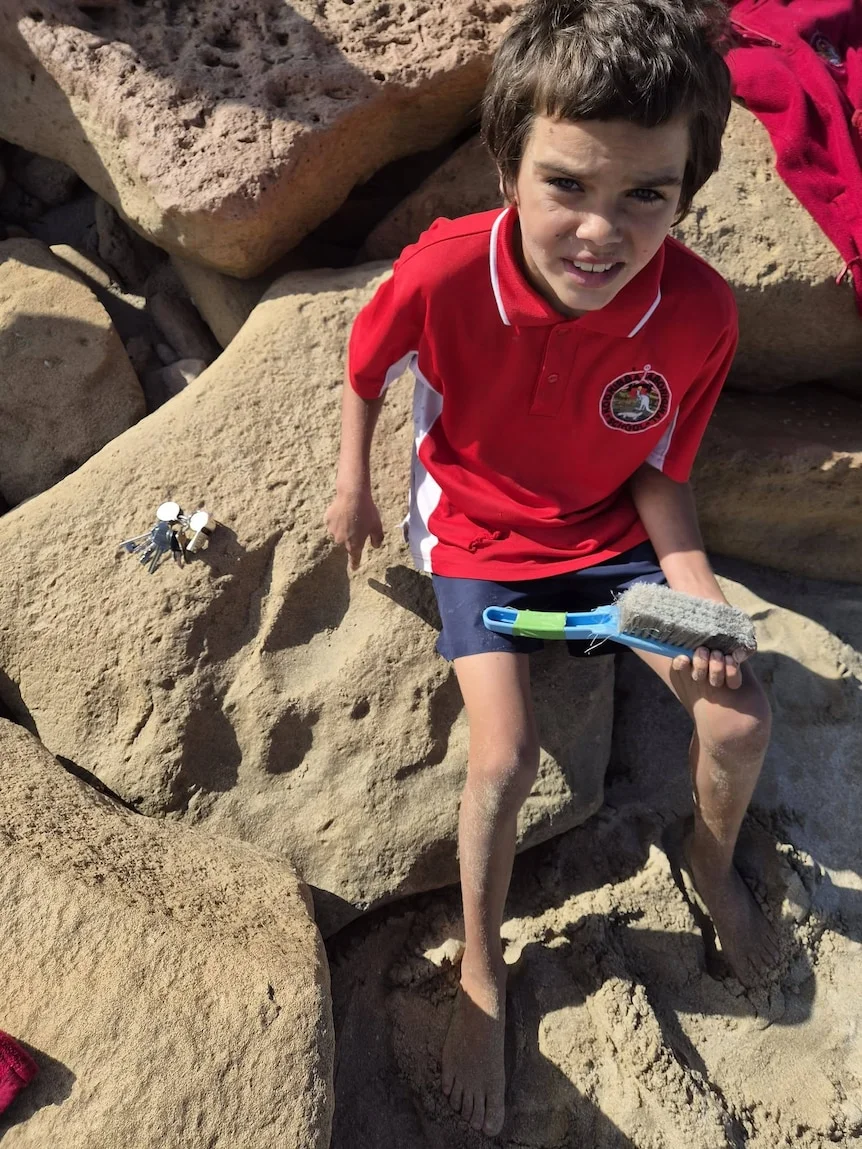
The find caps a journey that began in classroom books and videos, then took 21 students into the Flinders Ranges and to Fowlers Bay, 720 kilometres from their remote school. Along the way, they learned about giant kangaroos, duck-like birds and wombat-like animals, including
Protemnodon,
Genyornis and
Diprotodon. The most striking lesson was that their ancestors may have lived alongside these animals tens of thousands of years ago.
Country, culture and evidence
For principal Mark Prince, the trips were one part of a wider program: students studied megafauna at school, camped in the Flinders Ranges and presented their work at a state conference in Adelaide.
Adnyamathanha man Kristian Coulthard, who runs Wadna tours in the Flinders Ranges, took the group to Yura Mulka, a petroglyph site. He described the engravings as a record of his ancestors’ relationship with megafauna. Coulthard showed students the markings and explained how the animals depicted could help establish their age.
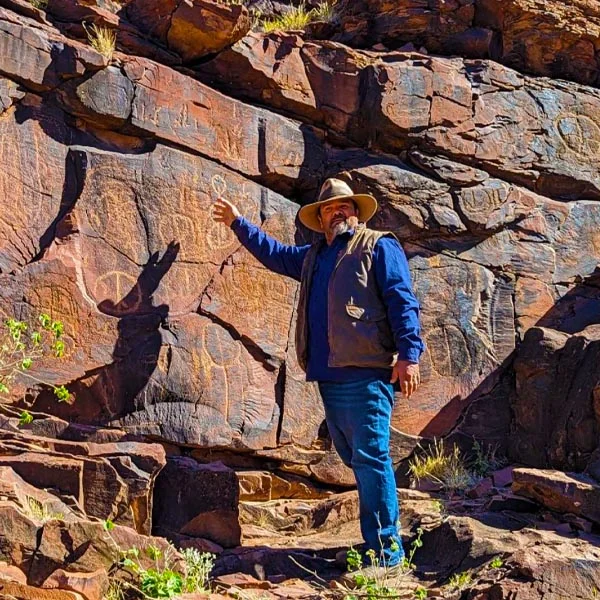
Coulthard said it mattered for young people to hear stories of early human history. The students, he pointed out, were learning on land shaped by some of the planet’s oldest geological and cultural histories.
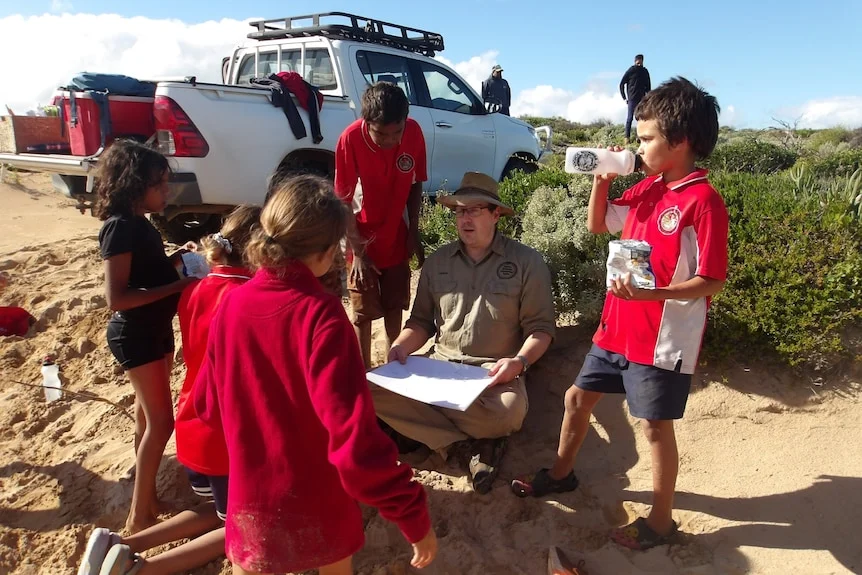
The school then contacted Flinders University to ask whether megafauna had lived near Koonibba. Palaeontologist Aaron Camens, who had worked with Coulthard, led a field trip at Fowlers Bay.
A record the sea keeps changing
Camens said the Fowlers Bay coast was unlikely to preserve the same kinds of fossils found in the Flinders Ranges. Its shifting marine environment does, however, preserve footprints when sand layers harden. Students learned to recognise kangaroo hopping marks, broad impressions that may have come from diprotodons, and three-toed tracks from large birds.
Those traces don’t stay exposed. Storms and erosion can bury or wear away prints, while also shifting rock and revealing others. That instability makes the coastline a changing archive: a footprint may disappear beneath sand for years, then reappear after a storm.
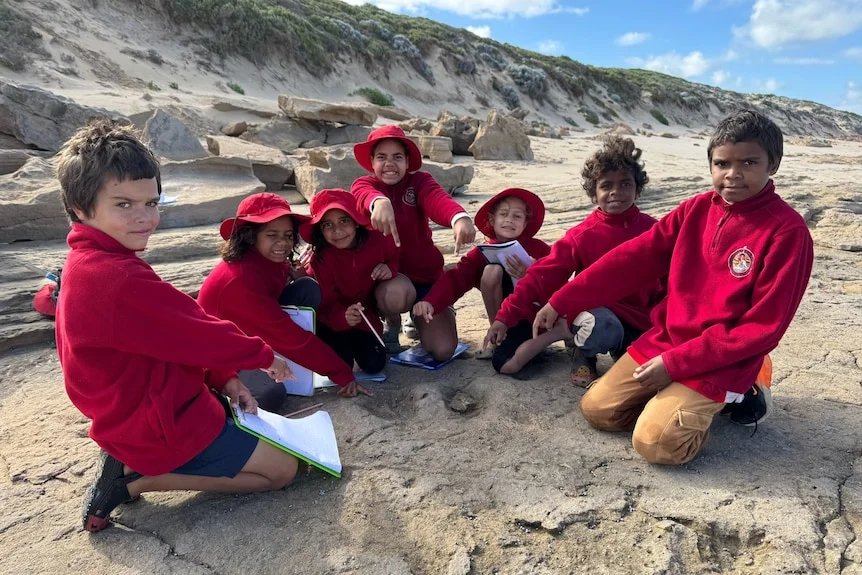
Camens estimated the tracks were probably 120,000 to 130,000 years old, from the last interglacial period, before the most recent ice age, when sea levels were close to today’s. He said the first people to reach Australia would have encountered megafauna. For him, the footprints connect both ancestors and Country to a distant past.
Students also recorded and analysed the tracks’ waves, which may offer clues about how quickly the animals moved. The evidence has limits, but the exercise gives students a way to ask questions of the landscape and test what measurements can tell them.
Turning fieldwork into maths
The students used quadrants to map the prints, applying measurement and analysis to a real field site. Prince said some of the maths went beyond primary-school level; later, students might use those measurements to estimate how fast the animals walked.
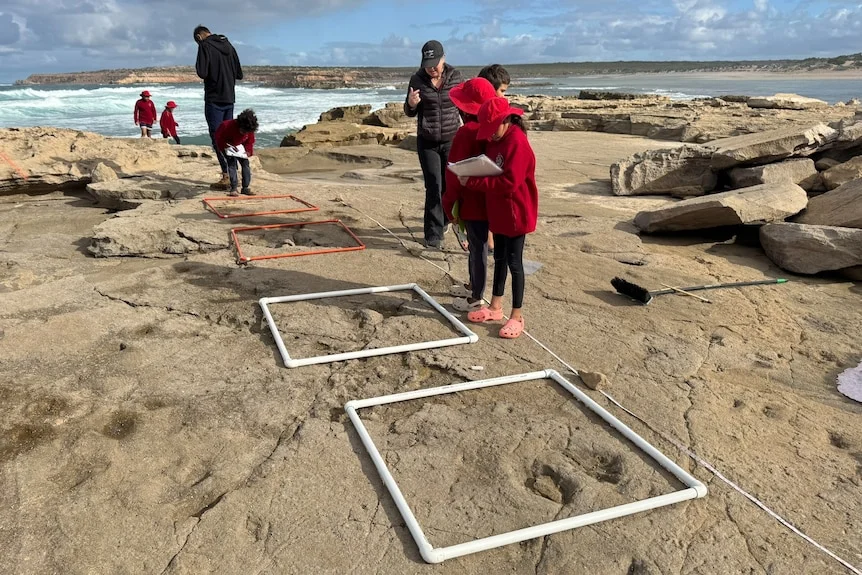
Two students presented the project at the 2026 Aboriginal STEM Congress (YASTSA) in Adelaide in August. They described bringing together the South Australian curriculum, cultural knowledge holders, palaeontologists, authors and park rangers. Their workshop, “Walking with the Megafauna,” was also due to be shared with parents and families at a school showcase later in the term.
That’s the point of the project: the measurements matter, but so does who gets to interpret the evidence and tell its story. For these students, field science has made a long connection to Country visible underfoot.


