Etsy’s AI rules now have clearer edges. Sellers still doubt they’ll stop copying
For Etsy, the problem is bigger than how sellers make products: it’s whether buyers can trust what a listing shows. After criticism from users dealing with AI-generated products, the marketplace has tightened its rules. The changes spell out some limits, but the real test will be enforcement. Etsy emailed sellers about the revisions and [published the policy online](https://www.etsy.com/sellerhandbook/article/1522733284810?msockid=1611f7790d726b3137cce08b0c266a3e). The company acknowledged it hadn’t addressed AI as directly or quickly as some sellers wanted, saying: “AI is threatening [buyer] trust, and we have a responsibility to protect it.” One new requirement is that sellers include at least one unedited photo of the item against a real background, with exceptions for certain products. Digital listings without visual elements, such as audio files, can use representative imagery, including AI-generated images, provided those images don’t mislead buyers. Sellers may still adjust other listing photos — including with AI tools — for exposure, cropping or backgrounds, as long as the edits don’t make the item look different. If the delivered product is “materially different” from its listing images, Etsy says the seller may have to issue a refund.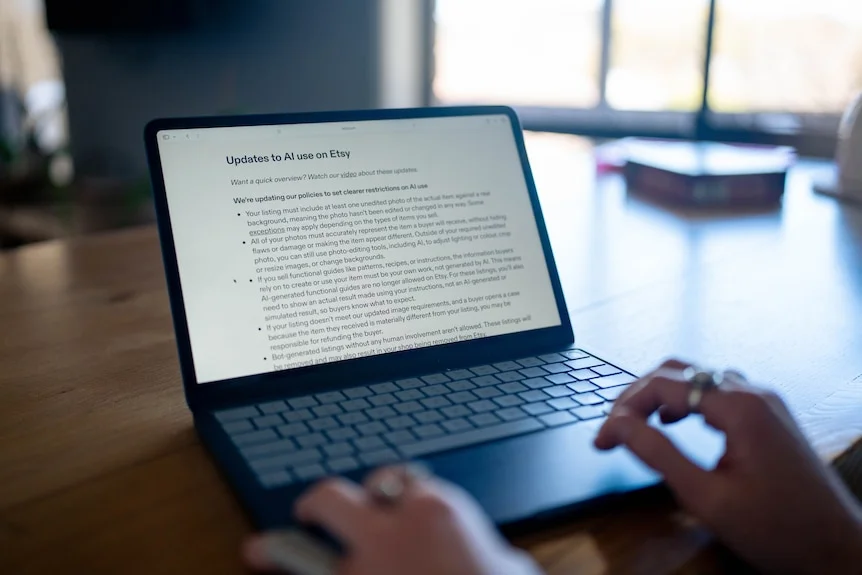
A policy change meets seller scepticism
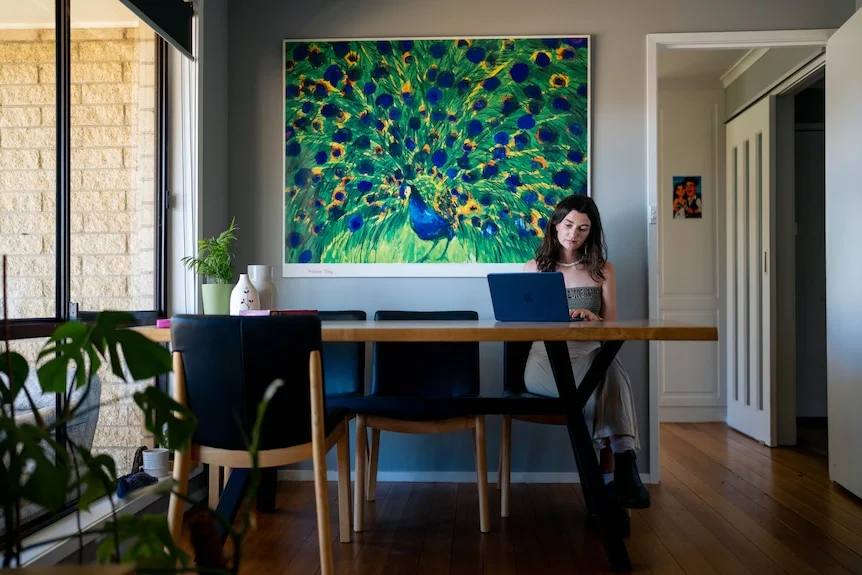
Earlier this month, the ABC spoke with Hobart crochet artist Lucy Cooper, known for a spiral beanie design inspired by 1990s surfwear. She said she found [an Etsy shop selling an AI-generated version of her crochet beanie pattern, illustrated with AI-generated images](/news/2026-10-09/ai-copied-products-found-on-makers-platform-etsy/107191232). For sellers facing copies of their work, clearer wording may be welcome, but it doesn’t settle the practical question: can Etsy identify misuse and act on it? The company calls the changes a “starting point” and says it will review them periodically.For sellers, enforcement is the real test
Lucy Cooper’s experience shows why Etsy’s policy announcement hasn’t settled the argument. Six days after the company announced its changes, on October 28, she found another store selling an AI-generated version of her spiral beanie pattern. All eight product images were AI-generated. Cooper’s design had started attracting attention in March. She welcomed Etsy’s response, but questioned whether a policy that depends on sellers being honest can stop copies from appearing. “They’re addressing the problem, but they’re not actually really doing anything about it,” she said. As she put it: “If you’re the platform owner, you have to do something to make it so that this can’t happen.”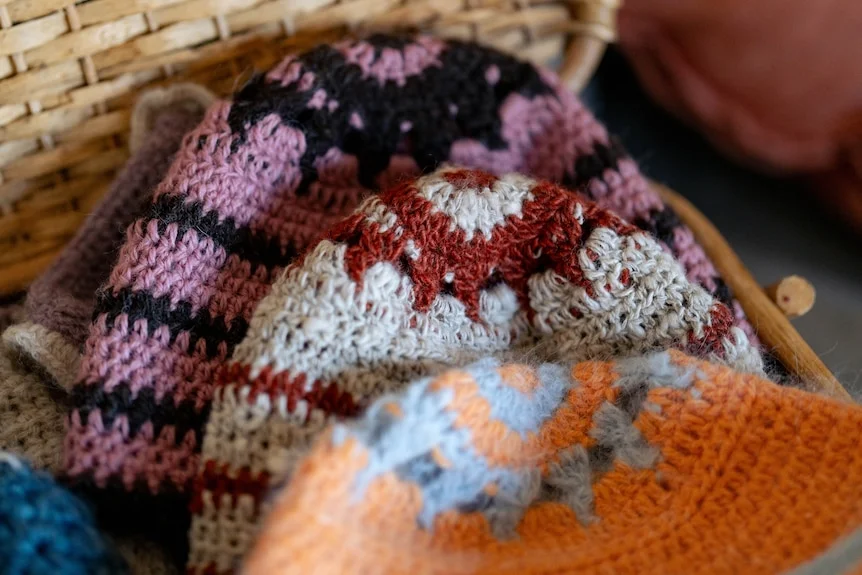
Lucy Cooper's small business started gaining traction in March with her "spiral beanie" design. (ABC News: Ebony ten Broeke)
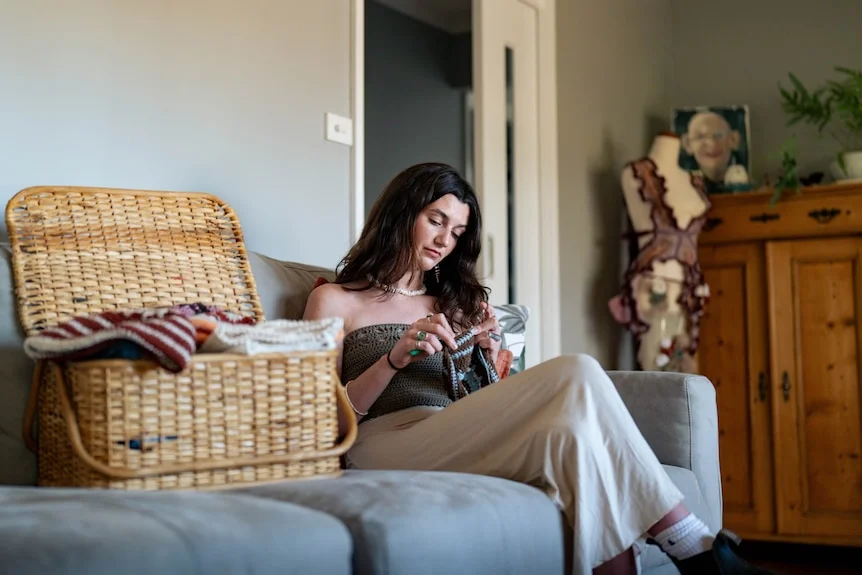
Lucy Cooper has been crocheting since she was 15. (ABC News: Ebony ten Broeke)
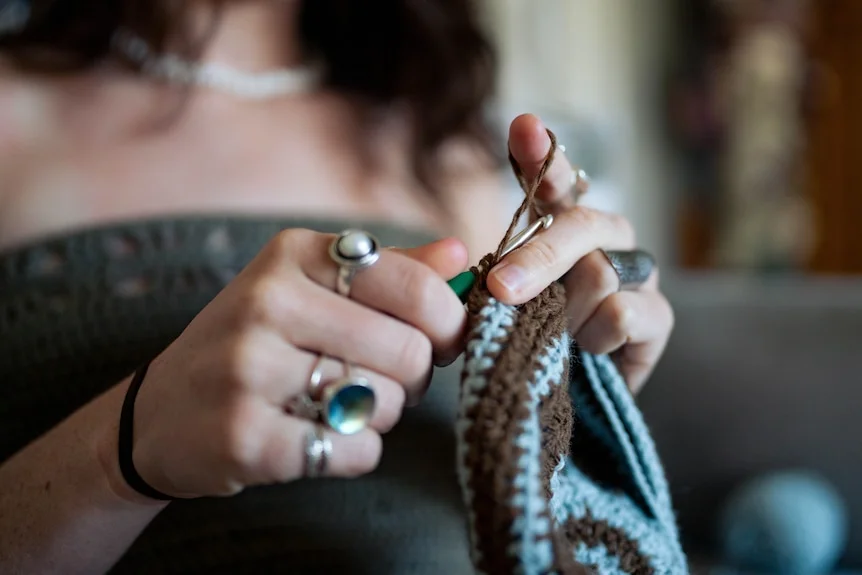
Lucy Cooper recently discovered a US-based Etsy store was selling a copy of her spiral beanie with AI-generated images. (ABC News: Ebony ten Broeke)
AI policy leaves Etsy’s community divided
Etsy’s announcement drew sharply different reactions online. Seamstress Jade argued in an Instagram post that the policy risked alienating buyers and sellers who oppose AI, because Etsy appeared unwilling to condemn its use outright. Others warned that a blanket ban would shut down legitimate work. One commenter, who described working as a visual and web designer, photographer and wood artisan, said AI can speed parts of the design process and called for clearer guidance instead of an outright prohibition. “Just because so many create AI slop does not mean the entire use of AI should be banned. It just needs more guidance.” The harder question is whether Etsy will act on reports. Crochet artist Molly welcomed the changes but asked in another Instagram post whether the company would proactively find AI-generated pattern listings. “I’ll believe it when I see it,” she wrote.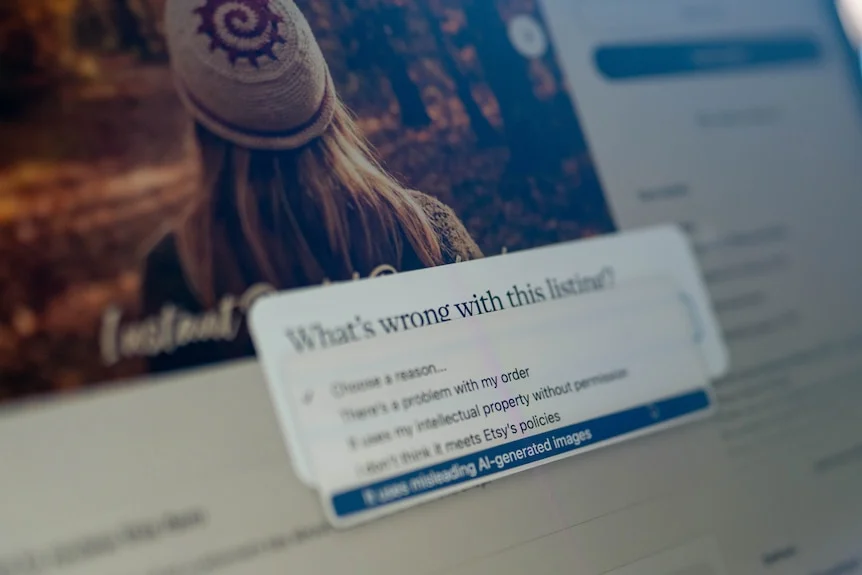
Etsy has acknowledged it failed to address AI issues as quickly as users may have wanted. (ABC News: Ebony ten Broeke)


