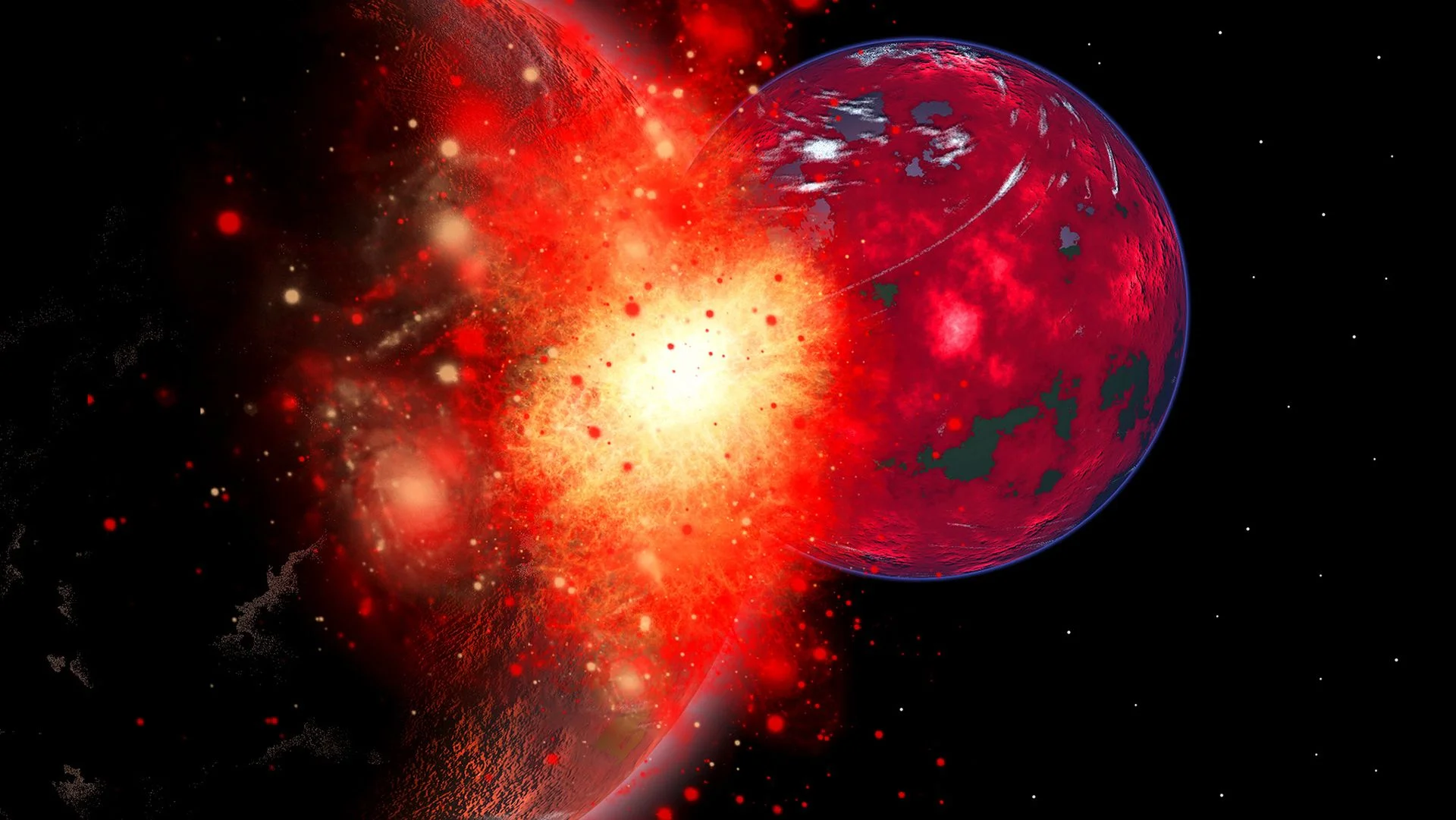
The fate of the outer solar system may hinge on how the Sun sheds its outer layers. If it loses mass in bursts as it ages, Jupiter, Saturn, Uranus and Neptune could be thrown into unstable orbits and collide within a few hundred million years of the Sun becoming a white dwarf. That’s a far less orderly outcome than earlier models predicted.
The study, published Sept. 21 in The Astrophysical Journal Letters, suggests astronomers may need to rethink how often white dwarf stars host planetary systems resembling our own.
Small stellar kicks, large planetary consequences
The Sun is expected to exhaust the hydrogen in its core in about 5 billion years, swell into a red giant and eventually collapse into a white dwarf. At its largest, it could reach roughly 100 times its current size, engulfing Mercury and Venus and possibly Earth, planetary scientist Nathan Kaib of the University of Oklahoma told Live Science by email.
Past models generally gave the four giant planets a quieter future. A 1998 study proposed that gas escaping from the Sun would gradually push their orbits outward, roughly doubling their orbital radii. The planets were expected to retain their arrangement for hundreds of billions of years, unless a passing star disrupted it—a kind of encounter thought to happen only about once every billion billion years.
That forecast assumes the Sun’s mass loss will be smooth. Observations of other stars point to a more uneven process: plasma plumes can lift large clouds of gas away from a star. “They're kind of like coronal mass ejections, except much larger,” said Jim Fuller, a Caltech professor of theoretical astrophysics and co-author of the study.
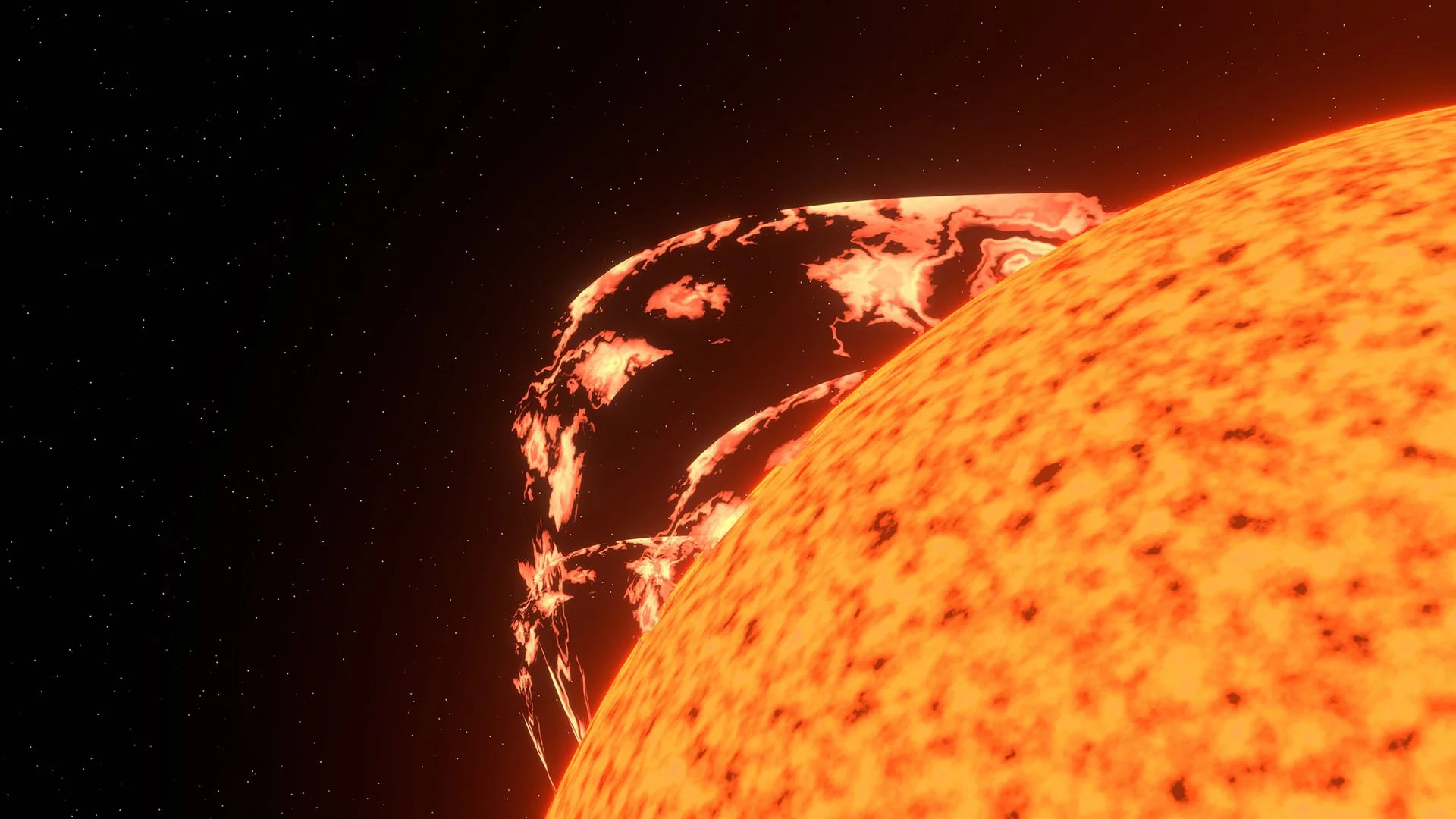
Each ejected cloud carries momentum, nudging the star in the opposite direction, much like recoil from a fired gun. A single push would be slight, but repeated bursts could change the Sun’s speed by several hundred feet per second. Astronomers have observed white dwarfs in other systems moving with these kinds of kicks.
Fuller had studied the effect of stellar recoil. When he described it to planetary scientist Konstantin Batygin, a Caltech professor and the study’s first author, Batygin saw that the changing motion of the Sun could alter its gravitational influence on the giant planets.
Simulations point to multiple possible endings
Batygin modeled the Sun and the outer planets under three conditions: smooth mass loss, bursts of ejected material throughout the red giant phase, and bursts concentrated in its final stages. The simulations also varied the mass of the ejected clouds.
In 672 simulations, the smooth-loss scenario largely matched earlier predictions: the outer planets kept their familiar configuration for billions of years. Bursty mass loss produced a different picture. The planets could exchange positions, move into elongated orbits or leave the solar system altogether. In 96% of simulations using the heaviest mass packets, they collided and were destroyed.
The disruption could arrive quickly on stellar timescales: within a few hundred million years after the Sun became a white dwarf, and in the most extreme cases while it was still a red giant.
What the results could mean for white dwarf systems
The findings suggest that white dwarfs are less likely than previously expected to host planetary systems arranged like today’s outer solar system. Kaib said the results instead point to elongated planetary orbits being more common. That matters for research into whether habitable planets could exist around white dwarfs: a planet’s presence alone may not tell us whether its orbit can remain stable.
For now, the outcome depends on how much mass the Sun ejects and how it releases it—details the models explore through different scenarios. The study’s central implication is clear: the Sun’s final stages could reshape the giant planets’ system far sooner and more dramatically than the smooth-loss models suggested.
See how well you know our planetary neighborhood with our solar system quiz!


