
Training people to recognize that they’re dreaming may take just a month of practice, according to a small study that paired meditation with virtual reality simulations. Participants who practiced reality checks in strange, dreamlike VR scenes reported lucid dreams four times as often as a group that did reality checks alone.
That result could matter for people troubled by nightmares. “Lucid dreaming can benefit people with nightmares by allowing them to transform their nightmares into positive dreams and feel greater agency in their dreams,” said Daniel Morris, a cognitive neuroscientist at Northwestern University who studies dreams and wasn’t involved in the research.
Practicing reality checks in VR
Reality checks ask people to question whether an unusual experience is real or part of a dream. The idea is that the habit might carry over into sleep, when events that would seem strange while awake can feel convincing. But everyday life doesn’t offer many dreamlike moments to practice on. “For most people, our day-to-day lives may not feel ‘dream-like,’” Morris said, which may help explain why reality checks alone have produced mixed results.
The research team, based at the University of Trento in Italy, tried to create those unusual moments with VR simulations of bizarre situations. University students first meditated, with the aim of improving their awareness of their thoughts in the moment, then explored virtual scenes. When objects or people behaved in ways that defied physics, or the scene changed abruptly, participants stopped to perform a reality check.
After the training sessions, held twice a week for one month, participants recorded their dreams each morning and completed daily questionnaires about how many dreams they recalled and how many seemed lucid.
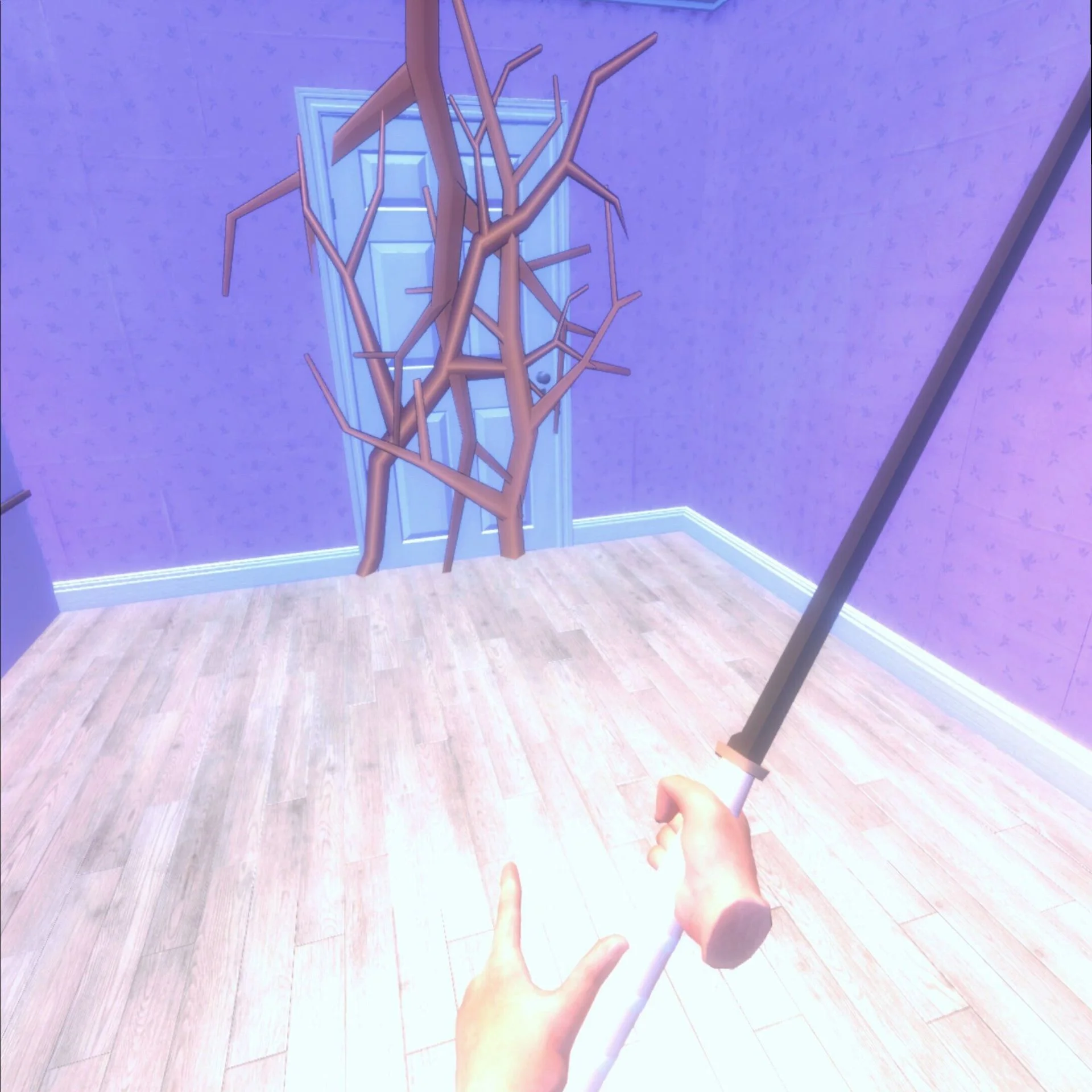
The VR group reported lucid dreams four times more often than participants who practiced reality checks without meditation or VR. A separate group used reality checks in realistic VR scenes instead of dreamlike ones; its participants reported lucid dreams at less than one-eighth the rate of the dream-simulation group. That comparison suggests the unusual scenarios may have contributed beyond the mere use of a headset.
“It was surprising how little training with the dreamlike VR simulations was needed” to build the skill, said study co-author Nicola De Pisapia, a neuroscientist at the University of Trento. The team limited the experiment to a month because extending it would have put too much demand on participants, he said.
What VR may add
Study co-author Andrea Signorelli, a doctoral student in De Pisapia’s lab, suspects the dreamlike VR scenes played a central role. Dreams can feel real to the senses, making it difficult to recognize them as dreams. VR can also create convincing visual and auditory experiences, Signorelli said.
“Virtual reality is the technology to fool you on stereoscopic vision and auditory information,” he said. Stereoscopic vision uses slightly different images for each eye to create the impression of depth. Signorelli described VR as “basically the most immersive technology that we have at the moment,” making it a useful setting for practicing reality checks.
The dream records raised another question: participants in every group recalled more dreams after the experiment began than before, but the group using dreamlike VR recalled the fewest dreams overall while reporting the most lucid ones. Signorelli suggested that lucid dreaming might take energy away from remembering other dreams. Morris offered another possibility: participants in that group may have been less inclined to report dreams that weren’t lucid, which could skew the comparison.
Small study, open questions
The findings come with important limits. Only 38 people took part, and the two control groups weren’t asked to meditate. That means the study can’t establish whether meditation, dreamlike VR, or the combination produced the difference in lucid dreaming.
The researchers are now running a follow-up study without meditation, Signorelli said, to test whether the VR scenarios are the main driver. He also sees potential in tailoring simulations to individual dream patterns, such as recreating details from a recurring nightmare so a person can practice recognizing its triggers.
Morris said future work could examine whether the approach helps people with nightmares, anxiety or post-traumatic stress disorder. For now, the study offers an early indication that realistic-feeling, unusual VR scenarios may give reality-check practice a more useful setting. Larger studies will need to pin down which part of the training works and whether the effect translates into practical support for people who experience distressing dreams.
The study was published Sept. 28 in Frontiers in Psychology.
How much do you know about sleep and dreams? Find out with our sleep quiz!


