Why Lumina’s scale matters
Lumina’s main contribution is scale: the simulation follows the young universe across a wide range of cosmic structures while tracking how radiation from emerging galaxies altered the gas between them. It spans the first 2 billion years of cosmic history, a period when the first stars and galaxies were taking shape and their radiation was changing the material around them. That combination could help researchers compare models with telescope surveys of many early galaxies at once. The point isn’t just to depict individual objects; it’s to follow how activity in galaxies connects to changes across much larger regions.
The findings appeared Monday (Oct. 26) in Monthly Notices of the Royal Astronomical Society. The universe is about 13.8 billion years old, so Lumina models a substantial early stretch of its history rather than a snapshot of the present cosmos. Simulations of this kind give researchers a way to test how proposed processes might fit together over time. But their usefulness still depends on whether the results can be compared with observations, not simply on how much of the universe they can represent.
“Other simulations cannot zoom in as far as this,” said study co-author Mark Vogelsberger, an MIT physics professor, in a statement. “The difference between the smallest and largest scales that we simulate is larger than in any other simulation.” That claim points to the project’s central technical ambition: modeling small-scale processes, such as stars forming, in a volume large enough to show how their effects spread. This is more significant than it looks, because the behavior of a galaxy can’t always be understood by examining it in isolation from its surroundings.
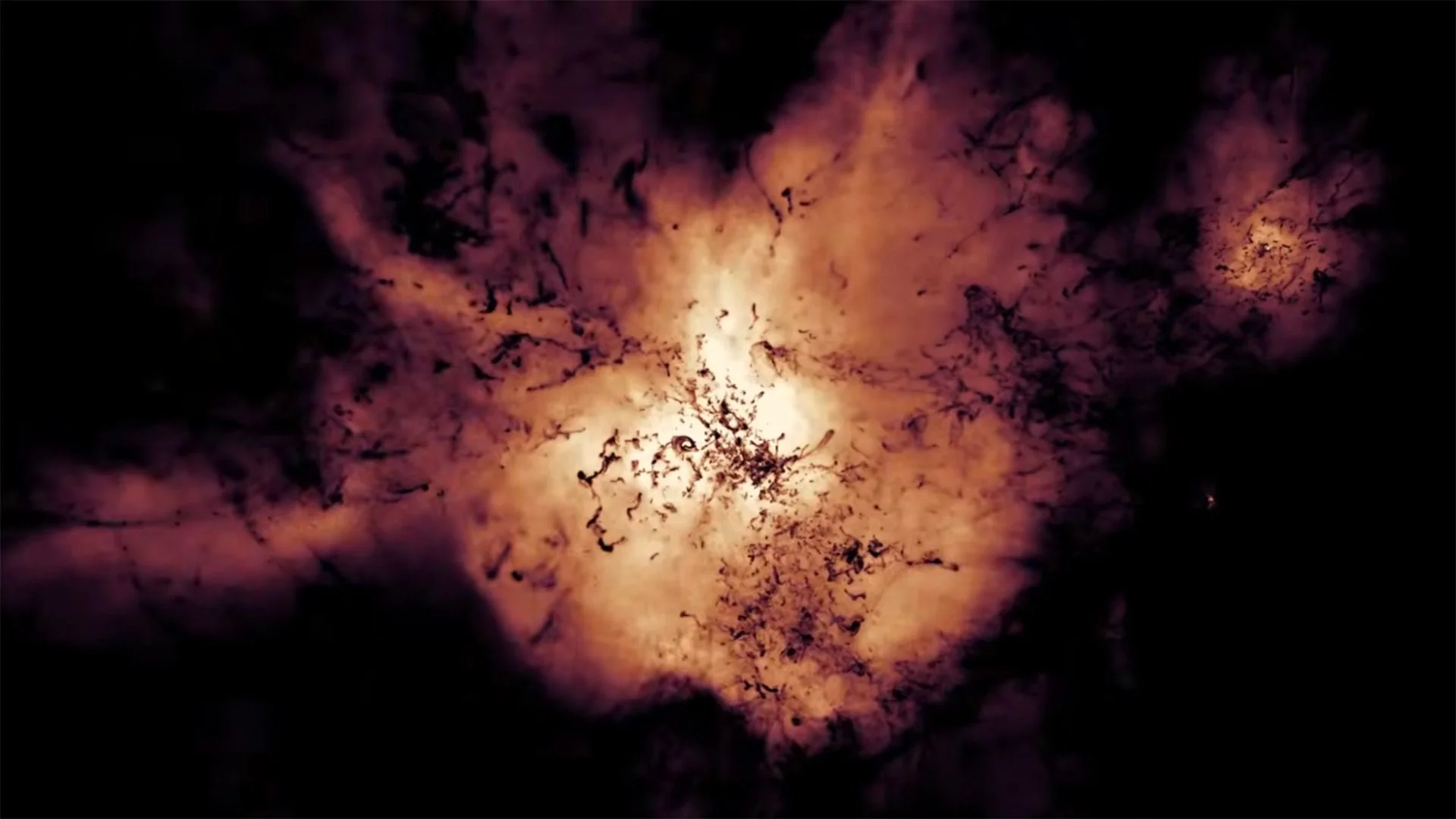
A video accompanying the research follows a simulated region about 1.6 billion light-years across. It starts roughly 45 million years after the Big Bang, when neutral hydrogen still obscured much of the universe’s light, then tracks gas gathering into halos and the first galaxies beginning to shine. The sequence offers a visual account of processes that unfold across enormous distances and timescales. It’s an illustration of the simulation, though; the scientific test comes from comparing its predictions with observations.
From the first stars to a transparent universe
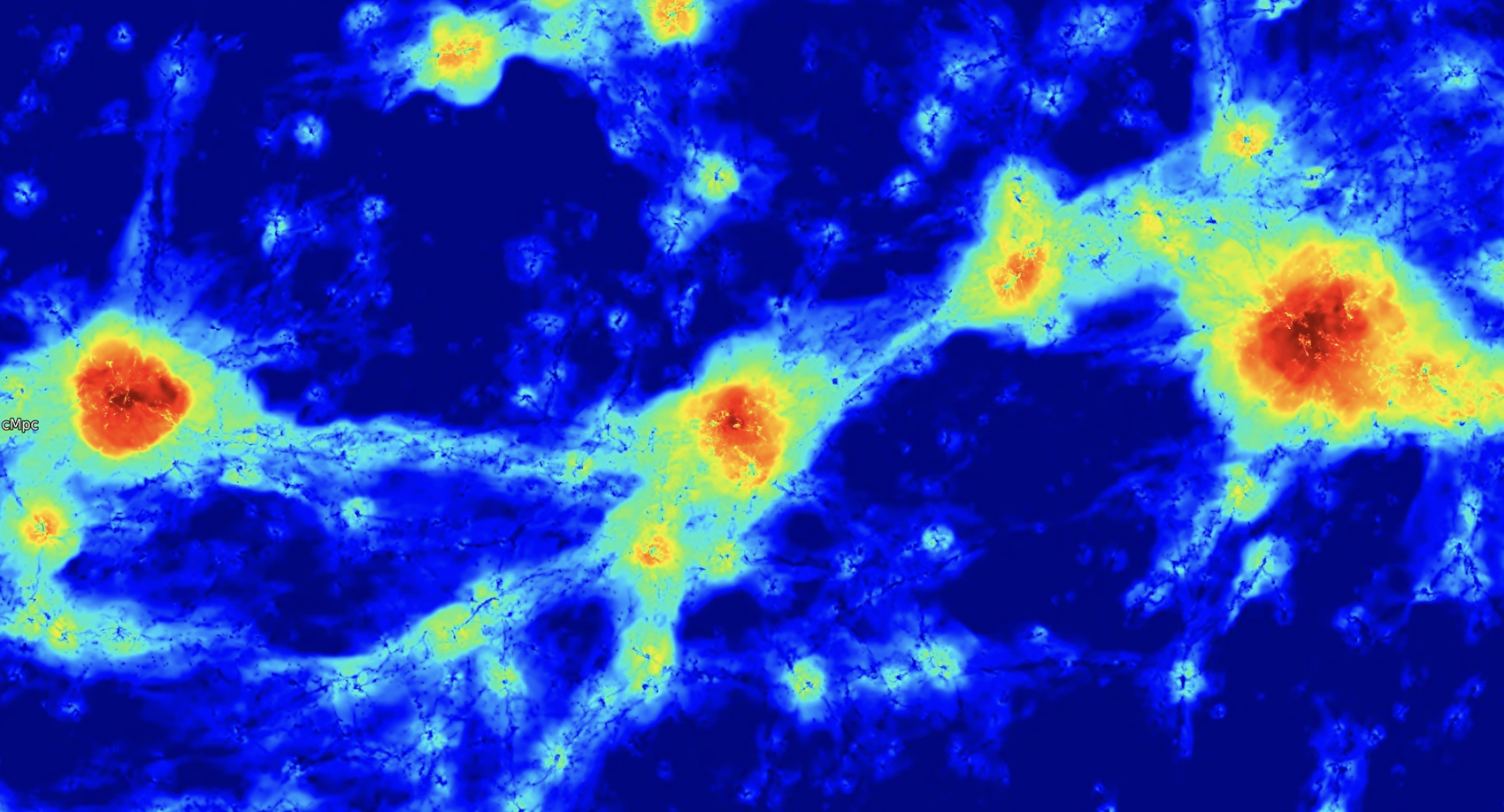
The early universe’s neutral hydrogen acted like a fog, limiting how far light could travel. Lumina incorporates dark matter, stars, gas and radiation to model how that changed as stars formed in the first galaxies, emitted radiation and gradually ionized hydrogen in the space between galaxies. In this context, ionization means that radiation strips electrons from atoms, changing how the gas interacts with light. The process didn’t happen everywhere at once, so tracking both the sources of radiation and the gas around them matters.
“We see this is where the first galaxies form,” said first author Oliver Zier, a former MIT postdoctoral researcher and computational astrophysicist now at Harvard University. “And the first stars form in those first galaxies. Those stars then create radiation. The simulation then tracks that radiation, and we can zoom way out to see how that radiation travels out from stars, through the universe, until at some point it ionizes some neutral hydrogen.” His explanation captures the chain the simulation is designed to connect: the formation of stars, the radiation they produce, and its effects beyond the galaxies themselves. (And this is the part most people overlook.) The challenge isn’t only making stars appear in a model; it’s following the consequences of their light across the surrounding gas.
Tracking hydrogen and helium reionization
Lumina models both hydrogen and helium reionization, a combination the researchers describe as a first for a simulation of its kind. Hydrogen became ionized as ultraviolet light from young stars and galaxies stripped electrons from hydrogen atoms, clearing the way for light to travel through intergalactic space. Later, energetic activity around supermassive black holes ionized helium. The two stages reflect different sources and conditions, which makes modeling them together useful for asking how the early universe changed from an opaque state toward one in which light could travel farther.
That sequence also makes the simulation’s scope relevant to observations: researchers can examine how radiation from galaxies and activity around black holes relate to the gas between them. The model can provide a framework for interpreting patterns in telescope surveys, while observations can show where its predictions fit and where they don’t. A wide simulation can make comparisons across many galaxies possible, but scale alone can’t establish that its assumptions capture the universe accurately.
What the simulation could help researchers learn
The researchers see Lumina as a way to test theoretical predictions against telescope observations, particularly surveys that map many galaxies together. Its value will depend on how well those large-scale patterns match what astronomers observe in the early universe. If you’re working in this space, the appeal is clear: a model that connects galaxy formation with radiation traveling through intergalactic gas could help make sense of observations that otherwise show only parts of the process.
That said, the article doesn’t establish that Lumina has already resolved every uncertainty about how the first galaxies changed their surroundings. The next step is comparison: researchers need to see whether the simulated patterns agree with measurements and whether any disagreement points to gaps in the model. A useful test, not a final answer.


