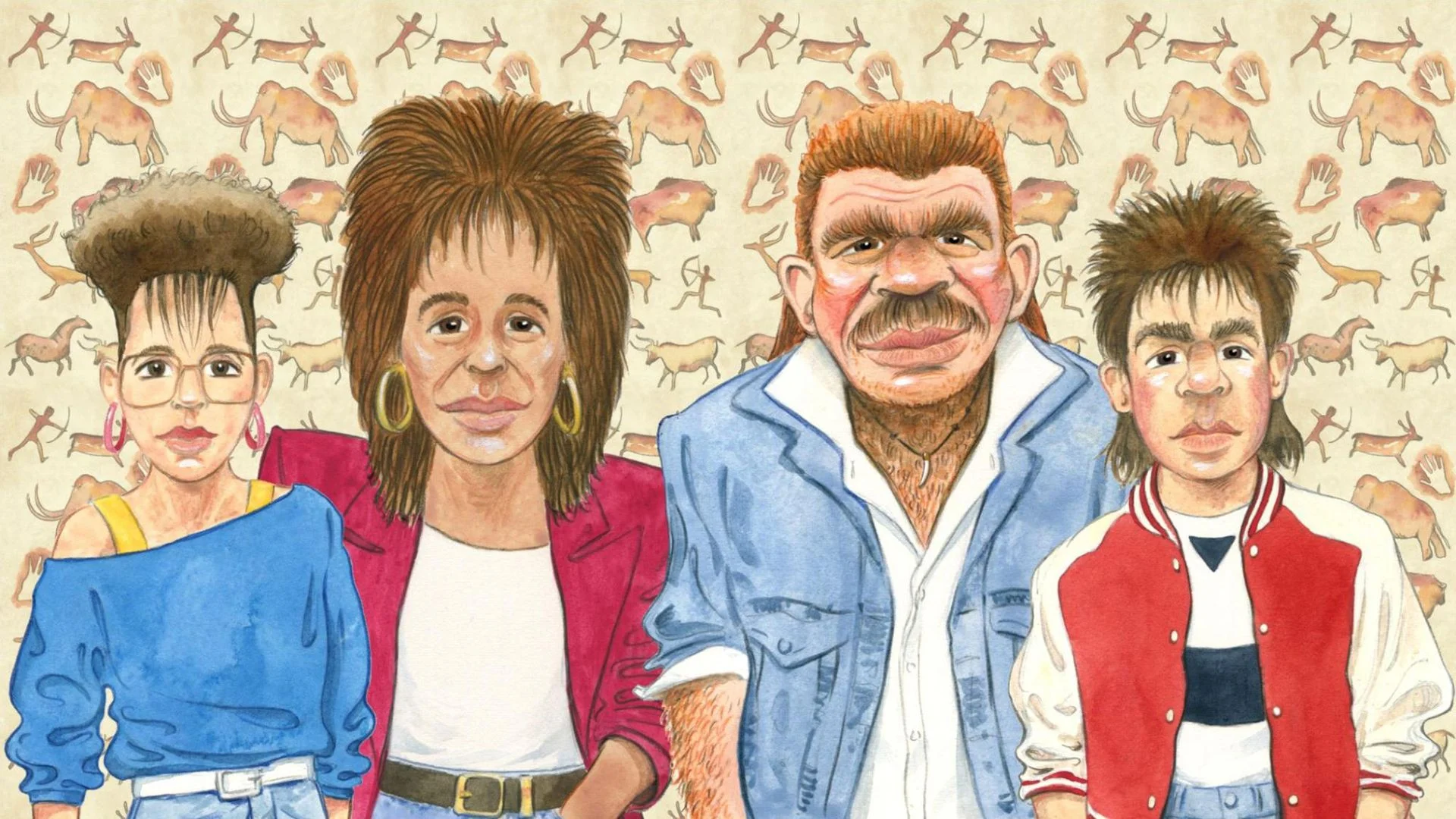
The genetic record says Neanderthals and modern humans had children together. It can’t tell us what those encounters looked like. That gap matters: evidence of shared ancestry is not evidence of shared lives, and no archaeological site has yet shown the two groups living together at the same time and place.
A cave on Turkey’s Mediterranean coast offers a striking clue to how easily the evidence can mislead. At Üçağızlı II, people separated by thousands of years left behind similar stone tools, prey remains and pierced seashell ornaments. The resemblance is real, but it doesn’t establish that Neanderthals and modern humans met there. The site instead captures a central problem in the story of Neanderthals and modern humans (Homo sapiens): familiar traces can outlast the people who made them.
The evidence for interbreeding is much clearer. Dozens of genetic studies show that the groups had children across tens of thousands of years and on multiple continents. Today, people with ancestry outside Africa carry the legacy: roughly 2% of their genomes is Neanderthal. But DNA alone can’t tell us who approached whom, whether those encounters involved consent, violence or alliances, or who raised the children. The X chromosome offers a new way to investigate one part of that story. Its message is intriguing, but its limits are just as important.
A puzzle on the X chromosome
Researchers have been trying to explain a striking imbalance since the first high-coverage Neanderthal genome was sequenced in 2010: Neanderthal DNA is less common on the X chromosomes of people alive today than it is across the rest of the genome.
The X is one of the two human sex chromosomes and makes up about 5% of the DNA in cells. Most females have two X chromosomes in each cell; most males have one X and one Y. Across the rest of the genome, Neanderthal ancestry appears in fairly consistent proportions. On the X, there’s much less.
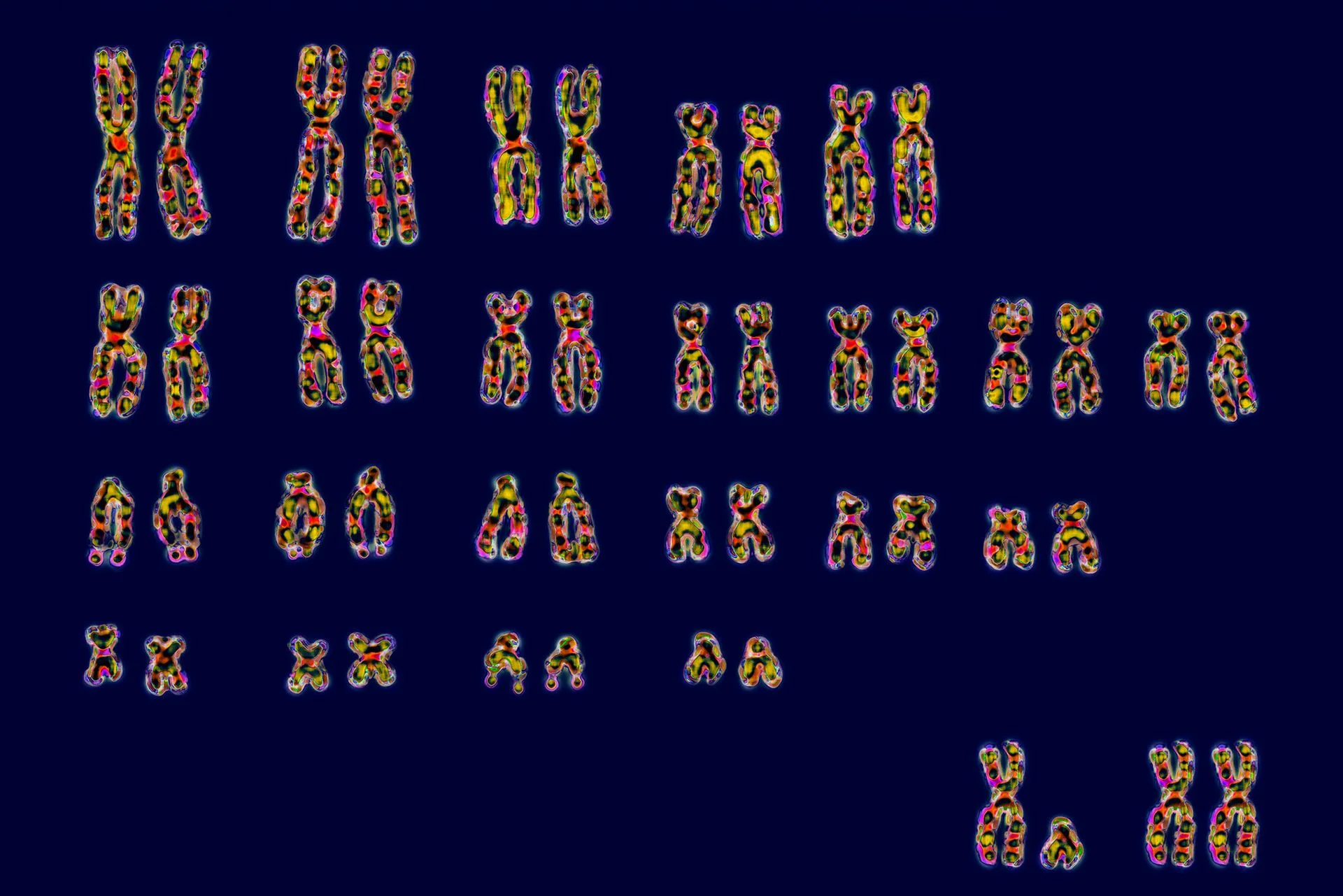
The standard explanation has been negative selection: Neanderthal variants on the X may have conflicted with modern-human biology, so natural selection gradually removed them over many generations. That’s plausible. Incompatibilities elsewhere in the genome also caused Neanderthal DNA to dwindle on other chromosomes.
But the X chromosome tells a more complicated story. DNA can contain instructions for proteins, regulatory sequences that control when genes are active, and stretches that appear to do neither. Researchers still don’t fully understand what all those noncoding stretches do.
Alexander Platt, an evolutionary biologist at the University of Pennsylvania’s Perelman School of Medicine, asked what the negative-selection theory would predict from the other direction. If Neanderthal X variants were harmful to modern humans, modern-human variants might have benefited Neanderthals. Neanderthal remains should then contain an excess of modern-human DNA in places where those variants could provide a measurable advantage, especially protein-coding genes or the sequences that regulate them. Platt’s team found the opposite: Neanderthal X chromosomes held more modern-human DNA in noncoding regions than in coding ones. The pattern, reported in the team’s study, looks less like natural selection favoring better genes and more like a record of reproduction.
That interpretation rests on how X chromosomes pass between generations. A mother always contributes an X in her egg. A father contributes either an X or a Y, so sons inherit their X from their mother and daughters inherit one from each parent. Unlike the other 22 chromosome pairs, which receive one copy from each parent, X chromosomes across a population come about two-thirds from mothers and one-third from fathers. That imbalance makes the X a particularly sensitive record of who had children with whom. The finding is about inheritance patterns; it doesn’t, by itself, reveal why those patterns formed.
Who had children with whom?
If Neanderthal men had children with modern-human women more often than Neanderthal women had children with modern-human men, more modern-human X chromosomes would flow into the Neanderthal population. The team’s simulations point to just such a recurring pattern. Males with more Neanderthal ancestry tended to reproduce with females with more modern-human ancestry, Platt said—a persistent mating pattern that appears in at least two periods separated by about 200,000 years.
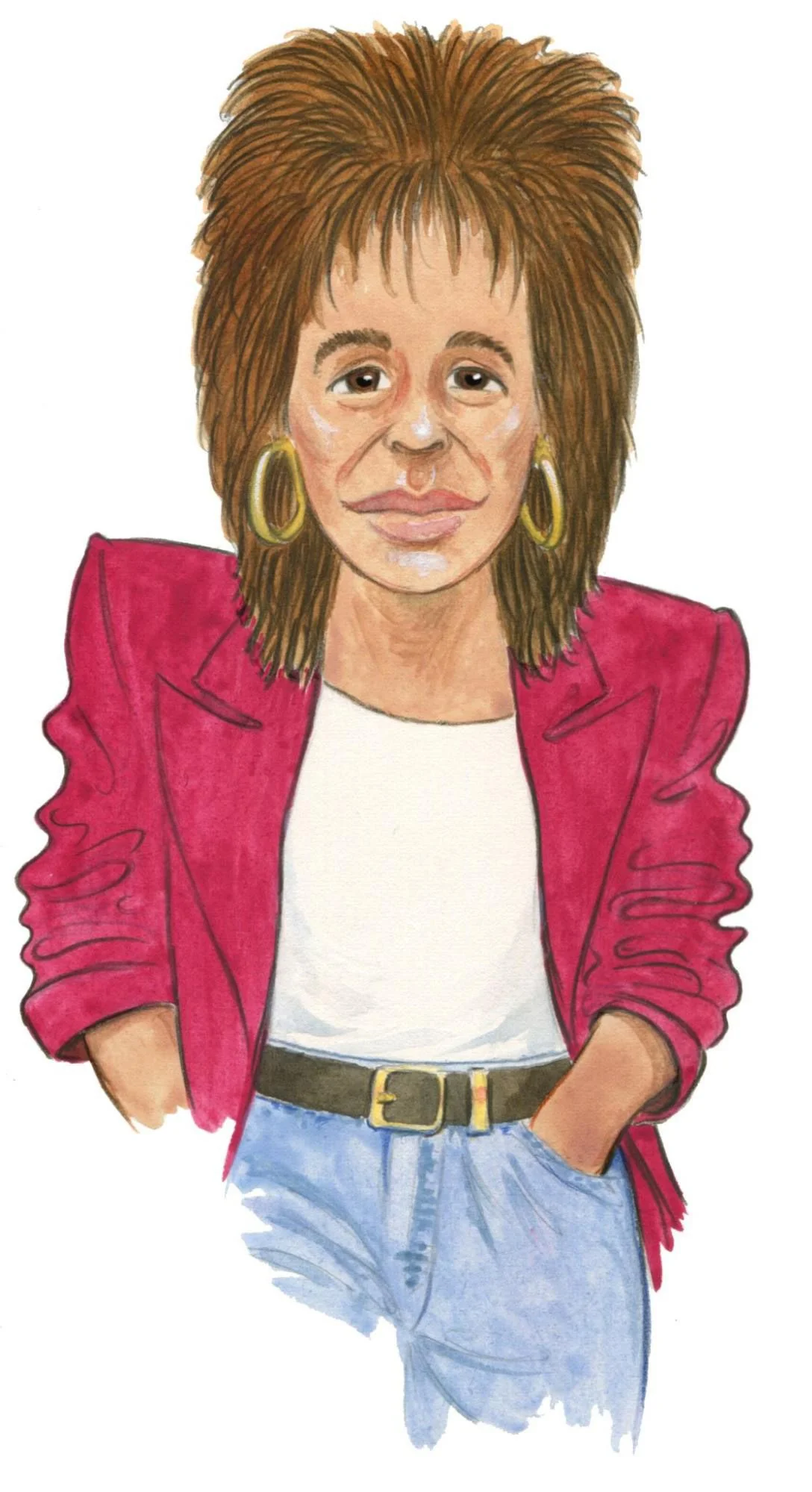
The researchers identified two distinct periods of interbreeding. One, about 45,000 years ago, accounts for most of the Neanderthal DNA found in non-African genomes today. The earlier pulse, more than 200,000 years ago, left genetic traces in Neanderthals rather than in modern-human populations. The apparent pattern—Neanderthal fathers and H. sapiens mothers—shows up in both periods, more than 150,000 years apart.
Here’s the thing: the X chromosome records which ancestry lines contributed to later generations. It can’t tell us whether people chose partners, faced coercion, or had children only when circumstances allowed. That distinction leaves the most human part of the story unresolved.
Biology can mimic preference
The same genetic pattern could arise even if neither group preferred partners from the other. Rajiv McCoy, a geneticist at Johns Hopkins University, told Live Science that in crosses between closely related species, pregnancy outcomes can depend on which group the mother and father come from. A hybrid pregnancy might simply have been more likely to succeed when the Neanderthal was the father and the modern human the mother.
Some proposed mechanisms fit that possibility. One study suggests Neanderthal red blood cells may have restricted fetal growth. Another argues that Neanderthal mothers carrying hybrid children may have faced a higher risk of preeclampsia, a life-threatening pregnancy complication. McCoy said existing evidence doesn’t rule out these explanations.
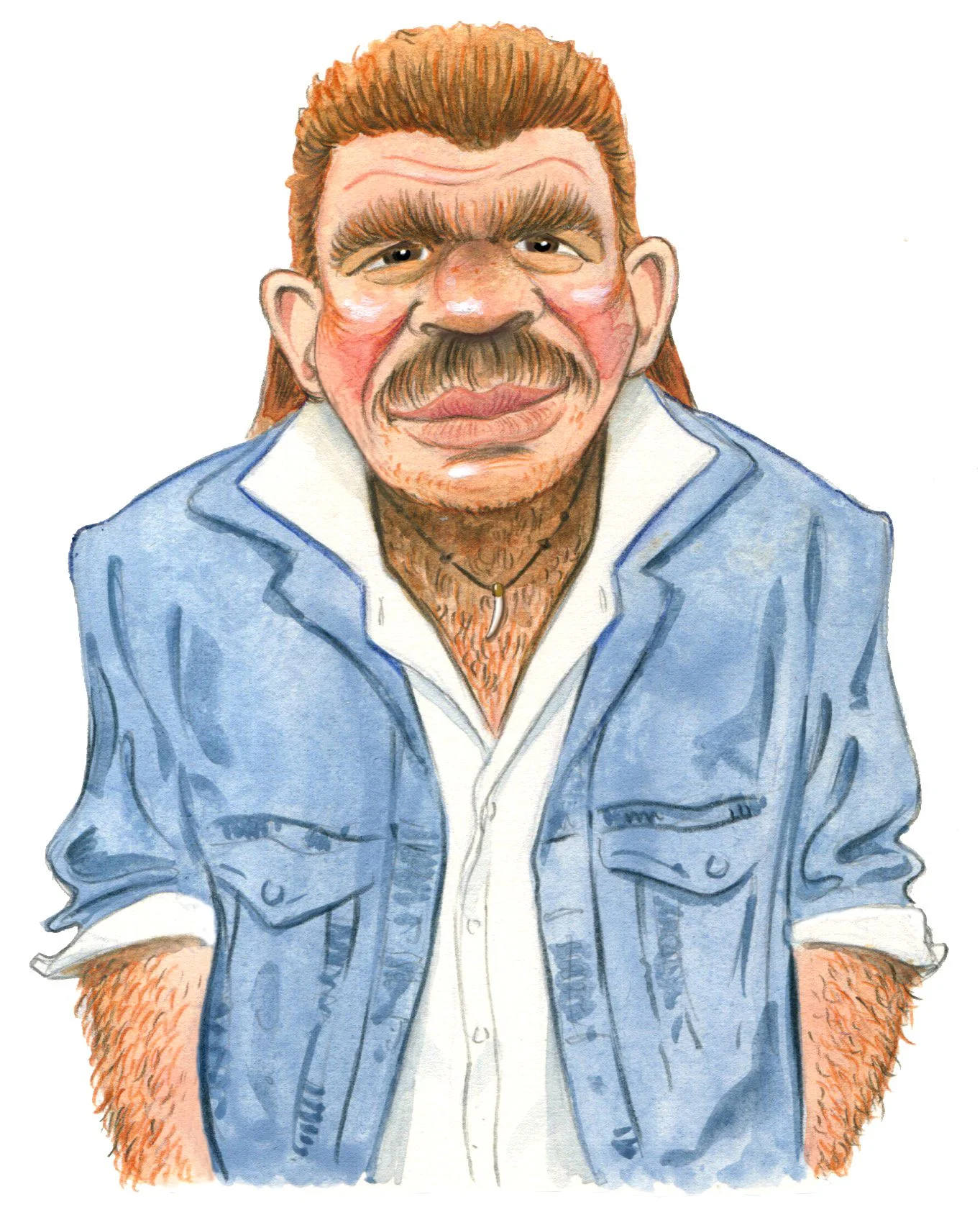
It’s difficult to separate the two possibilities with genetics alone. “Our models have no way of distinguishing mating from mating that produces a viable and fertile offspring,” McCoy said. If pregnancies were less likely to succeed when the mother was Neanderthal, the surviving DNA could look much like a population in which Neanderthal women had children with H. sapiens men less often. Encounters that produced no children left no genetic trace.
So the cause of the bias remains an open question: social preference, pregnancy biology, or some combination. What the record does show is that the barriers weren’t absolute. Several episodes of interbreeding across long stretches of time suggest, McCoy said, that hybrid fertility was “sufficiently intact to leave a lasting mark.”
Encounters without a shared record
Genetic evidence can reveal broad patterns, but it can’t reconstruct the settings in which people met. Bridget Alex, a researcher in human evolutionary biology at Harvard University who studies when and where Neanderthals and H. sapiens overlapped, says archaeology has yet to provide a direct snapshot of them together.
“Despite a century and a half of Neanderthal research,” Alex told Live Science, “no one's ever found a Neanderthal and Homo sapiens fossil in the same exact layer dated to the same exact period at the same exact site.”
Instead, the evidence forms a patchwork across changing regions and millennia. Neanderthals lived across territory from Siberia through Iberia to Southwest Asia from roughly 250,000 to 40,000 years ago. Modern humans were evolving in Africa through much of that span and moved out repeatedly in multiple waves. Those migrations brought the groups into contact at different times and places, with outcomes that likely varied, Alex said.
There was no single Neanderthal policy on what to do with modern humans. “It's not like the Neanderthals living in what's now Spain could call up the ones in what's now Uzbekistan and be like, 'OK, what's our policy with modern humans? Do we kill them, have sex with them, ignore them?'” Alex said. She expects encounters to have differed with local environments, social conditions and the decisions of particular groups.
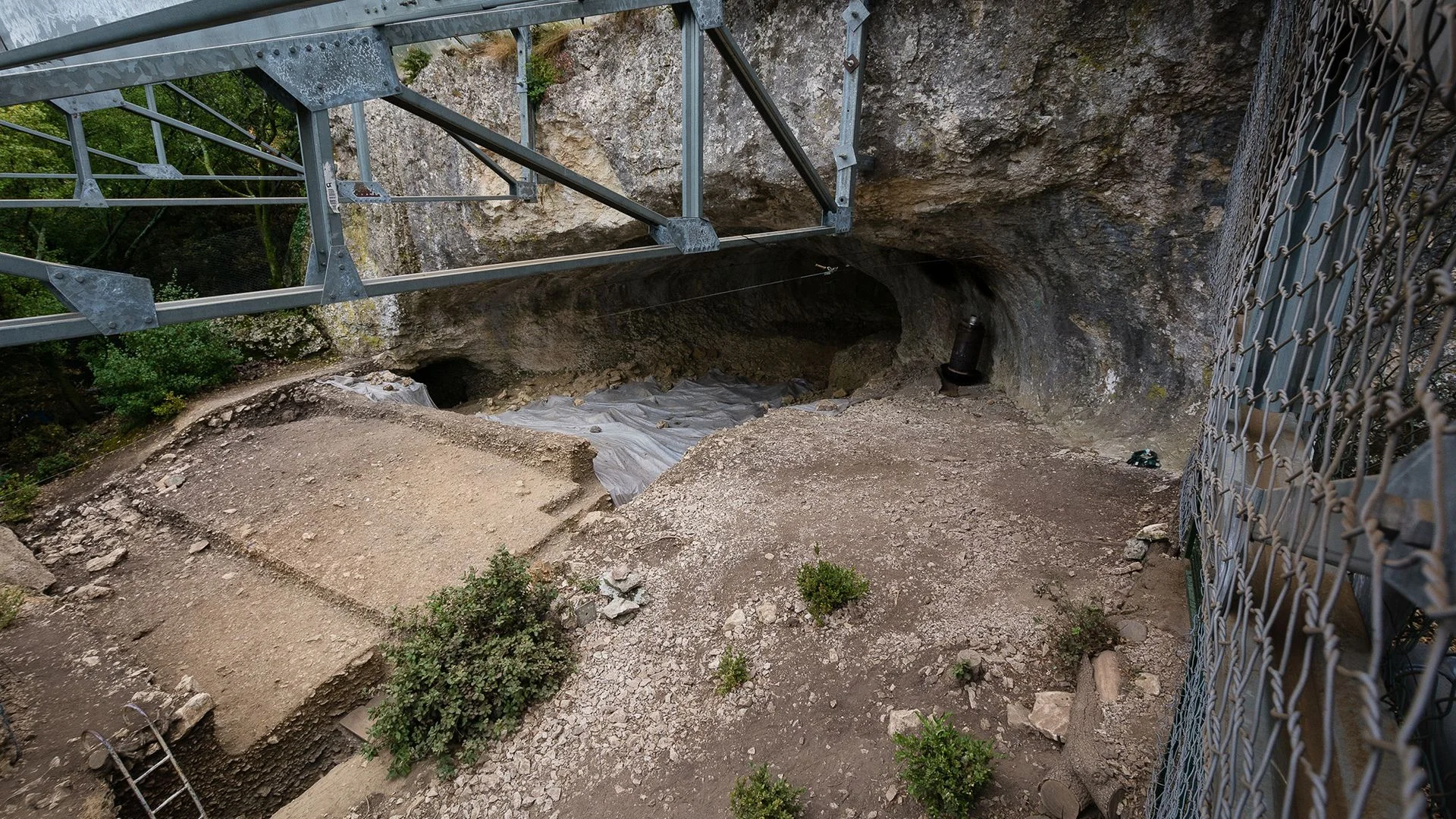
One unusually detailed sequence comes from Grotte Mandrin, a cave in France’s Rhône Valley. Ludovic Slimak, a paleoanthropologist at the University of Toulouse who has excavated the site for years, called it something genetic evidence can’t provide: “an extraordinarily precise archaeological sequence of Neanderthals and [Homo] sapiens occupying exactly the same place,” he told Live Science by email.
Dating methods place Neanderthal artifacts in layer after layer, back to about 57,000 years ago. A thin layer dated to between 56,800 and 51,700 years ago contains different stone tools and a single tooth that appear to belong to H. sapiens. Neanderthal artifacts return in the layers above, beginning around 51,700 years ago. The modern humans seem to have occupied a continent otherwise inhabited by Neanderthals, stayed briefly, and disappeared.
For Slimak, the striking feature is what the site doesn’t show. “What strikes me most is not mixture but proximity without fusion,” he told Live Science by email. He sees no trace of cultural exchange or shared practices: two populations in the same landscape, likely encountering one another, yet remaining culturally and biologically distinct.
Genetics also hints at different social structures. At Sunghir, a Russian burial site dating to about 34,000 years ago, two H. sapiens adolescents were laid head to head with thousands of ivory beads and mammoth-bone spears. Ancient DNA analysis showed they were not immediate family members, though they were buried together in an elaborate ceremony. The burial suggests a social world extending beyond a person’s closest relatives; it doesn’t tell us whether Neanderthal communities organized themselves in the same way.
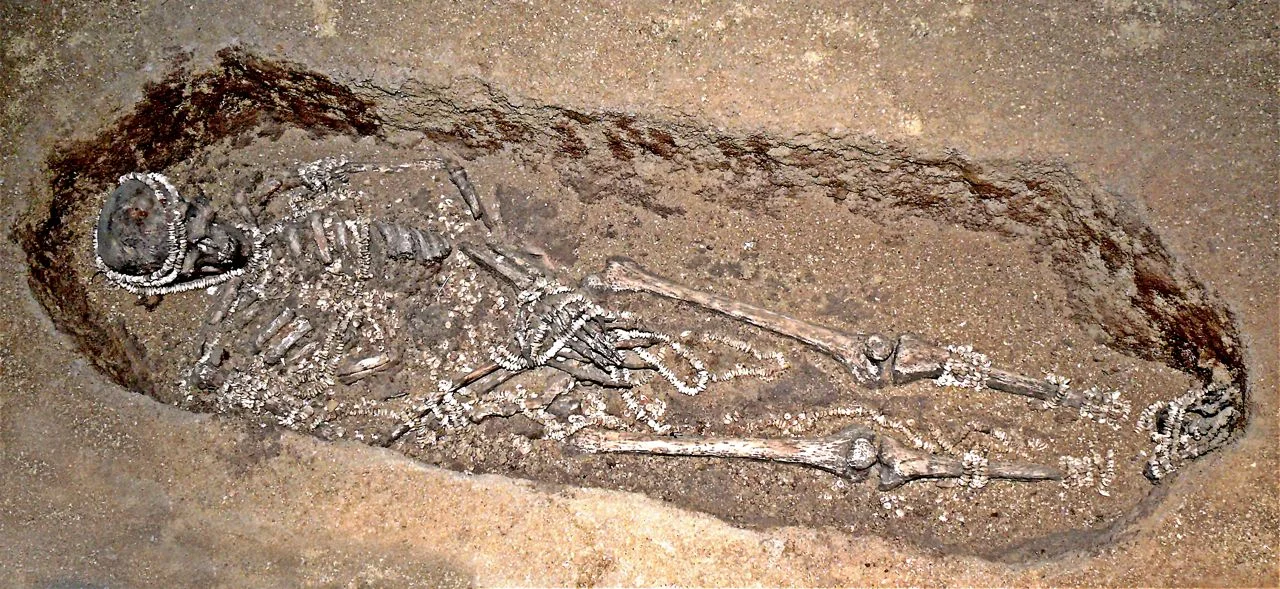
The genetic evidence points to a sharp difference in how Neanderthals and Homo sapiens organized their lives. At Sunghir in Russia, two adolescents buried together more than 30,000 years ago were not close relatives, a clue that human communities maintained ties beyond their immediate families. At Chagyrskaya, in Siberia, Neanderthal remains from what appears to be one community layer included a father and teenage daughter, as well as two people who shared about a quarter of their DNA.
Two sites can’t settle the question, but they fit a pattern in the genetic record. As Alex described it, human society worked in nested circles: small bands of perhaps 20 or 30 people linked to wider networks through ceremonies, intermarriage and exchanges with other groups. Neanderthals, by comparison, appear to have lived in smaller, more isolated communities.
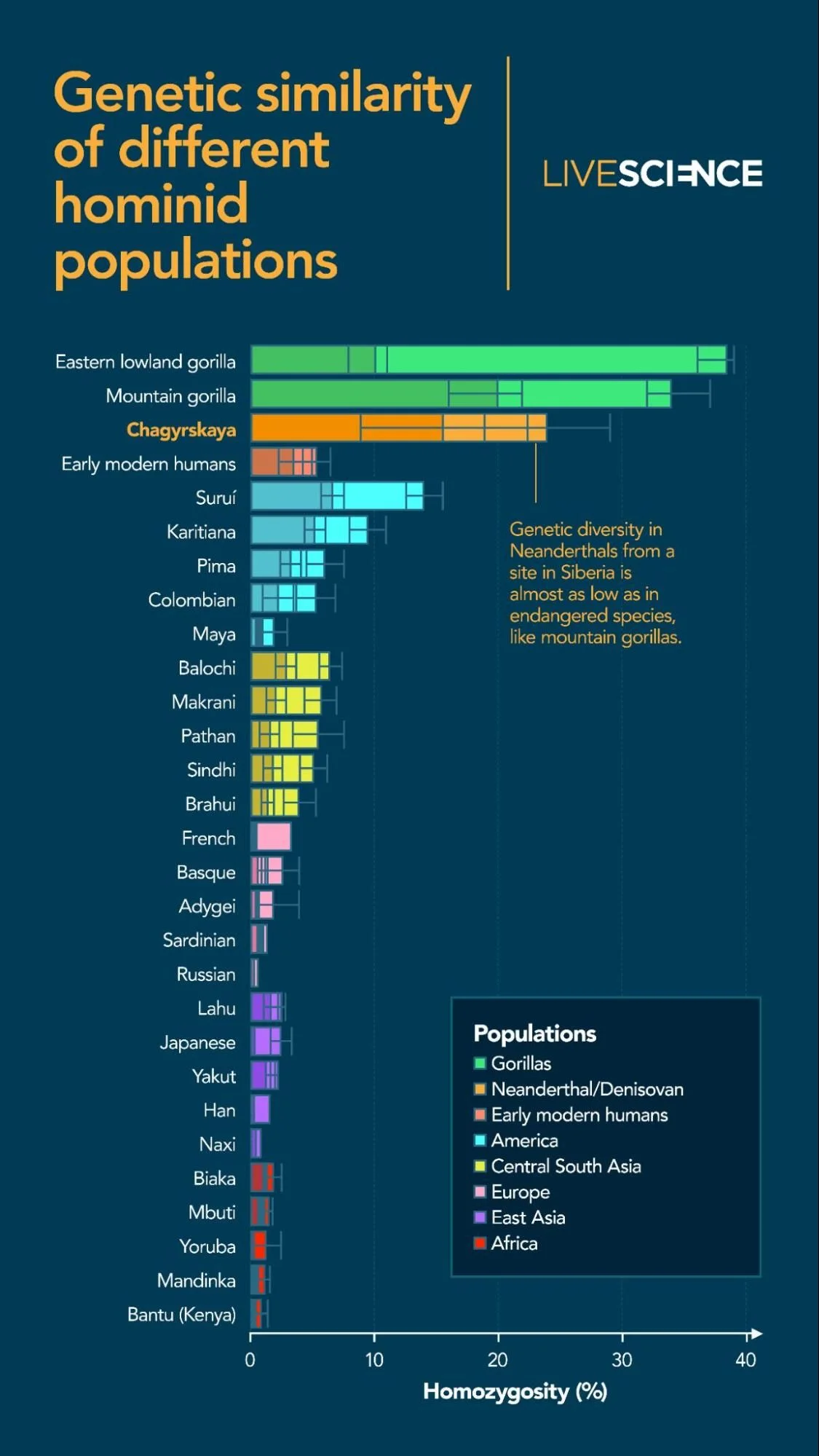
That separation shows up in their DNA. Neanderthals rarely seem to have mated with people outside their communities, Alex said, leaving individuals within a group often closely related and populations with little genetic diversity. Their genomes, she said, suggest a population “on the verge,” much like an endangered species.
They did have some contact beyond their birth groups. Across sites with genomes from several Neanderthals, men are more closely related to one another than women are. Women appear more likely to have arrived from elsewhere, a pattern consistent with patrilocality: men stayed in their birth communities while women moved between groups.
That raises a puzzle. If Neanderthals seldom brought in women from other Neanderthal communities, what brought modern-human women into contact with Neanderthal men?
The population imbalance
Population geneticist Fernando Villanea of the University of Colorado Boulder thinks the usual picture may have the direction of events wrong. Rather than Neanderthal men raising hybrid children inside Neanderthal communities, he argues, modern-human groups may have absorbed surviving Neanderthals and raised their children among humans.
The genomes of late Neanderthals—those near the end of their long presence in Eurasia—show roughly ten times as much inbreeding as those of the modern-human ancestors then expanding out of Africa, Villanea said. Such a degree of inbreeding points to small, fragmented populations, not a deliberate social preference.
We need to imagine scenarios where a majority of modern human groups traveling into Eurasia are encountering a vanishing minority of Neanderthals.
Fernando Villanea, population geneticist at the University of Colorado Boulder
The environment was changing, too. Archaeological and paleoclimate evidence suggests that habitats suited to Neanderthals were shrinking as the climate grew warmer and wetter. Modern humans, whose ancestors had adapted to hotter, wetter African conditions, may have been better suited to Europe’s new climate, experts think.
Put those conditions together and the encounters look less like meetings between equally sized populations. Villanea told Live Science that researchers should picture many modern-human groups entering Eurasia and encountering a dwindling Neanderthal minority.
Between about 50,000 and 44,000 years ago, when much of the interbreeding that left traces in living people’s DNA occurred, Neanderthal ancestry made up about 5% of the modern-human genome. Given the population imbalance, Villanea said, that represents “a lot of matings occurring between the two.” His proposed explanation is that human groups took in surviving Neanderthals and raised their children within predominantly human communities.
Villanea’s 2018 study in Nature Ecology & Evolution found evidence for several distinct episodes of interbreeding. Some European H. sapiens genomes from about 40,000 years ago contain ancestry from Neanderthals who lived only a few generations after archaeologists can no longer identify Neanderthal remains in that region.
The gene flow did not stop neatly when Neanderthals vanished from the archaeological record. A 2024 study by Leonardo Iasi and colleagues estimated that nearly 90% of the Neanderthal ancestry in people today came from a major interbreeding pulse around 50,000 to 45,000 years ago, probably in the Middle East. The remainder came from more scattered encounters across Eurasia.
The encounters may have become less frequent as Neanderthals disappeared, while interbreeding continued when groups met. Villanea sees this pattern as evidence that human groups deliberately incorporated Neanderthals. That interpretation is plausible, but the genetic record alone can’t tell us what people intended.
Why hybrid ancestry declined
Some Neanderthal-human hybrids survived; their descendants are part of us, Alex said. But Neanderthal ancestry fell quickly in the generations that followed, suggesting that those hybrids did not, on average, leave as many descendants.
Genes don’t work alone; they interact across the genome. Neanderthal variants evolved alongside other Neanderthal variants, and some combinations may have functioned poorly in a modern-human genetic background. Natural selection could then remove them. Using estimates of how chromosomes recombine during cell division, Villanea calculated that ancestry fell from roughly 5% around 50,000 to 45,000 years ago to about 2% today in around ten human generations.
“That’s very fast,” Villanea said. In practical terms, he added, many hybrids may not have survived to reproduce, while those who did could have faced lasting health problems.
The selection ran both ways. Platt’s team found that modern-human DNA was also removed from Neanderthal genomes. Neither lineage had inherently better genes, Platt concluded. Variants suited to one lineage’s evolutionary history could become harmful when combined with genes shaped by hundreds of thousands of years of separate adaptation in the other.
Where the children may have been raised
If Neanderthal fathers and modern-human mothers produced more surviving children than the reverse pairing, the next question is where those children grew up. Villanea cautions that the X chromosome pattern identified by Platt is real, but it doesn’t establish mating preferences. The same pattern could, in theory, result from Neanderthal men leaving their communities to find partners, though that doesn’t fit typical behavior suggested by archaeological evidence. Villanea thinks biology may offer a better explanation.
There’s a possible biological analogue in two related North American deer mice, Peromyscus maniculatus and Peromyscus polionotus. In these species, genomic imprinting can cause hybrids to develop differently in the womb depending on which species is the father and which is the mother. If a similar process operated in early humans, one parent pairing might have produced more surviving offspring without either group choosing that outcome.
“We simply don’t know enough yet,” Villanea said. To distinguish social explanations from biological incompatibility, researchers need more Neanderthal genomes from the contact period, gathered across multiple regions.
A 2026 study of 27 late Neanderthals offers another clue. The individuals lived in what is now Belgium and France between 50,000 and 40,000 years ago; none showed evidence of recent modern-human ancestry. Meanwhile, H. sapiens from the same broad period did carry Neanderthal DNA. If hybrid children had been raised and reproduced in Neanderthal communities, researchers might expect to see some modern-human ancestry in those groups’ genomes. So far, they don’t.
Human communities also appear to have had more varied residence patterns than Neanderthals. Alex said that in modern-human societies, either men or women might leave their birth group depending on the circumstances. That flexibility may have helped human groups take in newcomers.
What the evidence can’t tell us
The evidence still can’t establish whether contact was consensual, coerced or shaped by circumstance. Platt’s team left that question open, and Alex cautioned against drawing conclusions from genetic patterns alone. “We still wouldn’t know if it was consensual or coerced,” she said.
Different social histories might leave different archaeological traces. Peaceful alliances, for instance, could have involved tools or symbolic objects moving between groups. Yet at Grotte Mandrin, the two groups’ technical traditions remained distinct, with no such exchange in evidence, as Slimak noted.
Slimak, writing from the site during an excavation season, urged caution about what the genetic findings mean. They are “consistent with an asymmetry,” he said: Neanderthal men and H. sapiens women appear to have contributed more successfully to the shared gene pool than the reverse. But genes reveal nothing directly about culture, attraction, desire or intent. “That entire social world has been added afterwards,” he said.
The same genetic pattern could reflect women moving between groups, differences in population size, alliances, exchanges, capture or unequal survival among hybrid children. Several explanations may have operated at once. Even “migration” can be too simple a label: a woman’s move might have involved marriage, family strategy, alliance, obligation or violence, in combinations that leave little archaeological evidence to separate.
- 'More Neanderthal than human': How your health may depend on DNA from our long-lost ancestors
- Early Homo sapiens may have lived in rainforests, new clues suggest — and it could overturn our understanding of human evolution
- Scientists show that DNA can last for up to 50,000 years in Africa — much longer than previously thought
“We may identify that a woman came from elsewhere,” Slimak said. “We cannot recover her consent.”
What the combined evidence does support is a broad structural picture. Interbreeding happened repeatedly and asymmetrically, in a period when expanding human populations greatly outnumbered Neanderthals. Villanea’s model suggests that modern-human groups absorbed some of the remaining Neanderthals; Neanderthal men contributed ancestry to the larger human population, and their children were likely raised in human communities.
That is a demographic account, not a complete social history. As Slimak put it: “Genes do not preserve past loves. They preserve what was transmitted. And between transmission and lived experience lies almost the whole of human society.”
Help us improve Live Science Pro: We're always trying to make our content better. Leave us feedback about Pro here.


