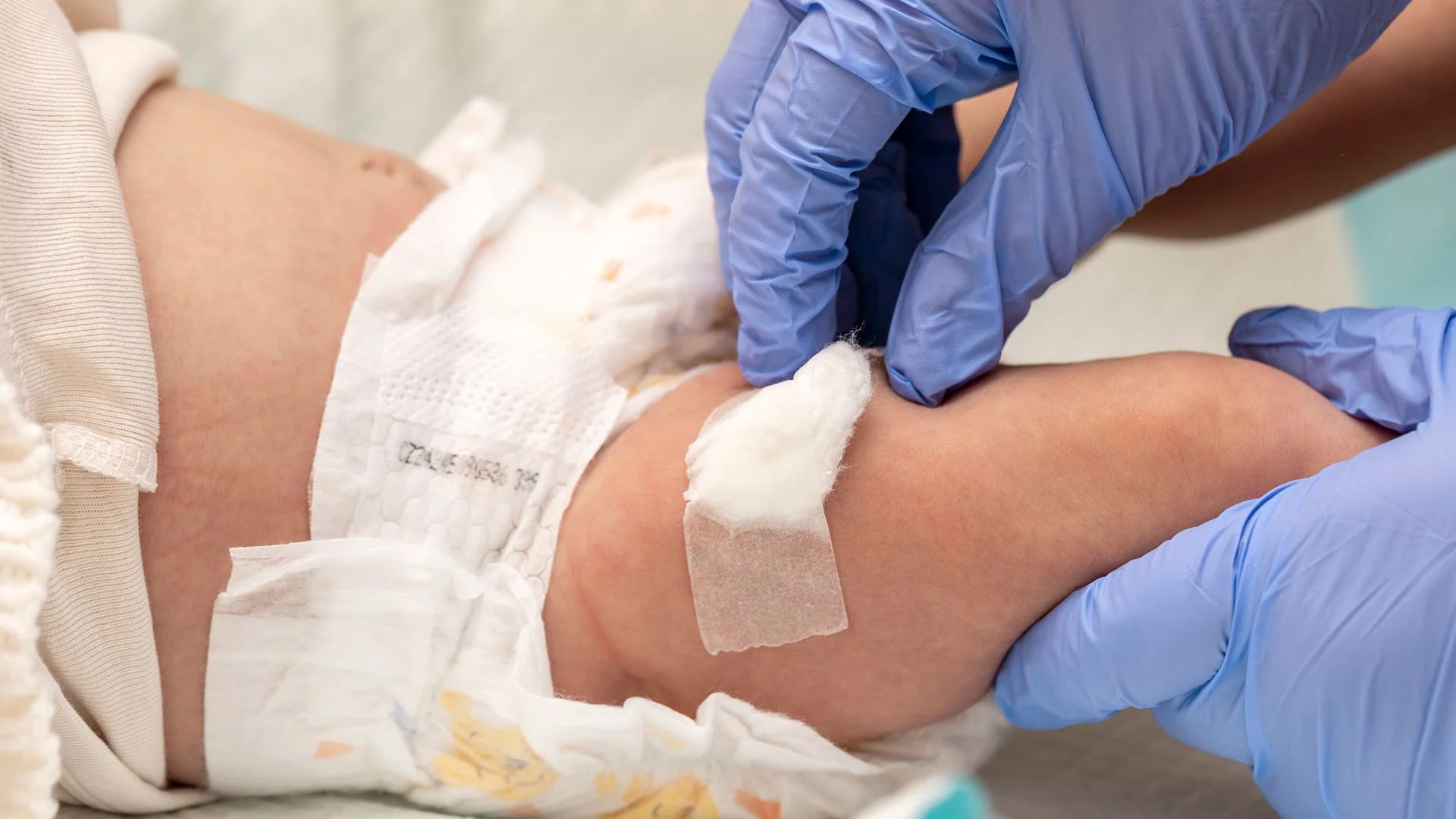
The hepatitis B birth dose works as a safety net: it protects infants before missed screening, inaccurate results or gaps in follow-up can leave them exposed. A new modeling study estimates that weakening this backstop could mean substantially more chronic hepatitis B virus (HBV) infections among young people in the United States.
The analysis, published Oct. 19 in Annals of Internal Medicine, compared universal vaccination shortly after birth with two alternatives. Under one, babies whose mothers test negative would begin the vaccine series at two months. Under the other, parents and clinicians would decide whether and when to start it. The study’s projections suggest that coverage and timing could make a large difference by the time children reach adulthood.
Two paths away from the birth dose
For decades, the Centers for Disease Control and Prevention (CDC) recommended that every newborn receive an HBV vaccine dose within hours of birth. That universal approach is now under review: in December 2025, the Advisory Committee on Immunization Practices (ACIP) advised ending the recommendation, and the CDC accepted that advice.
The revised guidance would recommend the birth dose for infants whose mothers test positive for HBV or whose status is unknown. For mothers who test negative, it calls for “shared clinical decision-making” with a clinician. If families defer the birth dose, the guidance says the child should be at least two months old before beginning the vaccine series. It also gives parents and doctors room to decide “when or if” the series will start, according to the CDC’s recommendation.
Medical experts criticized the change after it was announced. Its implementation has since been paused by legal action. The study estimates potential outcomes if the new approach takes effect; it does not report an observed rise in infections.
Why the first dose matters
The model was built by Dr. Amir Mohareb, an infectious-diseases physician-investigator at Massachusetts General Hospital and Harvard Medical School, and colleagues. The team used published data on HBV prevalence, pregnancy screening, test accuracy, childhood vaccination, infection risks by age and children’s potential exposure to infected people at home or in their communities.
That last factor matters because HBV can spread at birth and through small amounts of bodily fluid, including blood from a scratch. An infant whose mother tests negative can still encounter the virus through an infected household member or another child. As Mohareb put it, “Not every pregnant person is tested for hepatitis B.” And even when screening occurs, he said, “Something can be missed at any step in the care process, so the vaccine dose at birth provides protection.”
HBV infections acquired early in life are especially likely to become long-term infections. More than 90% of infections in infancy or early childhood become chronic, compared with a much lower risk for adults infected later. Among people with chronic HBV, about 15% to 25% develop cirrhosis, hepatocellular carcinoma or another chronic liver disease. The study did not calculate how many additional cases of those conditions might follow from its infection projections.

The modeled effect depends on uptake
If babies whose mothers test negative still begin vaccination at two months, the model estimates 19% more chronic infections by age 20 among children born in 2026 than under universal birth-dose vaccination. This scenario assumes that about 87% complete the vaccine series by age two.
The second scenario allows families to decide whether and when to begin the series. Mohareb said similar wording in recommendations for other vaccines has been associated with uptake as low as 25%. Because the response to this guidance is not yet known, the researchers modeled vaccination coverage of 50% by age two for this scenario.
At that level of coverage, the model projects an 83% increase in chronic HBV infections acquired by age 20 compared with universal birth-dose vaccination. It also estimates that roughly 50% to 70% of people born under this approach would remain susceptible to HBV at age 20—about 1.8 million people in each birth cohort, compared with fewer than 250,000 under universal birth-dose vaccination.
“This represents a population that is at risk for acquiring HBV via sex, drug use etc — behaviors more prevalent among young adults,” Dr. Norah Terrault, a transplant hepatologist at the University of Southern California Keck School of Medicine who was not involved in the research, told Live Science by email. Terrault described the analysis as a sound projection of how the recommendations could affect future chronic infections.
The researchers tested how much their results depended on uncertain inputs by varying them across wide ranges and running the model 1,000 times. In every run, universal birth-dose vaccination produced fewer chronic infections than either alternative. The size of the difference shifted with the assumptions, especially the share of families who would delay or decline vaccination.
A long decline, and a policy choice
The projections point to a reversal of a major public health trend if coverage falls. Reported childhood HBV infections in the United States dropped from more than 25,000 a year in 1985 to fewer than 100 in 2024. That decline has been credited to pregnancy screening, antibody treatment for babies born to mothers with HBV, and universal birth-dose vaccination.
Terrault said more infections would be expected to bring more cirrhosis, liver failure and liver cancer over time, though this study did not estimate those outcomes. Dr. Brian McMahon, a hepatologist and director of the Liver Disease and Hepatitis Program at the Alaska Native Medical Center, likewise told Live Science that ending a universal dose recommendation would mean more hepatitis B infections early in life.
Mohareb supports doctors and patients making decisions together, but says public health recommendations also need to communicate which policy is expected to protect health across the population. The model’s clearest finding is that the birth dose reduces the period in which infants can acquire HBV before vaccination begins. How many infections follow a change in guidance will turn on how families and clinicians respond.


