Children in Bundaberg are using AI to make video games—and organisers see a future for the industry in regional Queensland
From an idea to a playable game
AI is lowering the barrier to making a video game. In Bundaberg, children aged eight to 13 used it to turn ideas into racing, quest and trivia games without first having to learn how to code. That’s more than a novelty: the workshop’s organisers hope it can help build a local game development hub, giving regional young people a path into the industry without leaving home. The project puts an accessible first step ahead of technical prerequisites, while raising a harder question: can a short workshop help sustain interest and opportunity over time?
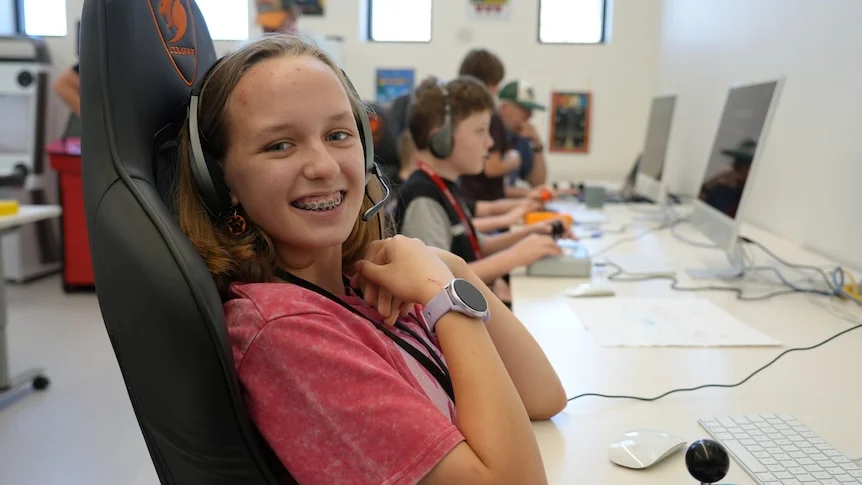
About 20 young people took part in the Bundaberg workshops last month. They brainstormed game ideas, used AI to build them, and learned to make and wire controllers, including by 3D printing parts. That combination matters: the children weren’t only describing games to a tool, but also engaging with some of the physical components that make play possible. The emphasis was on imagination and design rather than coding skill, making the activity accessible to more children and giving them several ways to contribute.
Bailey Francois, 13, said participants could either speak their instructions to an AI language model or type them in. Speaking was easier when the prompt got long, she said. That detail points to a practical strength of the format: a child can refine an idea in ordinary language, then see how the system interprets it. The first result may be a starting point rather than a finished game, but the quick connection between an instruction and something playable can make experimentation feel tangible.
Organisers Don Meadows and Bundaberg creative David Quarrell see that access as a starting point. They want to create a game development hub in regional Queensland, where young people can explore the field without having to move away. A hub could give the workshop’s initial spark somewhere to go, though the article doesn’t establish what ongoing resources or support would be available. Whether the workshops can help build a lasting local industry is still an open question. For now, they’re testing a practical first step: letting children see themselves as game makers.
Access to creation
The project’s wider promise comes into focus through Oscar Quarrell, who is 16 and cannot read or write. His father says Oscar could still explain his ideas to an AI tool: it handled the pauses and verbal stumbles, then turned his words into something usable. The example shows how a voice interface can change who gets to take part in a creative process, especially when writing would otherwise stand between someone and their idea. It doesn’t establish that AI removes every barrier, but it does show a route into making something that doesn’t depend on written prompts.
“The AI didn't stop. It didn't get confused,” Mr Quarrell said. “We've removed the need for reading and writing and we've just allowed his imagination to be captured.” That’s a meaningful use of the technology: it gives someone a way to create without making literacy a prerequisite. And this is the part most people overlook: access isn’t only about having a device or software. It’s also about whether the tool can respond to the way a person communicates.
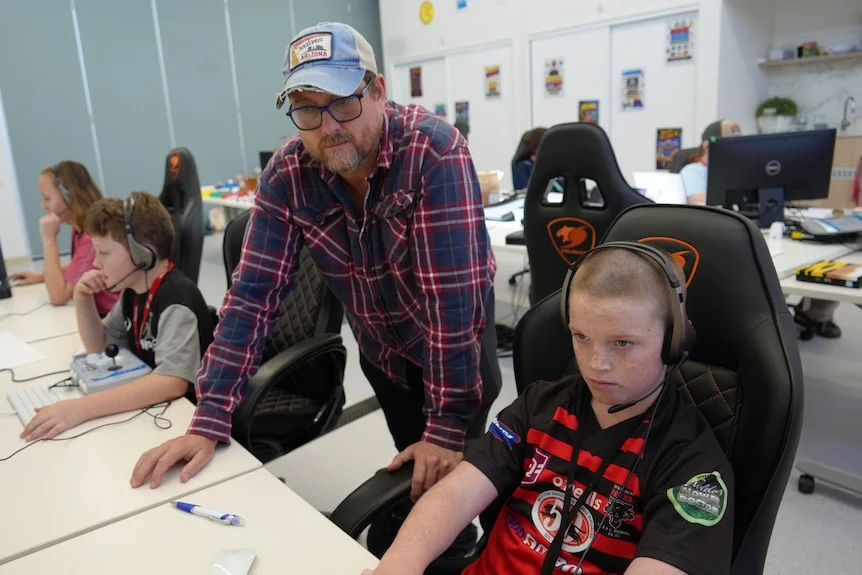
The organisers are aiming to build a gaming hub in the region to encourage young people to work in the industry without leaving their hometown. (ABC Wide Bay: Grace Whiteside)
Industry incoming
For Mr Quarrell and his son, the ambition reaches beyond a workshop: they want Bundaberg to develop a games industry and a local community capable of sustaining it. “It's not one of those champion activities in our community at the moment [but] there's no reason why it can't be,” Mr Quarrell said. The idea is to make participation feel possible where young people live, rather than treating relocation as the assumed route into creative work. That’s an appealing goal, though enthusiasm by itself can’t tell us whether a local industry will take shape.
That goal will take more than enthusiasm. The article gives no detail about what infrastructure or long-term support a hub would need, so the gap between an engaging workshop and an enduring community remains unresolved. Similar initiatives typically need ways for participants to keep learning and making things after an introductory session; the workshop’s organisers haven’t yet described how that would happen here. Still, Dr Phillips sees value in bringing initiatives like this to regional communities. “The local games industry needs people participating, and the more people that can participate, the better,” he said. Giving young people a first glimpse of what’s possible, he added, is “extremely worthwhile.”
What comes after the workshop
Here’s the thing: a low barrier to entry is useful only if there’s somewhere to go next. The workshop lets children try game design and gives them a visible result to discuss, but a lasting hub would have to turn that first encounter into continued participation. The source doesn’t say whether the organisers have a timeline, funding, or a plan for further sessions. That uncertainty doesn’t diminish what the children made; it does set a limit on what can yet be claimed about the region’s prospects.
If you're working in this space, the Bundaberg project offers a small but telling example of how AI might widen access to creative work. It can help people express an idea and begin shaping it, while the workshop adds design, controller-making and collaboration around the tool. The technology alone won’t create a local industry. A place for young people to keep learning, experimenting and meeting others with similar interests would matter just as much. A first step, then. And yet, for children who might not otherwise picture themselves making games, that first step could change what they imagine is possible.


