A reset as growth cools
Canva is reshaping its workforce and product operations after growth slowed, with about 1,270 roles—22 per cent of its global staff—set to be affected by job cuts, role changes or relocation. That figure covers several kinds of change, so it doesn’t mean every affected employee will lose a job. Still, the scale makes this a major reorganisation for a company that has spent years expanding its design platform and international operations.
CEO and co-founder Melanie Perkins described the restructure in a staff memo as “the hardest moment in our 13-year history”. She said Canva’s growth had slowed “for the first time in a decade” and that smaller adjustments wouldn’t prepare the company for its next phase. The memo frames the move as a response to a change in the company’s trajectory, rather than a limited cost-cutting exercise.
That distinction matters. When a business says incremental changes won’t be enough, it’s signalling a wider rethink of how teams are organised and where decisions are made. The practical test will be whether the new structure helps Canva respond faster to users and product demands, while retaining the knowledge held by employees whose roles are changing or ending.
Technology is changing the brief
The company also cited “new technology” changing how people create and use products. Canva didn’t specifically mention AI in its announcement, so the reference shouldn’t be treated as confirmation that AI drove the restructure. It does, however, place the changes in the context of a broader shift in how software companies think about product development and the tools people expect to use.
Similar technology shifts can force companies to reconsider which skills they need, how product teams work together and how quickly they can bring changes to customers. Those pressures don’t automatically explain a particular job cut or role change. Canva’s announcement leaves the precise connection between new technology and the affected roles unclear.
Here’s the thing: broad references to technological change can describe a real strategic challenge, but they don’t tell employees or customers exactly what will change in the product. Canva’s next steps will show whether this is chiefly an organisational reset, a response to new product demands, or both.
Sydney takes a larger role
Canva plans to make Sydney the main base for its product teams. Some employees may be asked to relocate, while the company’s existing Australian operations include Melbourne, Brisbane, Adelaide and Perth. It operates in 37 countries, giving the decision implications beyond a single office: staff in different locations will need to understand how the new centre affects their roles and collaboration with product teams.
Concentrating product teams in one main hub can make coordination easier, particularly when a company wants teams to share priorities and take more ownership. It can also make location a more significant part of the employment bargain. A role change or relocation may be manageable for some employees and difficult for others, which is why the details of how the move is handled will matter as much as the headline plan.
Perkins said most hybrid employees are expected to work from an office around two to three days a week from January, depending on what suits their area. The change puts more weight on in-person work as the company brings product teams closer to its Sydney hub. It’s a notable shift in working arrangements, though the memo’s allowance for different needs across areas suggests the policy won’t be identical for every team.
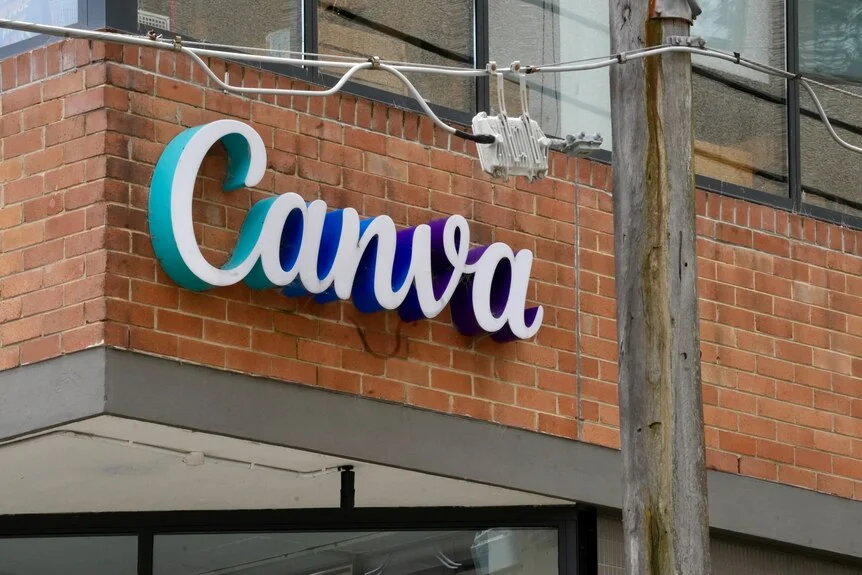
Sydney will become the primary home for Canva's product teams. (ABC News: Abbey Haberecht)
Support for departing staff
Employees leaving Canva will receive at least six months’ salary, along with health and wellbeing support. Some recently hired staff will also have the one-year equity vesting cliff removed. A new fund will offer $US10,000 grants to former employees who want to start a business or pursue a community project.
Those measures provide departing workers with pay and support during a transition, while the grants extend assistance to people pursuing work beyond Canva. The benefits are concrete, but they don’t remove the disruption of losing a role or being asked to relocate. For employees, the terms of each change will shape what the restructure means in practice.
Perkins said the company had considered alternatives but concluded that “small changes won’t be enough”. She said Canva needs to “re-found Canva”, returning to small, empowered teams with more ownership and focus on the people who use its products. That language points to a shift in how work is organised, with an emphasis on team responsibility and user needs rather than adjustments at the margins.
Small teams can give employees clearer ownership. They can also leave teams with harder choices about priorities when growth slows and resources are being redirected. The phrase “re-found Canva” sets a high bar: the company will need to show how the proposed structure changes day-to-day product work, not just how it changes the organisation chart.
What the restructure signals
Founded in Perth by Perkins and Cliff Obrecht, with Cameron Adams later joining as a co-founder, Canva grew into a global design platform used by hundreds of millions. Its scale makes the decision to reorganise particularly revealing: even a widely used product company can face pressure to rethink staffing, location and the way teams make products when growth changes.
Canva’s restructure also comes amid a wider run of tech-sector job cuts in Australia. Atlassian announced 1,600 cuts earlier this year and said AI would let it reduce headcount and redirect resources. Block, which owns Afterpay and Wise Tech Global, has also announced major workforce reductions. These examples point to a difficult period for technology workers, though the reasons companies give for cuts differ and shouldn’t be collapsed into one explanation.
This is more significant than it looks. Canva is linking slower growth, changing technology and a new centre for product work in a single organisational reset, while also offering departing staff defined support. Whether that reset delivers the focus Perkins describes will depend on how the new teams work and whether the company can keep product decisions close to the people who use its tools.
If you're working in this space, the message is plain: growth can’t be assumed to continue at its previous pace, and organisational design is becoming part of the product strategy. For Canva, the next phase will be judged in the details—how roles change, how Sydney’s hub works with teams elsewhere, and whether the new structure gives employees clearer ownership.
Hard choices, with the results still to come.


