Orange Residents Seek Asbestos Testing for Dust From Unsealed Roads
2026-11-03 22:02
506 views
Residents are asking Orange City Council to test dust from four eroded roads after mapping showed a naturally occurring asbestos risk in the area.
Dust on Orange’s unsealed roads prompts asbestos testing request
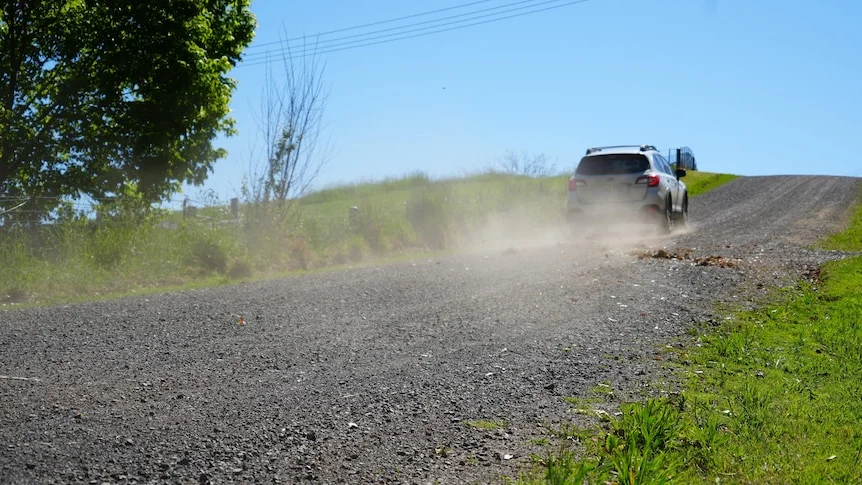
For Len Elliott, road dust follows his family indoors: it settles on clothes, enters the house and circulates through the air conditioning. The concern now is whether that dust could carry asbestos fibres. Asbestos was found in road materials during a nearby highway upgrade in 2025, prompting Elliott to check the NSW government’s SEED map. It showed a naturally occurring asbestos (NOA) corridor running through Orange.
Residents near Orange want the council to rule out naturally occurring asbestos in road dust. (ABC Central West: Micaela Hambrett)
Asbestos is a naturally occurring mineral. When disturbed, its microscopic fibres can become airborne and cause lung cancers and fibrosis. Elliott says the dust blows over homes and yards where children play. “The risk was people inhaling asbestos fibres in the road dust,” he said.
He took his concerns to Slater and Gordon, which agreed to represent him pro bono. In September, the firm asked Orange City Council to test four badly eroded roads that government mapping identifies as having medium to high NOA risk. Senior associate Kirsty Ruddock said residents faced a serious potential health concern and the council should take preventative action.
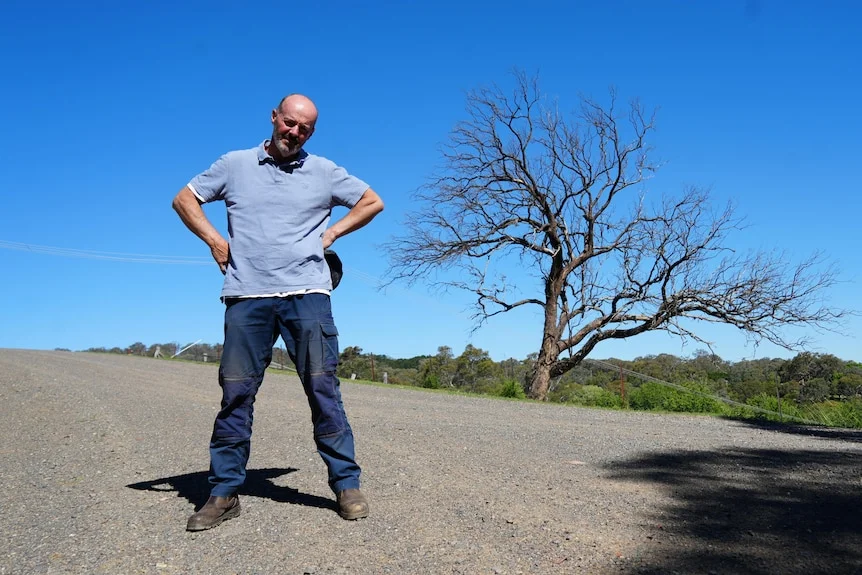
Len Elliott wants testing to rule out asbestos fibres in dust from roads near Orange. (ABC Central West: Micaela Hambrett)
The council says it has no evidence that the roads contain asbestos, but has agreed to review the matter. A spokesperson said one road named in the request sits some distance from known NOA areas east of the city; the council has told residents’ lawyers it will investigate.
Where the risk lies
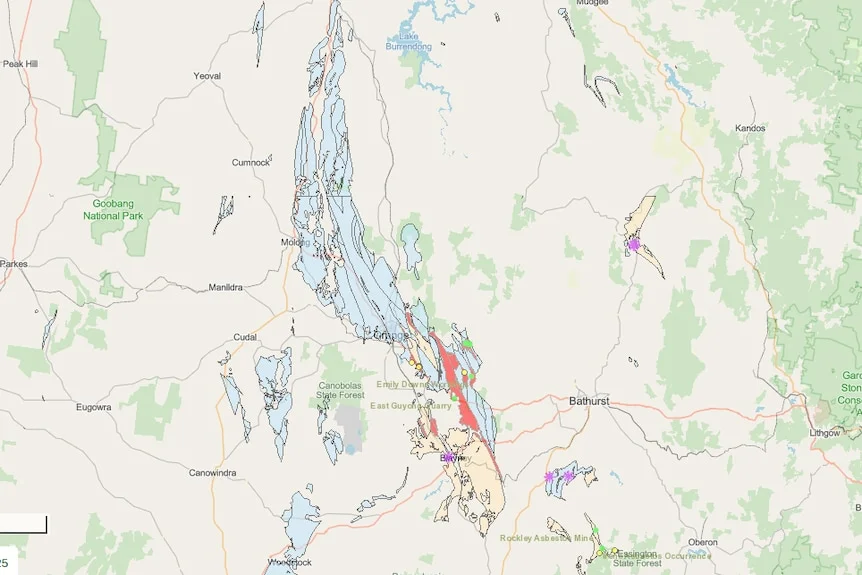
Around 1 per cent of NSW’s land area contains NOA seams, formed when molten rock mixes with water deep underground. A belt of serpentinite host rock runs south from Wellington through Orange and Blayney, then towards Rockley, south of Bathurst. NOA was once mined for construction and engineering products because it resists heat and water; its use was outlawed in 2003. The article’s background on asbestos mining is [here](/news/2023-10-25/asbestos-coal-gold-silica-mining-and-deadly-dust/102968642).
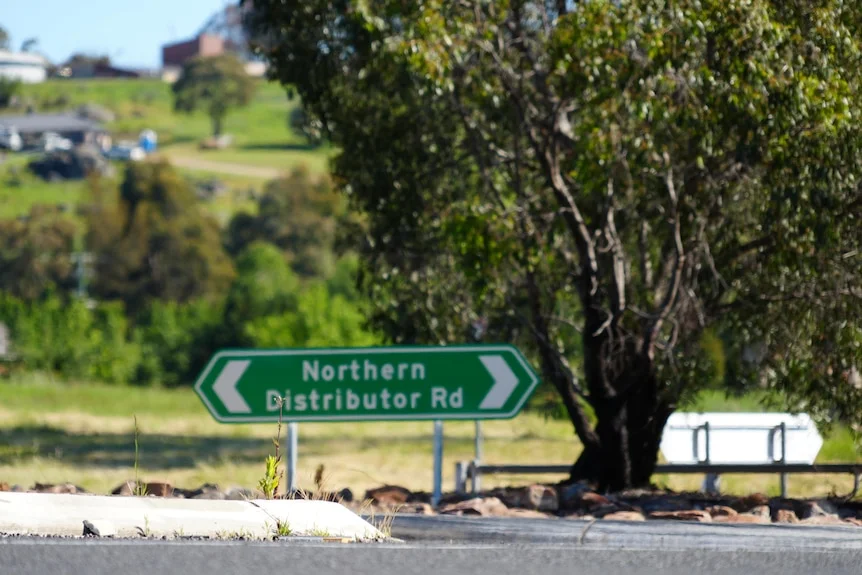
Asbestos was found in materials used to build Orange’s Northern Distributor Road in 2025. (ABC Central West: Micaela Hambrett)The NSW government’s SEED map records the presence of naturally occurring asbestos across the state. (Source: NSW government)
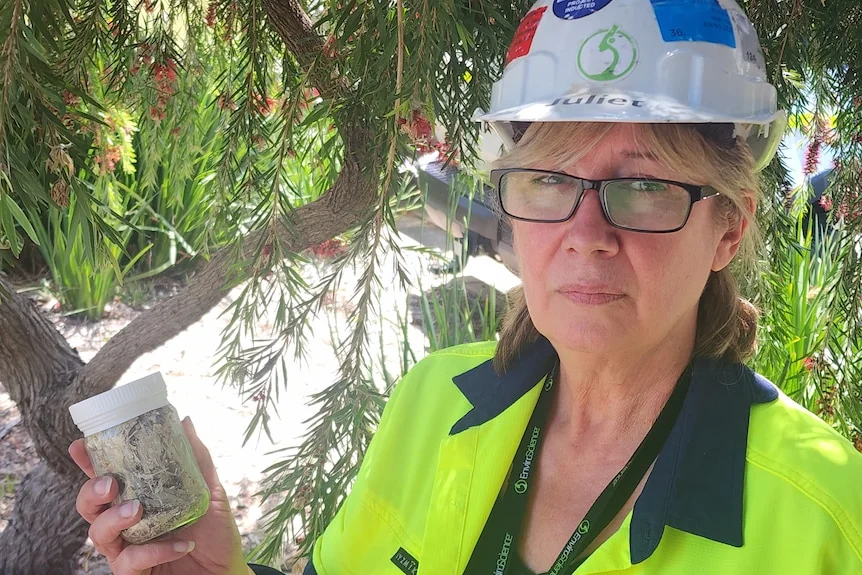
Occupational hygienist and asbestos assessor Juliet Duffy has advised the council since NOA was mapped in the area more than 20 years ago. A high-risk map designation doesn’t establish that dangerous fibres are present at the surface: asbestos-bearing rock may be buried, sealed or in a non-fibrous form. The potential exposure arises when material is disturbed, crushed or pulverised.
That distinction matters. Mapping indicates where the geology may warrant attention, but it cannot by itself show whether residents have been exposed or explain any illness. Duffy says links between NOA and health outcomes are difficult to establish because smoking, past land disturbance and the long delay before asbestos-related diseases appear can all contribute. “Through urbanisation and development, a lot of this material has been disturbed without people’s knowledge,” she said. It can be hard to trace a later diagnosis of mesothelioma, lung cancer or asbestosis to a particular place or event.
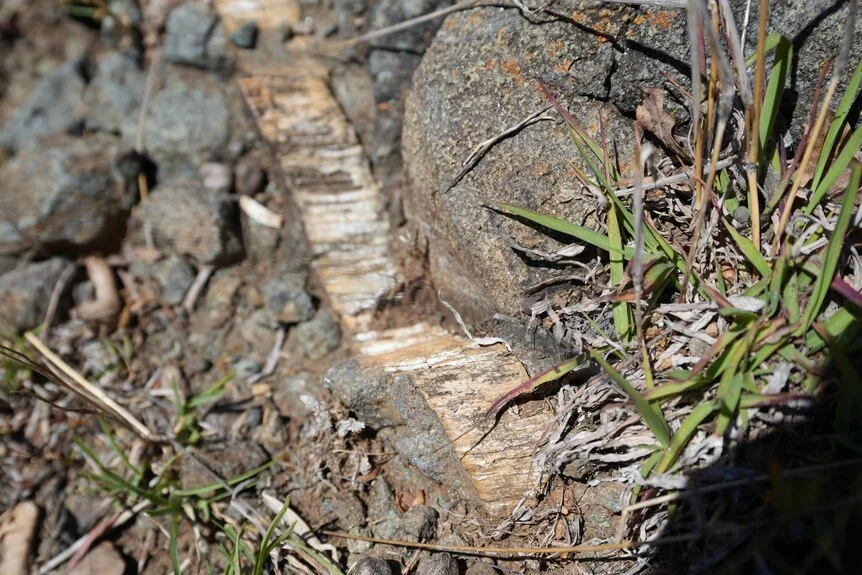
A seam of suspected asbestos runs through rock near Orange, in central west NSW. (ABC Central West: Micaela Hambrett)
Duffy’s advice is practical: learn what asbestos products and raw material look like, raise concerns when something seems suspect, and seek help to manage it safely.
Quarries and the case for testing
The lawyers’ letter also pointed to three now-closed Orange quarries that supplied road materials to the region. They were shut and sealed roughly 15 years ago. The residents’ concern is that NOA may have entered the road base. Elliott estimates that 43.4 kilometres of unsealed roads could have been built or maintained with material from those quarries.
“We’re not asking that the roads be sealed,” he said. “We’re asking that they’d be tested to show that people are safe in their homes.” That request is narrower than remediation, but testing is the evidence needed to determine whether the concern is borne out.
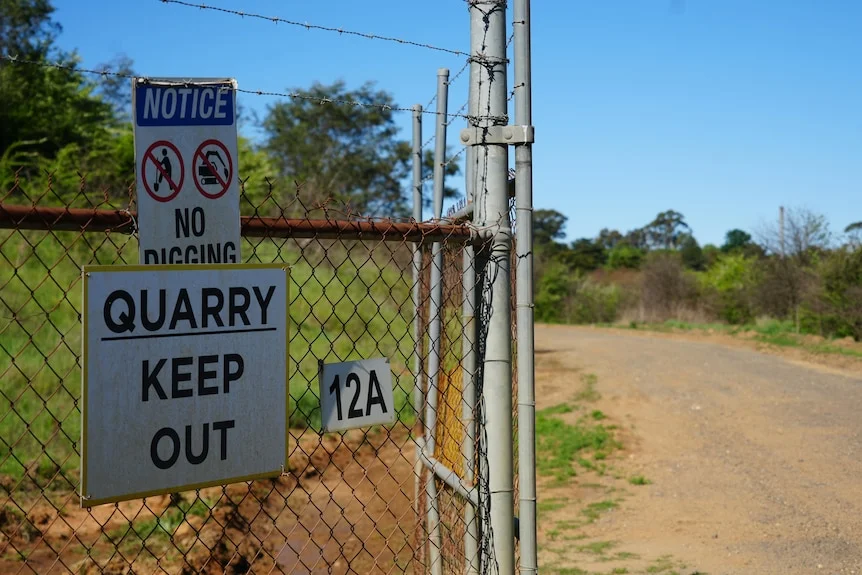
Several inactive Orange quarries sit in areas mapped as medium to high risk for asbestos. (ABC Central West: Micaela Hambrett)Juliet Duffy says people should know what naturally occurring asbestos looks like. (Supplied)
Orange City Council says it has more than 22 years’ experience assessing NOA in the region. If asbestos is found, the council says it will respond case by case and seek treatment advice from a qualified occupational hygienist.
Reported by Micaela Hambrett for ABC Central West. Asbestos. Posted Wednesday, 4 November 2026 at 9:02am.