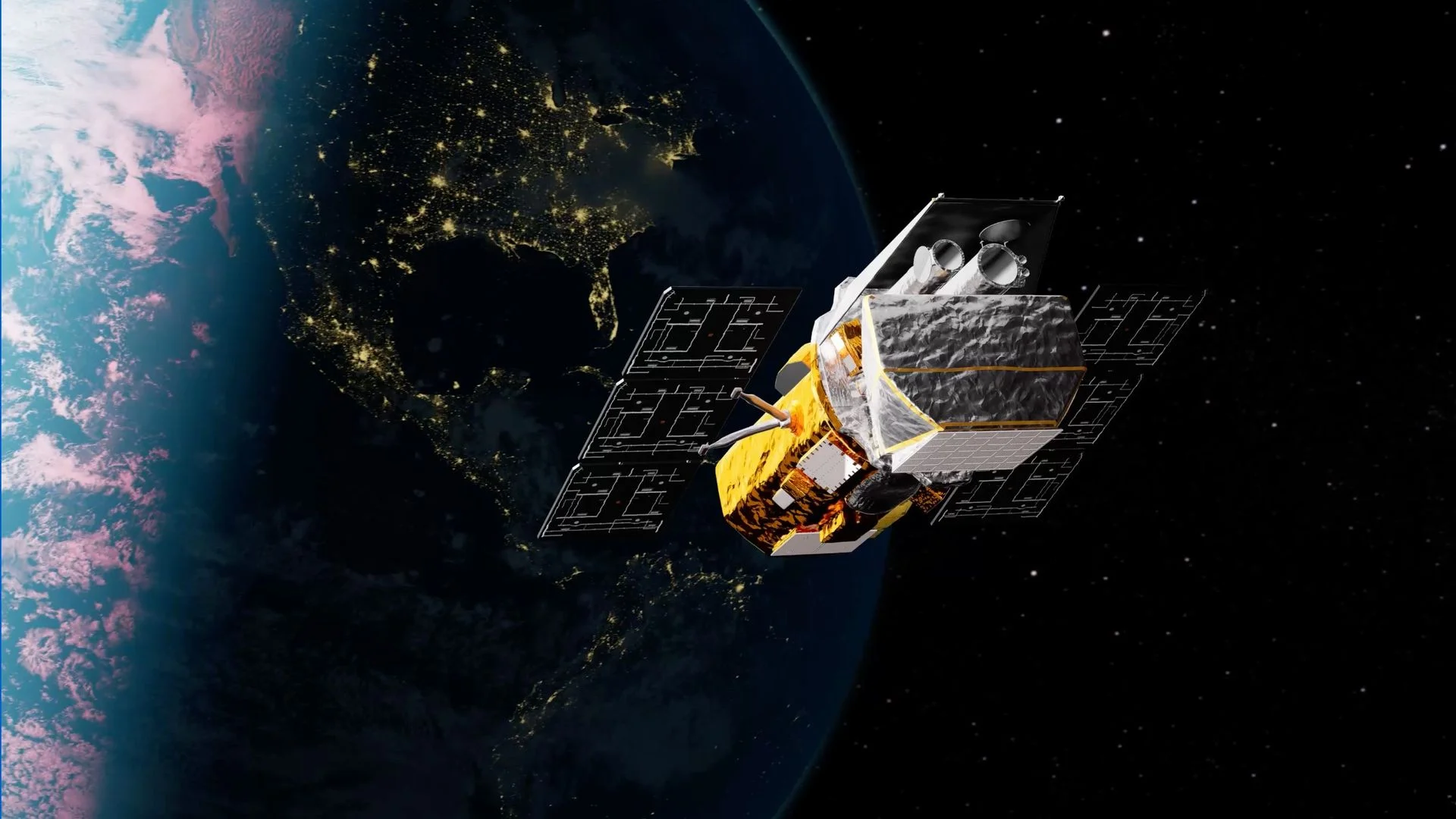
NASA’s Neil Gehrels Swift Observatory is nearing its final descent, with forecasts placing atmospheric reentry in the early hours of Wednesday, Nov. 4. The roughly 3,200-pound (1,450-kilogram) telescope could come down as early as Tuesday night, though the timing remains uncertain. A reentry forecast is a moving estimate: small changes in an object’s orbit and the atmosphere can shift when it encounters enough drag to fall. That leaves a broad window for tracking the event, not a precise appointment.
NASA’s Nov. 2 estimate put reentry at about 3:30 a.m. EST Wednesday, with a margin of 11 hours in either direction. Aerospace Corporation, which independently tracks orbital objects, forecast 5:12 a.m. EST, plus or minus eight hours. Its later estimate, reported Tuesday, shifted the expected time to 5:19 a.m., with the same eight-hour uncertainty; NASA had not updated its forecast by 6 p.m. EST Tuesday. The estimates point to the same general period, but their spread shows why a specific time should be treated cautiously. The forecast will matter most as an indicator of when the final pass could occur, rather than a guarantee of when or where Swift will cross the atmosphere.
Most of the observatory should burn up
The danger to people on the ground is low. NASA expects most of Swift to disintegrate in the atmosphere, where intense heating during reentry destroys much of a spacecraft. Any pieces that survive could land within a band stretching from 20.6 degrees south to 20.6 degrees north latitude. That zone covers parts of Mexico, the Caribbean, Central and South America, the Arabian Peninsula, India, Africa and Oceania, along with extensive ocean areas. The band describes where debris could come down, not a prediction that pieces will reach every part of it.
NASA puts the odds of debris landing in a populated area at roughly 1 in 2,100. For context, the National Weather Service estimates that a person’s lifetime chance of being struck by lightning is 1 in 15,300. The comparison gives readers a familiar scale for a rare event, though the risks arise in very different circumstances. Forecasts may change as the reentry window approaches, and the broad uncertainty means the precise location cannot yet be pinned down. For anyone in the possible corridor, the practical point is that the estimated risk to people remains low.
A long run studying cosmic explosions
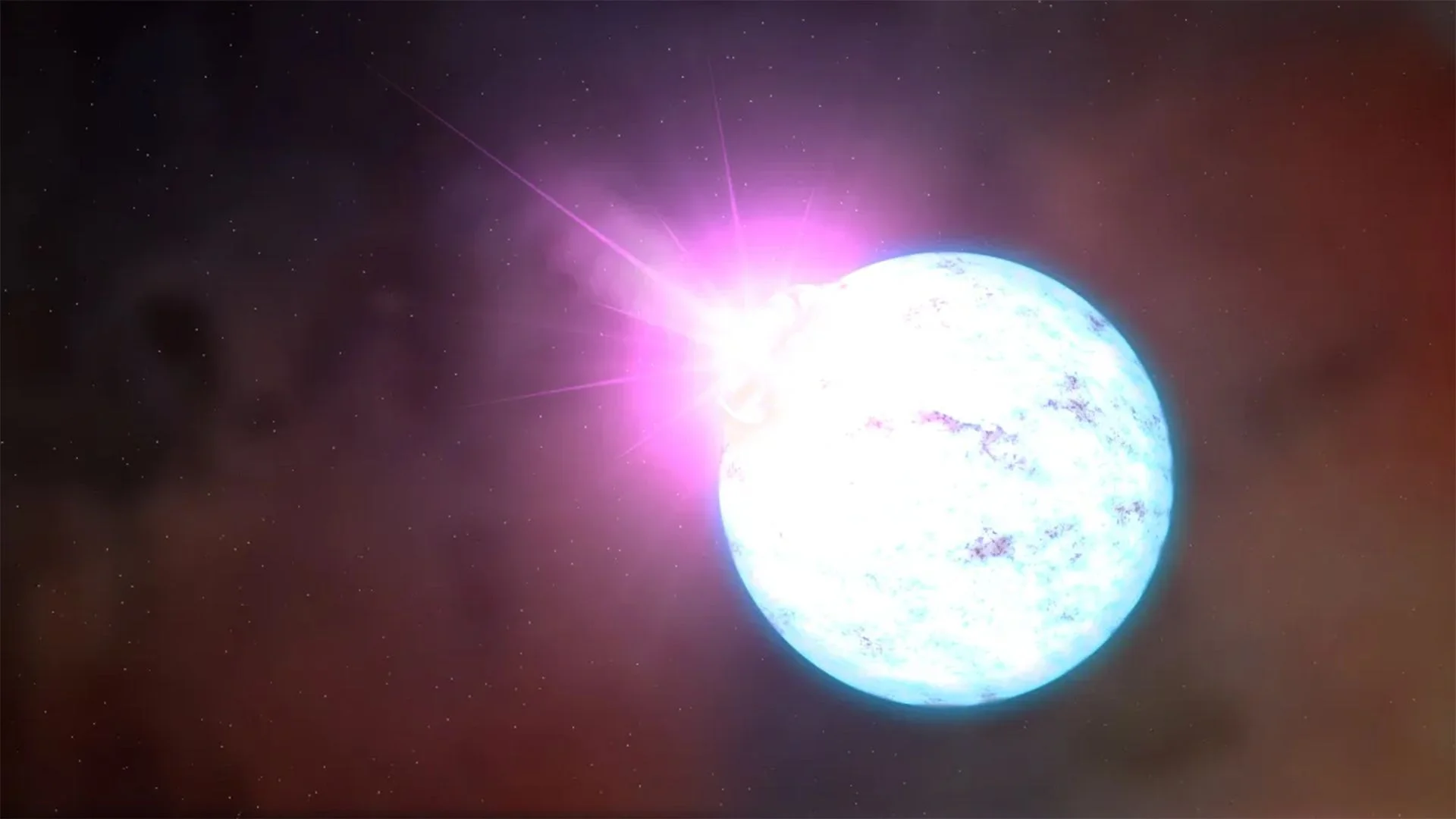
Swift launched in November 2004 with a planned two-year mission. Its optical, ultraviolet and X-ray instruments went on to track supernovas, gamma-ray bursts and eruptions linked to black holes for more than two decades. The observatory has contributed to over 7,000 scientific papers, a total expected to rise as researchers analyze its final data. That record reflects a central strength of a multiwavelength observatory: different instruments can capture different signals from violent events, giving researchers more than one way to study them. Swift’s value, then, isn’t measured only by the time it spent in orbit.
Solar activity has accelerated the end. For more than a year, increased atmospheric drag has steadily lowered Swift’s orbit. A private spacecraft intended to raise it failed shortly after launch in August, and the telescope’s science operations ended Oct. 20 after its orbit became too low for stable observations. The sequence shows how a mission can lose the conditions it needs to operate even when its instruments and scientific purpose remain relevant. Once the orbit dropped too far, continued observations were no longer stable enough to sustain the work.
What remains after reentry
Swift’s final descent closes its observing mission, while its archive will keep supporting research into some of the universe’s most energetic events. That afterlife matters: observations collected over years can be revisited as researchers ask new questions or compare them with other data. The end of live operations doesn’t erase the scientific record.
And yet, an archive can’t replace an observatory that responds to events as they happen. This is more significant than it looks: Swift’s retirement removes an active set of instruments used to track cosmic explosions across several wavelengths. If you’re working in this space, the immediate question is how researchers will use the stored observations alongside future measurements. The archive’s value will depend on continued analysis. For now, the mission’s final contribution is both a dataset still to be explored and a reminder that even productive observatories operate within physical limits.


