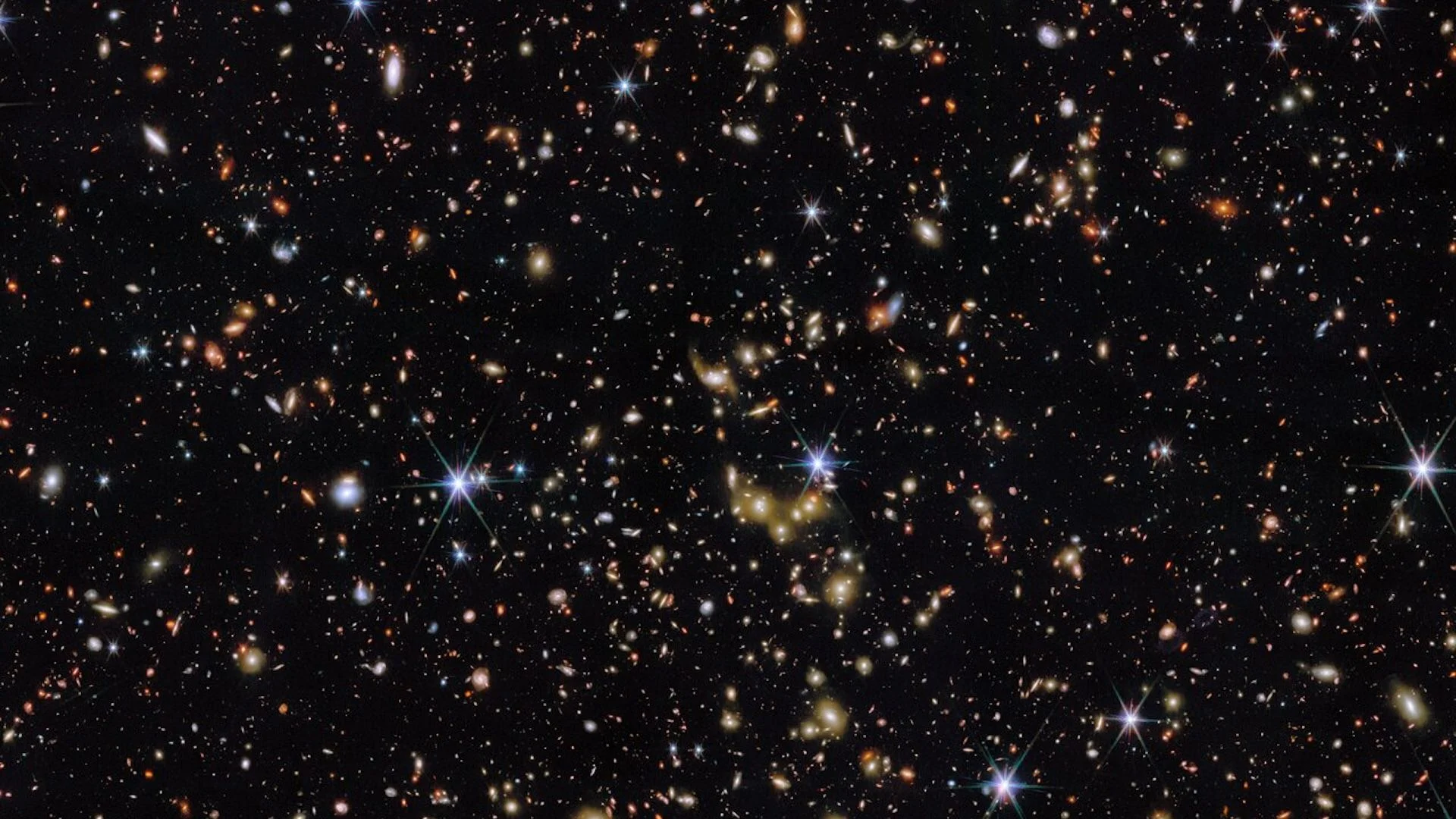
The first stars may have cleared the early universe’s hydrogen fog before supernovas could help. New observations suggest that winds from newborn stars opened routes for ionizing light to escape their galaxies, while later supernova activity may have sealed those routes with gas and dust. That sequence challenges a common assumption about what powered the Epoch of Reionization.
Two phases of clearing the fog
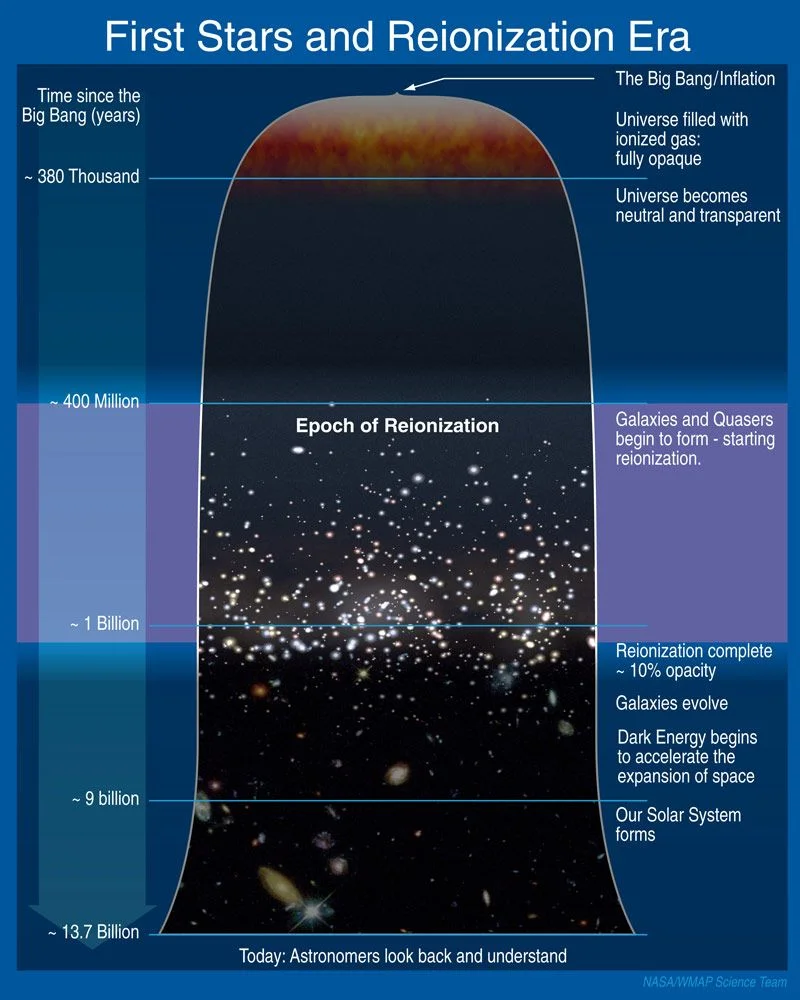
About 400,000 years after the Big Bang, the universe had cooled enough for atoms to form, mostly neutral hydrogen. That hydrogen absorbed ultraviolet light, leaving the cosmos opaque. Hundreds of millions of years later, the first stars and galaxies began producing radiation that stripped electrons from the hydrogen. Once ionized, the gas no longer blocked light in the same way.
Astrophysicists have often looked to supernovas—the explosions of stars roughly eight to 50 times the mass of the sun—as a force that could drive this transition. But a study published Oct. 15 in Nature Astronomy points to a more complicated picture. Supernova-driven winds may have hindered the escape of Lyman continuum (LyC) photons, the high-energy ultraviolet radiation that ionizes hydrogen.
“We don't know exactly what objects caused reionization or how it evolved,” said Cody Carr, an astronomer at the University of Michigan and the study’s lead author, in a statement. “We know that it took place, but we don't have complete answers to those questions.”
Nearby galaxies offer a clue
Carr and his colleagues used the Hubble Space Telescope to study six compact, star-forming galaxies about 3.5 billion light-years away. These systems serve as local analogues for galaxies in the early universe. Each is less than 6,500 light-years across and forms about 10 solar masses of stars per year—several times the Milky Way’s rate, despite being far smaller than our galaxy, which can be up to 20 times wider.
The team examined the galaxies’ spectra to trace the source, composition, speed and direction of their winds. The observations revealed a sequence with two distinct stages. During the first three million years of star formation, winds from young, massive stars pushed through neutral gas and dust at nearly 2,000 miles per second (3,000 kilometers per second). LyC photons could then escape and ionize material beyond the galaxies.
After roughly three million years, the conditions shifted. The most massive O-type stars—hot, blue stars with short lives—ended in supernovas. Their expelled material stirred up and added mass to the surrounding gas and dust, making it harder for ionizing photons to get out. In the older galaxies observed by the team, where supernova-driven winds were fastest, the escape of ionizing radiation was lowest.
A challenge for cosmic simulations
“The most interesting thing about our paper is the observation that the strongest LyC emitters do not have fast galactic winds,” Carr told Live Science by email. That finding runs against the idea that rapid, supernova-driven winds are needed to clear pathways for LyC radiation.
The results also diverge from many cosmological simulations, which typically predict that LyC escape rises after supernova winds begin. In these observations, the early stellar winds appear to have helped ionizing light get out, while later supernova activity may have reduced its escape. If that pattern also held in the young universe, newborn stars may have been the more direct agents of reionization.
The sample is small, and the galaxies are nearby analogues rather than direct observations of the first galaxies. More targets and higher-resolution observations at other wavelengths could test whether this two-stage process was common. For now, the study shifts attention toward the timing of stellar feedback: the winds from young stars may have opened the way for reionization, before stellar deaths began to close it.


