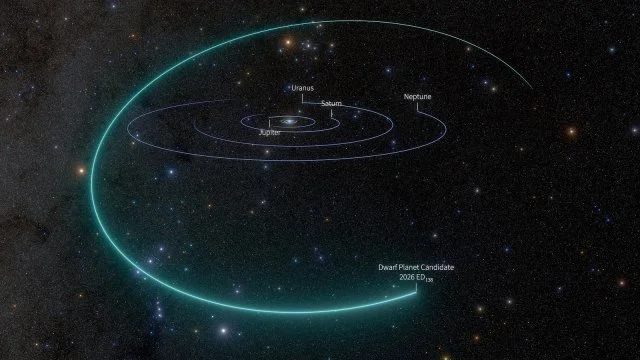
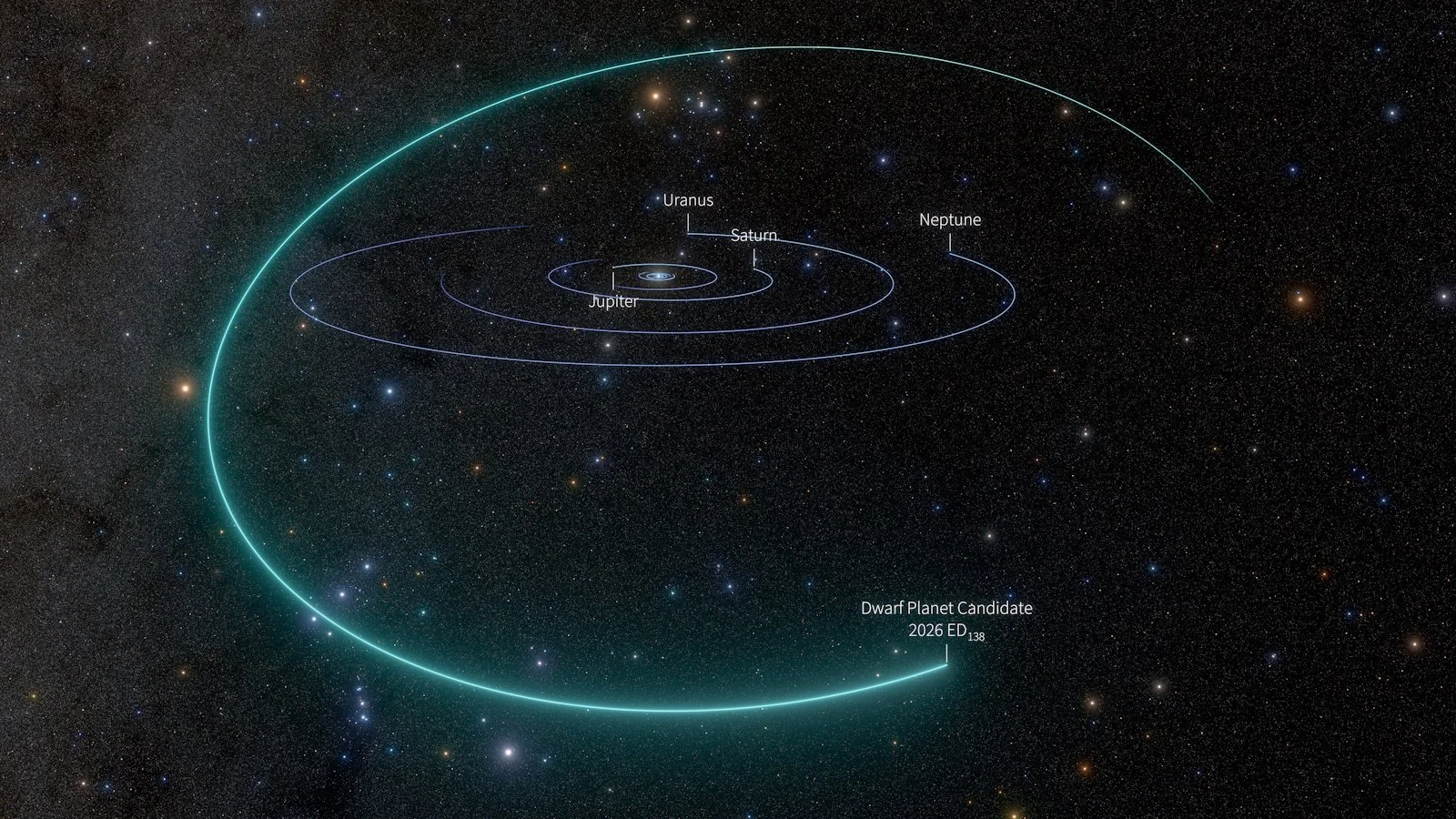
The discovery of 2026 ED138 points to what the Vera C. Rubin Observatory may change in planetary science: not the definition of a dwarf planet, but the supply of candidates that can be studied against it. The object is a trans-Neptunian body, and early estimates put its diameter between 600 and 1,500 kilometers. That range makes it a strong dwarf planet candidate, though its physical size—and therefore its status—still needs better measurement.
There’s a striking gap between the number of objects that may qualify and the number formally recognized. The International Astronomical Union (IAU) has named five dwarf planets: Ceres, Pluto, Eris, Makemake, and Haumea. No additional object has received that designation since the IAU defined the categories in 2006. 2026 ED138 brings that stalled list back into view.
Why the classification is about more than size
The IAU definition gives dwarf planets four key characteristics: they orbit the Sun, aren’t moons, have enough gravity to reach hydrostatic equilibrium, and haven’t cleared other objects from their orbital neighborhood. That last condition separates them from the eight planets. A body can be round and substantial without dominating its orbit.
Size helps assess whether a distant object might be round, but it doesn’t settle the question by itself. Composition matters: icy trans-Neptunian objects may reach hydrostatic equilibrium at smaller diameters than rocky bodies. Estimates suggest that objects with a diameter around 400 kilometers could be large enough, though the threshold varies. The source article notes that more than 100 objects in the Solar System are in hydrostatic equilibrium, while only five are officially listed as dwarf planets.
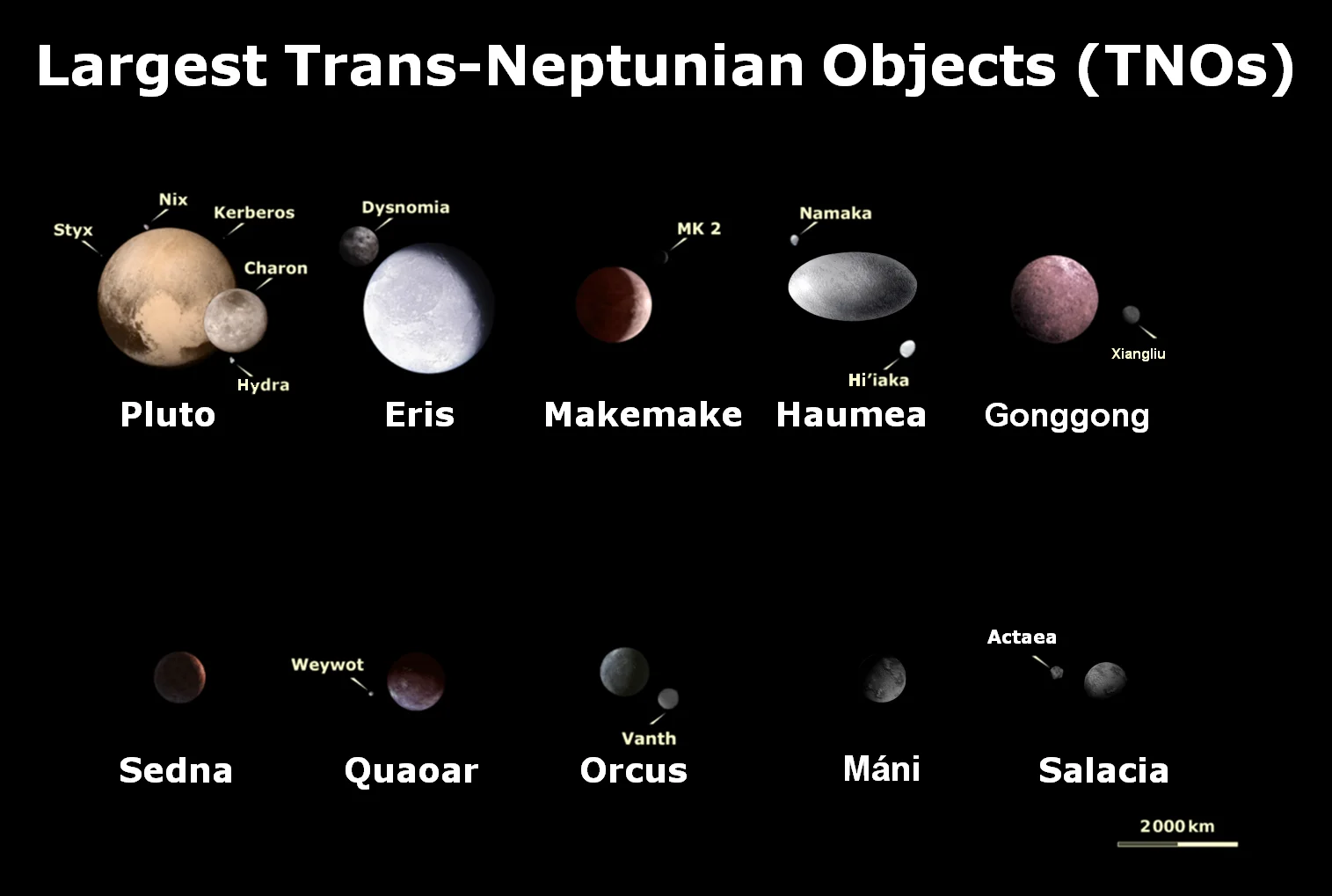
That leaves a broad field of plausible candidates. Ceres is the smallest body definitively known to be in hydrostatic equilibrium. Among trans-Neptunian objects, Pluto, Eris, Makemake, and Haumea are the recognized examples. Other large bodies—including Sedna and several Kuiper belt objects—may also meet the physical criteria, but their size, shape, or composition can be uncertain.
Rubin’s survey turns faint motion into a discovery pipeline
Rubin Observatory is built to repeatedly image the visible southern sky, returning to the same areas every three to four nights. That cadence matters for Solar System work: objects move against the fixed background of stars, and repeated observations help researchers identify them, measure their motion, and estimate their orbits. The observatory’s large telescope and camera are designed to reveal faint objects across a wide field.
Automated analysis of Rubin images flagged 2026 ED138. Researchers then found older “precovery” images—archival observations that captured the object before its discovery—dating back ten years. Together, those observations made it possible to determine the object’s orbital path and establish that it is a trans-Neptunian object. Its nickname is “Ed.”
By observed brightness, 2026 ED138 is the 14th brightest known trans-Neptunian object. It is also reported to be the 103rd known object in that population with a diameter estimate above 400 kilometers. Those rankings put it among the more observable large bodies beyond Neptune, but brightness alone can’t provide a precise diameter. A dark object reflects less light than a bright one of the same size; the estimate therefore depends in part on assumptions about reflectivity.
That uncertainty explains the wide 600-to-1,500-kilometer size range. The lower end would still make the object scientifically interesting, while the upper end would place it among the largest known trans-Neptunian bodies. The estimate suggests dwarf planet potential, but confirmation depends on improving what researchers know about its physical properties.
What better measurements could establish
One route is to observe stellar occultations. When an object passes in front of a distant star, the star’s light briefly dims. The duration and shape of that change can help constrain the object’s size and outline. Occultations can also reveal whether a body has an atmosphere: Pluto’s atmosphere, for example, was discovered through this kind of observation in the late 1980s.
Future occultation observations of 2026 ED138 may sharpen its size estimate and test for an atmosphere. Those results would add important physical evidence, although the question of formal recognition remains tied to the definition and how the object meets it. The discovery gives astronomers a candidate to investigate; it doesn’t mean the IAU has added a sixth dwarf planet.
That distinction matters because the recognized list is much shorter than the likely scientific population. The source article points to ten large trans-Neptunian objects considered strong dwarf planet possibilities, while the IAU’s official roster remains at five. A more complete picture will depend on finding these distant bodies, measuring them well, and assessing their physical characteristics.
The significance is in the growing sample
Rubin Observatory’s early result offers a preview of how repeated, sensitive imaging can expand the catalog of distant Solar System objects. Its value isn’t simply that one candidate has appeared. A steady stream of detections can give researchers a larger set of objects to compare, refine estimates of how many may be round, and identify targets for follow-up observations.
2026 ED138 is therefore a test case for both the observatory’s survey strategy and the practical limits of classification from remote observations. Its orbit is established through years of imagery, while its diameter remains uncertain enough to span a substantial range. The next measurements will determine whether “dwarf planet candidate” becomes a firmer physical description. For now, Rubin has supplied the kind of find that could make the long-unchanged list harder to treat as a complete inventory.
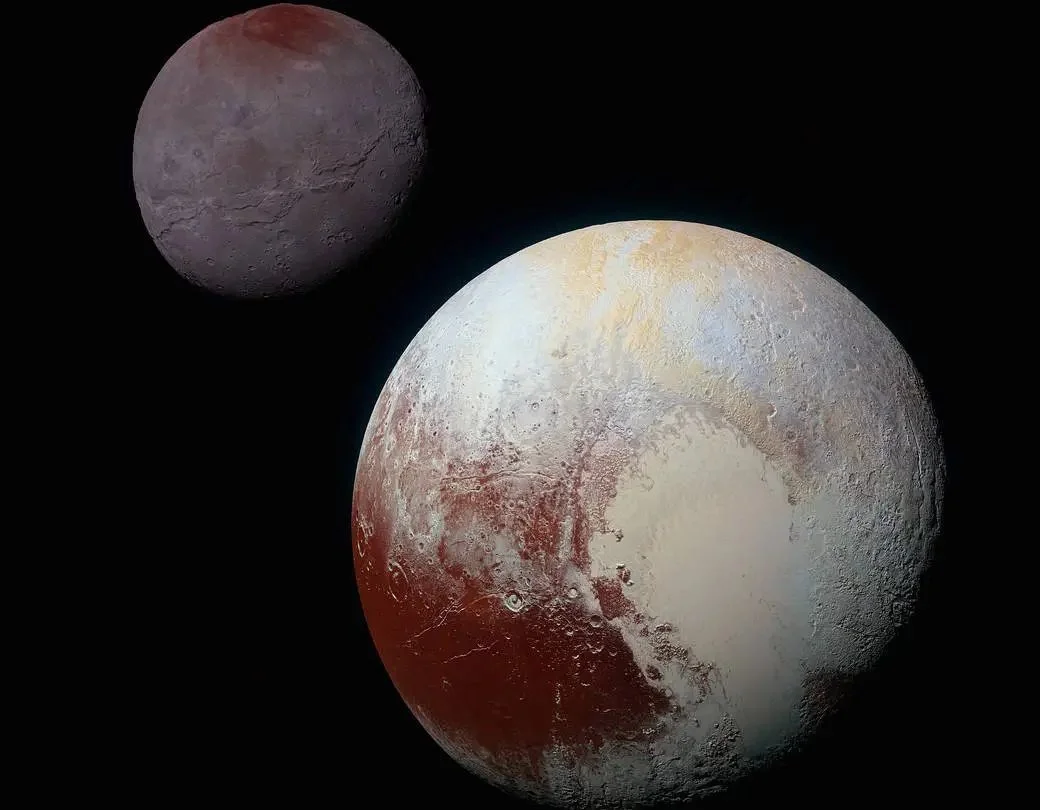
In 2006, the IAU established formal definitions for “planet” and “dwarf planet,” a decision that reclassified Pluto.
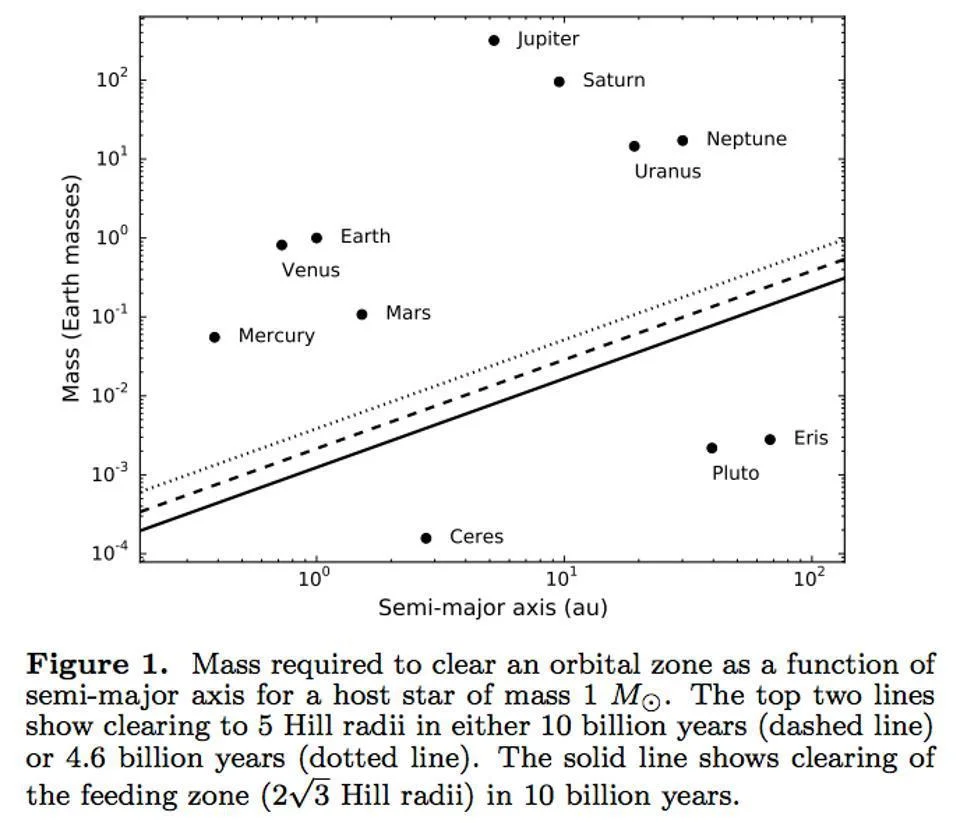
The dwarf planet criteria require that a body:
- orbits the Sun,
- isn’t a moon,
- has reached hydrostatic equilibrium,
- and hasn’t cleared its orbital neighborhood.
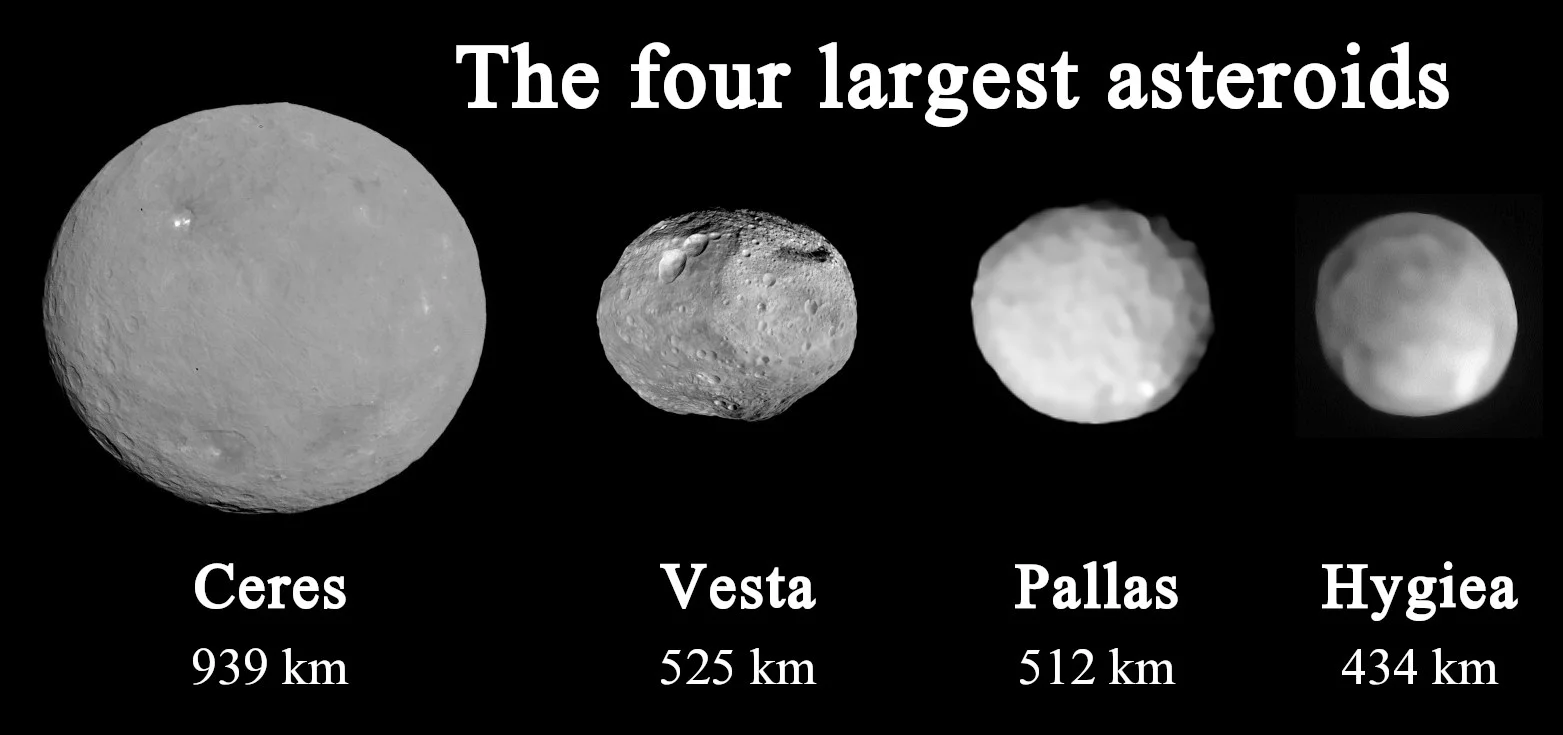
Large asteroids such as Ceres can qualify as dwarf planets.
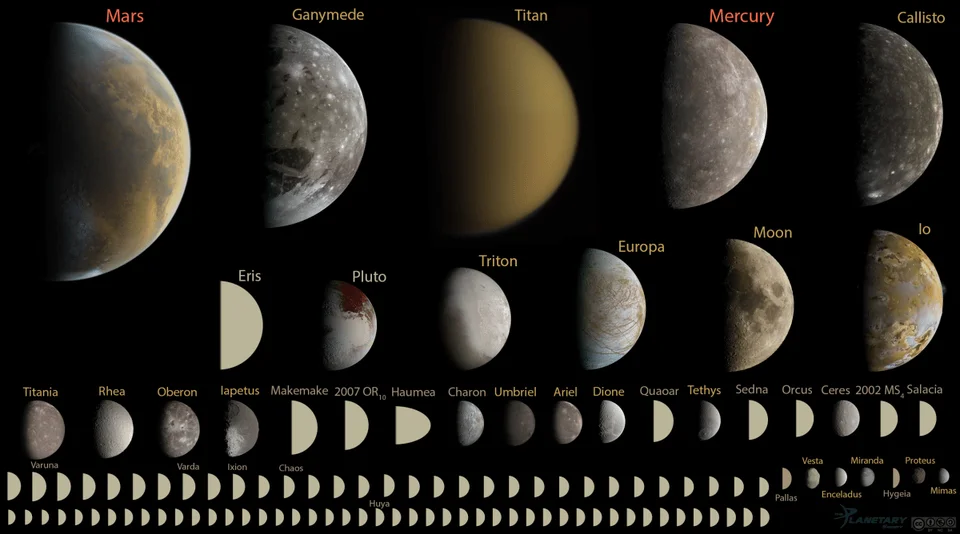
Credit: Emily Lakdawalla; data from NASA/JPL, JHUAPL/SwRI, SSI, and UCLA/MPS/DLR/IDA
Kuiper belt objects such as Pluto, Eris, Makemake, and Haumea are among the known examples.
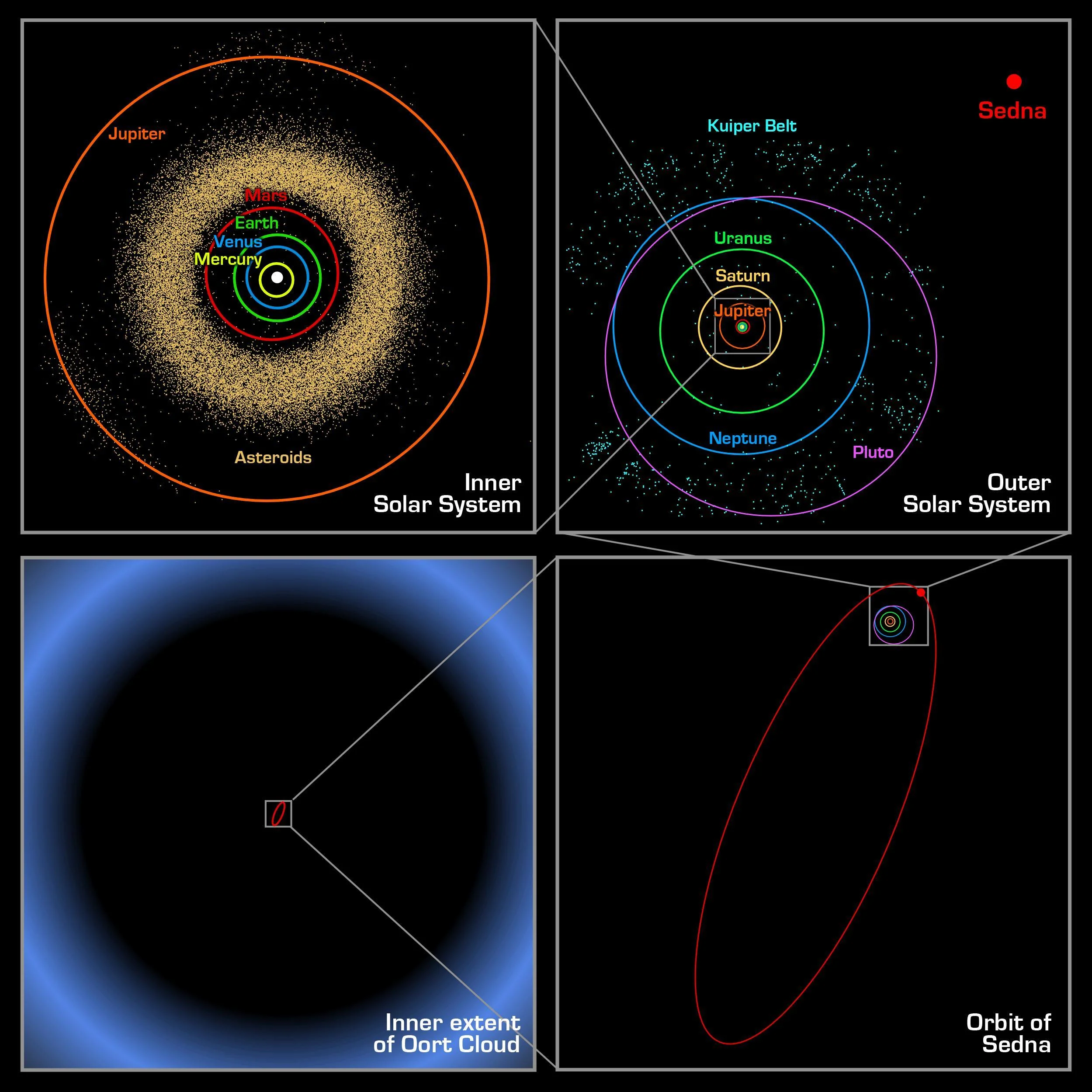
Some distant Oort cloud objects may also meet the criteria.
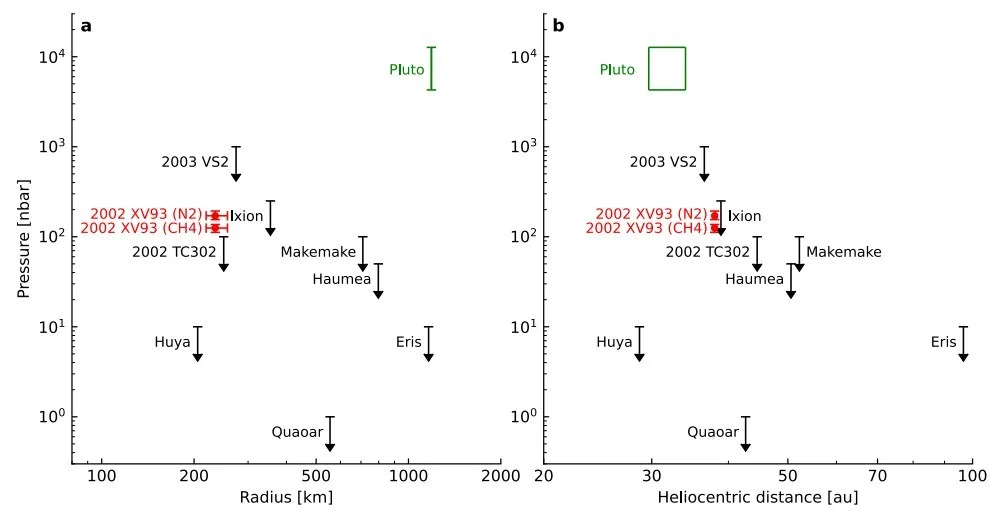
For icy trans-Neptunian objects, estimated diameters around 400 kilometers may be enough to reach hydrostatic equilibrium.

The Vera C. Rubin Observatory revisits the visible southern sky every three to four nights.

Repeated imaging has already helped reveal faint Solar System objects.
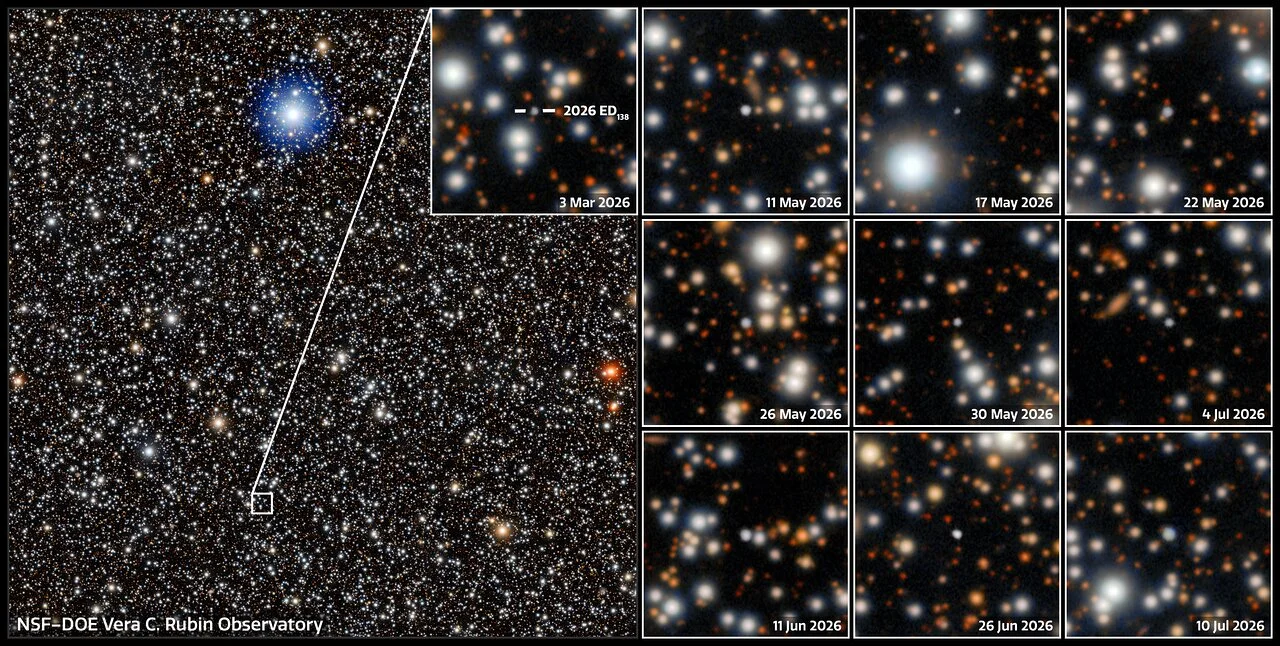
Automated analysis helped Rubin scientists identify 2026 ED138.
Archival “precovery” images extend the observational record back ten years.
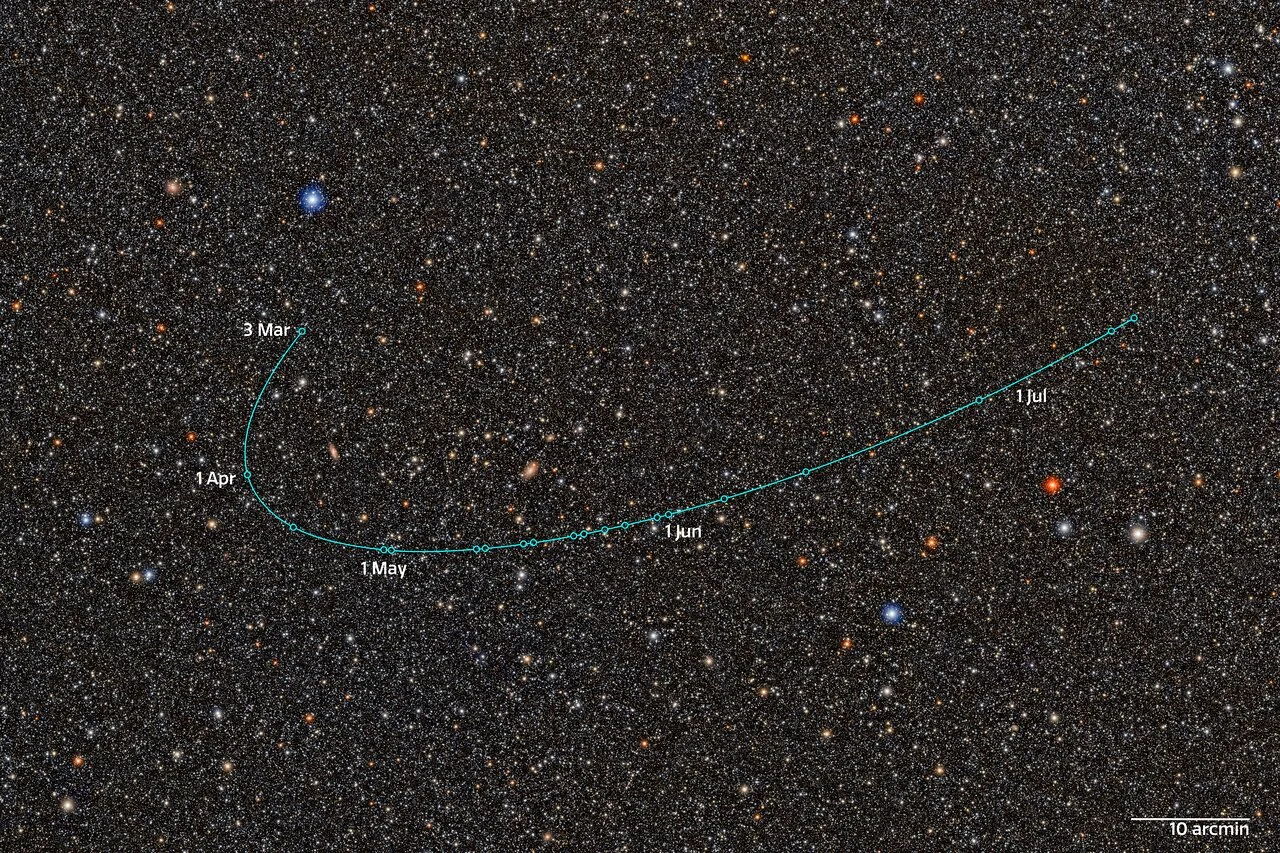
Its distance, brightness, and estimated reflectivity identify it as a trans-Neptunian object.
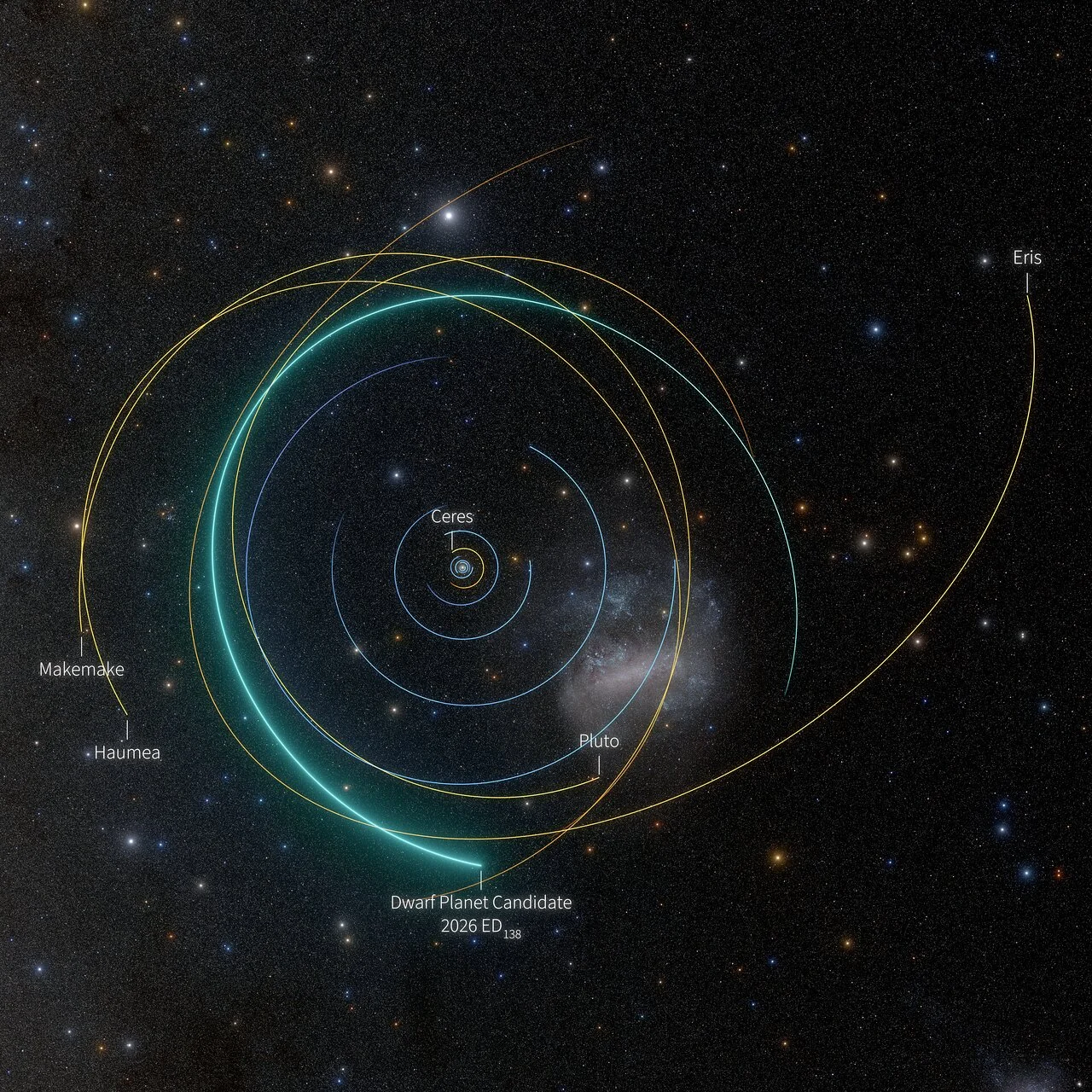
Current estimates put its diameter between 600 and 1,500 kilometers, a range consistent with dwarf planet candidacy.
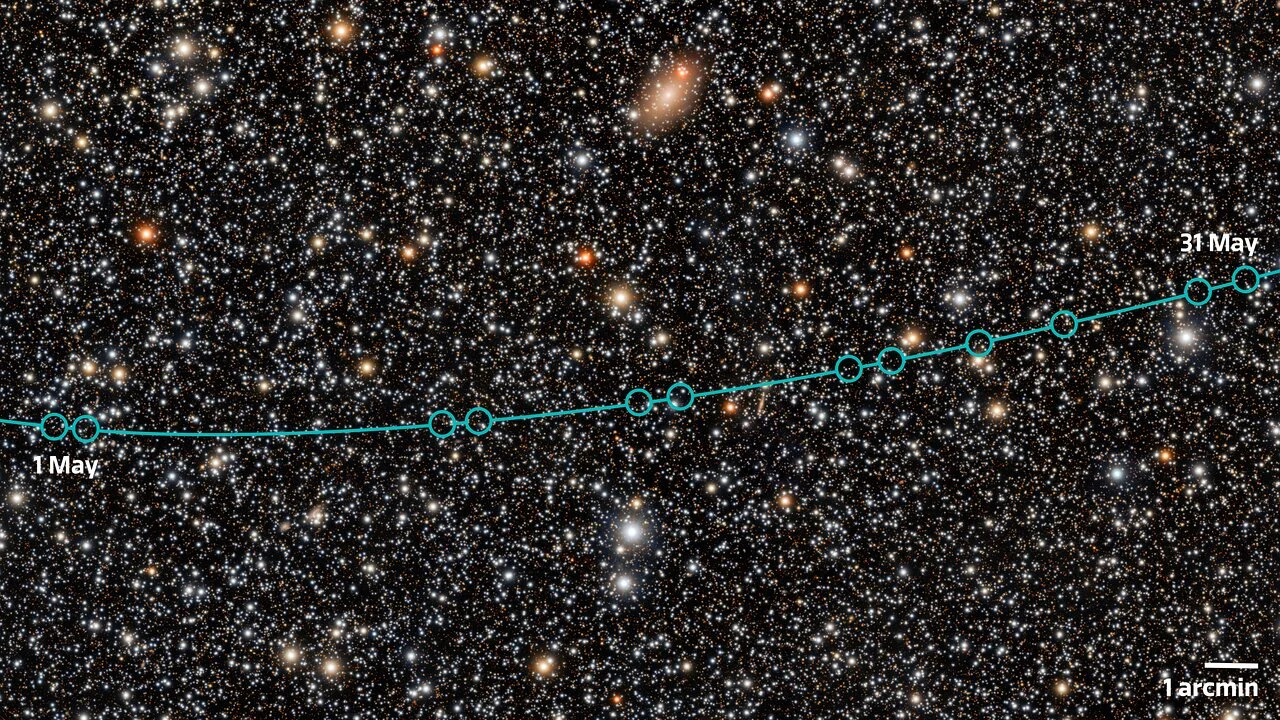
The IAU has not officially recognized a new dwarf planet since 2006.
2026 ED138, nicknamed “Ed,” is the 103rd known trans-Neptunian object estimated to exceed 400 kilometers in diameter.
As the 14th brightest known trans-Neptunian object, it may be a useful target for future occultation observations, which could narrow its size estimate.

Credit: Bob King/Stellarium/Sky & Telescope
Mostly Mute Monday tells an astronomical story in images, visuals, and no more than 200 words.
This article What Vera Rubin Observatory’s first new dwarf planet means is featured on Big Think.



