
AI is changing the question corporate learning teams are expected to answer. When tools can package knowledge and deliver it when employees need it, producing courses and training sessions no longer defines the function’s value. The harder task is figuring out what actually needs to change at work—and helping an organization make that change.
That shift can unsettle learning and development professionals, or L&D teams, whose expertise and workplace identity have long been tied to creating and distributing content. Psychologist Pauline Boss used “ambiguous loss” to describe grief without clear boundaries. The term offers a way to understand this professional unease: nothing has vanished outright, yet a familiar source of purpose and status is slipping away. When AI can generate work that once depended on specialized human skill, it can feel as though the boundaries around that expertise are dissolving.
The uncertainty grows because there’s no settled account of what should replace content production. L&D has often measured its activity by what it delivers—courses, workshops, and e-learning—rather than by whether people work more effectively afterward. AI makes that distinction harder to ignore. It can carry information to employees in a useful format and at a relevant moment. That frees teams to take on other work, but leaves an open question: what work should they own?
Start with the workplace problem
A useful answer begins by changing the unit of analysis. Instead of treating a request for training as a diagnosis, L&D can investigate the conditions shaping performance. The World Economic Forum’s Future of Jobs Report 2025 lists systems thinking among the skills expected to be in high demand through 2030. For learning teams, systems thinking means tracing how roles, processes, incentives, and decisions affect one another—and asking whether a course would address the cause of a problem or only its visible symptoms.
A global technology company’s effort to improve accountability shows the difference. Its CEO asked People & Culture leaders to teach employees and managers about accountability after teams repeatedly missed commitments. A conventional response would have been to build a workshop and roll it out across the company. The team instead spent several weeks interviewing leaders in research and development, operations, finance, legal, and commercial functions to find out where the breakdowns occurred and what support would help.
The interviews revealed that accountability wasn’t failing in the same way everywhere. Some functions already had clear revenue targets and weekly routines built around shared dashboards. Elsewhere, recent organizational changes had left responsibilities uncertain. In another area, departments lacked standard handover procedures, so teams struggled to identify who should act when work went off track.
Those leaders rarely described the issue as a lack of understanding of the word “accountability.” They wanted clearer expectations and help handling poor performance. Most said manager training wasn’t what they needed. A single company-wide course would have addressed the CEO’s proposed remedy while leaving these different working conditions in place.
Learning becomes one part of a wider response
The team returned with a plan that went beyond training. It called for goal-setting within the performance cycle, clearer senior-level OKRs, shared measures for cross-functional teams, recognition connected to results, and a direct conversation about whether leaders modeled the accountability they expected from others. Learning still had a role, but the team’s conclusion was that accountability depended on several organizational conditions working together.
This kind of work requires L&D to challenge the premise of a request, even when it comes from a senior leader. Asking what drives a problem can lead to solutions outside a learning team’s traditional remit: clearer role definitions, better feedback, stronger processes, more useful measures, or time for colleagues to resolve disagreements and align on decisions. That can be an uncomfortable finding for teams accustomed to demonstrating their contribution through content and events.
It also changes what stakeholders can expect from L&D. A learning team that surfaces the causes of a performance problem may not be the team that owns every fix. Its contribution can be to help leaders frame the issue accurately, show how different parts of the organization affect it, and bring the right people together to decide what needs to change. In that role, judgment and organizational understanding matter as much as instructional design.
The transition is already visible in the work some teams are taking on. Facilitation can help leaders reach decisions and resolve differences. Experience design can make learning more memorable. Behavioral science can help turn a lesson into a lasting habit. These disciplines shift the focus from producing information to shaping what people do and how organizations operate.
A different measure of relevance
AI’s ability to produce and deliver content puts pressure on a model of L&D built around that output. But it also makes room for work that automated content alone cannot settle: deciding whether training is the right response, understanding why people struggle to perform, and helping a company coordinate a broader fix. The shift is less a clean handover than a redefinition of what expertise is for.
For L&D professionals, the practical test is whether they can connect a learning request to the conditions surrounding it. Sometimes the answer will be a course. Sometimes it will be clearer responsibilities, shared measures, better feedback, or a facilitated discussion. As AI takes on more of the work of packaging knowledge, the teams that can diagnose the workplace problem—and help people change how they work—will have a clearer case for their place in the organization.
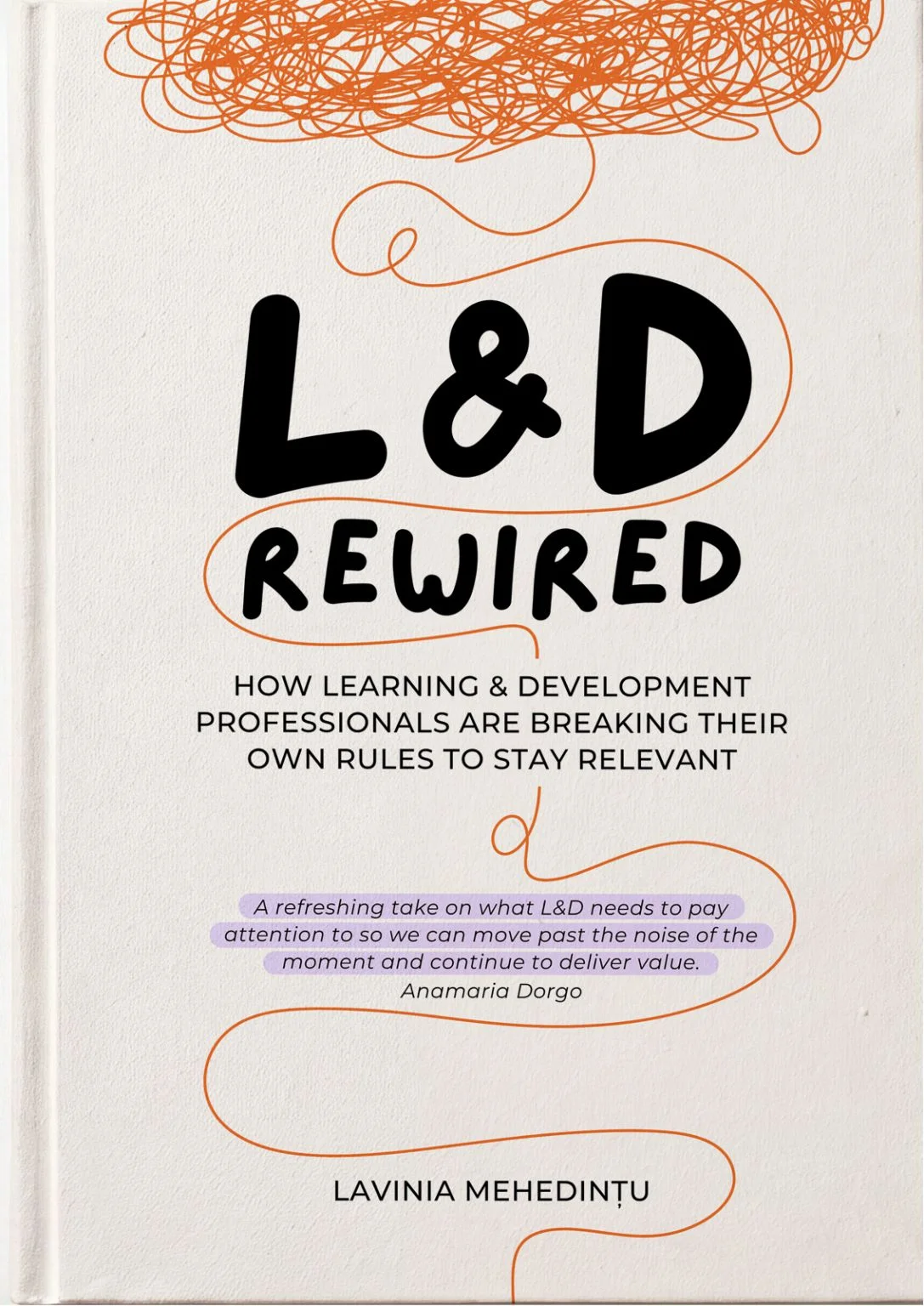
This article is a book excerpt from L&D Rewired, How L&D Professionals Are Breaking Their Own Rules To Stay Relevant, by Lavinia Mehedințu. The book is about the identity challenge L&D professionals are currently going through. Each chapter explores a discipline (systems thinking, experience design, behavioral science, facilitation, and AI) through theory, research, tools, and real-world examples. You can purchase the book here.
This article Inside the quiet reinvention of corporate learning is featured on Big Think.
===

