This story appeared in The Logoff, a daily newsletter about the Trump administration. Subscribe here.
Donald Trump’s closing midterms pitch offered a revealing measure of his campaign priorities: nearly an hour of remarks on Washington construction, with little focus on the races that could cost Republicans control of Congress. A president’s final appeal before voters head to the polls is usually a chance to connect national stakes with the candidates asking for support. Trump instead made a local project the centerpiece, leaving the audience to draw its own line between a refurbished landmark and the congressional contests hanging in the balance.
That choice may tell voters something about how Trump prefers to campaign when the political environment is difficult. Construction is visible, concrete, and easy to present as evidence of action. Elections are less controllable: candidates have their own records, local concerns vary, and the outcome depends on voters’ judgments across many races. Here’s the thing: a speech can show what a president wants to talk about, even when it can’t show whether that subject will persuade anyone.
A campaign stop focused on construction
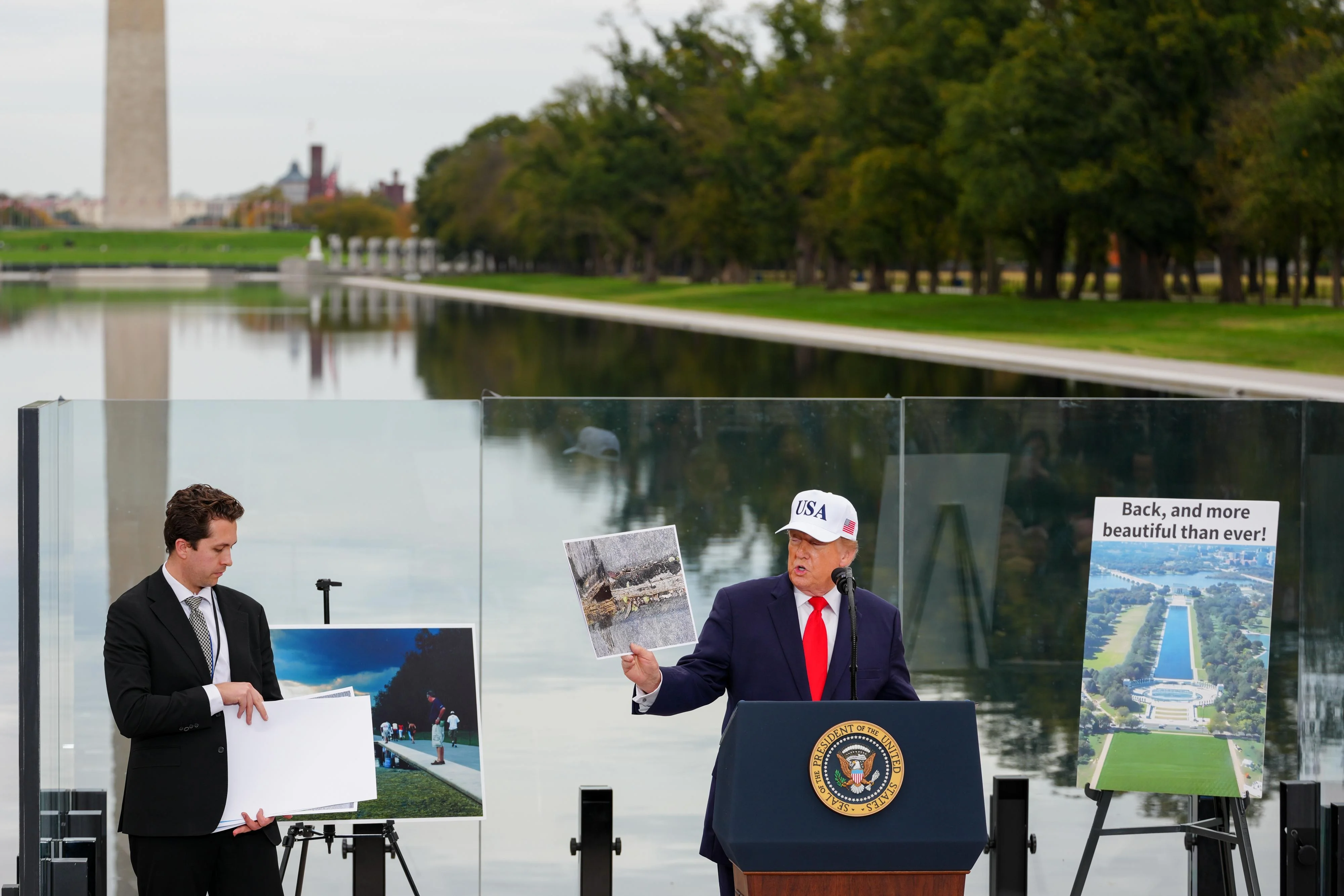
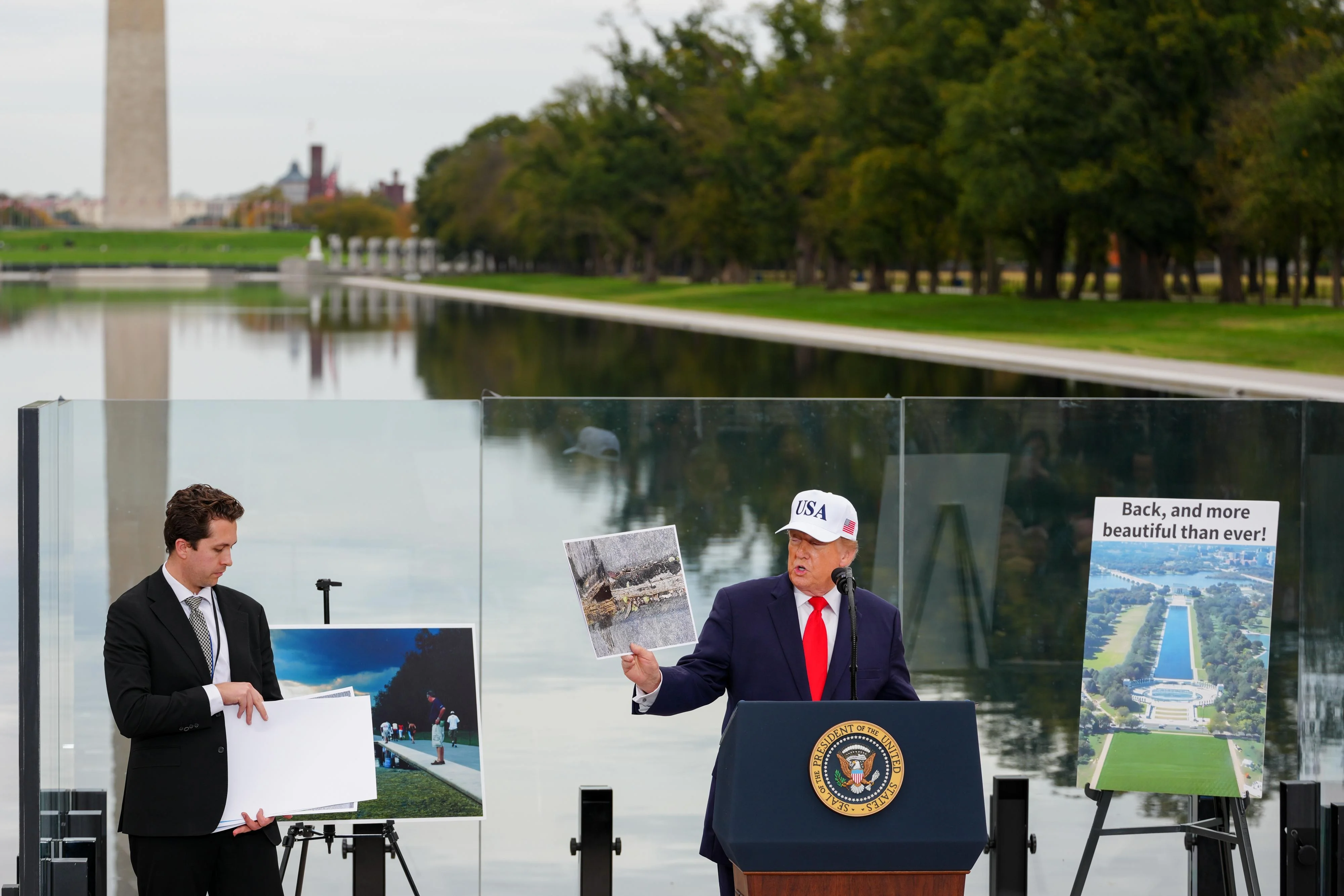
At a Monday press conference with Interior Secretary Doug Burgum, Trump highlighted the newly reopened Lincoln Memorial Reflecting Pool and other projects planned or underway in Washington, DC. He described the pool as “a massive piece of pool,” adding that it had been treated “with a lot of love” and “a lot of hate,” and that “we’re going to stop the hate.” His remarks put the physical work at the center of the event, while the broader election stakes remained largely in the background.
A public works project can offer a president a straightforward story: there was a problem, work was done, and the result can be seen. That kind of message has an obvious political appeal, especially when the subject is a familiar landmark. But it also leaves a question hanging. How much does a visible improvement in the capital matter to voters weighing the economy, national politics, or their own congressional candidates? The event itself doesn’t answer that.
The choice of setting was striking because the country was on the eve of an election with control of Congress at stake. Washington construction may be a natural fit for an administration eager to point to activity in the capital, but it’s a narrow subject for a final midterms pitch. This is more significant than it looks: the speech’s focus became a small test of whether Trump could keep attention on the campaign’s central political contest, or whether his own preferred subjects would take over.
The event came as polls pointed to a tough election for Republicans, with the party potentially losing both chambers of Congress. Trump’s attention to local construction projects capped a campaign season marked by disjointed speeches and comments about the appearance of Republican Sen. Jon Husted and others. That pattern gives the Monday appearance more weight than an isolated detour: it fits a campaign in which the president’s remarks haven’t always stayed tightly focused on helping his party’s candidates.
And yet, a speech’s subject alone can’t establish its effect. Voters may hear an event differently depending on whether they’re already supportive, undecided, or focused on local issues. The available account shows what Trump emphasized and what he left out; it doesn’t show how listeners responded. A vivid setting can draw attention, but attention and persuasion are different things.
Trump’s role in close races
For months, Trump urged voters to treat the midterms as a referendum on his presidency. Yet polling and Republican concerns suggested his presence could hurt candidates in tight contests rather than help them. That creates a difficult role for a president who wants the election to be about his record: his visibility can energize supporters, but it can also make his own standing part of the decision voters are making.
For candidates in close races, that tension matters. A national figure can give a campaign attention and a shared message, but candidates still have to make the case to voters in their own contests. If you're working in this space, the key question isn’t simply whether Trump campaigned; it’s whether his appearances helped voters connect his presidency to the candidates, or reminded them of reasons to vote against his party. The source offers signs of Republican concern, not a definitive answer about each race.
Trump briefly conceded the party’s difficult position on Monday. “For some reason, the sitting president doesn’t win the midterms,” he said. “But we gave this a very strong shot.” The remark acknowledged a political headwind while presenting the campaign as an effort made in earnest. It also shifted attention from the particular choices voters would make to a familiar explanation of the president’s party facing a tough election.
That framing may be useful for a president trying to manage expectations, though it does little to resolve the question of whether his involvement has helped Republicans. The gap between calling an election a referendum and then spending much of a final appearance on construction is notable. A message about a national vote asks voters to judge a presidency; a message about a reflecting pool asks them to notice a project. Those appeals can coexist, but the event described here gave them markedly different amounts of attention.
The result won’t be clear until polls close Tuesday night, and close races could take longer to call, as Vox’s midterms polling coverage explains. Until then, polling can indicate the pressures candidates face without settling the outcome. The distinction matters: a difficult forecast isn’t a result, and the political meaning of Trump’s final pitch will depend partly on what happens at the ballot box.
What the closing pitch leaves behind
The episode offers a useful way to read the campaign’s final hours. A president may try to define the election around his own record, but the subjects he chooses at a high-profile appearance can complicate that effort. The reflecting pool gave Trump a visible project to discuss; the congressional races required a more direct argument about why Republican candidates deserved voters’ support. The difference is plain.
(And this is the part most people overlook.) A campaign’s closing message isn’t only a list of claims; it’s also a signal about what the candidate believes deserves attention. Trump’s event placed a Washington project ahead of the Republican struggle for Congress, at a moment when polling suggested the party was vulnerable. Whether that reflected a deliberate choice or simply the way the event unfolded isn’t established here. Either way, the contrast was available for voters and observers to see.
For the party, the immediate implication is practical: candidates still have to carry their own cases through the final stretch, even when the president is the most prominent figure in the campaign. Trump’s influence may be part of the story, but the source doesn’t establish that his appearance changed any voter’s decision. The election results will offer a clearer measure of the political environment than one press conference can provide.
A final reading recommendation
For readers logging off from the campaign, Ian Millhiser has written a tribute to the late Patrick Stewart and his portrayal of Captain Jean-Luc Picard in Star Trek. The full story is available here via a gift link. It's a change of subject from the campaign’s last-minute arguments, offering readers a cultural essay after a day defined by the uncertain stakes of an election. For anyone stepping away from the results watch, that’s a quieter note to end on.


