Ecoganic bananas from Innisfail are shipping to Japan every fortnight, with growers eyeing expansion and testing Ecoganic papayas in Australian markets.
A niche export with room to grow
The red wax on these bananas marks a farming system that’s found a particular selling point in Japan: buyers can trace not just the fruit’s taste and quality, but the way it was grown. That story may help Ecoganic bananas stand out in a market where Australian exports remain rare. The Australian Banana Growers Council says fewer than 0.1 per cent of Australian bananas are exported, a figure that puts the Japanese shipments in context: they’re a small part of the industry, but a meaningful step for a product trying to establish itself overseas.
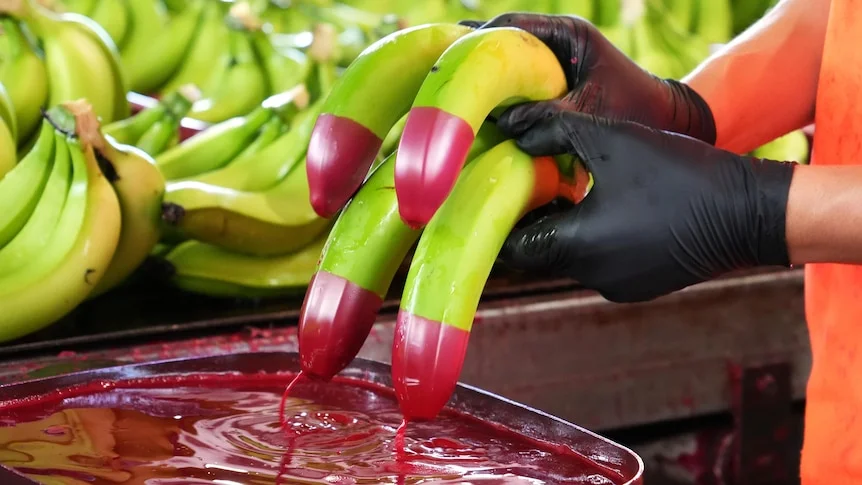
*Ecoganic bananas are being exported to Japan in regular shipments for the first time. (ABC Far North: Sophie Johnson)*
The Ecoganic system was developed about 20 years ago by Innisfail farmers Frank and Dianne Sciacca. It relies on natural ecosystems and minimal inputs, and is accredited. Those features give the product a way to explain its farming credentials to buyers, though the article doesn’t specify the accreditation’s standards or what a consumer can verify from it. That distinction matters: a farming story can open a door, but repeat purchases still depend on the fruit meeting expectations.
After months of trials and market testing, shipments to Japan began on October 23: 1,200 kilograms every fortnight. Regular deliveries give importers and retailers a basis for testing whether interest holds beyond an initial launch. The volume is modest, but consistency can help a new product earn shelf space and restaurant orders.
Sciacca says Japanese consumers want to understand how food is grown and presented, and that interest helped get the bananas into the country. Importer Tomoki Tokuda, of Pacific Coast Asia Company, is targeting middle- and higher-income customers as well as international visitors. He says those buyers care more about the farming story, taste and quality than price, and have high expectations for all three.
That positioning narrows the initial audience. It also gives Ecoganic a clearer pitch than simply being another imported banana: the product is being sold with a production story, and that story has to be supported by the eating experience. If you're working in this space, that’s the hard part to watch. A point of difference may attract a first purchase; quality and reliable supply determine whether retailers and restaurants keep making room for it.
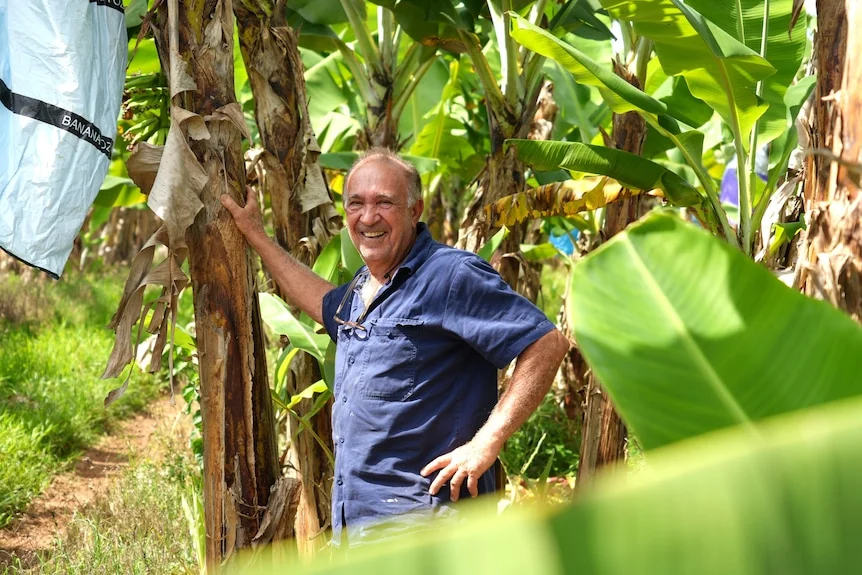
*Frank Sciacca pioneered the Ecoganic farming system with his wife, Dianne. (ABC Far North: Sophie Johnson)*
The product is already sold in two Japanese supermarkets, one in the Kanto region and one in Hokkaido, and served at 60 restaurants around the country. Tokuda describes early feedback as excellent. He wants to lift shipments to 3,000 kilograms per fortnight within three years, though the market is still developing and the article offers no sales figures to show how quickly that expansion might happen.
The numbers here are underwhelming as evidence of broad demand: distribution across stores and restaurants shows reach, but it doesn’t reveal how many customers are buying again or whether the product is selling at a pace that supports larger shipments. That’s not a reason to dismiss the launch. It’s a reminder that an ambitious target is still a target, and the next stage depends on sales data that hasn’t been provided.
Here’s the constraint: Sciacca says the current handful of Ecoganic growers probably couldn’t meet demand if the Japanese market takes off. He sees significant room for growth in Japan, but expanding exports will require more farms to produce under the system. This is more significant than it looks. A small grower base can keep supply limited even when interest is real, while bringing more farms into the system would require them to meet its production and accreditation requirements.

*Tomoki Tokuda has been importing the bananas into Japan. (Supplied: Tomoki Tokuda)*
The next test: papayas
Ecoganic is also being applied to papayas for the first time in more than a decade. Innisfail grower Will Darveniza, already a banana producer, received certification this year to grow the fruit under the brand. His papayas have been sent to Melbourne, with production starting on a small part of his farm and set to rise if demand does. Starting small lets Darveniza test the market before committing more land and production to a crop whose demand is still developing.
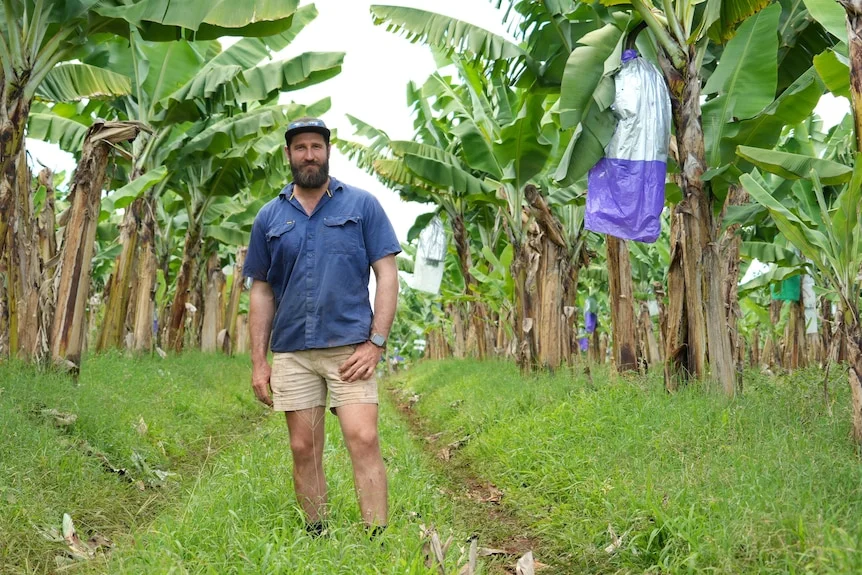
*Will Darveniza already produces Ecoganic bananas and has now been accredited for papayas. (ABC Far North: Sophie Johnson)*
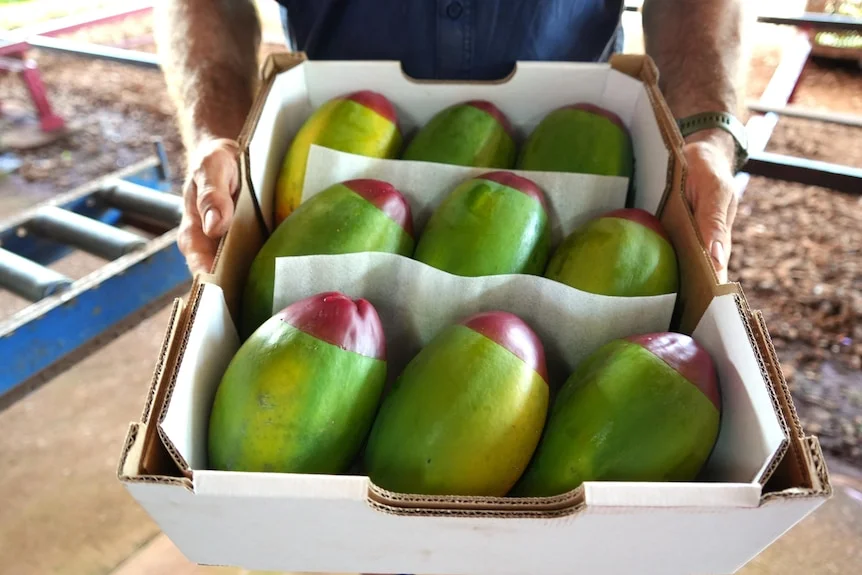
*Ecoganic papayas are being produced for the first time in more than a decade. (ABC Far North: Sophie Johnson)*
Darveniza says he’ll match supply to demand as the business grows; his longer-term goal is to export papayas too. Japan doesn’t currently have a market for the fruit, Tokuda says, but he believes he can build one. That’s an ambition, not yet evidence of demand. Building a market would mean establishing that buyers want the product and that growers can supply it consistently, just as the banana export effort is still testing its own path.
What the expansion depends on
The two crops point to the same underlying question: can Ecoganic’s farming story support repeatable sales at a scale growers can supply? For bananas, the early signs include regular shipments and placement in supermarkets and restaurants, but published sales figures aren’t available. For papayas, the product is at an earlier stage, with production limited and exports still a future aim.
That said, the approach has a practical logic. A defined farming system can give importers and customers a reason to consider produce from a small Australian export base, while trial shipments and limited production help growers learn whether that reason translates into demand. And yet, growth will depend on more than a compelling account of how the fruit is grown: the market must keep buying, and farms must be able to meet orders under the system.
The test is still ahead. For now, Ecoganic has a foothold in Japan for bananas and an early domestic run for papayas. Promising, but provisional.