The bench as a response
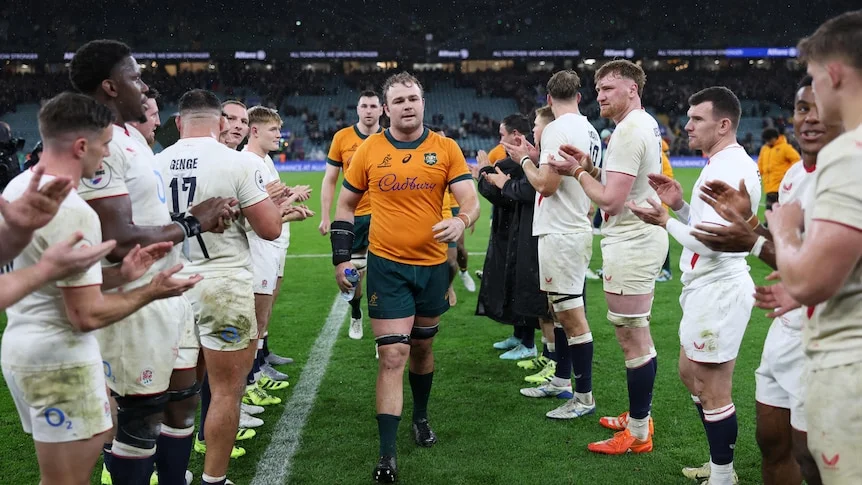
Australia captain Harry Wilson sees the Wallabies’ bench as a way to change the contest against England at Twickenham. Rob Valetini, usually a starter in the back row, is set to bring late impact as Australia tries to match the hosts’ powerful replacements. The choice gives Wilson a different option for the closing stages: a player accustomed to starting can enter when the pace and shape of the match have already shifted.
The selection carries a clear memory of last year’s meeting. England’s second-half reinforcements helped turn the game against Australia, exposing how much a team’s reserves can matter when the contest is tight. This time, Wilson is counting on Valetini, Taniela Tupou and Carlo Tizzano to answer the challenge. Their presence gives Australia more than a like-for-like replacement plan; it offers the prospect of changing the physical tone late in the match.
“It’s different for Bobby, and it’s just a genuine X factor coming off the bench,” Wilson said. He called Valetini one of the world’s best players in his position and said his arrival could give Australia confidence if the match remains close. That confidence depends on the game staying within reach, of course, and on the bench being able to make an immediate contribution rather than simply hold the line.
“Hopefully, Bobby can really spark us on the bench again this year,” he said.
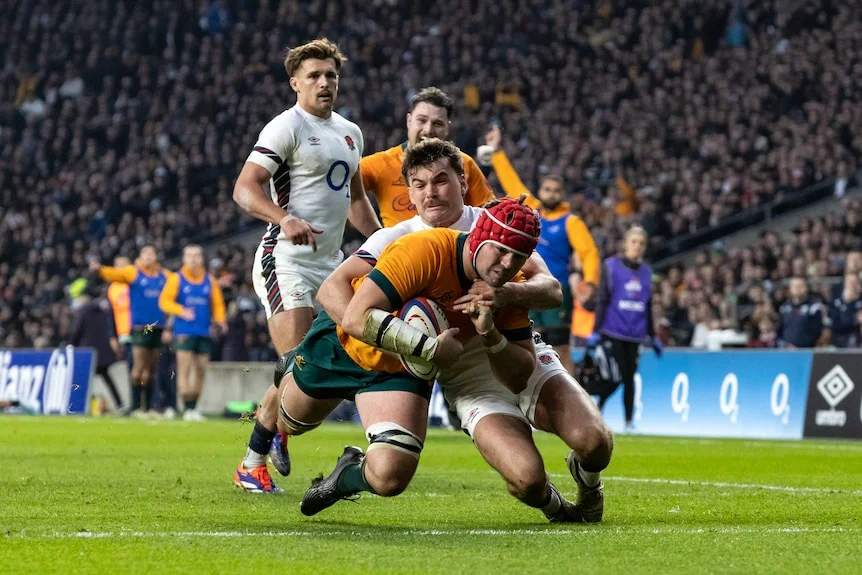
Wilson’s try helped Australia secure a memorable Twickenham win in 2024. (Getty Images: CameraSport/Andrew Kearns)
A win to draw on, and losses to answer
That victory remains a defining moment in Wilson’s captaincy. He scored a try in Australia’s last-gasp win, an ending that gives this return to Twickenham an obvious point of reference without guaranteeing a repeat. Wilson says he’s now comfortable leading a side with plenty to build on. For a captain, confidence can come from remembering what the team has already managed; the harder test is making that memory useful when the next match takes a different shape.
The Wallabies return after two heavy defeats to New Zealand, but Wilson points to their win over South Africa as evidence of what they can do when they trust their skills and keep attacking. Those results leave Australia with both a template and a problem: the attacking approach has produced a strong performance, but it must hold up across matches and under pressure. A single positive result can show what’s possible. It can’t, by itself, settle questions raised by the defeats.
“We definitely want to be us. We want to play our own game,” he said. Australia, he added, had learned lessons from the New Zealand matches and needs to carry them into this Test. That’s a simple message, but its value will be judged in execution: whether the Wallabies can keep their shape, make sound decisions and continue attacking when England pushes back.
England’s reported unrest
Talk of divisions in England’s camp has shaped the build-up. Reports said players sought showdown talks with coach Steve Borthwick during the team’s July tour over what was described as a toxic environment. Senior England players have pushed back against those claims, with Jamie George saying they’d show their support for Borthwick through their performance. The reports offer a talking point, but they don’t reveal how the team will respond once the match begins.
Wilson said the reports could affect England in different ways. Australia’s task, in his view, is to apply pressure and find out how united the hosts are on the field. That shifts the question away from speculation and toward something the Wallabies can influence: the pace and intensity of the contest. If you’re working in this space, that’s the distinction to watch—outside claims may shape the week, but the match will test the team’s cohesion directly.
“It could go one or two ways for them, and I guess it’s on us to put them under pressure to see how close they are as a team,” he said.
He also stressed the connection within his own squad, saying the players care for one another, their coaching staff and the Wallabies jersey. “I’m really only worried about us,” Wilson said. Here’s the thing: that focus may help Australia avoid getting drawn too far into England’s reported problems, but it also puts responsibility squarely on the Wallabies to deliver their own performance.
What the contest will show
Wilson expects “an epic battle in the forwards” as Australia seeks to reverse last year’s experience against England’s bench. The contest will also test whether the Wallabies can turn the attacking form they showed against South Africa into a response after their losses to New Zealand. Those questions are connected: a team’s ability to attack often depends on whether it can win enough physical contests to create opportunities and keep the opposition under pressure.
Valetini’s role gives the bench story a human focus, but the broader issue is how both teams manage the match as it develops. Similar contests often reward substitutions that add energy at the right moment, though timing and the scoreline matter as much as the names on the bench. And yet, a late impact player can’t erase what happened earlier. Australia will need its starting group to keep the game close enough for that option to matter.
This is more significant than it looks: Wilson is framing the bench as a way to take control of a weakness exposed in the previous meeting. The selection will only prove its value if Australia can bring Valetini and the other replacements into a contest that still offers room to change. The question is whether the Wallabies can make their own game last long enough to give those players a chance.
The Nations Championship match kicks off at 2:10am AEDT on Monday. ABC Sport will provide live blog coverage.


